



The first time I watched an aerial camera glide above a packed stadium, I wondered how such a heavy piece of equipment could move smoothly over performers and spectators without shaking. Understanding how cable camera systems work in live events reveals a carefully coordinated combination of cables, powered winches, stabilization technology, control software, broadcast equipment, and trained operators.
These systems do far more than suspend a camera in the air. They create controlled, repeatable movements that can follow athletes, sweep across concert stages, reveal an entire venue, or move from a wide establishing shot into a close-up. Every movement is planned, monitored, and integrated into the wider live-production workflow.
What Is a Cable Camera System?
A cable camera system is an aerial camera platform supported and moved by tensioned cables. Depending on the design, the camera may travel along a single fixed cable or move freely through a defined three-dimensional area.
The camera is normally attached to a motorized carriage or suspended dolly. Powered winches adjust the length and tension of the supporting cables, allowing the platform to travel horizontally, vertically, diagonally, or along a predetermined route.
A stabilized remote head holds the camera and lens. This head lets the operator pan, tilt, zoom, and frame shots independently from the movement of the suspended platform.
Main Components of a Cable Camera Setup
Support Cables and Anchor Points
High-strength cables form the physical structure of the system. They connect the moving camera platform to engineered anchor points placed around the venue.
Anchor locations are selected after examining the venue layout, available structures, camera path, audience position, stage design, and required coverage area. Engineers and riggers must confirm that every mounting point can safely support the planned forces.
Motorized Winches
Winches control the length of each cable. When one winch releases cable while another pulls it in, the camera platform moves toward a new position.
In a multidirectional system, several winches operate simultaneously. Control software calculates how much cable each winch must release or retrieve to produce a smooth and accurate movement.
Camera Carriage or Dolly
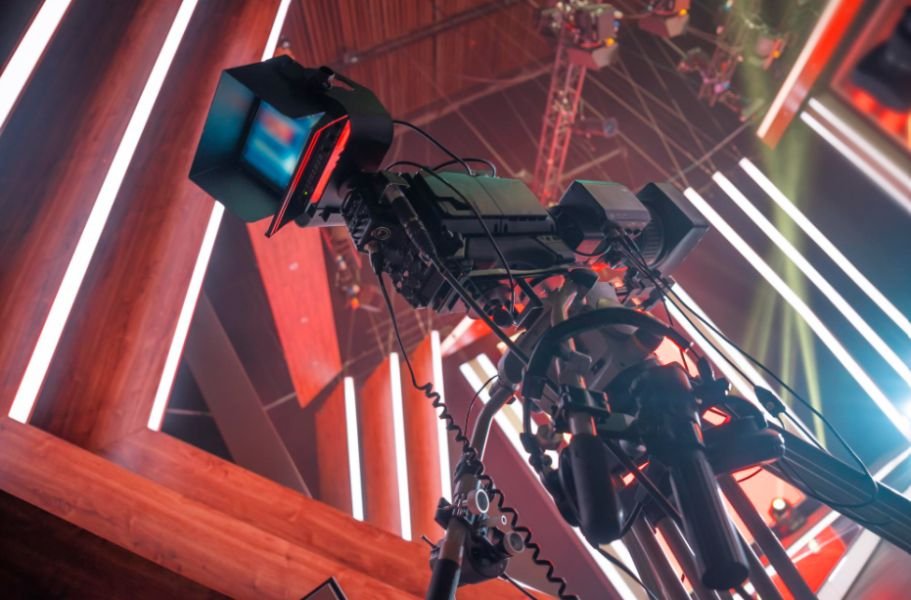
The carriage is the moving platform supported by the cables. It carries the camera, stabilized head, communication equipment, signal hardware, and sometimes an onboard power system.
The total payload must remain within the approved limit for the system. Camera bodies, lenses, batteries, transmitters, and accessories are therefore selected carefully.
Gyro-Stabilized Camera Head
Cable movement, acceleration, wind, and changes in direction can introduce vibration. A gyro-stabilized head uses sensors and motors to compensate for unwanted motion.
The camera operator can control the framing while the pilot controls the movement of the carriage. Separating these responsibilities helps create cinematic shots without forcing one person to manage several complex tasks at once.
Control Computer and Positioning Software
The control system coordinates the winches and tracks the camera’s position. Operators can establish movement boundaries, speed limits, minimum heights, restricted zones, and emergency stopping points.
These programmed limits help prevent the camera from entering unsafe areas or colliding with venue structures, lighting rigs, scoreboards, scenery, or other production equipment.
How the System Is Prepared for an Event
Crews planning smaller or more controlled installations can review about how to set up a cable camera system for filmmaking to understand route planning, payload calculation, secure anchoring, line tension, balancing, and staged testing before adapting the workflow for a live venue.
Venue Survey and Engineering
Preparation begins with a detailed venue survey. The production team identifies suitable anchor points, calculates cable routes, measures clearances, reviews structural information, and determines where the camera needs to travel.
The plan must also consider lighting fixtures, suspended speakers, video screens, roofs, temporary staging, performers, athletes, and audience areas.
Rigging and Cable Installation
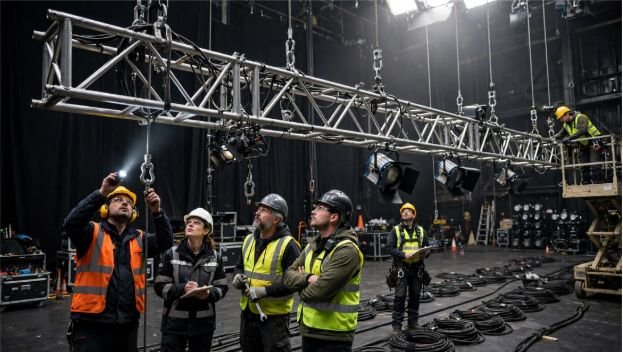
Qualified riggers install the anchors, winches, cable lines, and safety components. Cable tension is checked throughout the installation process.
The camera carriage is then attached and loaded with the approved equipment. Every connection, fastener, cable, and control component is inspected before powered movement begins.
Calibration and Movement Limits
Once installed, the system must learn the usable flight or movement area. Operators move the carriage through reference points while the control software maps its position.
Restricted zones are programmed to keep the platform away from obstacles and sensitive areas. Speed, acceleration, and height limits may also be adjusted for the specific production.
Rehearsal and Shot Planning
The cable camera team rehearses with the director before the live event. Planned movements may include an opening venue reveal, a tracking shot over a field, a sweep across a stage, or a descending move toward a performer.
Rehearsals allow the crew to test timing, framing, lighting, focus, communications, and potential obstructions.
How Cable Cameras Are Controlled During the Show
A cable camera commonly requires several specialists. The pilot controls the position, direction, speed, and height of the moving platform. The camera operator controls pan, tilt, zoom, focus, and composition.
A systems technician monitors the winches, controls, cable conditions, power, communication links, and positioning data. The director communicates desired shots through the production intercom.
Clear communication is essential. The pilot must know where the camera needs to go, while the camera operator must anticipate the direction of movement and frame the action smoothly.
How the Video Reaches the Live Broadcast
The camera feed must travel from the moving platform to the production control room or broadcast vehicle. Depending on the system, video and control data may travel through fiber-optic connections, integrated cable infrastructure, wireless transmission, or a combination of methods.
The signal path can carry more than video. It may also handle camera control, lens commands, intercom, tally information, equipment data, and monitoring signals.
Once the feed reaches production control, it becomes one of several camera sources available to the director. The vision mixer can then place the aerial shot into the live program shown on venue screens, television, or streaming platforms.
Differences Between 1D, 2D, and 3D Systems
A 1D cable camera follows a single line between two points. It works well for racing routes, concert runways, sidelines, and predictable tracking shots.
A 2D system adds another direction of movement, allowing the camera to travel across a wider plane or change elevation while moving along a route.
A 3D system typically uses several cables and independently controlled winches. By changing the length of each cable, the platform can move through a defined volume above a field, arena, stage, or event space.
Safety Measures Used at Live Events
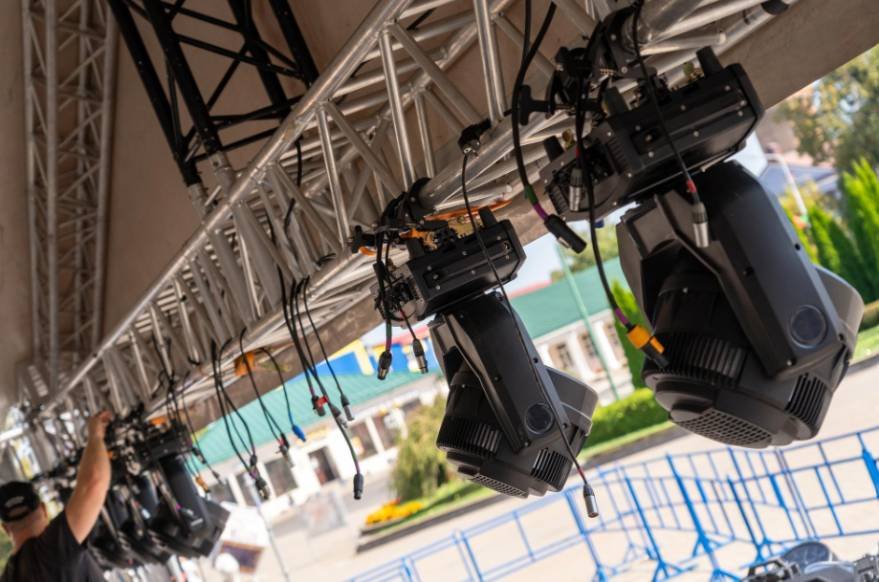
Safety planning begins long before the audience arrives. The system must be designed for the venue, payload, movement area, and expected operating conditions.
Typical precautions include anchoring mechanism capsule, equipment inspections, controlled cable tension, programmed movement boundaries, emergency braking, redundant controls, exclusion zones, weather monitoring, rehearsals, and constant communication.
Operating conditions may change because of wind, rain, temperature, stage modifications, or unexpected objects entering the movement area. The crew must be prepared to slow, reposition, or stop the system when conditions are unsuitable.
Cable Cameras Compared With Other Camera Systems
Cable cameras offer long operating periods, repeatable movements, smooth tracking paths, and access to overhead viewpoints. Unlike a crane, they can cover a much larger area without occupying substantial floor space.
Drones may offer greater freedom in some outdoor environments, but they can face restrictions involving noise, battery life, weather, audience proximity, and venue permissions.
Jibs and cranes remain useful for controlled sweeping shots near stages or smaller performance areas. Rail cameras are effective when movement must follow a fixed ground-level route. The best option depends on the venue, shot requirements, budget, available rigging, and safety plan.
Frequently Asked Questions
1. How do cable camera systems move so smoothly?
Computer-controlled winches coordinate cable lengths while a gyro-stabilized head compensates for vibration and unwanted platform movement.
2. Who operates a cable camera during an event?
A typical crew may include a camera pilot, camera operator, systems technician, rigger, broadcast engineer, director, and safety supervisor.
3. Can a cable camera operate above an audience?
It may operate over approved areas only when the system, rigging plan, venue conditions, inspections, operating procedures, and applicable safety requirements permit it.
4. How cable camera systems work in live events with multiple cameras?
The cable camera sends its video feed to production control, where the director selects it alongside handheld, fixed, robotic, crane, and other camera sources.
Final Perspective
After looking closely at the entire workflow, I see a cable camera as much more than an aerial filming device. It is a coordinated live-production system in which engineering, rigging, software, cinematography, communications, and safety must work together.
When properly planned, the system gives directors a perspective that conventional cameras cannot easily reproduce. It can reveal the scale of a venue, follow fast action, connect different parts of a performance, and make viewers feel as though they are moving through the event rather than simply watching it.