







Small businesses often struggle to explain why customers should choose them over larger, cheaper competitors. Features, certifications, and service lists may communicate what a company does, but they rarely create an emotional reason to trust it.
In this small business brand video production case study, I break down how a local eco-friendly cleaning company could transform a technical service into a persuasive customer story. The project shows how strategic messaging, authentic interviews, cinematic footage, measurable proof, and smart content repurposing can turn one production into a long-term sales asset.
Wyzowl’s 2026 research found that 83% of video marketers believe video has directly increased sales, while 85% say it has helped generate leads. Those numbers do not guarantee results, but they show why businesses increasingly treat video as a revenue tool rather than a decorative marketing expense.
What Problem Was the Small Business Trying to Solve?
For this illustrative case study, I am using a fictional regional company called Local Eco-Cleaners. The business provides certified green commercial cleaning services to offices, clinics, and professional buildings across a competitive US metropolitan market.
Although the company uses advanced equipment and environmentally responsible products, prospects view it as another janitorial provider. Larger competitors offer lower prices, recognizable names, and aggressive service packages.
Local Eco-Cleaners wants to charge approximately 20% more than standard cleaning companies, but its website does not clearly explain the added value. Technical certifications feel confusing, photographs look similar to competing websites, and sales representatives spend too much time explaining why healthier cleaning practices matter.
The video objective is therefore clear: reposition the company from a commodity vendor to a workplace-health partner.
What Storytelling Framework Did the Brand Video Use?
I structure the brand story around a simple progression: the customer’s pain point, the company’s strategic solution, and the measurable impact.
How Did the Video Introduce the Customer’s Pain Point?
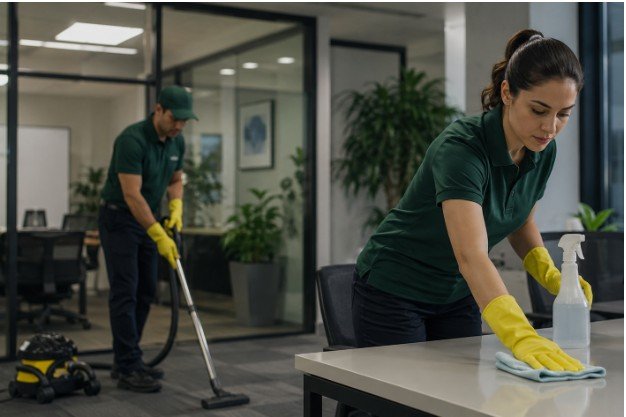
The opening avoids a slow company introduction. Instead, it begins with an office manager describing recurring employee complaints about chemical odors, dust, and inconsistent cleaning.
This approach creates immediate relevance. The viewer recognizes a familiar workplace problem before hearing anything about the cleaning company.
The video then expands the issue by showing how traditional cleaning methods can create disruption, employee discomfort, and uncertainty about indoor cleanliness. The goal is not to frighten the audience. It is to show that purchasing decisions affect more than the appearance of an office.
How Did the Company Present Its Strategic Solution?
The second section introduces Local Eco-Cleaners through real-world implementation. Rather than listing certifications on screen, the video shows trained technicians using green cleaning equipment, organizing supplies, testing surfaces, and communicating with the client.
The owner explains the company’s purpose in straightforward language. The message focuses on creating healthier, more comfortable workplaces without sacrificing cleaning performance.
Including a Healthcare Patient Story Video Case Study can further strengthen this message by demonstrating how effective cleaning practices contribute to safer healthcare environments and improved patient experiences. Authentic testimonials and real-world outcomes help build trust while illustrating the practical impact of the company’s commitment to health, safety, and high-performance cleaning solutions.
This customer-centered structure matters because effective case-study videos normally connect specific challenges with clear solutions and outcomes. They work especially well during the research and decision stages, when prospective buyers want proof rather than broad promotional claims.
How Did the Video Show Measurable Impact?
The final section supports the emotional narrative with evidence. A client interview discusses improved employee feedback, fewer odor complaints, and greater confidence in the cleaning process.
Motion graphics can display independently verified figures, such as allergen-testing results, satisfaction scores, or reductions in cleaning-related complaints. Any number used in the final video must come from documented client data, laboratory reports, or company records.
Specific evidence strengthens credibility, but invented statistics would damage trust. For that reason, the performance figures in this article remain illustrative rather than verified client results.
How Was the Brand Video Planned Before Filming?
Strong brand video production begins long before cameras arrive. I would start with a discovery meeting involving the company owner, sales manager, operations lead, and selected client.
During discovery, I would identify the company’s ideal customer, common objections, strongest competitive advantage, and primary call to action. Competitor research would reveal whether other cleaning companies focus on price, reliability, sustainability, health, or convenience.
The production team would then prepare interview topics, a filming schedule, location releases, a visual treatment, and a detailed shot list. The owner and client would not receive rigid scripts. Instead, they would receive conversational prompts that encourage honest, natural answers.
Testimonial videos become more persuasive when viewers can see genuine emotion and hear customers explain their challenges, experiences, and outcomes in their own words.
What Happened During the Video Production Day?
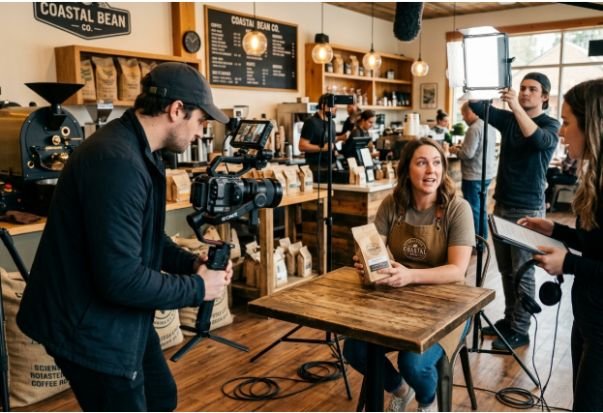
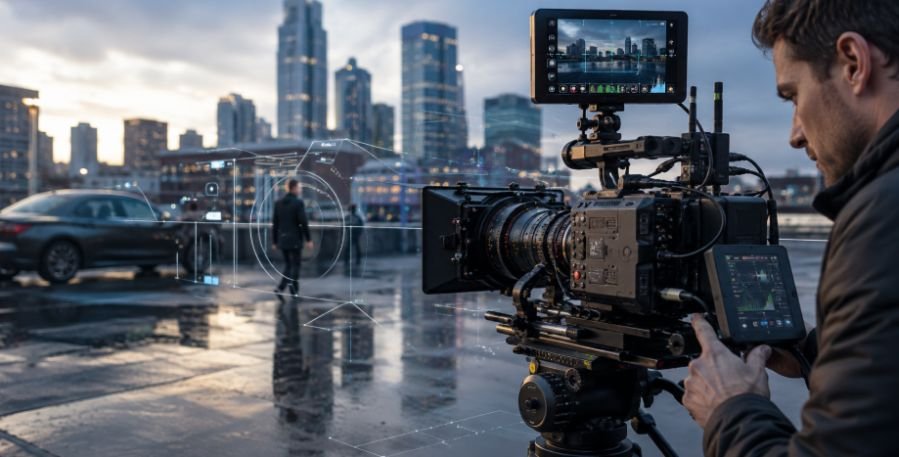
The production would use a small professional crew to minimize disruption at the client’s office. A director-producer would manage the story, while a cinematographer, sound specialist, and production assistant would handle visuals, audio, lighting, and logistics.
The client interview would take place in a recognizable workplace setting rather than a generic studio. This provides context and helps the testimonial feel connected to an actual business environment.
Cinematic B-roll would show the cleaning team arriving, preparing equipment, working around office areas, handling high-touch surfaces, and interacting professionally with building staff. Close-up shots would highlight green products, advanced tools, careful procedures, and certification details.
The production team would also capture contrasts without attacking competitors. Clean, bright, modern visuals could represent the company’s approach, while carefully selected shots could illustrate the discomfort associated with harsh odors or outdated cleaning methods.
Professional sound recording would receive the same attention as the visuals. Poor audio can quickly make a polished brand film feel untrustworthy or amateurish.
How Much Does Small Business Brand Video Production Cost?
Video pricing varies widely across the United States because every project involves different locations, crews, filming days, equipment, editing requirements, talent, animation, travel, and deliverables.
For a streamlined live-action project, a small business might budget approximately $3,000 to $10,000 for a basic professional video. A more developed production involving multiple interviews, polished motion graphics, advanced lighting, several locations, and social media cutdowns may fall between $10,000 and $30,000.
Industry pricing guides commonly place basic corporate videos near the lower end of that range, with more complex mid-tier productions costing considerably more.
For Local Eco-Cleaners, the budget would cover strategy and pre-production, a professional filming day, editing, sound design, color grading, licensed music, captions, motion graphics, and multiple social versions.
The most effective way to control cost is not to reduce every production element. It is to define the message, filming schedule, locations, and deliverables before production begins.
How Did Post-Production Turn Footage Into a Sales Story?
Post-production would organize the footage into a clear narrative rather than a montage of attractive cleaning shots.
The final two-minute video would begin with the client’s problem, introduce the cleaner’s approach, show the work in action, and finish with customer outcomes and a direct invitation to request a workplace assessment.
Editing would remove repetitive responses and preserve the strongest emotional moments. Color grading would create visual consistency, while sound design and licensed music would guide the pace without overpowering the interviews.
Motion graphics would simplify technical certifications and display verified performance data. Closed captions would support accessibility and make the video easier to understand when viewed without sound.
What Results Could the Brand Video Generate?
In this illustrative scenario, Local Eco-Cleaners would place the video on its homepage, industry-specific landing pages, sales presentations, proposal follow-ups, email campaigns, LinkedIn page, and paid social advertisements.
A realistic measurement plan would track video plays, watch time, landing-page engagement, quote requests, lead quality, proposal acceptance, sales-cycle length, and revenue influenced by video.
For example, the company might set targets such as increasing qualified website inquiries by 35%, shortening the sales cycle by two weeks, and winning four premium commercial accounts during the following quarter. These figures should be treated as campaign objectives unless actual analytics confirm them.
The sales team should also ask prospects whether they watched the video before requesting a quote. That simple question can reveal whether the asset influenced trust, understanding, or purchase readiness.
How Can One Video Shoot Create Months of Content?

One of the most important lessons from this small business brand video production case study is that the main film should never be the only deliverable.
From one production day, the company could create a two-minute brand video, a 60-second sales version, a standalone customer testimonial, vertical clips for Instagram Reels and YouTube Shorts, LinkedIn videos, website background footage, recruitment content, educational clips, digital advertisements, and high-quality still frames.
This repurposing strategy allows the business to use the same core story across different platforms without posting an identical video everywhere. It also gives the marketing and sales teams a library of relevant assets for different customer objections and buying stages.
What Made This Brand Video Strategy Effective?
The strategy works because it begins with the customer’s problem rather than the company’s equipment. It uses authentic voices instead of stiff corporate scripts, connects sustainability with a practical business outcome, and supports emotional storytelling with evidence.
It also treats distribution and measurement as part of production. The company knows where each video will appear, who it should reach, and which results will determine whether the campaign succeeded.
Most importantly, the film does not simply claim that Local Eco-Cleaners is better. It shows why the service matters, how the process works, and what a customer experienced.
Frequently Asked Questions About Small Business Brand Videos
1. How long should a small business brand video be?
A primary website brand video usually works well between 90 seconds and three minutes, while social media versions should be shorter and focused on one message.
2. Should a brand video include customer testimonials?
Yes. A credible customer interview can add emotional proof, explain the buying experience, and answer concerns that company representatives may struggle to address objectively.
3. How long does professional video production take?
A straightforward project may take several weeks from discovery to final delivery, depending on scheduling, filming complexity, client approvals, editing, and revision rounds.
4. Where should a small business publish its brand video?
The video can support the homepage, About page, service pages, YouTube, social media, email marketing, digital ads, sales presentations, proposals, and event displays.
Turning One Brand Story Into Long-Term Business Value
For me, the most valuable takeaway is that a successful small-business brand video production case study must connect creative decisions to commercial goals. Attractive visuals can capture attention, but strategy, authenticity, customer evidence, strong distribution, and measurable outcomes create business value.
When a company clearly communicates its purpose and customer impact, video can help prospects understand the difference between a cheaper service and a more valuable one. One carefully planned shoot can then support sales, marketing, recruiting, social media, and customer education for months or even years.


One thought on “Small Business Brand Video Production Case Study: From Story to Sales”