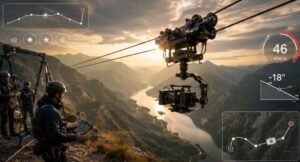
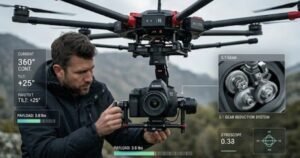
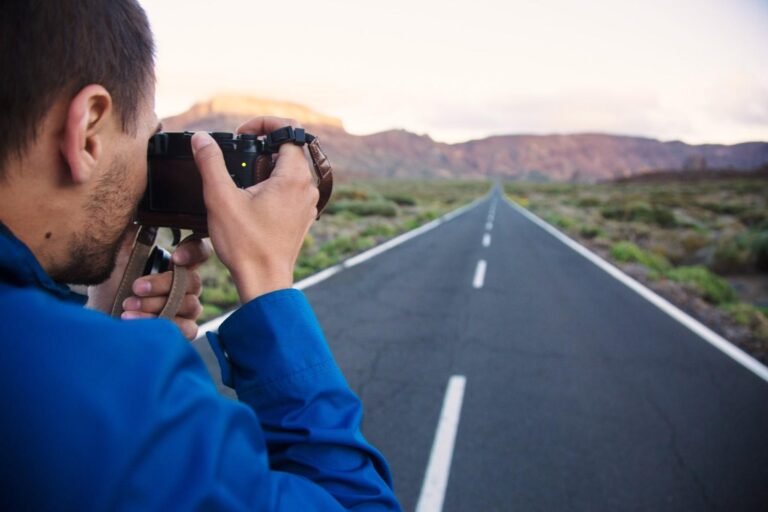
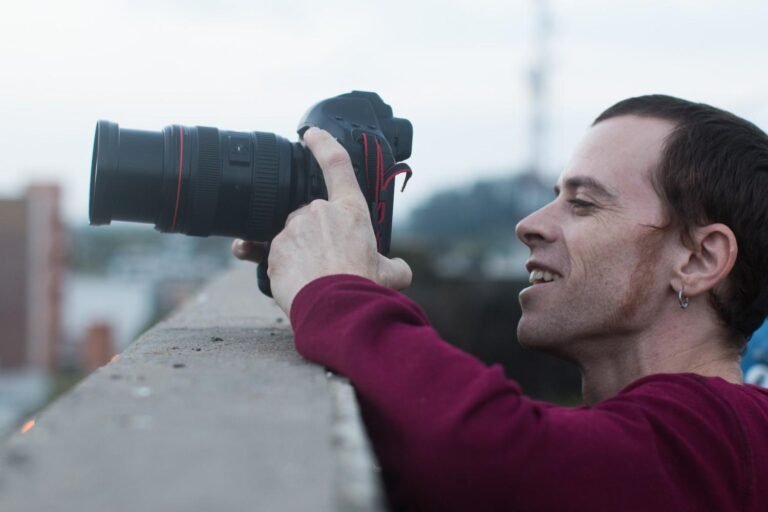
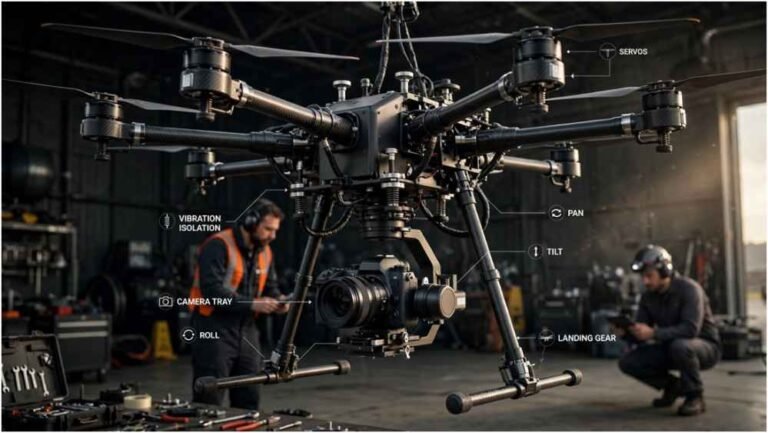
A camera rises above a character and suddenly reveals an entire city block. Another shot begins high over a crowd, then glides down until one face fills the frame. That is what makes camera boom movement in film so effective. A boom shot physically changes the camera’s height, perspective, and relationship to the scene. What […]
A product can sit still and look polished, but the right motion can make viewers feel its shape, texture, and quality before they touch it. That is why I treat camera movement for product videos as part of the sales message, not decoration. A push toward a logo, a slow orbit around a watch, or […]
A bedroom can feel intimate, a hallway can feel endless, and a kitchen can become the center of a thriller. Perspective and motion can transform even an ordinary room. When I plan camera movement for indoor scenes, I work around walls, furniture, doorways, low ceilings, reflections, and limited floor space. Instead of forcing large moves, […]
Two camera moves can send a viewer’s attention upward or downward and still create very different results. When I compare tilt shot vs pedestal shot, I use one simple rule: a tilt changes the camera’s angle, while a pedestal changes the camera’s physical height. A tilt rotates the camera vertically on a fixed axis, much […]
A camera can stay perfectly still and make a scene feel electric, or glide through space and pull viewers into the action. When I compare static shot vs moving camera shot, I do not ask which looks more cinematic. I ask which gives the audience the clearest emotional experience. That choice affects composition, pacing, depth, […]
Walking onto a bustling movie set for the first time completely reshaped how digital storytelling felt to me. Watching a camera operator glide seamlessly alongside an actor made me realize that understanding what is a tracking shot mechanics can instantly transform a chaotic indie project into a polished, high-end piece of cinema. Key Takeaways A […]
A close-up can trap us inside a character’s thoughts. Then the camera retreats, the room grows around them, and the whole scene changes. A lonely face becomes a tiny figure in a huge space; a harmless detail becomes part of a larger threat. That transformation is why pull-back camera movement in film can turn simple […]
A camera does not need a huge move to change a scene. Raising or lowering it a few feet can reveal a secret, preserve eye contact, or make a character feel more imposing. I wrote this guide for filmmakers and film students who want pedestal camera movement explained in practical terms without losing the mechanics […]
Suspense begins when viewers sense that something is wrong but cannot yet see the danger. When I plan camera movement for suspense scenes, I treat the camera like an invisible narrator. It can withhold information, suggest an unseen presence, distort reality, or guide the audience toward a reveal they desperately want—and fear—to see. For US […]
A punch lands, the camera snaps with it, a runner tears across the frame, and suddenly I am not just watching the action—I feel like I am inside it. That is the power of camera movement for action scenes. When the camera moves with purpose, it can make a chase feel faster, a fight feel […]