



A great chase should make me feel one step away from being caught. That does not come from random shake or nonstop fast cuts. It comes from movement that puts the audience inside the pursuit while keeping the action clear.
For most productions, the best camera movement for chase scenes starts with tracking, then gains intensity through handheld shots, whip pans, POV angles, telephoto pans, static pass-bys, and aerial coverage.
I focus on three things when planning chase scene cinematography: speed, emotion, and geography. The camera should increase perceived velocity, reveal the character’s reaction, and show viewers where everyone is going.
Why Are Tracking Shots the Core of Chase Cinematography?
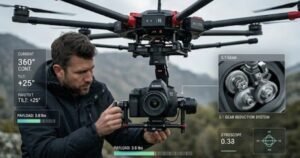
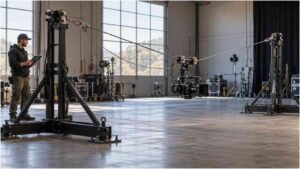
Tracking shots physically travel with the subject. A gimbal, dolly, Steadicam, vehicle-mounted rig, or controlled handheld setup can keep viewers connected to the action instead of leaving them to observe from a distance.
Tracking from behind creates a pursuer perspective and reveals obstacles rushing toward the character. Leading from the front places the camera ahead of the fleeing actor and moves backward, making it ideal for capturing fear, exhaustion, and facial reactions.
Profile tracking moves parallel to the action and often creates the strongest impression of raw speed.
How Does Side Tracking Use Parallax to Increase Speed?
Side tracking becomes especially effective when objects pass close to the camera. Trees, parked cars, walls, streetlights, fences, and other foreground elements sweep rapidly across the frame while distant backgrounds appear to move more slowly.
That difference creates parallax.
Parallax can make moderate movement appear dramatically faster without requiring the actor or vehicle to actually move at extreme speed. Wide-angle lenses can strengthen this effect by exaggerating depth and foreground movement.
When Should You Use Handheld Camera Movement?
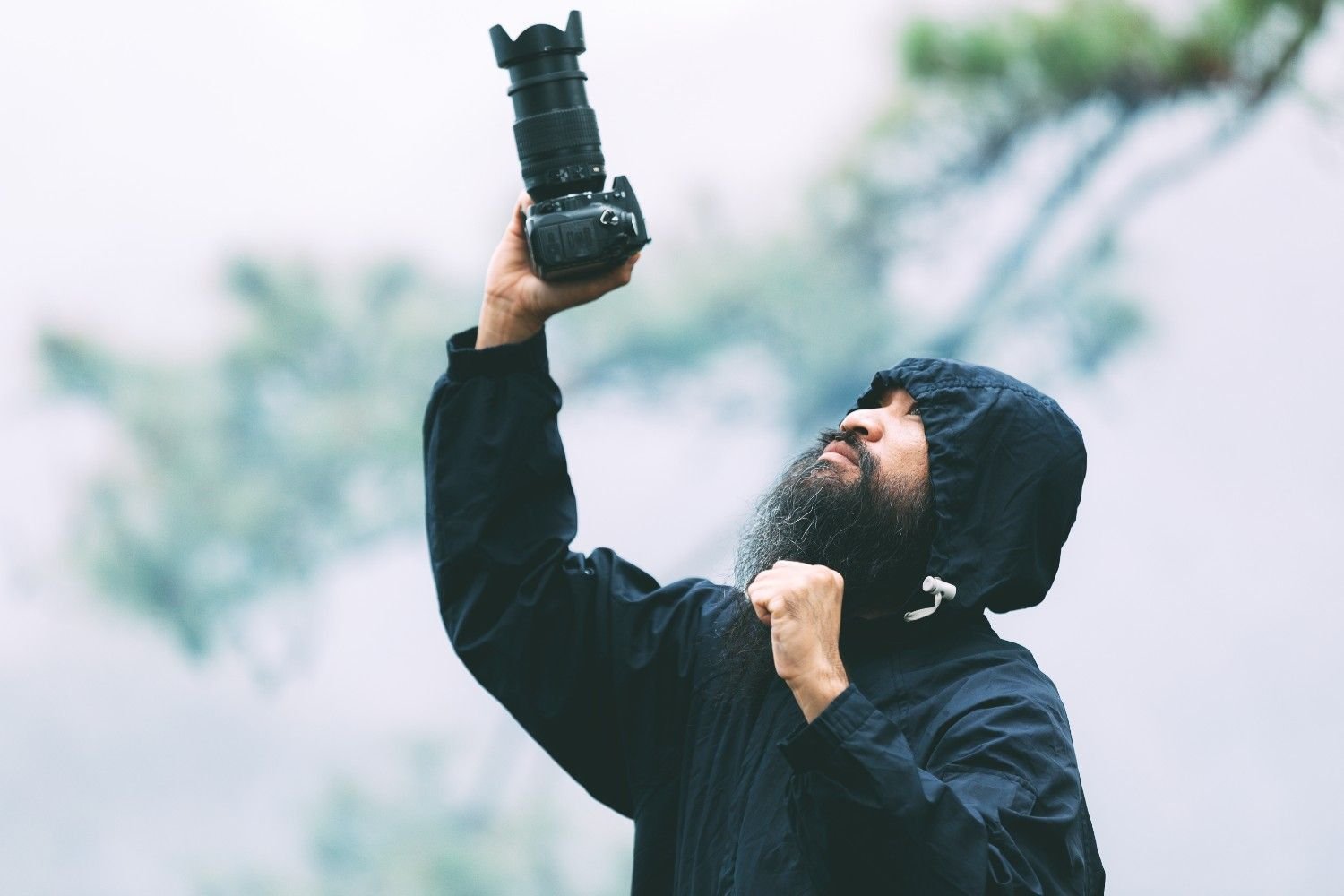
Handheld movement adds instability, urgency, and documentary-style realism. I find it particularly effective when a foot chase becomes unpredictable or the fleeing character starts losing control. Among the different types of camera movements in film, handheld work is especially useful when the goal is to make action feel immediate and physically intense.
However, handheld cinematography should not mean uncontrolled camera shaking.
The operator still needs to frame the actor and maintain screen direction. Controlled imperfections make viewers feel as though they are physically running beside the character. Random shaking simply makes important action harder to see.
A smooth gimbal tracking shot can establish the chase before handheld footage takes over as the tension rises.
How Can a Whip Pan Make a Chase More Intense?
A whip pan rapidly redirects the camera and creates strong motion blur. I use this camera movement when a character suddenly changes direction, another pursuer enters the scene, or viewers need to shift their attention immediately.
A useful variation is the re-whip.
Let the actor race past an almost-static camera, then aggressively whip the camera around and catch the character running away. That instant change from stillness to fast camera movement creates a powerful burst of kinetic energy.
Whip pans work best in moderation. If every shot uses one, the technique quickly loses its surprise.
Why Do Long-Lens Pans Create Compression and Desperation?
Not every chase needs the camera physically following the character.
A telephoto lens allows me to position the camera farther away, frame tightly, and pan horizontally as an actor runs through the scene. Long lenses compress visual space, making background elements appear much closer to the subject.
If the runner has a pursuing character, approaching vehicle, wall, or dead end behind them, lens compression can make that threat look alarmingly close.
The result creates an illusion of futility. The character may actually be gaining distance, yet visually it seems as though there is nowhere left to escape.
Long-lens panning can also be useful when physically tracking alongside fast action would be impractical or unsafe.
How Do POV and Hard-Mounted Shots Increase Velocity?
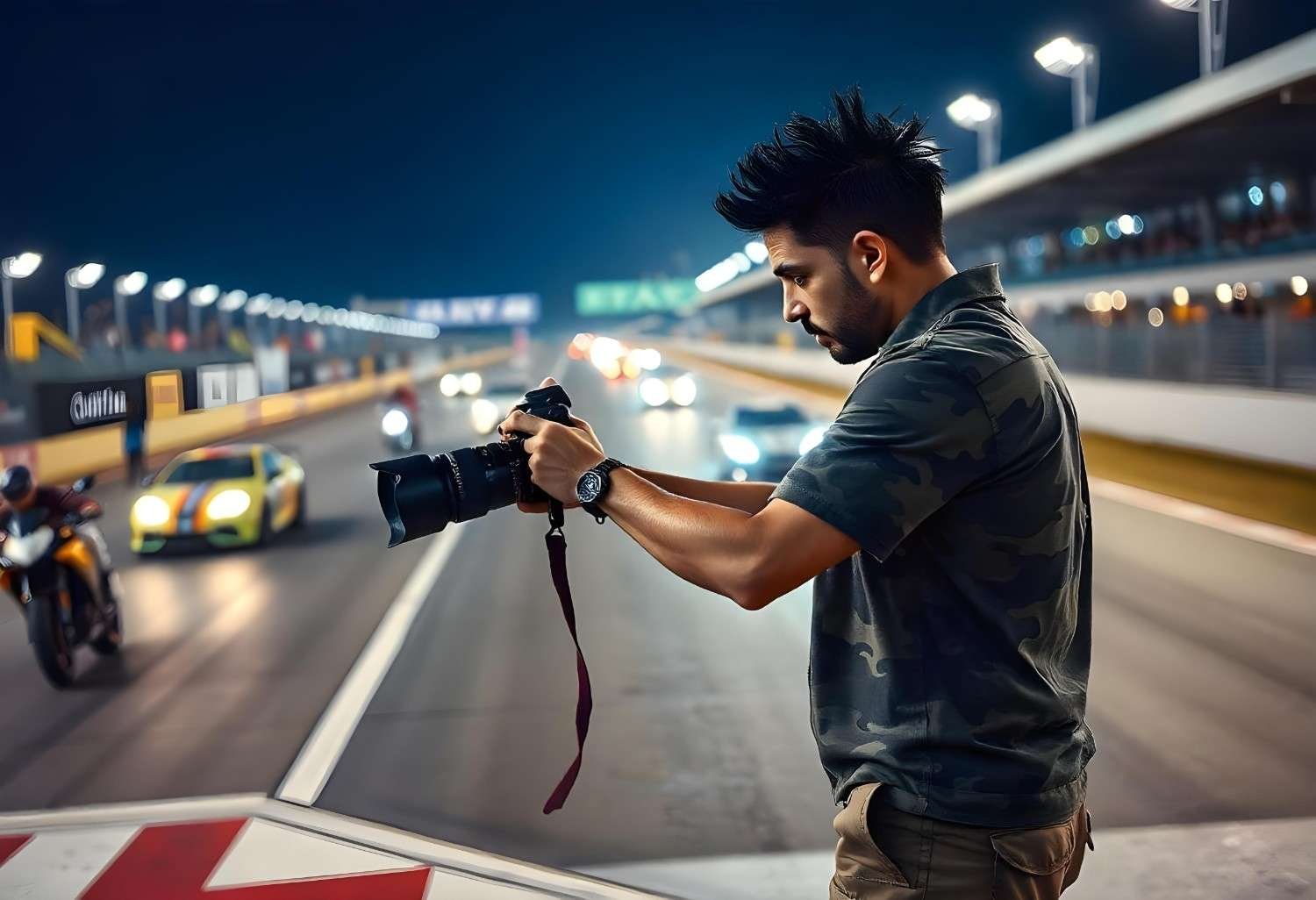
POV shots place viewers directly inside the pursuit.
A securely mounted chest or head camera can show sidewalks, corridors, obstacles, or streets rushing toward the character while quick backward looks reveal whoever is chasing them. This first-person perspective works especially well when survival instincts and split-second decisions drive the sequence.
For car chase cinematography, professional hood, bumper, wheel-adjacent, or other low-mounted camera rigs can create an even stronger sense of velocity.
Keeping the lens close to the pavement makes road markings and nearby foreground details rush through the frame, allowing moderate speeds to appear significantly faster on screen. Low camera angles can also make vehicles feel heavier and more aggressive.
For US productions, I would always prioritize professional rigging, qualified drivers, controlled roads, permits where required, insurance, and appropriate stunt-safety procedures. The goal is to create the illusion of danger rather than introduce unnecessary real-world risk.
Can a Static Camera Make a Chase Look Faster?
Yes, and this is one of my favorite ways to create contrast.
A runner or vehicle passing a locked-off camera can appear extremely fast because the subject suddenly enters and exits the frame. That gives viewers a fixed reference point against which they can judge speed.
I like mixing these static pass-by shots with tracking footage. The contrast creates rhythm and prevents the entire action sequence from feeling like one continuous camera move.
A static angle can also reveal an obstacle before the fleeing character reaches it, allowing viewers to anticipate the danger.
When Should You Use Drone or Aerial Tracking?
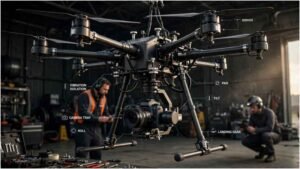
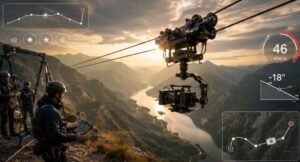
Drone and aerial tracking shots become useful when viewers need to understand the geography of a complicated pursuit.
A wider camera angle can reveal roads, intersections, alleys, escape routes, vehicles, or the distance between a pursuer and the target.
I generally use aerial coverage as a brief visual reset. After several tight tracking, handheld, or POV shots, a wide aerial view can quickly remind viewers where everyone is positioned.
How Do You Keep Fast Chase Cinematography Easy to Follow?
The best camera movement for chase scenes will not help if viewers lose track of what is happening. Learning how to shoot a tracking shot properly can make a major difference because consistent subject placement and screen direction help preserve clarity while the action speeds up.
I establish screen direction early and avoid crossing the action axis without a clear visual reason. The 180-degree rule, neutral shots, centered framing, establishing shots, and occasional wide angles help preserve spatial continuity even when the editing pace increases.
Centered framing becomes especially useful during very fast action because viewers have little time to search the image for important information.
I also make the cinematography escalate with the story. Smooth tracking can introduce the pursuit. Handheld movement can increase panic. A whip pan can reveal a new threat. A low vehicle hard mount can exaggerate speed. Telephoto compression can make escape feel impossible.
Camera movement should follow the emotional stakes rather than simply move for the sake of movement.
FAQs About Chase Scene Cinematography
1. What camera movement works best for a foot chase?
Tracking is usually the strongest starting point. The camera can follow the runner from behind, lead from the front, or move alongside the action. Controlled handheld movement can then add urgency as the chase becomes more chaotic.
2. How can I make a chase scene look faster?
Use foreground objects to create parallax, place the camera closer to the action, use low camera angles, let subjects pass a static camera, and alternate between tracking directions. Perceived speed often depends more on visual reference points than actual speed.
3. Is a gimbal or handheld camera better for a chase scene?
A gimbal creates smoother tracking and makes action easier to follow, while handheld cinematography creates instability and tension. I choose between them based on the emotional effect the scene needs.
4. What lens works best for chase cinematography?
Wide-angle lenses emphasize depth, foreground motion, and parallax. Telephoto lenses compress visual space and make pursuers, obstacles, or dead ends appear closer. Using both can create greater visual variety throughout an action sequence.
Which Camera Movement Should You Choose for a Chase?
If I could use only one technique, I would start with a tracking shot because it provides an excellent balance of immersion, speed, emotional connection, and visual clarity. The same principle applies when choosing the best camera movement for opening shots, where the goal is to establish energy, perspective, and audience attention from the very beginning.
But memorable chase sequences rarely depend on one movement from beginning to end.
The best camera movement for chase scenes is ultimately a combination of techniques chosen for specific moments. Tracking creates momentum, side-profile movement increases parallax, handheld cinematography adds panic, whip pans create sudden energy, telephoto pans compress danger, POV shots increase immersion, static pass-bys prove speed, and aerial shots restore geography.
When every camera move serves a purpose, the chase can feel fast, dangerous, and unpredictable without becoming confusing.