




A character can walk into a scene quietly and still take control of the entire screen. Sometimes it happens through a slow rise from their shoes to their eyes. Sometimes the camera glides backward as they confidently move through a crowded room. Other times, it simply waits, revealing them at exactly the right second.
When I choose the best camera movement for character introductions, I am not thinking about which shot looks the most impressive. I am deciding what the audience should feel before that character even says a word. Power, mystery, vulnerability, confidence, or chaos can all begin with the way the camera moves.
What Camera Movement Creates the Strongest Character Introduction?
A slow tilt-up is one of the most recognizable choices for a dramatic character reveal. However, I would never call it the universal winner.
A hero entering an arena, a detective moving through a crime scene, and a mysterious stranger sitting unnoticed in a restaurant should not necessarily receive the same cinematic entrance.
I first decide what I want viewers to feel. Then I choose the camera movement, shot composition, lens, movement speed, and character blocking that reinforce that emotion.
How Does a Tilt-Up Create a Powerful Hero Reveal?
A tilt-up works because it controls when the audience receives visual information.
I can begin on boots, hands, clothing, equipment, or another meaningful detail before gradually tilting the camera upward toward the character’s face. The audience studies those details while anticipation builds.
Combined with a low camera angle, the technique can make an action hero, athlete, authority figure, or villain appear imposing because viewers literally look upward at the subject.
It is important, however, to distinguish a tilt from a pedestal movement. During a tilt, the camera rotates vertically while remaining essentially in the same position. During a pedestal move, the entire camera physically rises or lowers.
Filmmakers can combine these ideas for a stylized hero reveal, but they are technically different cinematography techniques.
Why Does a Slow Push-In Make a Character Feel Important?
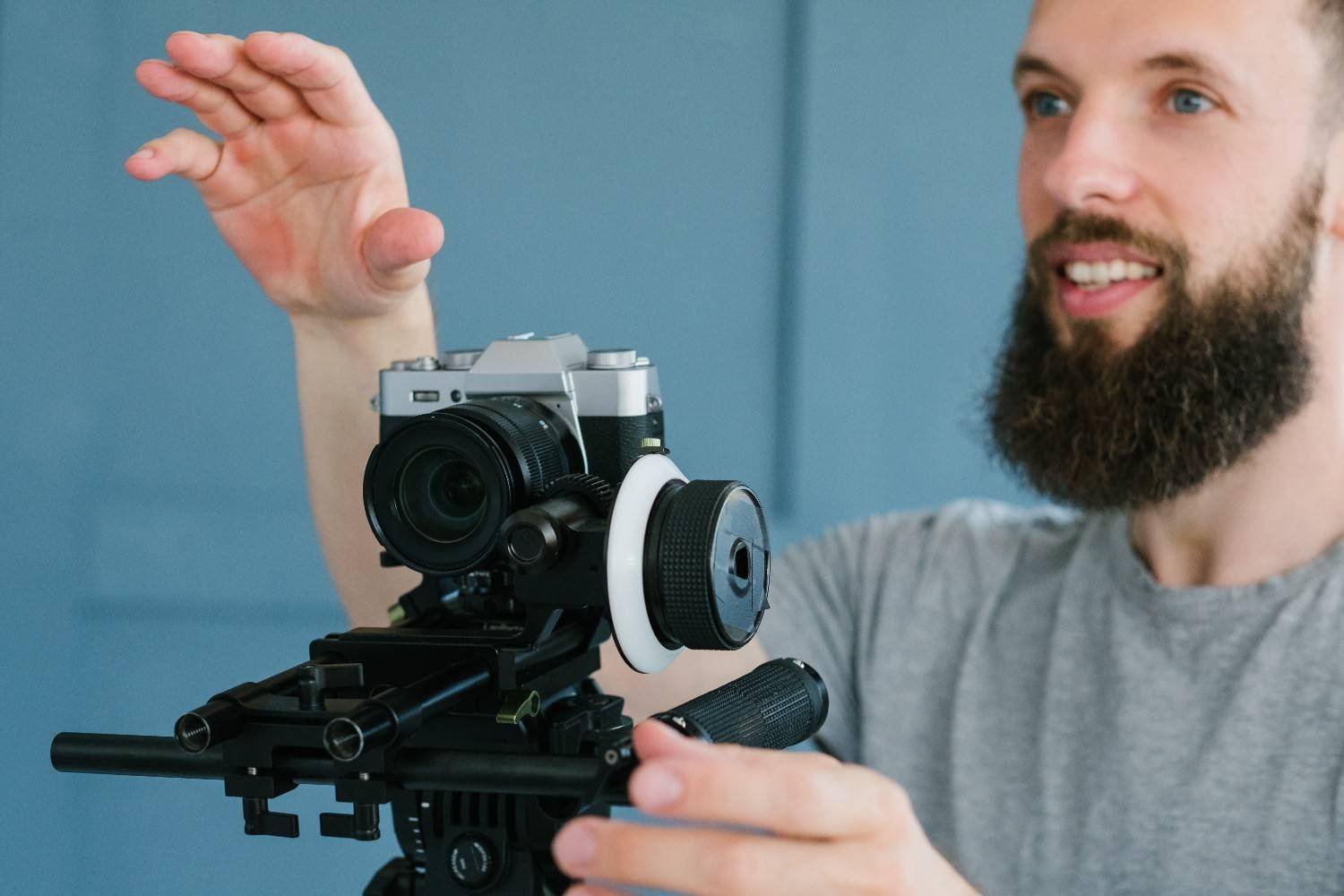
A slow push-in or dolly-in directs the audience’s attention toward a character without requiring an exaggerated entrance.
The camera physically approaches the subject, gradually changing a wide or medium composition into a tighter frame. I like this movement when introducing protagonists, mysterious figures, introspective characters, or people hiding information.
The emotional effect comes from decreasing the distance between the viewer and the character. As the frame tightens, their expression becomes increasingly important.
Lens choice changes the result as well. A wider lens combined with physical camera movement can exaggerate the changing relationship between the character and environment. A longer lens may produce a more compressed, intimate feeling.
For character introduction cinematography, this combination of lens choice and motivated camera movement can make a seemingly quiet entrance surprisingly powerful.
When Should You Use a Tracking or Leading Shot?
If a character is defined by action, I often prefer to introduce them while they are already moving.
A leading tracking shot can move backward in front of a character as they walk toward the camera. Matching their pace creates momentum while keeping their expression visible.
But tracking shots are not limited to this setup. The camera can follow from behind, move alongside the subject, lead from the front, or travel independently through the environment.
This makes tracking particularly effective for confident executives, detectives, athletes, performers, soldiers, fast-talking professionals, and other characters whose environment reveals something about their identity.
Following a doctor through a busy hospital corridor, for example, can reveal status, relationships, urgency, and personality before the character ever stops walking.
That is visual storytelling doing the work normally assigned to exposition.
How Can a Pan Reveal Make an Entrance More Mysterious?
A pan reveal works by withholding the character temporarily.
The camera may begin on another person, an important object, or an empty part of the environment before rotating horizontally and revealing the new character.
I find this especially effective when the audience should feel surprise, tension, curiosity, or uncertainty.
The movement might follow someone’s eyeline before revealing who they are watching. It might sweep across a room and stop on an unexpected rival. In a thriller, it could reveal that someone has been silently observing the conversation.
The important part is timing. The pan creates a visual question, and the character reveal provides the answer.
When Does a 360-Degree Orbit or Arc Shot Work Best?
An arc shot moves around the character while maintaining them as the primary point of attention. A full 360-degree orbit takes that concept further by completely circling the subject.
I use this kind of camera movement more carefully because it attracts attention to itself.
A partial arc can create confidence, romance, tension, realization, or importance. A complete orbit can make a character feel legendary, overwhelmed, trapped, or caught inside a transformative moment.
It works particularly well for larger-than-life sci-fi and fantasy characters, superheroes, dramatic transformations, and pivotal revelations.
The changing background creates movement and instability while the character remains visually dominant.
Can a Pull-Back Reveal Introduce a Character Through Surprise?
A pull-back reveal is especially useful when I want to change the audience’s first impression.
Imagine opening with a tight shot that makes someone appear intimidating or heroic. As the camera moves backward, the wider environment reveals something completely unexpected.
Suddenly, the intimidating person may look insignificant inside an enormous space, or the heroic pose may turn into a visual joke.
This technique works well for comedy, irony, unconventional protagonists, and introductions built around misdirection. Understanding pedestal camera movement explained can also help filmmakers distinguish vertical camera repositioning from a pull-back, where the camera physically moves away from the subject.
It demonstrates why framing matters as much as movement. Characters gain meaning from their relationship with the surrounding environment.
Is No Camera Movement Sometimes the Better Choice?
Yes. One of the easiest cinematography mistakes is assuming that important characters always require dramatic camera movement.
A static shot can communicate extraordinary confidence.
An intimidating character who remains perfectly still while everyone else moves around them may feel more powerful than someone introduced with an elaborate crane or dolly shot.
Static framing can also emphasize loneliness, vulnerability, restraint, or emotional distance.
Before moving the camera, I ask whether movement actually improves the story. If the answer is no, stillness may create the stronger character introduction shot.
How Does Camera Speed Change the Character’s Personality?
Movement speed changes how viewers interpret the same technique.
A slow push-in can create psychological tension. A measured tilt-up suggests importance. A fast tracking shot introduces energy and urgency. A sudden whip pan creates surprise.
Smooth movement often communicates confidence and control, while unstable handheld camera movement can create anxiety, realism, danger, or chaos.
That does not mean one style always produces one emotion. Context, performance, lighting, sound, lens choice, and editing all influence the final result.
The movement simply becomes another part of the cinematic language.
How Do I Match Camera Movement to Character Personality?
When choosing the best camera movement for character introductions, I start with personality rather than equipment. The same approach applies when deciding on the best camera movement for opening shots, because the first move should immediately establish tone, perspective, or character presence.
For a powerful character, I may choose a low-angle tilt-up or controlled dolly-in. For someone confident and active, I might use a leading tracking shot. For a mysterious stranger, a slow pan reveal can delay information. An epic character may justify an arc or orbit, while a comedic introduction can benefit from a pull-back that overturns the audience’s expectations.
The camera should reveal something meaningful instead of simply moving because the production has access to a gimbal, dolly, crane, or Steadicam.
That difference separates motivated camera movement from movement used purely for spectacle.
Frequently Asked Questions (FAQs)
1. What is the best camera movement for character introductions?
There is no single movement that fits every character. Tilt-ups work particularly well for powerful reveals, push-ins create psychological importance, tracking shots establish momentum, pan reveals create mystery, and arc shots can give characters heightened or epic status.
2. What camera angle makes a character look powerful?
A low-angle shot often makes a character appear dominant because the audience looks upward toward them. Combining that angle with a controlled tilt or push-in can strengthen the effect.
3. Should I use a dolly-in or zoom for a character reveal?
A dolly-in physically moves the camera toward the subject and changes spatial relationships within the frame. A zoom changes focal length while the camera remains stationary. Both can tighten attention, but they create noticeably different visual effects.
4. How do you introduce a mysterious character cinematographically?
I would consider withholding information. Partial framing, shadows, reaction shots, slow push-ins, pan reveals, and delayed facial reveals can encourage viewers to ask questions before receiving the full character introduction.
Final Take
Whenever I plan a cinematic character entrance, I focus on what viewers need to learn rather than which piece of camera gear looks most impressive. The same storytelling principle applies when choosing the best camera movement for chase scenes, where movement should reveal urgency, direction, and emotional stakes rather than simply add visual excitement.
Tilt-ups can establish authority. Push-ins create intimacy and importance. Tracking shots reveal personality through action. Pan reveals create anticipation, while orbit shots heighten a pivotal moment. Pull-backs can completely change context, and sometimes a static frame communicates more power than movement ever could.
The strongest introduction happens when camera movement, framing, lens choice, movement speed, performance, blocking, and environment communicate the same idea.
When those elements work together, audiences do more than notice a new character. They start forming an opinion about that character before a single line of dialogue explains who they are.