



A camera does not need a huge move to change a scene. Raising or lowering it a few feet can reveal a secret, preserve eye contact, or make a character feel more imposing. I wrote this guide for filmmakers and film students who want pedestal camera movement explained in practical terms without losing the mechanics that matter.
What Is a Pedestal Camera Movement?
A pedestal shot is a vertical camera movement in which the entire camera rises or lowers while staying level in a pure pedestal move. Among the types of camera movements in film, it differs from a tilt because the camera does not simply point up or down from a fixed position. Its physical height changes.
Moving upward is called pedestal up, ped up, or ped-up. Moving downward is pedestal down, ped down, or ped-down. Crews may also use “pedding” as shorthand.
Think of an elevator: the whole camera moves up or down while facing forward. That change in viewpoint can shift foreground and background relationships, creating subtle parallax. Tellers specifically notes that changing camera height alters the relationship between foreground and background even when the lens remains aimed in a similar direction.
Pedestal vs Tilt: What Is the Difference?
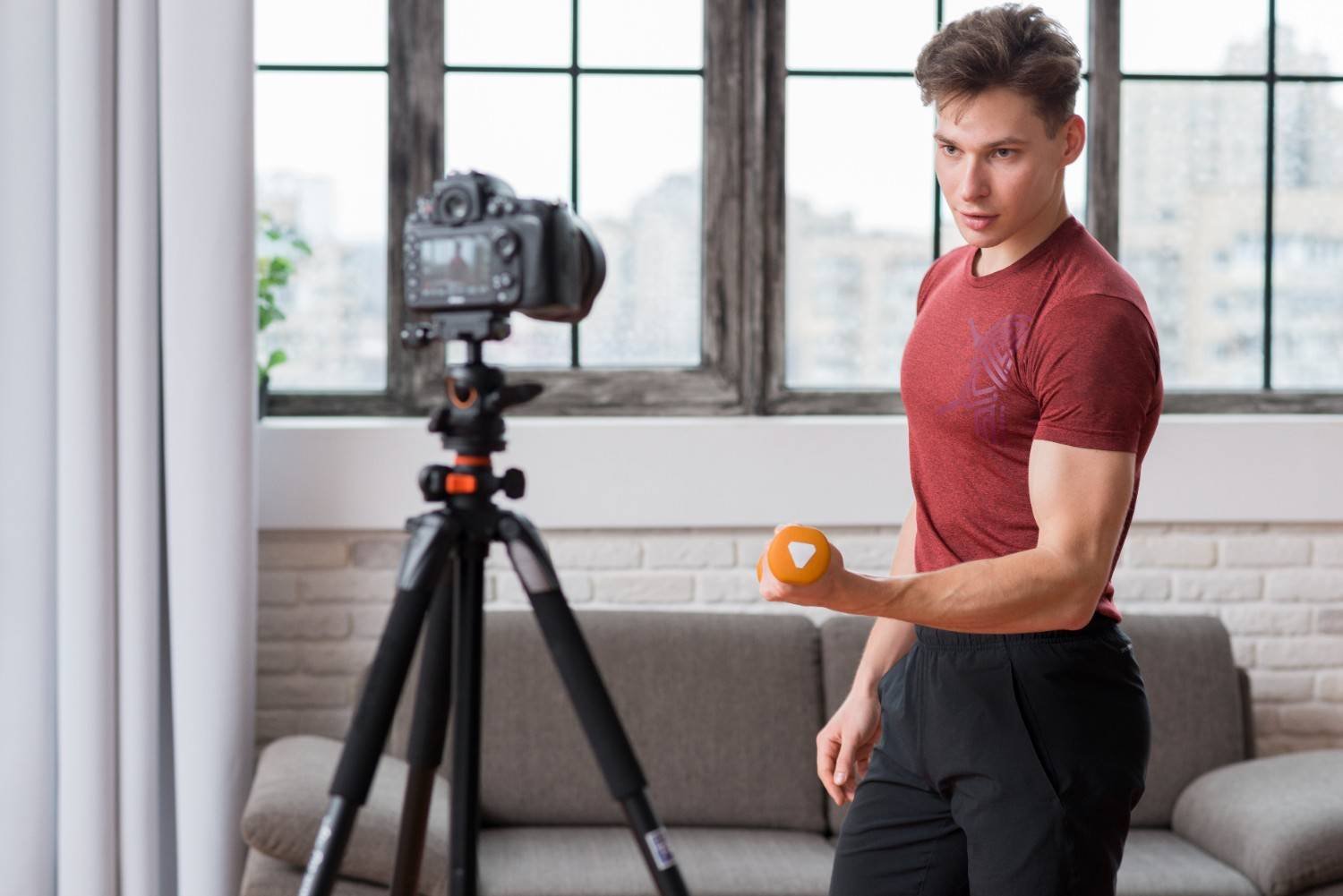
In a pedestal move, the camera body changes height. In a tilt shot, the camera stays at a fixed height while the lens pivots vertically, like nodding your head.
That difference changes perspective. A tilt changes the viewing angle and moves the horizon or other visual lines through the frame. A pedestal changes the camera’s position in space while keeping the lens level during the basic move.
If an actor stands from a chair and I want to preserve eye-level framing, I can ped up with the performer. If I stay fixed and tilt upward, the shot becomes progressively lower-angle.
Pedestal vs Crane or Boom Shot: Which Should You Use?
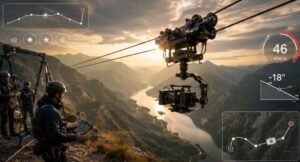
A crane or boom can also travel vertically, but it usually covers a larger range and can sweep through an arc or across several axes. I would use a crane or jib for a dramatic location reveal, a rise over a crowd, or a large transition between levels. A pedestal is more directly about changing camera height.
That distinction matters because similar-looking shots may come from different equipment. A true studio pedestal primarily lets the operator reposition the camera smoothly, including vertically, while jib and crane systems offer a larger and often more complex path through space.
What Equipment Can Create a Pedestal Shot?
A traditional studio camera pedestal is the classic tool, especially in television studios and multicamera broadcast production. Camera pedestals are designed to support substantial camera systems while allowing controlled movement around a studio floor and adjustment in height.
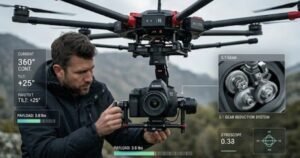
For those learning camera movement techniques for beginners, smaller productions can use a tripod center column, vertical slider, crane or jib, or a carefully operated gimbal. Some professional dollies also include lift or boom mechanisms for smooth height changes.
Tellers specifically identifies tripod columns and dolly lifts as alternatives, while modern stabilization systems give independent filmmakers additional ways to create controlled movement.
Whatever the rig, the move should feel stable, controlled, and motivated.
Why Do Filmmakers Use Pedestal Up and Pedestal Down?
A major use is revealing hidden information. A slow pedestal down can expose something beneath or behind the original composition without cutting.
A frequently cited teaching example appears in Quentin Tarantino’s Inglourious Basterds. During the farmhouse sequence, the camera descends to reveal the Jewish family hiding beneath the floorboards while the interrogation continues above. The move changes what the audience knows without interrupting the tension with a conventional cut.
Pedestal movement also helps maintain framing. If a subject stands, sits, kneels, or changes posture, I can move vertically with the performer and keep the face near the intended eye line.
This is especially useful in dialogue scenes, interviews, studio television, commercials, and narrative filmmaking where maintaining consistent camera framing matters.
A pedestal up can emphasize scale by rising beside a tall character, structure, or set element. A pedestal down can redirect attention toward a lower environment or reveal an object hidden by foreground scenery.
How Can Pedestal Movement Create a Diorama Effect?
Precise vertical movement can make a set feel like a cross-section or miniature world.
Wes Anderson is known for controlled camera movement and compositions that resemble dioramas. His films frequently use carefully arranged, relatively flat visual spaces in which camera movement reveals different parts of the environment with unusual precision. Film analysis of Anderson’s style has specifically described his lateral and vertical camera movement as helping create a flattened, diorama-like effect.
The Royal Tenenbaums also provides examples of mobile, carefully organized camera work that reveals new perspectives within a single shot. Anderson and cinematographer Robert Yeoman are particularly associated with deliberate widescreen staging and compositions that place people and environmental details carefully throughout the frame.
That effect works because the camera reveals space layer by layer rather than creating the loose, unstable feeling of handheld movement.
How Do You Film a Smooth Pedestal Camera Movement?
I set the opening and ending frames, check the horizon and headroom, and rehearse the full travel.
Start gently, keep a consistent speed, and ease into the final position. Mark the beginning and ending heights when possible so you can repeat the move across takes.
One common mistake is accidentally tilting. In a basic pedestal shot, keep the camera orientation controlled while the entire unit changes height.
You can intentionally combine a pedestal with a pan or tilt, but that should be a creative choice rather than an operating error. Combining movements can work especially well when a performer is simultaneously walking, standing, or turning through a scene.
When Should You Use a Pedestal Instead of Another Camera Movement?
Use a pedestal when changing camera height improves composition, follows vertical action, reveals information, or changes the audience’s relationship with the subject without a cut.
Use a tilt when the camera should stay in place and simply look higher or lower. Choose a dolly movement when you need to change distance from the subject, and use a crane or jib for a larger multi-axis sweep.
If I had to reduce pedestal camera movement explained to one principle, it would be this: move vertically because the story needs a new viewpoint, not simply because the equipment allows it.
Good cinematography depends on motivated camera movement. The viewer should pay attention to the character, reveal, environment, or emotion rather than suddenly wondering why the camera is moving.
Frequently Asked Questions About Pedestal Shots
1. What does ped up mean in filmmaking?
Ped up means raising the entire camera during a shot. It is production shorthand for pedestal up.
2. What does ped down mean in cinematography?
Ped down means lowering the camera’s physical position while recording. It is the opposite of pedestal up.
3. Is a pedestal shot the same as a tilt?
No. A pedestal changes camera height. A tilt leaves the camera in place and pivots its viewing direction vertically.
4. Can you combine a pedestal movement with a pan or tilt?
Yes. A pure pedestal keeps the camera level while moving vertically, but filmmakers can combine it with a pan, tilt, dolly, or another camera movement to create a more complex shot.
Final Takeaway
Once I have pedestal camera movement explained clearly, I stop thinking of it as simply moving the camera up and down. It becomes a visual storytelling tool for controlling eye level, revealing hidden information, maintaining framing, emphasizing scale, and guiding attention through a set.
The same principle applies when learning how to shoot a tracking shot: the movement should be motivated by the story rather than added only for visual effect.
Whether you use a studio pedestal, slider, jib, gimbal, tripod center column, or lift-equipped dolly, the strongest move is the one that serves the scene.