



I noticed the difference a good tripod makes the first time I compared two otherwise similar shots. One had a tiny wobble whenever the camera moved, while the other had a controlled pan that started gently and stopped without a visible jolt. The cameras and lenses were capable of producing good footage in both cases, but the support system changed how that footage actually looked.
I also found that choosing a tripod for filmmaking is less about finding the biggest or most expensive model and more about matching the support system to the camera rig. A cinema camera with a long lens, matte box, monitor, follow focus, and large battery can behave very differently from a lightweight mirrorless setup. That is where a professional camera tripod for filmmaking starts to make a real difference.
A Professional Tripod Is More Than Three Sturdy Legs
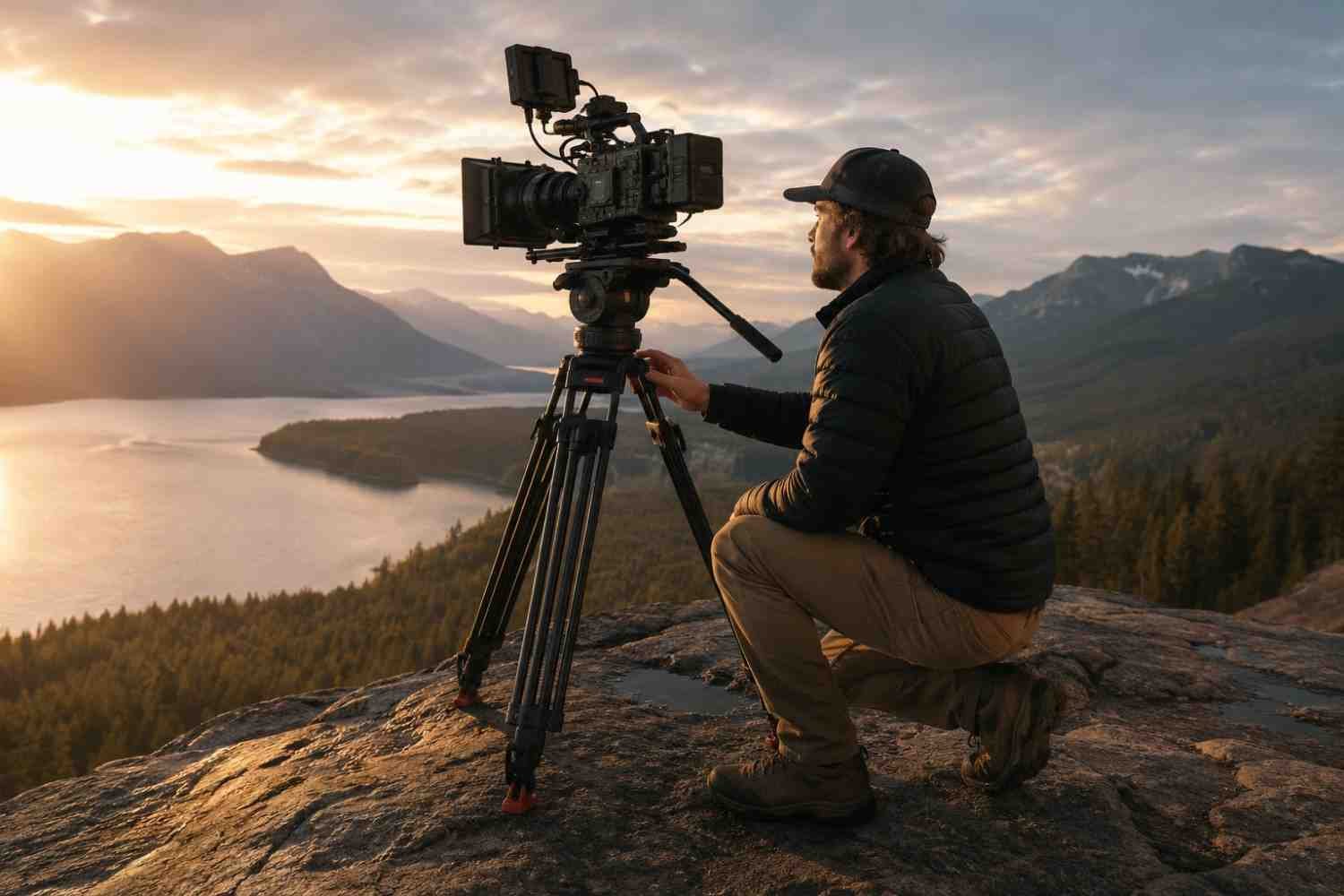
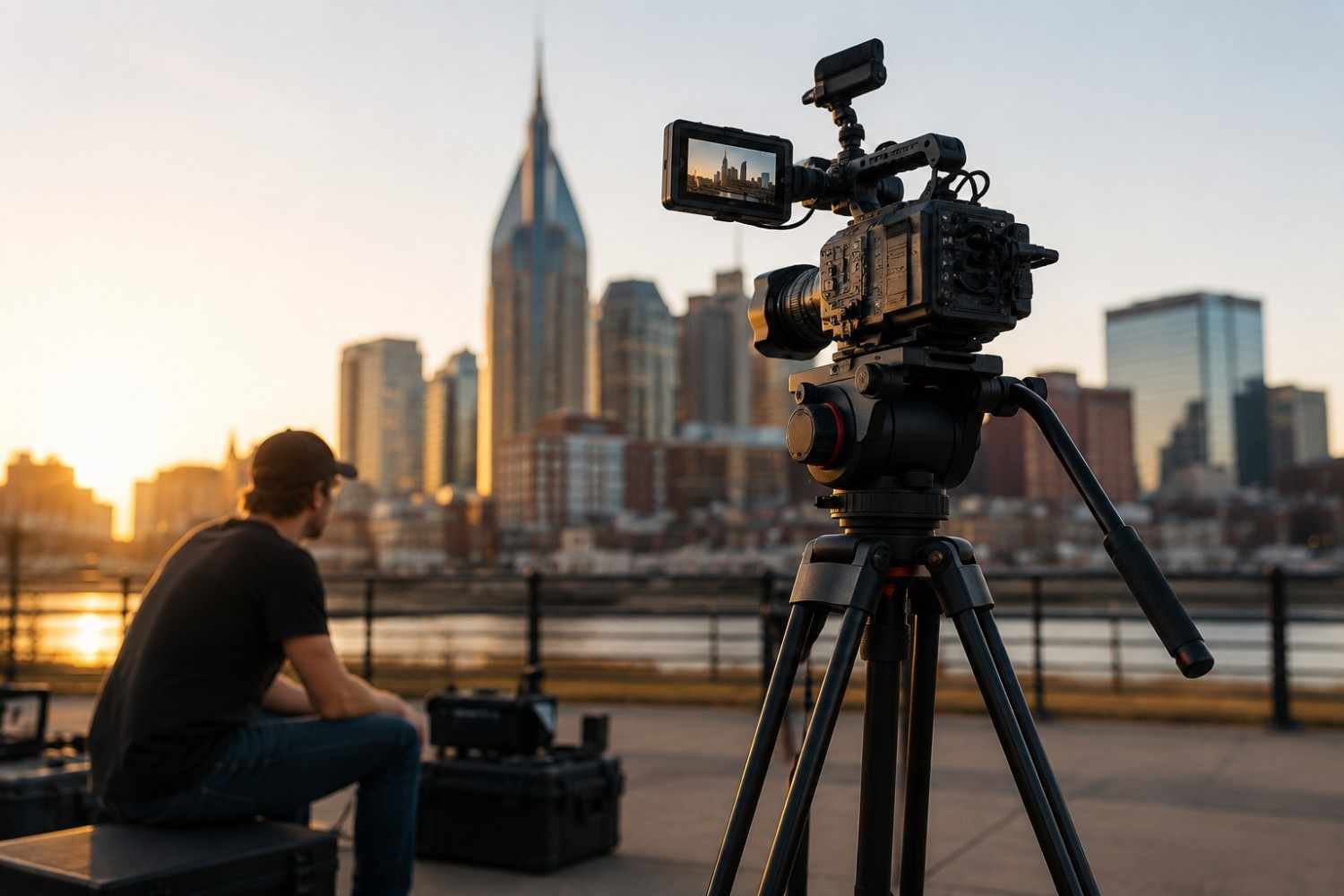
A filmmaking tripod is really a complete camera support system. The legs provide rigidity and height, but the fluid head controls how the camera moves. The connection between those components determines how confidently you can frame a shot, make a controlled pan, or hold a heavy rig without unwanted vibration.
Payload capacity is one of the first specifications to check, but it should not be treated as a simple maximum-weight number. Your working payload includes the camera body, lens, matte box, follow-focus motor, monitor, wireless transmitter, battery, rails, and anything else attached to the camera.
Center of gravity matters too. A long cinema lens can place more leverage on the head even when the total rig weight seems reasonable. Professional heads therefore specify counterbalance performance around particular center-of-gravity positions. Manfrotto, for example, publishes counterbalance ranges alongside payload specifications on its professional fluid heads. Sachtler does the same across its cinema and broadcast support systems.
Match the Tripod to Your Full Camera Rig
A common mistake is choosing a tripod based on the camera body’s weight alone. A production setup rarely stays that simple.
A camera package might include a cinema zoom, wireless follow focus, external monitor, top handle, rods, matte box, V-mount battery, and wireless video transmitter. Add those components together before choosing a head.
The tripod should also provide enough safety margin above the actual operating weight. Running a support system close to its maximum capacity can leave less room for proper balance and future accessories.
This is also where a broader understanding of camera support becomes useful. A tripod may be ideal for a locked-off interview but less practical when the same camera needs to move between handheld, gimbal, and tripod configurations. Understanding a gimbal payload guide for filmmakers can help when planning a production package that needs to transition between different support systems.
Carbon Fiber or Aluminum?
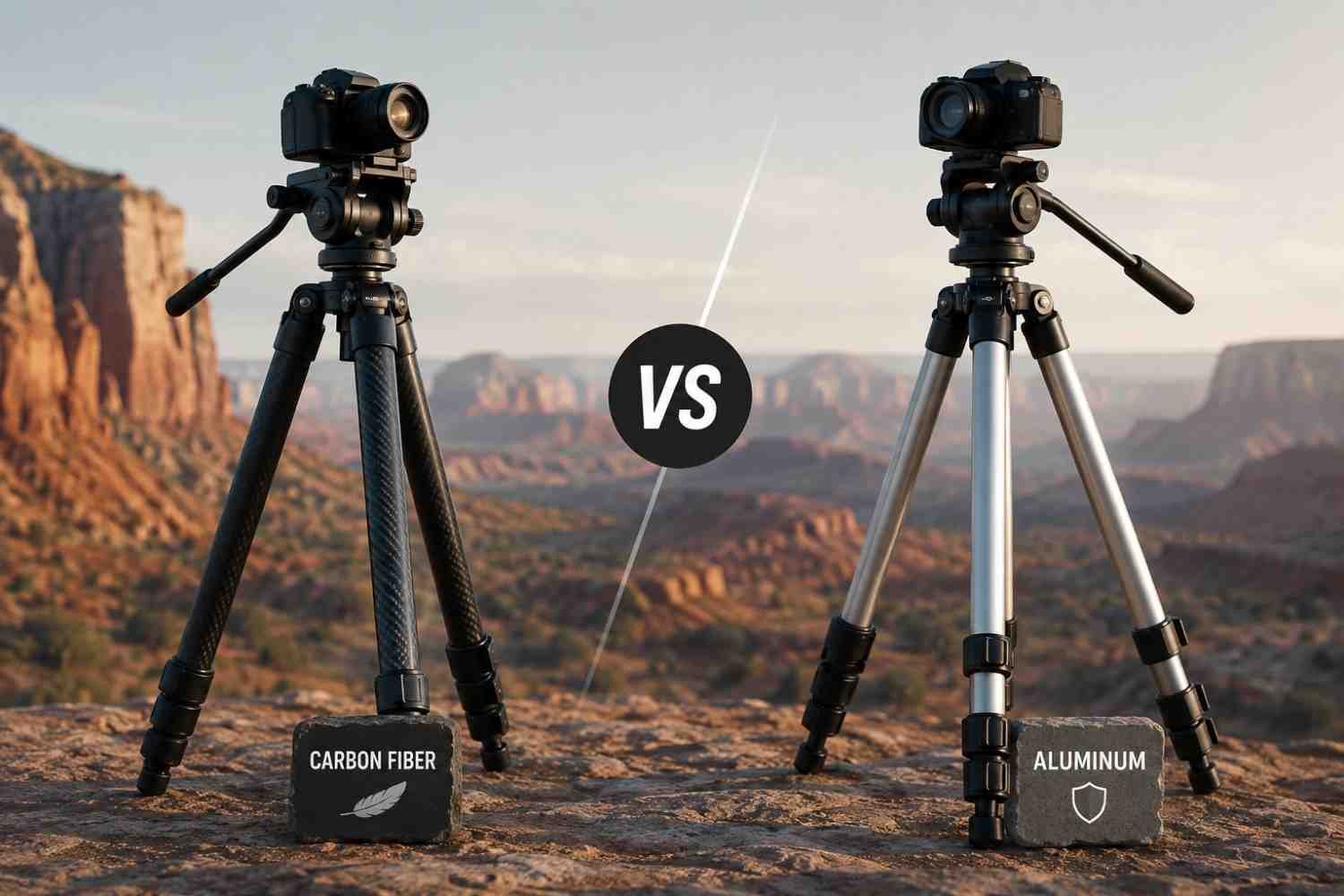
Material choice usually comes down to the balance between weight, rigidity, durability, and transport requirements.
Carbon fiber is popular with location filmmakers because it can reduce the weight of the support system while maintaining good rigidity. That can matter when the crew is moving equipment between locations, climbing stairs, or carrying a complete camera package for extended periods.
Aluminum remains a strong choice for studio work, controlled production environments, and situations where maximum durability and cost efficiency matter more than carrying weight.
Neither material automatically makes a tripod professional. The leg construction, locking mechanism, spreader design, bowl interface, and overall engineering matter just as much.
For outdoor work, foot design deserves attention too. Rubber feet provide useful grip on hard surfaces, while spiked feet can bite into soil, grass, or other soft terrain. Some systems combine spikes with rubber overshoes, giving the operator more flexibility when moving between surfaces.
Think About the Lens and Camera Movement
Lens selection changes the demands placed on a tripod.
A wide-angle lens can make small camera movements less obvious, while a long focal length can magnify every vibration and imperfect pan. If you’re shooting with a long telephoto or cinema zoom, a rigid support system becomes much more valuable.
The lens also affects how you plan camera movement. A controlled push, lateral pan, or slow tilt can reveal flaws in a support system that may never appear in a static shot. This is one reason professional fluid heads offer adjustable drag instead of relying on simple friction.
A production that regularly switches between focal lengths also benefits from a support system that can accommodate changing camera configurations. When planning lens-heavy productions, understanding your zoom cine lens options can help determine how much payload, balance adjustment, and support rigidity the tripod needs.
Quick Setup Matters on a Real Set
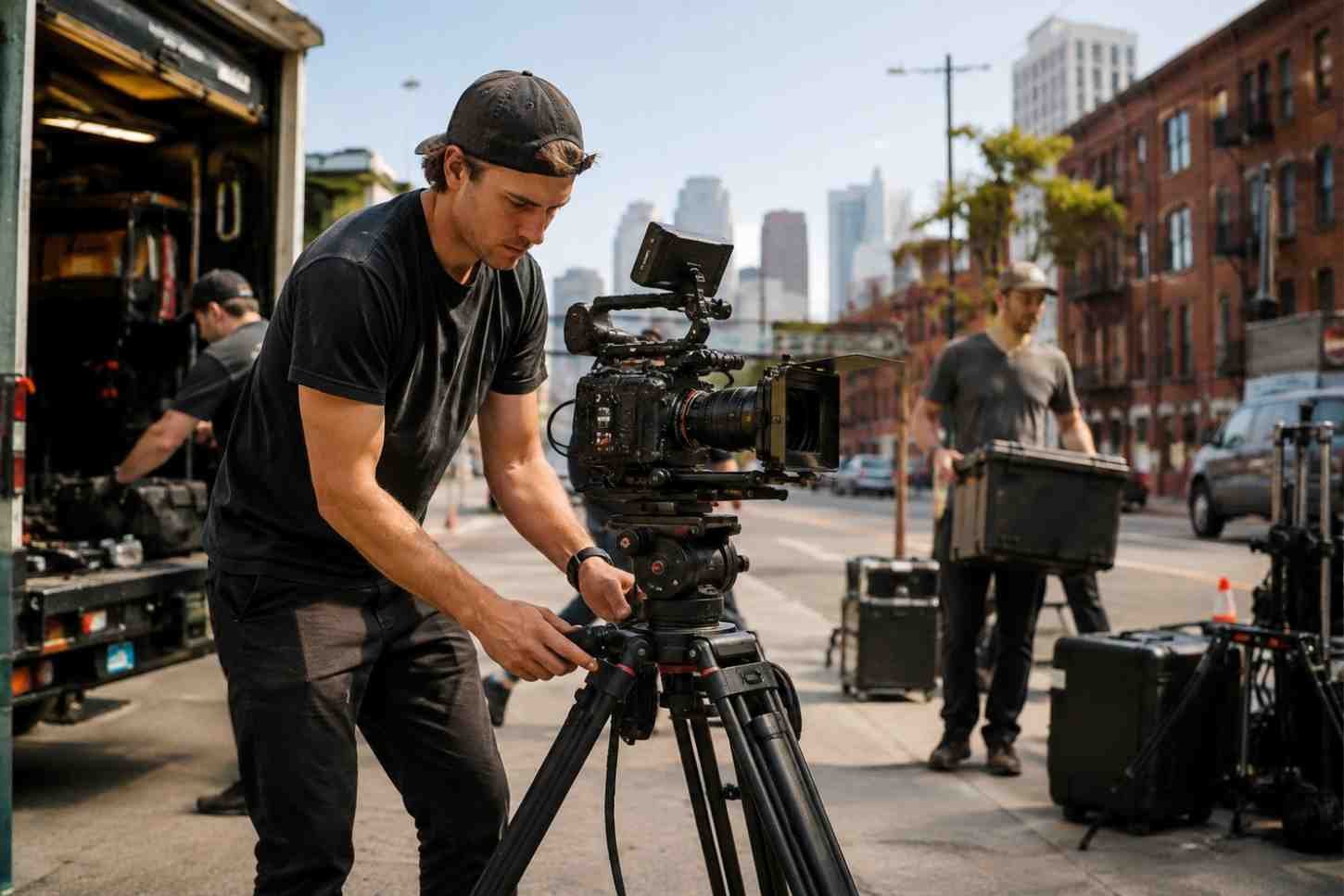
Professional camera support isn’t only about stability. Speed matters when you’re working against a shooting schedule.
A quick-release or sliding camera plate allows the operator to mount and remove the camera without rebuilding the entire setup. A leveling bowl can also make it easier to level the head without adjusting every tripod leg independently.
That becomes especially useful when moving between locations. A camera department may need to establish a shot, adjust framing, move several feet, and rebuild the composition repeatedly. Small setup delays become significant across a full production day.
A good system should make these adjustments predictable. Leveling indicators, secure leg locks, repeatable height markings, and accessible adjustment controls all contribute to a more efficient workflow.
Stability Matters Even More With Cinematic Accessories
Accessories can change a camera’s balance faster than many filmmakers expect. A matte box extends forward, a monitor can move the center of gravity upward, and a large battery can add weight toward the rear. Long lenses can also create additional leverage.
This becomes especially important with specialty lenses. An anamorphic lens may require additional accessories, support hardware, or a different balance position depending on the production setup. Before adding one to a rig, a filmmaker should understand how the complete anamorphic lens setup will affect weight distribution and camera support.
The goal isn’t simply to find a tripod that can physically hold the package. The head should be able to balance it, the legs should remain rigid, and the system should allow smooth movement without excessive vibration.
What Makes a Tripod Worth the Investment?
A professional tripod earns its place on a production when it removes problems instead of creating them. It should hold the complete rig securely, provide predictable pan and tilt control, adjust quickly, and remain stable across the surfaces where you actually shoot.
Look beyond the maximum payload number. Check the counterbalance range, center-of-gravity specification, drag controls, bowl size, working height, leg construction, spreader type, plate system, and transport weight. These specifications tell you much more about how the tripod will perform on a real set.
The right choice also leaves some room for growth. If your current setup weighs 10 pounds but you expect to add a heavier cinema lens and accessories later, buying a support system with no additional capacity may create another equipment purchase sooner than expected.
FAQs: Why a Professional Camera Tripod for Filmmaking Makes a Difference
1. Do I need a fluid head for filmmaking?
For most professional video work, yes. A fluid head provides controlled pan and tilt resistance, making camera movements smoother and easier to repeat.
2. How much tripod payload do I need?
Calculate the complete operating weight of the camera, lens, battery, monitor, matte box, focus system, and other accessories. Then choose a head with suitable payload and counterbalance capacity rather than matching the camera body’s weight alone.
3. Is carbon fiber better than aluminum?
Not automatically. Carbon fiber offers a strong combination of low weight and rigidity, making it useful for location work. Aluminum can provide excellent durability and value, especially for studio or frequent production use.
4. Why does center of gravity matter?
Center of gravity affects how the camera behaves when tilted. A long lens or front-heavy rig can require more counterbalance control even when the total package remains within the head’s stated payload.
Why Better Support Becomes Part of Better Filmmaking
A camera tripod rarely gets the same attention as a camera body or cinema lens, but its influence shows up throughout the finished footage. Stable framing, controlled pans, accurate leveling, and repeatable camera positions give the cinematographer more control over composition and movement. The support system becomes especially valuable when a production involves heavier rigs, long lenses, specialty optics, or demanding location work.
The best tripod is not necessarily the heaviest one on the market. It is the one that matches the camera, balances the full rig, moves the way you need, and stays dependable when the shooting day gets complicated.