






A healthcare patient story video case study can do far more than promote a hospital, physician, or treatment. When created responsibly, it can teach clinical empathy, identify patient-safety risks, demonstrate treatment outcomes, explain new care models, and help prospective patients understand what receiving care may feel like.
I see the strongest patient videos as evidence-based stories. They preserve the patient’s voice while giving clinicians, educators, administrators, quality teams, and healthcare marketers useful insights.
For US healthcare organizations, this broader purpose matters because every video must balance authentic storytelling with patient privacy, medical accuracy, accessibility, and ethical communication.
What Is a Patient Story Video Case Study?
A standard patient testimonial usually focuses on satisfaction with a doctor or healthcare facility. A case study follows a more complete journey. It introduces the patient’s life before treatment, explains the medical or operational challenge, documents important care decisions, and shows the eventual outcome.
The format changes according to its purpose. A hospital marketing video may help prospective patients build trust. A medical education video may examine communication during an ethical dilemma. A quality-improvement case may reconstruct a near miss so clinical teams can identify the system failures behind it.
In every format, the patient should remain a person rather than becoming a diagnosis, marketing claim, or collection of clinical data.
How Do Patient Story Videos Teach Clinical Ethics and Communication?
Clinical ethics videos help medical and nursing students understand situations that written definitions cannot fully capture. A case might show family members disagreeing about end-of-life treatment for an unconscious patient. Another might examine whether an aggressive intervention reflects the patient’s values or only the family’s fear of stopping treatment.
These videos encourage clinicians to consider informed consent, medical uncertainty, cultural values, shared decision-making, and the emotional consequences of care.
Narrative medicine case studies offer another important benefit. Listening to patients describe illness, uncertainty, and recovery can help clinicians process difficult experiences and develop stronger professional empathy. These discussions may also help teams recognize emotional strain before it contributes to burnout or poor communication.
Patient-provider communication videos can break down the effect of body language, interruptions, facial expressions, and word choice. AHRQ highlights the value of allowing patients to tell their diagnostic stories and recommends deeper, more reflective listening as one way to improve diagnostic safety.
How Can Video Case Studies Improve Patient Safety?
Patient-safety videos reconstruct the events surrounding an error, near miss, or harmful outcome. They are especially useful when several minor failures combine into one major event.
Diagnostic Blind Spots
A diagnostic safety case can show how cognitive bias, incomplete medical histories, missed test results, electronic health record alerts, or fragmented follow-up contributed to a delayed diagnosis.
Video allows viewers to see the sequence from multiple perspectives. The physician may believe that another department will contact the patient, while the patient assumes that silence means the test was normal. Reconstructing that gap helps clinical teams understand how communication and workflow problems affect diagnostic accuracy.
Root Cause Analysis
Root cause analysis examines the system conditions that made an error more likely instead of focusing only on individual blame.
A video might track a medication order as it moves through a physician, pharmacy, nursing unit, and bedside. It could reveal how confusing instructions, incomplete handoffs, workload pressure, or weak verification procedures compounded into a serious patient-safety event.
Infection Control
Patient stories can also strengthen infection prevention training. A realistic scenario can demonstrate how missed hand hygiene, incorrect personal protective equipment use, inadequate room cleaning, or poor isolation procedures allow healthcare-associated infections to spread.
CDC (Centers for Disease Control and Prevention) training resources emphasize both the technical and foundational practices needed to prevent infections in US healthcare environments.
How Do Patient Videos Explain Specialized Therapies and Digital Health?

Emerging technology often becomes easier to understand when viewers see its effect on a real patient.
A telehealth case study may follow a primary care practice as it adapts to virtual appointments. The story can explore broadband access, digital literacy, privacy, caregiver involvement, and the clinical value of audio-only visits. These challenges remain especially relevant in rural and lower-income American communities where reliable internet service may be limited.
Advanced medical device videos can document how minimally invasive equipment, endoscopic tools, robotic systems, or remote monitoring changed a patient’s treatment plan. The video should explain the potential benefits and limitations without suggesting that every patient will experience the same result.
Behavioral health, rehabilitation, and speech therapy case studies often work best when they show functional progress. A patient may return to work, participate in conversations, complete daily activities, or reconnect with family. These human outcomes can communicate improvement more clearly than clinical scores alone.
How Do Patient Journey Videos Show Continuity of Care?
Continuity-of-care videos document the patient’s complete timeline from initial symptoms through diagnosis, treatment, recovery, and long-term management.
A multidisciplinary oncology case may show how surgeons, medical oncologists, radiation specialists, nurses, social workers, behavioral health professionals, and nutrition teams coordinate care. This gives viewers a clearer understanding of the support available beyond a single procedure.
For chronic conditions such as diabetes or heart failure, a video can demonstrate how medication management, remote monitoring, follow-up visits, caregiver support, lifestyle changes, and patient education work together. It also shows that successful chronic disease management depends on sustained collaboration rather than one appointment.
How Should US Healthcare Organizations Produce Patient Story Videos?
I recommend defining the video’s purpose before selecting a patient or planning an interview. The organization should decide whether the case will support clinical training, patient safety, public education, service marketing, or treatment documentation.
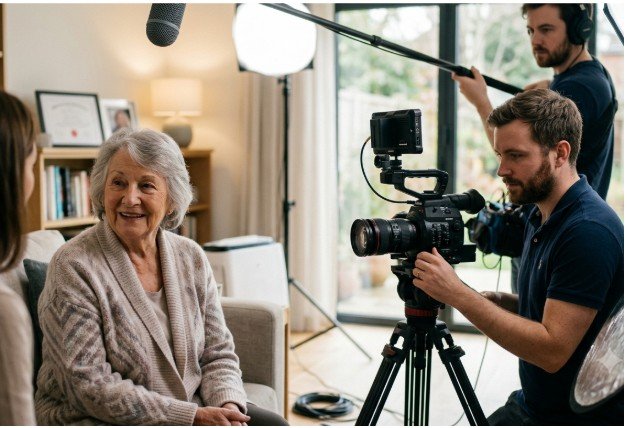
Interviewers should use open-ended questions and allow patients to answer naturally. Heavily scripted responses often sound promotional and may reduce credibility. Medical information should be reviewed by qualified professionals, while captions, transcripts, clear audio, and plain-language explanations should make the content accessible.
Privacy must remain central throughout production. The HIPAA Privacy Rule generally requires covered entities to obtain written authorization before using or disclosing protected health information for marketing, subject to limited exceptions.
The authorization and final footage should receive review from legal, compliance, privacy, and clinical teams. Producers must also check for visible medical records, prescription labels, patient wristbands, computer screens, names, and other identifying information.
A patient should understand where the recording will appear, what information it contains, and how widely it may be distributed. Participation should remain voluntary and should never affect access to care.
How Can Patient Story Videos Support SEO and Engagement?
A dedicated video page should include a descriptive title, a strong introduction, captions, a complete transcript, related service information, internal links, and an appropriate next step.
Healthcare organizations can also use video schema, descriptive file names, optimized thumbnails, accessible controls, and mobile-friendly video players. These elements help search engines understand the content while improving the viewing experience.
One interview can become shorter social videos, a written patient success story, an educational article, clinician training material, email content, and quote-based graphics.
Performance should match the original objective. Marketing teams may measure watch time, service-page engagement, appointment requests, phone calls, and assisted conversions. Clinical teams may evaluate knowledge retention, communication quality, protocol adherence, or whether a previously identified safety failure occurs again.
Frequently Asked Questions (FAQs)
1. What are the four main types of patient story video case studies?
The four broad categories are clinical ethics and communication, patient safety and system quality, specialized therapies and digital health, and continuity-of-care journeys.
2. How long should a healthcare patient video be?
Public-facing stories often work well between two and five minutes, while clinical training or root cause analysis videos may require additional time.
3. Can a hospital publish a patient story under HIPAA?
A hospital may publish a story with appropriate authorization and compliance review, although the organization should obtain legal advice for its specific situation.
4. What makes a healthcare patient story video case study credible?
Credibility comes from voluntary consent, natural interviews, medical review, specific details, balanced outcomes, accessible production, and a clearly defined clinical or educational purpose.
A More Human Way to Improve Healthcare
I believe patient stories create the most value when healthcare organizations treat them as tools for learning rather than polished advertisements. A responsible video can help a clinician listen more carefully, reveal a broken workflow, explain a new therapy, improve continuity of care, and reassure someone who is considering treatment.
By combining ethical storytelling with clinical accuracy, privacy safeguards, accessibility, and measurable goals, US healthcare organizations can produce videos that improve understanding, safety, trust, and patient engagement.