





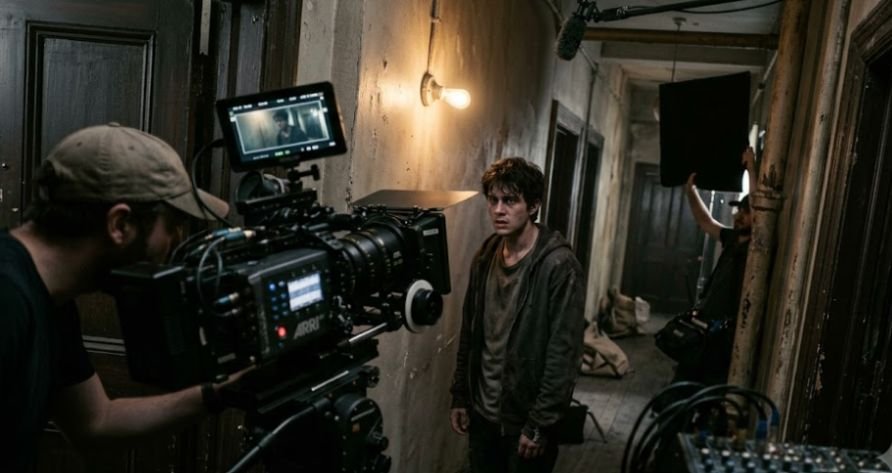
A tilted frame once turned a corridor into the most unsettling shot in a short film I helped plan. That experience taught me when to use dutch angle shots with purpose, rather than simply because they look dramatic.
A Dutch angle, also called a Dutch tilt or canted angle, rolls the camera sideways until the horizon becomes diagonal. It can suggest danger, confusion, tension, chaos, or psychological imbalance.
Key Takeaways
- Dutch angles create visual imbalance.
- Small tilts feel subtle, while steep tilts feel intense.
- Use them for story changes, not decoration.
- Match the angle with camera movement.
- Avoid repeating the effect until it loses meaning.
Why Is This Camera Movement So Cool?
Understanding when to use dutch angle shots stops scenes from looking accidentally crooked. Think of the technique as hot sauce for cinematography. A little adds tension, but covering every shot leaves viewers distracted and wondering whether the tripod was broken.
Viewers expect floors, walls, and horizons to appear level. Tilting those familiar lines creates visual friction.
What Is a Dutch Angle?
A Dutch angle is created by rotating the camera on its roll axis. The roll makes doorways, streets, buildings, and actors appear less stable. The composition suggests that the physical world, emotional state, or power structure is no longer balanced.
How Viewers Read It
People use the horizon to understand orientation. A canted frame interrupts that habit, forcing the brain to work harder.
Context changes the meaning. With low-key lighting, the angle can feel dangerous. With a wide lens and handheld movement, it feels chaotic.
Psychological Thrillers and Horror
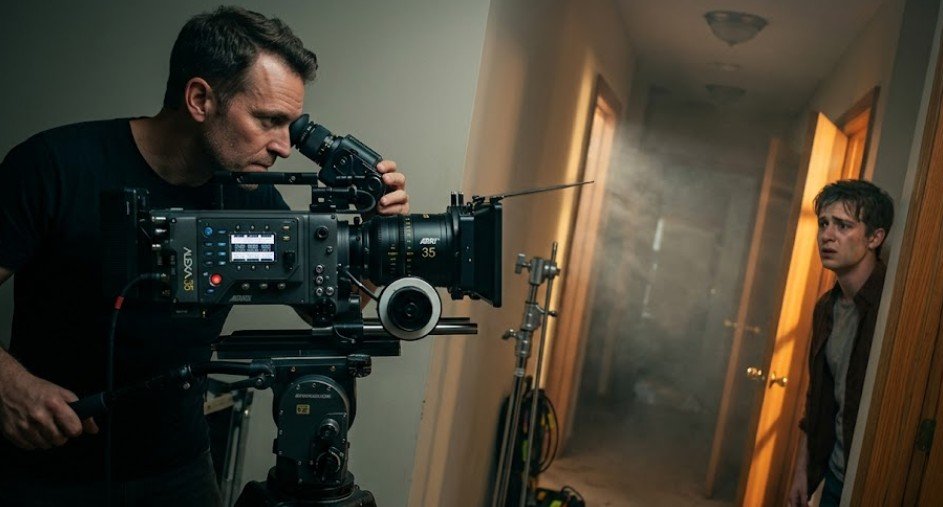
Dutch angles suit psychological thrillers and horror because both genres depend on uncertainty. A tilted close-up can suggest paranoia, internal terror, intoxication, or a mind beginning to break.
Films such as Black Swan and Shutter Island use unstable visual language to place viewers near characters who cannot trust their surroundings.
Show Mental Pressure
Begin with level framing while the character feels safe. As doubt grows, introduce a slight roll of five to ten degrees. Increase it only when the emotional pressure becomes stronger.
Save a sudden extreme tilt for panic, hallucination, violence, or complete psychological collapse.
Dawning Realization
A Dutch tilt can mark the instant a character understands that everything has changed. A betrayal appears, an escape route closes, or a trusted person becomes a threat. Instead of explaining the realization through dialogue, roll the frame or cut to a canted close-up.
Shift the Power
Level compositions often suggest control. Tilting the camera after a confession, threat, or discovery can show that control has moved to someone else. Keep earlier coverage stable so the Dutch angle has a clear visual baseline to disrupt.
Sci-Fi and Surrealism
Science fiction and surreal stories often ignore normal rules. Dutch angles help futuristic locations, dreams, alternate realities, and distorted memories feel unfamiliar. A diagonal horizon can suggest that gravity, time, space, or perception has changed.
Build an Unfamiliar World
Combine a moderate camera roll with unusual production design, reflections, deep perspective, or slow tracking movement.
Keep the visual rule consistent. Repeating a tilt direction under the same story condition turns a camera trick into a meaningful motif.
Comedy and Action

A canted angle can add exaggeration to comedy or energy to action. During an awkward conversation, it highlights strangeness. During a chase or fight, it makes movement feel less controlled. Viewers still need to understand direction, character positions, and physical danger.
Keep Motion Clear
Use wider framing during action and leave enough space around the subject. A diagonal composition should not hide important movement.
Understanding the difference between pan and tilt also helps filmmakers choose the right directional movement without confusing it with the camera roll used to create a Dutch angle.
A subtle handheld Dutch tilt adds urgency, while an extreme angle suits comic-book action or deliberate chaos.
How to Use the Tilt
Knowing when to use dutch angle techniques begins with choosing the emotion or story change the frame must communicate. Decide whether the moment needs unease, danger, confusion, energy, or lost control.
Choose the smallest effective roll. Five to ten degrees creates mild discomfort, ten to twenty-five degrees feels clearly unstable, and steeper angles become bold or surreal.
Plan the Shot
Frame the actor after rolling the camera because the angle changes headroom, negative space, eye lines, and background geometry.
Record a level version too. Comparing both takes during editing shows whether the canted composition strengthens the performance or only attracts attention.
Connect the Movement
A Dutch angle may remain static, appear through a cut, or develop as a slow camera roll. Understanding the types of camera movements available can help you decide whether to combine the tilt with a dolly move, push-in, handheld shot, tracking shot, or controlled camera roll.
Combine it with a dolly move, push-in, handheld shot, or tracking shot. Motivate the movement through an action, reveal, breakdown, or shift in power.
Protect Shot Continuity

Consider the shots surrounding the Dutch angle. Returning to a level horizon can communicate relief, clarity, or restored control. Increasing the tilt over several shots can build pressure. Avoid changing roll direction randomly.
Track the Details
Record the tilt direction and approximate degree in the shot list. During editing, check eye lines, screen direction, and rhythm. The transition into and out of the canted shot should support the emotional result.
When to Avoid It
Calm, intimate, or dialogue-heavy scenes often benefit from stable framing. A Dutch angle may distract from a quiet performance or falsely suggest danger. Use camera movement only when it supports the intended experience.
Avoid Forced Style
Do not tilt the frame because a static shot feels boring. Change the blocking, focal length, lighting, camera distance, or depth of field first. An unmotivated Dutch tilt can make drama look cheap or unintentionally funny.
Prevent Overuse
Repeated canted shots lose psychological power. Save it for major transitions, revelations, or emotional peaks. One carefully timed Dutch angle often creates more impact than a sequence of tilted coverage.
Frequently Asked Questions
1. Can Dutch Angles Be Overused?
Yes. Too many tilted frames reduce emotional impact, distract from performances, and make intentional cinematography look careless. Use them only when imbalance adds clear story information.
2. What Is a Canted or Dutch Angle Often Used To?
A canted or Dutch angle is often used to create unease, tension, danger, confusion, psychological instability, or a power shift by making the horizon diagonal.
3. What Movies Use a Dutch Angle?
Examples appear in The Third Man, Black Swan, Shutter Island, Mission: Impossible, Inception, Thor, Batman, and Do the Right Thing, with each film using the technique differently.
4. Why Do They Use So Many Dutch Tilts in Do the Right Thing?
The tilted compositions increase heat, pressure, confrontation, and social imbalance. As conflict grows, the unstable framing suggests that the neighborhood is approaching an emotional breaking point.
Give the Horizon a Story
Learning when to use dutch angle shots means recognizing when a scene needs visual imbalance. Establish normal framing, choose the smallest useful tilt, and protect continuity. Used with restraint, a canted camera can reveal fear, danger, chaos, or changing power. Without motivation, it becomes a distraction rather than meaningful visual storytelling.