



Cinematic magic does not happen by accident; it is carefully crafted through the deliberate ways we guide our audience’s eyes. Standing behind my first rig years ago, I realized that understanding how the camera travels is what separates simple home videos from true visual storytelling.
Diving deep into the types of camera movements transforms your creative perspective, turning a mechanical camera frame into an emotional window for your audience.
Key Takeaways
- Purpose over motion: Every camera movement must have a clear psychological narrative purpose.
- Axis versus translation: Know the difference between rotating on a fixed point and physically traveling through space.
- Equipment dictates style: Choose the right tool—tripod, slider, dolly, or gimbal—for your desired emotional impact.
- Avoid visual fatigue: Guard against overusing complex movements when a simple static shot works best.
- Plan your transitions: Design your movements with the final edit and visual flow in mind.
Why You Must Master the Types of Camera Movements
Let us be real: nobody wants their hard work looking like a security camera feed or a chaotic toddler’s birthday tape. Mastering the types of camera movements is your golden ticket to controlling the perspective, pacing, and emotional heartbeat of your visual story.
It is the secret sauce that transforms a dry, boring scene into a cinematic feast, keeping your viewers completely glued to the screen while making your work look like a million bucks.
Classic Stationary Camera Rotations
Stationary camera bases can still produce some of the most powerful visual storytelling in cinema. By keeping your tripod or camera mount locked in a single physical position, you force the audience to focus on targeted directional shifts.
The Pan Shot
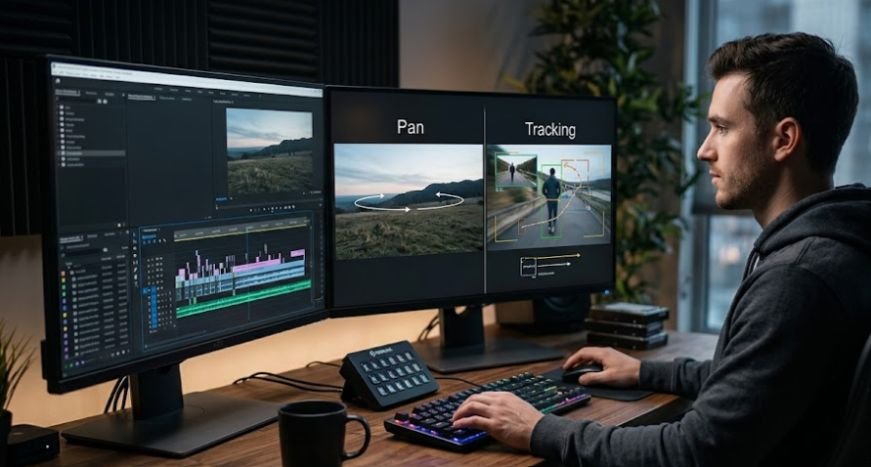
Panning rotates your camera horizontally from a fixed left-to-right or right-to-left pivot point. It acts exactly like a human neck turning to look around a room, making it incredibly natural for establishing vast locations. A rapid horizontal pivot is called a whip pan or swish pan, which injects high energy, dynamic transitions, or sudden comedic timing into your scene.
The Tilt Shot
Tilting shifts your camera lens vertically up or down while keeping the base firmly anchored. This movement is ideal for introducing a towering subject or establishing scale, like looking up at a massive skyscraper or down at a vulnerable character. It builds a sense of awe, power, or sudden insignificance depending on your direction.
The Roll Shot
Rolling involves rotating the camera on its Z-axis, which tilts the horizon line sideways. This creates a highly stylized visual aesthetic often referred to as a Dutch angle. It is an incredible psychological tool for instantly communicating to the audience that something is deeply wrong, disorienting, or chaotic within the narrative.
Dynamic Physical Camera Translations
Moving the entire camera body through physical space creates three-dimensional depth and a natural sense of parallax. This spatial translation alters the background perspective relative to your foreground subject, pulling your viewer directly into the physical environment.
The Dolly Shot
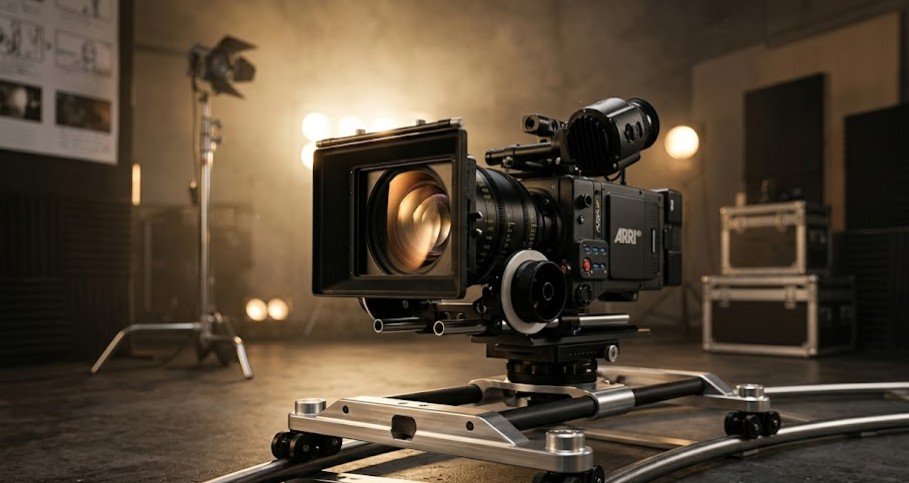
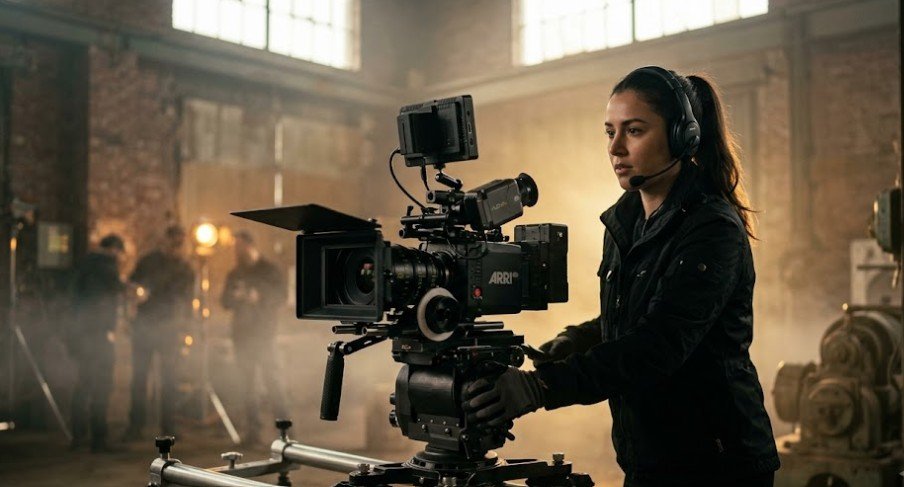
A classic dolly shot involves mounting your camera on a wheeled cart, track, or slider to roll smoothly toward or away from a subject. Moving forward is a push-in, which builds intimacy, tension, and emotional realization. Moving backward is a pull-out, which slowly detaches us from the character, revealing their isolation or the larger world surrounding them.
The Truck Shot
Trucking is the lateral sibling of the dolly shot, where the entire camera rig travels parallel to the action. It is highly effective for keeping pace with walking characters during long conversational scenes. This movement makes the audience feel like an active companion walking right alongside the cast.
The Pedestal Shot
A pedestal shot involves physically raising or lowering the entire camera assembly along a vertical column without tilting the lens. This allows you to maintain a level horizon line while adjusting your vertical perspective. It is brilliant for slowly revealing details from head to toe or moving past foreground obstacles.
The Arc Shot
An arc shot moves the camera in a sweeping circular motion around a subject while keeping them dead center in the frame. This dynamic movement creates a strong sense of three-dimensional space and isolates the character from their surroundings. It is often used to capture heroic moments, intense realizations, or romantic tension.
The Tracking Shot
Tracking is a broad cinematic term where the camera physically follows a subject moving through space, often utilizing a dolly track, camera vehicle, or a stabilizing rig. This continuous movement keeps the viewer locked into the physical journey of the character. It provides a highly immersive experience that seamlessly blends action and environment.
For a deeper breakdown of shot planning, equipment choices, and practical execution, explore what is a tracking shot before designing complex moving camera sequences.
Clever Lens-Based Optical Movements
Adjusting the internal glass elements of your lens allows you to dramatically alter perspective without shifting the physical footprint of your camera setup. Optical adjustments offer a unique way to manipulate the frame instantly.
Zooming Shots
Unlike the dolly shot, the physical camera remains completely stationary during a zoom. Instead, you adjust the camera’s focal length to magnify or reduce the size of the subject in the frame, changing perspective. While a dolly shot alters spatial relationships, a zoom visually flattens the image, creating a voyeuristic feel or a sudden punch of energy.
Dynamic Rigs and Advanced Support Systems
Modern cinema relies heavily on specialized mechanical supports to execute incredibly complex movements with absolute precision. These physical tools remove human limitations and elevate production value instantly.
Steadicam and Gimbal Systems
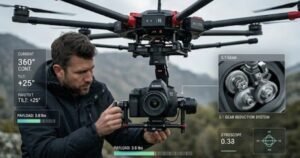
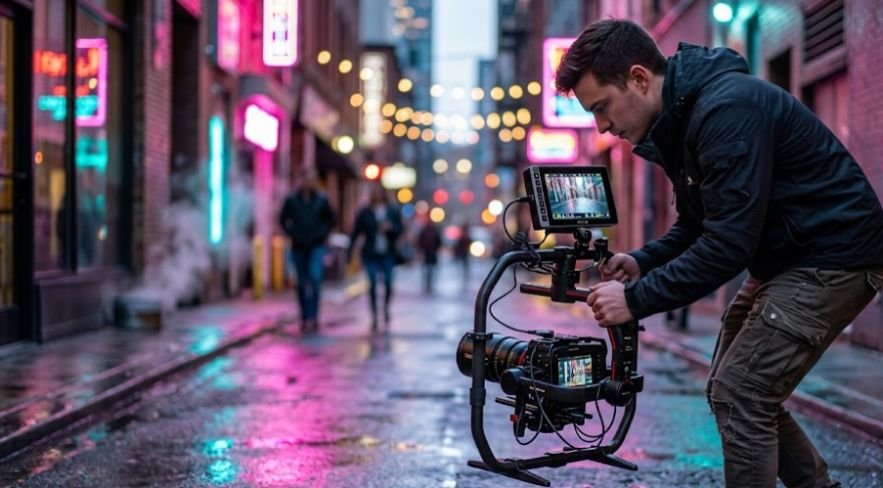
A Steadicam or motorized 3-axis gimbal is a wearable stabilizer rig that removes the natural bounce and jerkiness of handheld walking shots. These tools allow the operator to run, climb, or walk through tight spaces while maintaining butter-smooth visual flow.
They deliver the organic feeling of a handheld shot combined with the slick, flawless look of a dolly.
Crane and Jib Shots
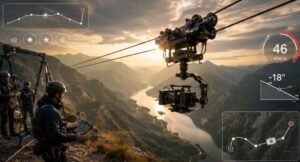
Mounting the camera on a mechanical crane or jib arm allows you to smoothly raise, lower, or swing your setup across a large space. This provides sweeping, bird’s-eye views that are perfect for opening or closing a scene with grand scale. It offers a majestic, omniscient perspective that establishes the massive scope of your cinematic world.
Real-World Tips: Deploying the Types of Camera Movements
To use these techniques effectively on set, you must align your camera gear with your narrative intent. Follow these direct steps to plan, execute, and polish your next visual sequence.
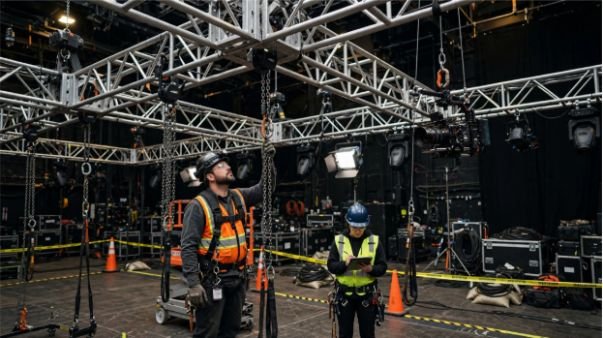
A detailed outdoor film shoot camera rigging case study guide can also show how movement choices, terrain, stabilization, crew coordination, and safety planning work together in real production conditions.
First, identify the dominant emotion of your scene and map a motivated camera movement directly to that feeling. If a character is realizing a dark secret, plan a slow, smooth dolly push-in to emphasize their internal psychological state.
Next, select the exact equipment needed to achieve the desired stability or shakiness. Use a heavy fluid-head tripod for clean pans and tilts, a slider for tight dolly moves, or a handheld grip if you want to convey unstable tension.
Finally, communicate the plan clearly by sketching your movements by building a detailed storyboard or writing them into your shot list. Practice the physical path with your camera operator and actors before hitting record, ensuring that the lighting and focus puller can track the movement seamlessly.
Frequently Asked Questions
1. What are the 7 basic camera movements?
The seven fundamental types of camera movements in filmmaking are the pan, tilt, zoom, dolly, truck, pedestal, and roll. Each of these movements offers a distinct way to shift perspective, track action, and emotionally engage your audience.
2. What are the 12 camera movements?
The twelve primary movements are pan, tilt, zoom, dolly, truck, pedestal, whip pan, tracking shot, crane shot, arc shot, roll, and handheld shot. Mastering these tools gives filmmakers complete control over visual storytelling on set.
3. What are the five basic types of camera movement?
The five most essential types of camera movements used across almost every production are the pan, tilt, zoom, dolly, and tracking shot. These form the baseline vocabulary for visual composition and directing.
4. What are the 7 types of shots?
The seven primary camera shots based on framing are the extreme wide shot, wide shot, medium shot, medium close-up, close-up, extreme close-up, and point-of-view shot. Combining these frames with physical movement creates cinematic magic.
Action! Take Your Visuals to the Next Level
Elevating your visual storytelling starts with mastering the physical and emotional language of cinema. By understanding the diverse types of camera movements, you gain the power to dictate exactly how your audience feels with every single frame. Grab your camera, experiment with these techniques, and start moving your audience today!