



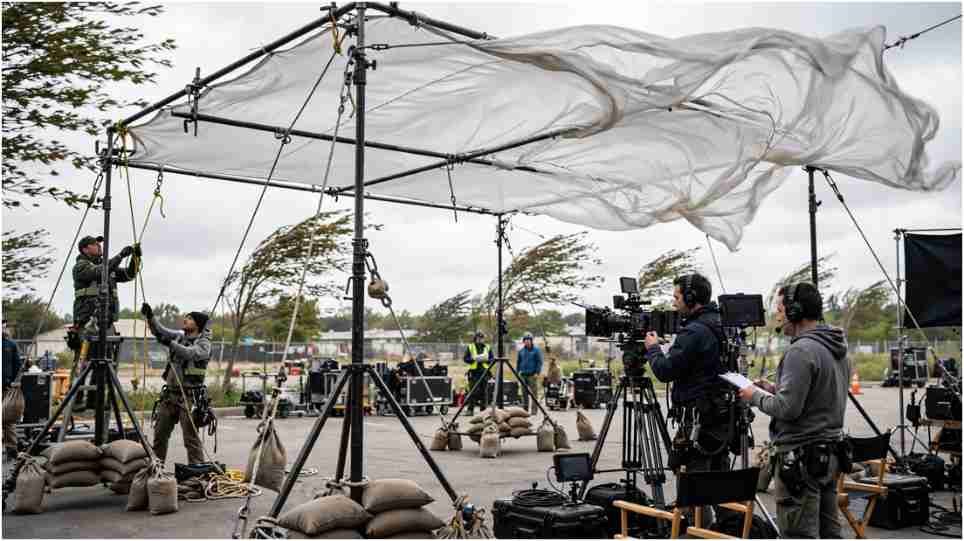
A 20×20 solid does not behave like ordinary grip equipment once the wind arrives. It becomes hundreds of square feet of exposed surface trying to move whatever is holding it.
That is why I treat wind limits for overhead rigs on film sets as a strike-planning problem, not a single magic mph number. Frame size matters. Fabric matters. Support geometry matters. Gusts matter. If a lift supports the rig, its manufacturer instructions matter even more.
Why One Wind Number Cannot Protect Every Overhead
A crew can make a dangerous mistake by asking, “What’s the maximum wind speed?” without asking what is actually in the air.
A 4×4 net and a 20×20 solid have radically different exposed areas. An open mesh also behaves differently from an artificial silk or solid. Height changes the conditions again because wind at platform or frame level can exceed what a meter reads near the ground.
JLG specifically warns that elevation, surrounding structures, and local weather can change wind exposure around an elevated platform.
I therefore use three limits when thinking about wind limits for overhead rigs on film sets:
| Limit | What controls it | What crews should check |
| Frame limit | Size, textile, orientation | Frame/system documentation and approved procedure |
| Support limit | Stands, anchors, truss, hardware | Ratings and engineered load path |
| Equipment limit | MEWP or other powered support | Manufacturer manual and data plate |
Whichever produces the lowest allowable condition wins.
That same principle matters when reviewing temporary truss rigging safety for film production. A strong truss does not make weak anchors, undersized hardware, or excessive wind load disappear.
Practical Outdoor Overhead Frame Wind Limits
The following figures are useful as conservative on-set reference triggers from the material supplied for this article. They should not be presented as OSHA regulations or universal engineered limits.
| Frame size | Practical strike reference |
| 20×20 | 11–12 mph |
| 12×12 | 18 mph |
| 8×8 | 20 mph |
| 6×6 | 25 mph |
| 4×4 | 30 mph |
Treat these as planning triggers, not permission to operate until the last mph. Gusts, fabric type, frame orientation, hardware, anchoring, terrain, and manufacturer requirements can demand an earlier strike.
Why a 20×20 Gets Serious So Fast
Here is the part I find more useful than memorizing numbers.
A 20×20 presents 400 square feet of nominal area. A 12×12 presents 144 square feet. The larger frame therefore has about 2.8 times the area before fabric porosity or orientation is considered.
Wind load also rises roughly with the square of wind speed. NIST describes wind-induced forces on rigid structures as proportional to the square of wind velocity.
So moving from 12 mph to 18 mph does not create merely 50% more wind pressure. The simplified velocity-squared relationship produces about 2.25 times the pressure.
That is why modest-looking increases on an anemometer deserve attention. This example is a sanity check, not an engineering calculation.
MEWP Wind Ratings Change the Decision
This is where wind limits for overhead rigs on film sets are most likely to be misunderstood.
OSHA notes that outdoor-rated scissor lifts are generally limited to wind speeds below 28 mph. JLG likewise explains that modern MEWPs may carry a 0 mph indoor rating or a 28 mph outdoor rating.
That does not mean a 20×20 can safely remain attached to a lift at 28 mph.
JLG warns operators against increasing the wind-exposed surface of a platform or carrying large surface-area items outdoors because the added “sail” effect can reduce machine stability. Genie gives similar instructions and states that increasing exposed area can decrease stability.
Film-industry guidance is stricter still. Contract Services Safety Bulletin #22 says scissor and aerial boom lifts should not be raised when winds exceed 25 mph and warns that lower limits may apply during rigging activities. It also says equipment extending beyond an aerial boom platform requires manufacturer-defined approval and appropriate training.
So I would never take the machine’s bare-platform rating and apply it directly to a lift carrying diffusion.
Rigging Hardware, Ballast, and Guy-Line Control
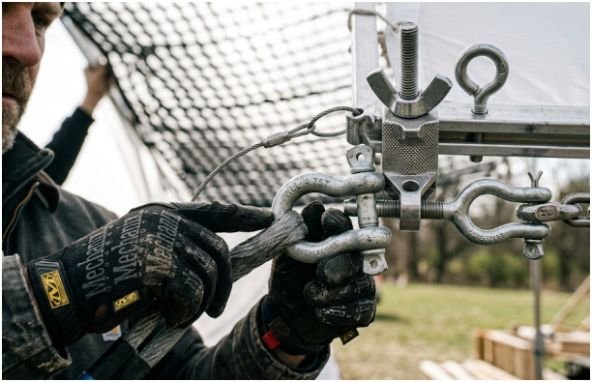
Wind limits mean little if the load path is weak.
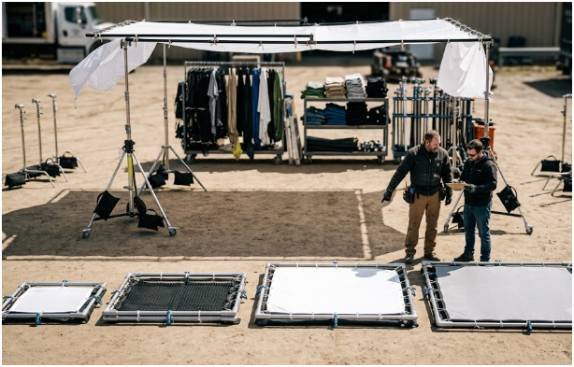
Large outdoor frames need support equipment selected for the actual load and wind exposure. I would not treat lightweight C-stands as the default support for substantial outdoor overheads. Heavy-duty stands, properly designed anchors, approved lift attachments, guying, and secondary restraint deserve deliberate planning.
Hardware must also remain within its marked working load. OSHA requires covered rigging equipment to carry legible manufacturer identification showing its recommended safe working load and prohibits exceeding that rating. It also requires inspection before each shift, with defective gear removed from service.
That makes film rigging hardware load ratings part of the wind discussion. Wind creates additional forces that can travel through heads, clamps, shackles, slings, stands, anchors, and lift attachments.
The same applies to shackle and sling safety for film rigging. A rated component is only useful when the configuration, angle, condition, and total loading remain within its permitted use.
I also avoid universal statements such as “four sandbags always makes it safe.” Ballast must suit the frame, support geometry, surface, rigging method, and expected forces. More weight does not repair an inherently unsuitable setup.
Wind Monitoring Belongs at Rig Height
A weather app is useful for planning. It is not enough for controlling an exposed overhead.
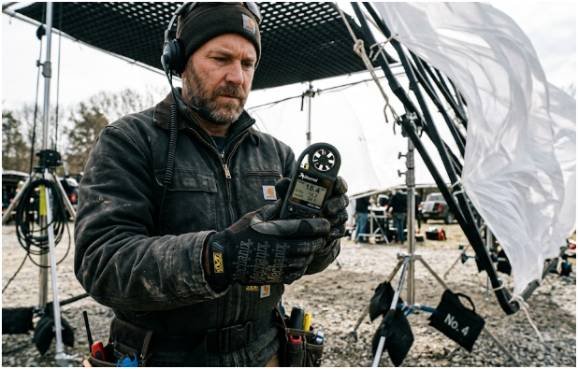
JLG recommends measuring wind with an anemometer and notes that speed can change with elevation and nearby structures. It also calls for continued monitoring as conditions change.
For significant outdoor overheads, I want a designated person watching sustained wind, gusts, direction changes, and approaching weather.
Do not wait for a threshold reading before discussing the strike. A 20×20 takes time to bring down safely.
A Better Strike Decision Than Watching One Number
My preferred decision sequence is simple.
First, identify the manufacturer’s or engineered limit for every critical component. Next, establish a lower operational trigger that leaves enough time to lower or strike the rig. Then monitor gusts and changing weather continuously.
If the frame starts pumping, stands are shifting, guy lines are repeatedly shock-loading, or gusts become unpredictable, the number on the meter should not become an excuse to continue.
Wind limits for overhead rigs on film sets are ceilings, not targets.
A mesh or more porous textile can sometimes reduce wind exposure when the creative requirement allows it. But material substitution still needs approval within the planned rigging system. Never assume that changing the rag automatically makes the same frame safe.
FAQs
1. What wind speed is too high for a 20×20 overhead frame?
A conservative crew reference is around 11–12 mph, but the approved rig design, manufacturer instructions, fabric, gusts, and support system must control the actual limit.
2. Are MEWPs safe for film overhead rigs in 28 mph winds?
Not automatically. A lift’s normal wind rating does not authorize adding large sail-area equipment, and film-industry guidance may require substantially lower operating limits.
3. Should gust speed or sustained wind control an overhead strike?
Both matter, but sudden gusts can create rapid load changes, so the approved operating plan should account for gusts rather than relying only on sustained averages.
4. Who should monitor wind limits for overhead rigs on film sets?
The production should assign a qualified, clearly identified person to monitor conditions and empower the responsible grip or safety authority to order an early strike.
The Shot Can Wait. The Frame Cannot.
I would rather have a 20×20 on the ground five minutes early than discover five seconds late that the weather changed faster than the crew could react.
Good wind limits for overhead rigs on film sets combine numbers with judgment. Know the frame. Know the fabric. Verify every rated component. Read the lift manual. Measure conditions where the rig actually sits. Most importantly, establish the strike point before the wind reaches it.
The safest call rarely begins with, “We can probably get one more take.”