



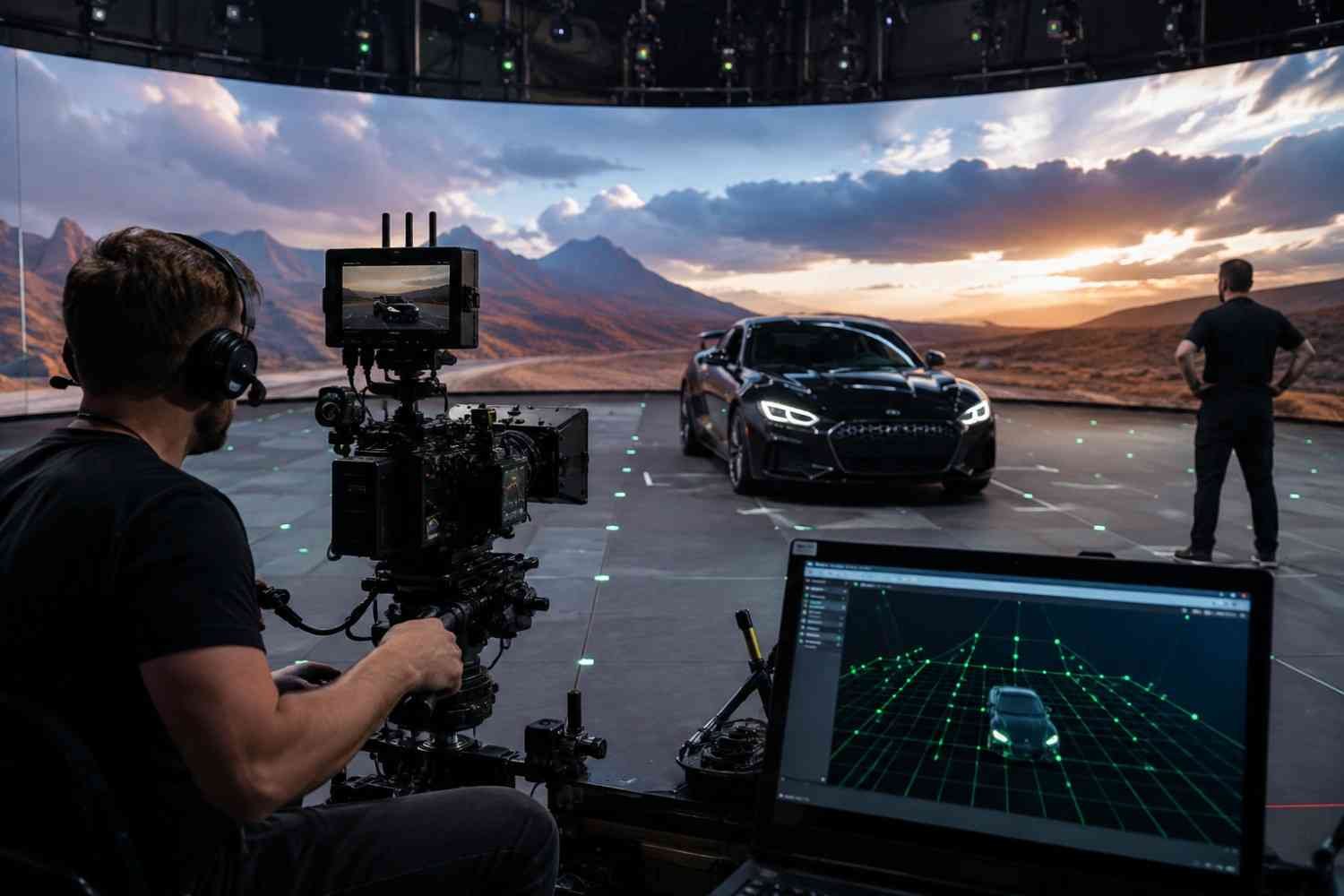
I have noticed that virtual production looks convincing only when the physical camera and digital environment seem to occupy the same space. Even a small tracking error can make an LED background feel disconnected from the action. The camera may move correctly, but if the virtual world does not respond at exactly the right moment, the illusion starts to break.
That is why real-time camera tracking systems have become such an important part of in-camera VFX. They capture information about the camera while it moves and send that data to the rendering environment. When position, orientation, lens information, and timing stay aligned, filmmakers can create camera moves that feel natural while the virtual scene responds with accurate perspective and depth.
What Real-Time Camera Tracking Systems Actually Do
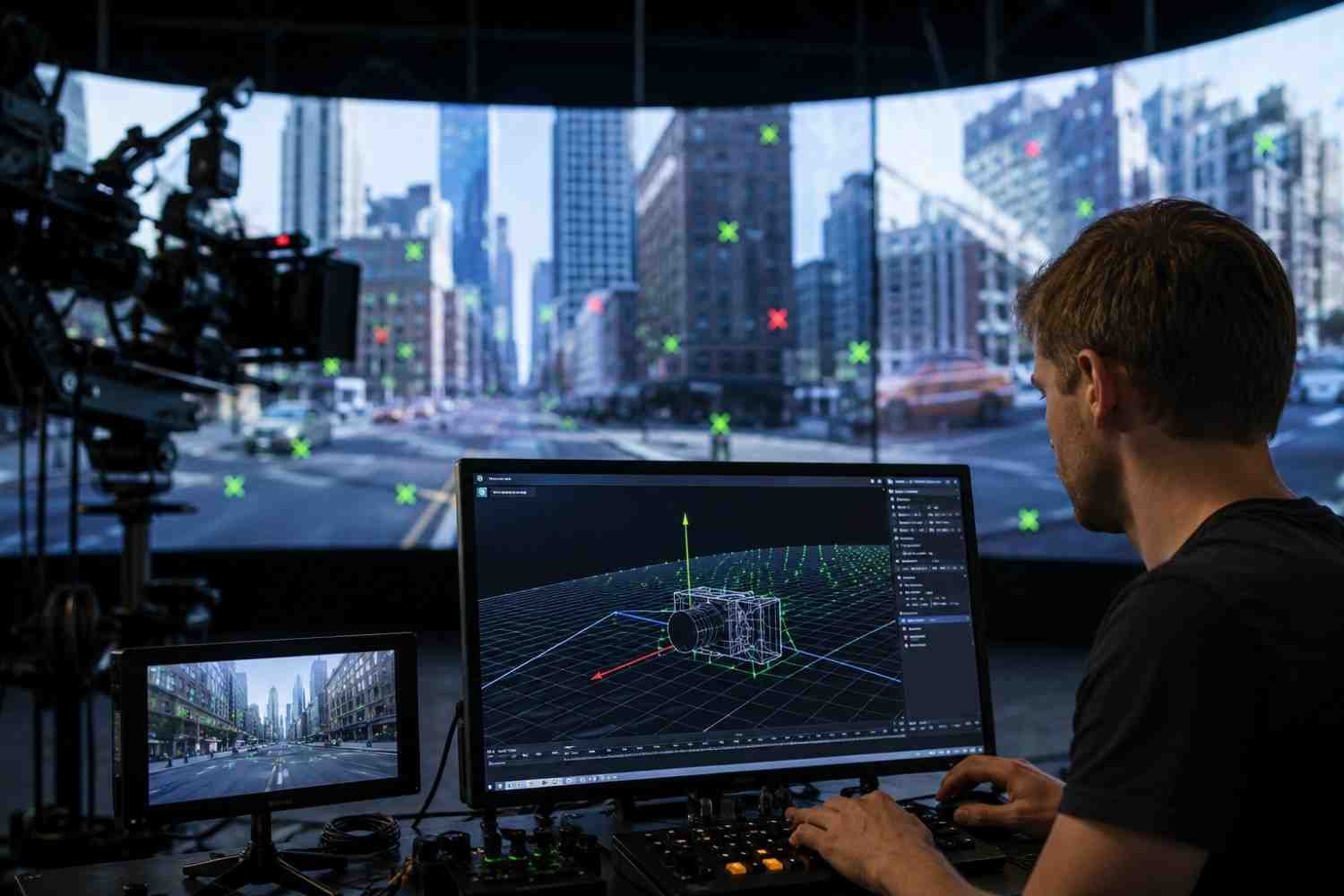
A tracking system determines where a physical camera is and how it is moving. Depending on the technology, this can involve optical markers, sensors, image analysis, or a combination of methods.
Sony’s OpenTrackIO documentation describes camera tracking data as information covering camera position, orientation, lens calibration, and timing. That information can then be transmitted to rendering engines in real time.
This allows the virtual camera to follow the physical camera rather than simply displaying a fixed background. As the operator moves closer, farther away, or sideways, the virtual environment can respond accordingly.
Why Accuracy Matters for In-Camera VFX
The biggest reason accuracy matters is perspective. A physical camera does not see a scene from a fixed viewpoint. Every movement changes the relationship between foreground, subject, and background.
Epic Games explains that the virtual camera’s position and orientation need to closely match the physical camera for accurate in-camera VFX. The tracking information must also match the timing of the video feed, so each rendered frame corresponds with the camera’s actual position.
That is where camera lens calibration becomes important. Lens characteristics affect how the virtual environment appears through the physical camera. Unreal Engine’s Camera Calibration tools are designed to calibrate lens distortion and nodal point offset so the physical and virtual cameras align more accurately.
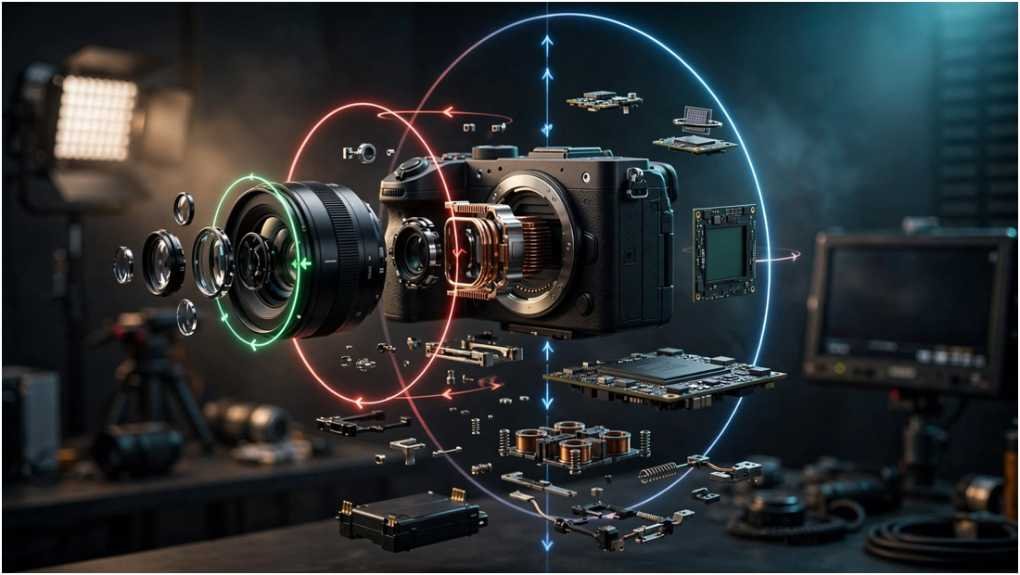
For a production team, this means tracking should not be treated as a standalone box. The camera, lens, tracking hardware, rendering system, and synchronization workflow all influence the final result.
Features Worth Looking For
Tracking accuracy is the obvious starting point, but latency is just as important. If the virtual environment responds too slowly to a physical camera move, the background can appear to lag behind the camera.
You should also check how the system handles lens information. Some workflows use separate lens encoders, while newer camera systems can transmit camera and lens information directly. Sony’s OpenTrackIO documentation shows how camera position, orientation, and lens data can be transmitted together to supported rendering systems.
Synchronization deserves equal attention. Epic’s documentation specifically highlights timecode and genlock as important for keeping cameras, tracking systems, computers, and LED displays synchronized during in-camera VFX.
Without proper synchronization, even accurate tracking data can produce visual problems such as tearing or timing mismatches.
Marker-Based vs. Markerless Tracking
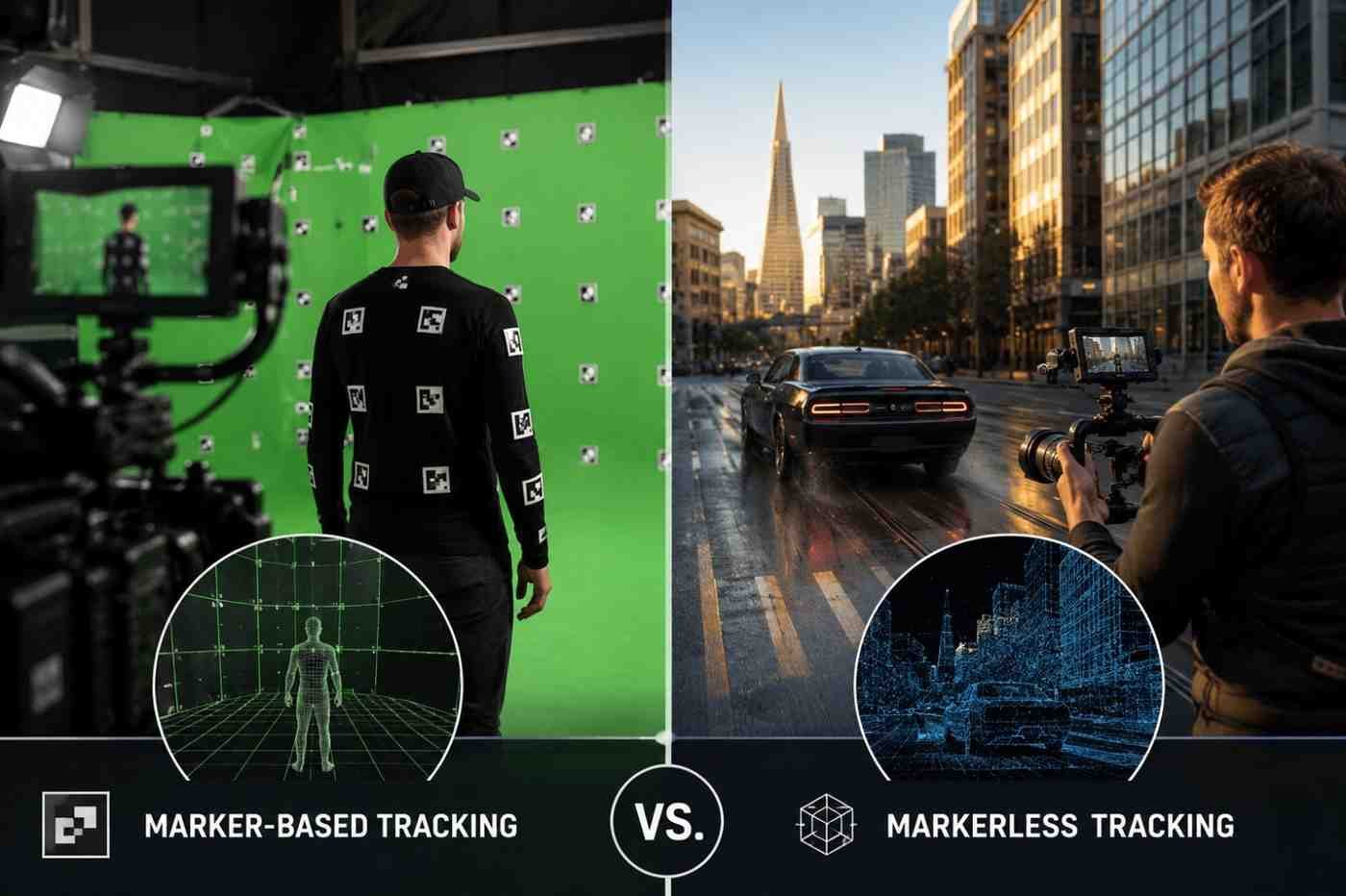
Marker-based systems use recognizable physical references to determine camera position. Optical tracking systems can use reflective or active markers placed around a stage.
Markerless systems use visual information from the environment instead. This can reduce the need for physical reference points, although performance depends heavily on the environment, available visual detail, lighting, and the tracking technology itself.
There is also a difference between live production tracking and post-production tracking. Adobe’s 3D camera tracker effect analyzes recorded footage to extract camera motion and 3D scene information for compositing digital elements into live-action footage.
A real-time production system has a more demanding job because the tracking data needs to influence the virtual scene while the camera is recording.
Match Tracking to the Camera Movement
The tracking system should suit how the camera will actually move. A studio camera mounted on a dolly may require a different configuration from a handheld cinema camera, crane, or remote head.
The rest of the camera package matters too. A production that already uses camera audio monitoring systems needs to make sure the tracking setup does not interfere with monitoring, cables, mounting hardware, or operator access.
The same applies to controlled camera movement. Motorized camera slider systems can provide repeatable lateral movement, but the tracking system still needs to understand the camera’s changing position accurately. Combining the two can be useful for repeatable virtual production shots where both physical movement and digital perspective need to match.
Think Beyond the Tracking Hardware
A tracking system is only one part of the virtual production pipeline. The camera feed, rendering engine, LED processor, lens information, synchronization hardware, and monitoring tools all need to communicate reliably.
Panasonic, for example, describes camera positioning data as information that can be sent from supported cameras to virtual production systems using the FreeD protocol. This allows camera information such as pan, tilt, zoom, and iris to be used by compatible virtual studio systems.
That interoperability can matter more than a headline specification. A tracking system with excellent accuracy is less useful if it does not integrate cleanly with the cameras, lenses, software, and rendering pipeline already used by the production.
The physical camera package also deserves attention. A 4×5.65 filter system setup can change the space around the lens and affect how accessories are mounted, so compatibility should be checked before finalizing a tracking configuration.
What to Check Before Buying or Renting
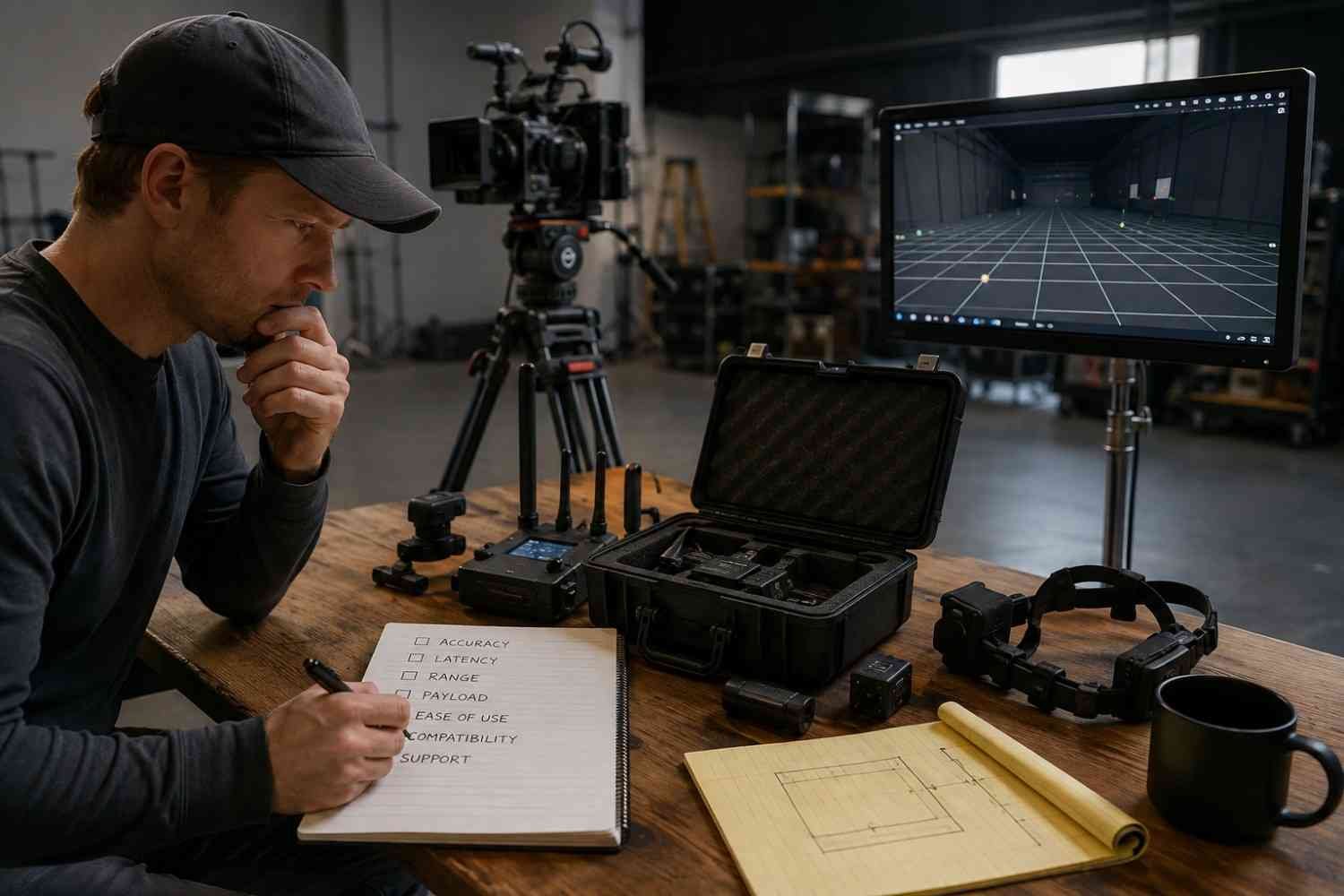
Start by checking camera and lens compatibility. Then look at tracking accuracy, latency, calibration requirements, supported data protocols, tracking range, synchronization options, and integration with your rendering platform.
Also consider the shooting environment. A system that performs well inside a controlled LED stage may have different requirements when used on a moving camera outdoors or on a larger physical set.
Support matters as well. Virtual production involves several connected technologies, so troubleshooting can become complicated when tracking, lens data, synchronization, and rendering are all involved.
FAQs: Real-Time Camera Tracking Systems for Precise In-Camera VFX
1. What does a real-time camera tracking system measure?
It can measure camera position and orientation and, depending on the system, lens and timing information. That data helps the virtual environment respond to physical camera movement.
2. Why is lens calibration necessary?
Lens calibration helps the virtual camera account for characteristics such as distortion and nodal point offset. Accurate calibration improves alignment between the physical camera and virtual environment.
3. Are markerless systems better than optical tracking?
Not automatically. Markerless systems can reduce physical setup requirements, while optical tracking can provide highly controlled results in environments designed for markers.
4. Can tracking systems work with moving cameras?
Yes. Systems can support cameras on dollies, cranes, sliders, remote heads, and other moving platforms when the hardware and software support that configuration.
When Tracking Becomes Invisible
The strongest real-time tracking is the kind viewers never think about. When the camera moves, the virtual world simply responds as expected. There is no obvious drift, delayed perspective, or strange separation between physical and digital elements.
That is ultimately the value of real-time camera tracking systems. They connect physical cinematography with real-time rendering and give filmmakers greater freedom to move the camera without breaking the visual illusion.