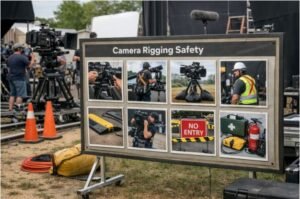




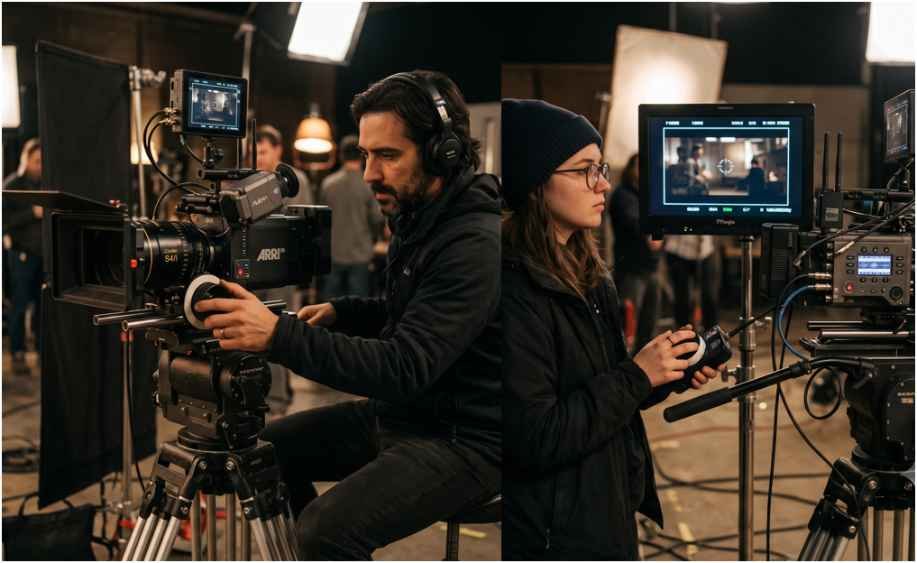
The wrong focus system can turn a simple rack focus into a shaky, missed take. When I compare manual vs wireless follow focus for filmmaking, I do not begin with price or technical features. I first ask one question: can someone safely touch the camera during the shot?
That answer usually reveals which system belongs on the rig.
A manual unit offers direct control, predictable operation and no battery concerns. A wireless system removes physical contact and lets the focus puller work away from the camera. Neither option wins every production.
How Manual and Wireless Follow Focus Systems Differ
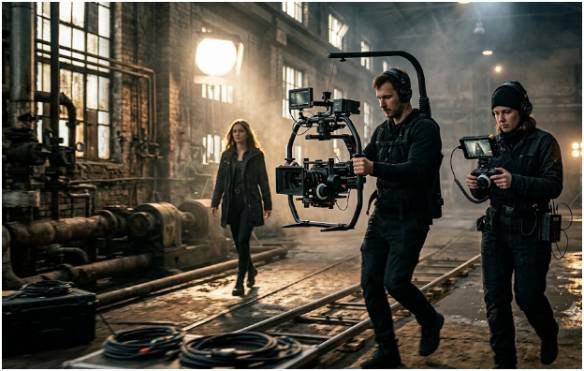
Both systems rotate the lens focus ring through geared contact. The difference lies in who turns that gear and how the movement reaches the lens.
How a Manual Follow Focus Works
A manual follow focus normally mounts to a 15mm or 19mm rod system. Its drive gear engages with a cinema lens gear or an added gear ring on a photography lens.
Turning the handwheel rotates the lens directly. Many units include a marking disc and adjustable A-B stops. These features help an operator repeat a measured focus pull.
For example, SmallRig’s Mini Follow Focus 3010 mounts through a 15mm rod, weighs about 195 grams and provides adjustable A-B marks. Its compact mechanical design targets DSLR and mirrorless camera rigs.
How a Wireless Follow Focus Works
A wireless system places an electronic motor against the lens gear. A handwheel, grip or control unit sends commands to that motor.
The focus puller can stand beside a monitor rather than beside the camera. Professional systems may also control iris and zoom motors.
ARRI’s Hi-5, for example, supports wireless multi-axis lens control and uses interchangeable radio modules for different production environments. Its ecosystem also supports calibrated focus rings and monitor-based lens-data overlays.
Manual Follow Focus Advantages and Limitations
I prefer a manual unit when I want a compact camera package that can operate all day without charging another device. The mechanical connection responds immediately and gives my fingers clear feedback from the lens.
There is no wireless pairing, firmware check or motor calibration. If the gears align correctly, the system works.
A manual follow focus also makes sense on controlled interviews, product videos and locked-off narrative scenes. The operator remains close enough to reach the wheel without disturbing the composition.
Its weakness is physical contact. A fast focus pull can transfer movement into a lightweight mirrorless rig. That movement becomes more visible with macro lenses, long focal lengths or loosely secured rods.
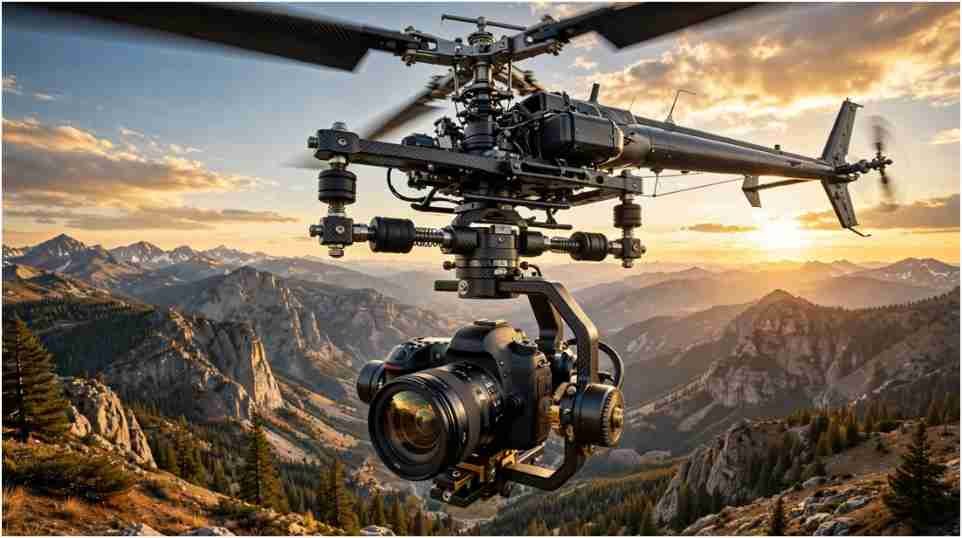
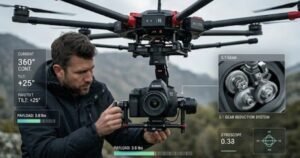
Manual control also becomes impractical when the camera sits on a crane, car mount or motorized gimbal. A hand cannot remain connected to a camera that must move independently.
Wireless Focus Control Advantages and Limitations
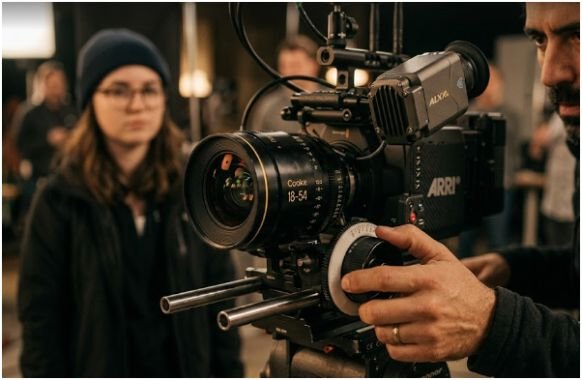
Wireless control solves the camera-contact problem. The focus puller can watch a larger monitor, mark positions and adjust focus without touching the support system.
That advantage matters during tracking shots and shallow-depth-of-field scenes. It also lets the camera operator concentrate on framing while a first assistant camera operator manages focus.
Wireless systems introduce more failure points. The controller needs power. The motor needs power. Cables must remain secure, and the motor must generate enough torque for the lens.
Some current compact systems offer long controller runtimes. SmallRig rates its Wireless Follow Focus Kit Lite’s built-in 1,400mAh battery for up to 21 hours. Its receiver motor supports a broad voltage input and produces approximately 4.3 kgf·cm of torque. Actual production time still depends on motor power, lens resistance and operating conditions.
Image Stability and Focus-Pulling Accuracy
My practical test is simple: I frame a detailed object, record at the longest planned focal length and pull focus five times at production speed.
If the frame shifts when my hand touches the wheel, I either reinforce the rig or switch to wireless control. This test exposes weaknesses that specification sheets miss.
Wireless control does not automatically create sharper footage. Accuracy still depends on lens markings, monitor quality, motor calibration, latency and the focus puller’s timing.
A bright, detailed display becomes especially valuable outdoors. Checking the on-camera monitor brightness needed for daylight filming helps ensure that poor screen visibility does not get mistaken for a focus-system problem.
Premium systems may add distance assistance or automated manual focus. DJI Focus Pro’s LiDAR module uses 76,800 ranging points, operates from 0.5 to 20 meters and captures distance data at 30 frames per second. These tools can assist focusing, but they do not remove the need for lens calibration and careful monitoring.
Choosing by Camera Rig and Crew Size
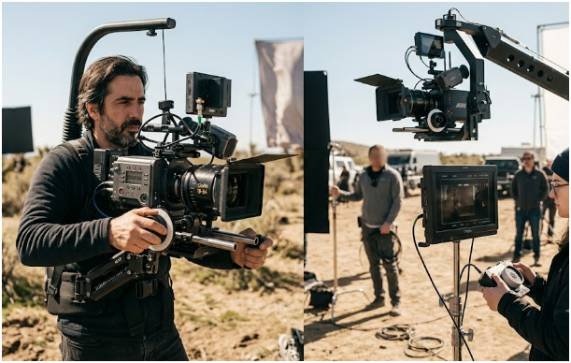
Tripods and Shoulder Rigs
For interviews, documentaries and controlled tripod work, I usually begin with a manual system. It keeps the rig light and avoids another charging routine.
Shoulder work requires more care. The wheel must sit where my hand can reach it without changing my grip or pushing the camera off balance.
Gimbals, Jibs and Vehicle Rigs
Wireless control becomes the practical choice when the camera moves beyond arm’s reach. The motor stays on the lens while the operator or focus puller controls it remotely.
A gimbal may also use a focus wheel mounted on its handle. This still relies on an electronic motor, even when the camera operator controls focus personally.
Before mounting one, I check motor clearance through the gimbal’s complete movement range. A motor or cable that touches an arm can ruin balance and restrict rotation.
Solo Operators and Camera Assistants
A solo filmmaker does not automatically need manual control. A wireless grip can let one hand manage focus while the other controls a gimbal or shoulder rig.
A dedicated first AC gains more from a full wireless hand unit, especially when the system supports focus marks, motor limits and lens data.
Lens Compatibility and Setup Requirements
Cinema lenses commonly use standardized 0.8 MOD gears. Photography lenses may need removable gear rings because their focus surfaces lack teeth.
Focus-by-wire lenses can behave unpredictably. Their focus-ring movement may not correspond consistently to a fixed distance change. Some reset when powered down, which can invalidate carefully placed marks.
For either system, I check four details before shooting: gear alignment, rod rigidity, lens rotation direction and end-stop behavior. The gear should engage without pressing the lens sideways.
Wireless motors also require calibration. Hard-stop cinema lenses normally calibrate more easily than endlessly rotating electronic lenses. Always test the exact camera, lens, adapter and motor combination before production.
Cost, Reliability and Upgrade Value
Manual units offer the strongest value when the camera stays accessible. They require fewer accessories and remain useful across many camera bodies.
Wireless systems cost more because the kit may include a motor, controller, batteries, cables, mounting hardware and power distribution. Advanced systems add multiple motors, lens mapping, distance tools and camera control.
I choose based on the cost of a failed shot rather than the cost of the accessory. A basic manual unit is sensible for repeatable tripod work. Wireless control becomes worthwhile when touching the camera could create vibration, interrupt movement or place the operator in danger.
Manual vs Wireless Follow Focus: Quick Comparison
| Feature | Manual Follow Focus | Wireless Follow Focus |
| Control method | Mechanical handwheel and gears | Remote controller and electronic motor |
| Camera contact | Operator touches the rig | No contact during the focus pull |
| Power requirement | None | Batteries or external power |
| Setup complexity | Low | Moderate to high |
| Added weight | Usually light | Motor, cables and controller add weight |
| Best camera support | Tripod, monopod and shoulder rig | Gimbal, jib, Steadicam and vehicle rig |
| Ideal crew | Solo shooter or camera operator | Dedicated focus puller or moving-camera team |
| Interference risk | None | Possible wireless or electronic disruption |
| Tactile feedback | Direct mechanical feel | Simulated through the controller |
| Typical cost | Lower | Higher |
Frequently Asked Questions
1. Is a wireless follow focus better than a manual follow focus?
It is better for remote and moving-camera shots, while manual control is often simpler for accessible tripod or shoulder rigs.
2. Can I use a manual follow focus on a photography lens?
Yes, provided you attach a compatible gear ring and the lens offers predictable manual focus rotation.
3. Do solo filmmakers need a wireless follow focus?
Solo filmmakers benefit from one when using gimbals, jibs or rigs that make direct lens access difficult.
4. Does wireless follow focus have noticeable latency?
Quality systems keep delay low, but performance depends on the controller, motor, radio conditions, power and setup.
Pick Your Focus Weapon
The manual vs wireless follow focus for filmmaking decision becomes easier once I stop treating it as a battle between old and new technology.
I choose manual control when the camera remains stable, reachable and lightly built. I choose wireless control when the camera must move freely or a focus puller needs independent access.
Before buying either, recreate your hardest planned shot. Mount the complete rig, use the real lens and perform repeated focus pulls. The system that preserves framing, reaches every mark and survives the test deserves a place in your camera case.