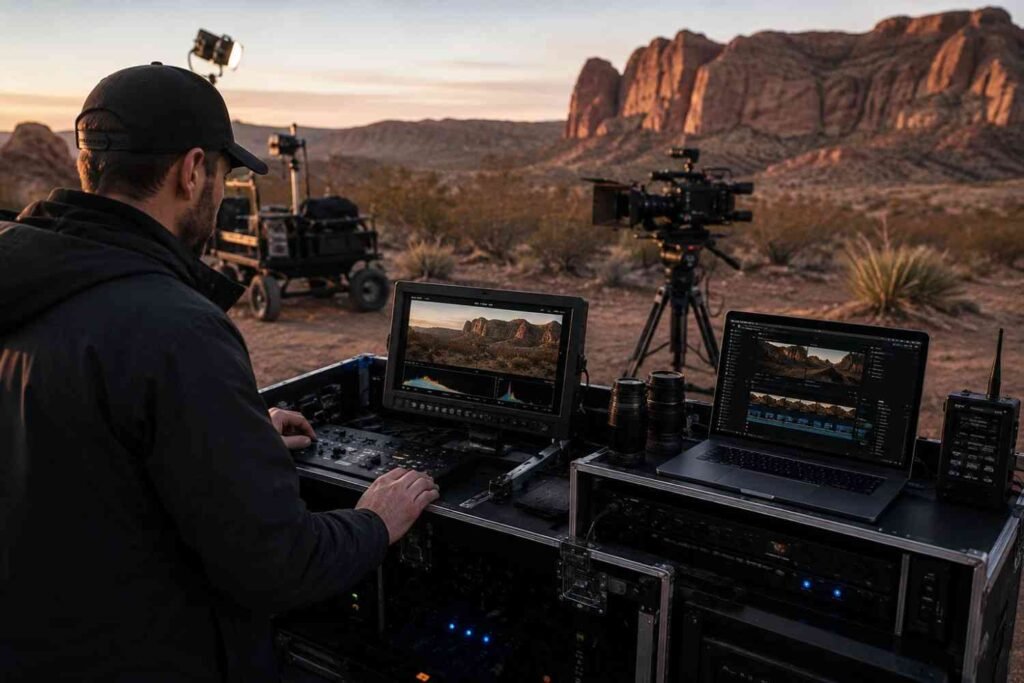





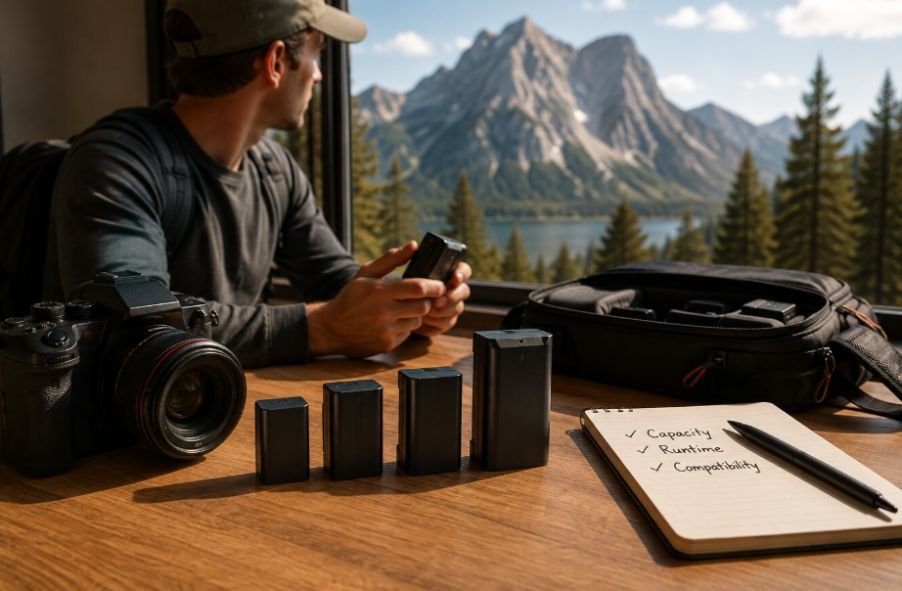
I have learned that battery capacity becomes a much bigger concern once a camera setup grows beyond the camera body itself. A mirrorless camera with one small battery is one thing. Add an external monitor, wireless transmitter, recorder, follow focus, or other accessories, and suddenly a battery that looked sufficient on paper can disappear much faster than expected.
I also found that choosing a battery is not simply about buying the biggest capacity available. Voltage, connector type, physical fit, power draw, battery chemistry, and communication between the battery and camera all matter. A high-capacity pack can be useful for long production days, but only when its electrical specifications match the equipment it is powering.
Why Battery Capacity Matters on a Camera Rig
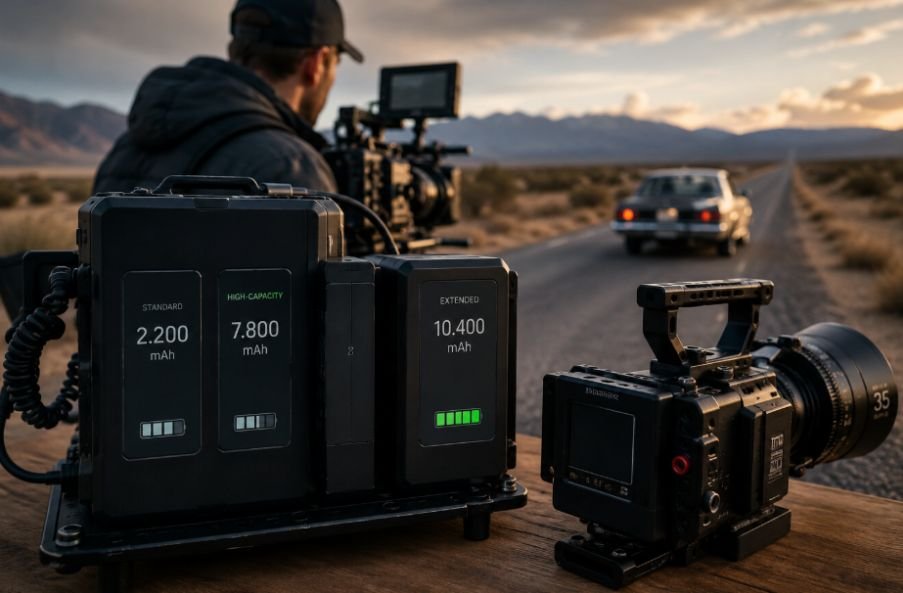
Camera batteries store energy that the equipment converts into usable power. Capacity is commonly listed in milliamp-hours (mAh) for smaller packs or watt-hours (Wh) for larger professional batteries.
Wh is often the more useful number when comparing different battery systems because it accounts for voltage. For example, Sony’s NP-FZ100 is rated at 7.2V and 16.4Wh with a 2,280mAh capacity. Sony uses this battery across several interchangeable-lens and cinema camera systems.
A higher capacity generally means more stored energy and potentially longer runtime, but actual operating time depends on how much power the camera consumes. Recording resolution, frame rate, autofocus, stabilization, display brightness, wireless functions, and connected accessories can all change that demand.
Understanding Capacity, Voltage, and Runtime
A simple way to estimate runtime is to divide battery capacity in watt-hours by the equipment’s power consumption in watts.
For example, a 100Wh battery powering equipment that consistently draws 20W could theoretically provide around five hours of operation. Real-world runtime will usually be lower because batteries do not deliver every watt-hour under every condition, and power consumption can fluctuate during production.
This is why a battery’s advertised capacity should be treated as a starting point rather than a guaranteed runtime.
Temperature can also affect performance. Lithium-ion batteries can behave differently in cold environments, while aging and repeated charge cycles can gradually reduce usable capacity. A production team planning a long outdoor shoot should therefore leave some runtime margin rather than calculating power requirements down to the last minute.
Choosing a Battery Capacity for Your Setup
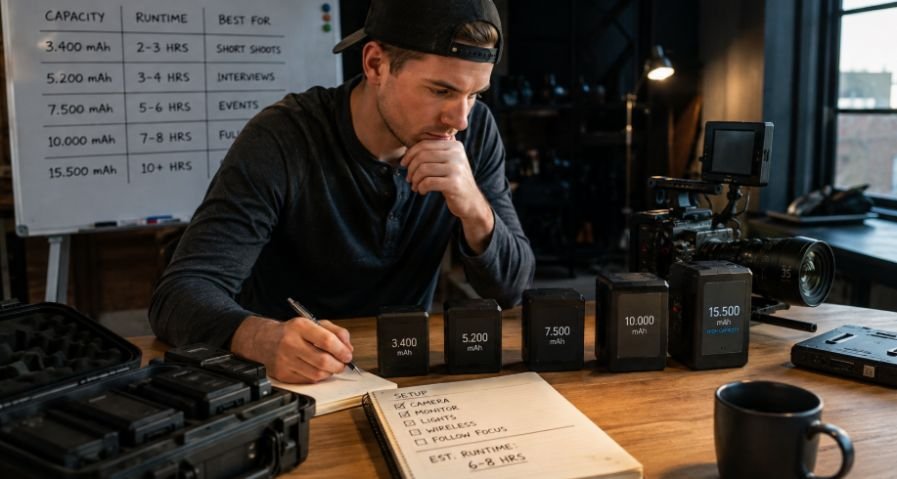
The right capacity depends heavily on the camera and the rest of the rig.
For a lightweight mirrorless setup used for photography or short video sessions, a compact OEM battery may be preferable because it keeps the camera small and balanced. Carrying several spare batteries can sometimes make more sense than attaching a large external pack.
Professional cinema and broadcast setups are different. A camera may need to power several accessories simultaneously, making larger battery systems much more practical.
Before purchasing, list every device connected to the camera and estimate its power requirement. That includes monitors, wireless video systems, transmitters, external recorders, focus motors, lens accessories, and sometimes lighting equipment.
Once that power budget is clear, the battery choice becomes much easier.
V-Mount and Gold Mount Options
V-mount and Gold Mount batteries are common in professional video production because they can provide substantially more stored energy than small camera packs. Many V-mount batteries are built around a nominal 14.4V system, although output specifications vary between models.
A properly planned V-mount battery setup can also simplify the way several accessories receive power. Instead of relying on separate batteries for every device, a larger pack can feed compatible equipment through outputs such as D-Tap or other regulated connections.
That approach can reduce battery swaps during a long take, but it also creates another responsibility: the power distribution system must be designed around the voltage and current requirements of each connected device. One large battery does not automatically make every accessory compatible.
Compatibility Matters as Much as Capacity
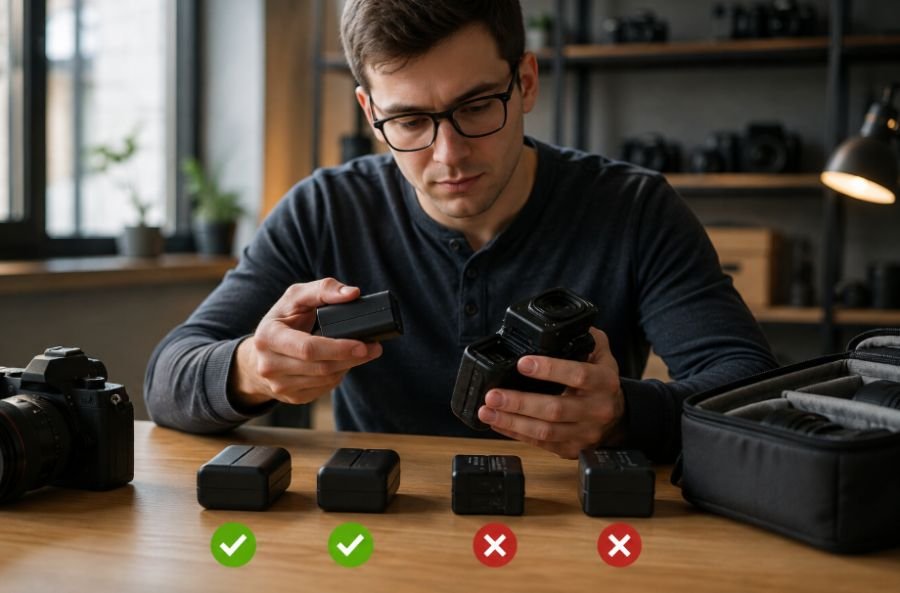
This is where many battery upgrades go wrong.
Never assume that a battery with a larger capacity is automatically a safe replacement. Voltage, battery terminals, physical dimensions, connector polarity, current capability, and manufacturer specifications all need to match the equipment.
For example, Canon specifies the LP-E6P for cameras such as the EOS R6 V and notes limitations for certain older battery generations. Its published specifications also identify a 7.2V battery system.
Modern cameras can also use authentication or battery communication systems. Sony states that some newer cameras can detect third-party or counterfeit batteries and may not display remaining capacity correctly.
That means physical fit alone is not enough. A battery can slide into the compartment and still fail to provide the expected functionality.
Why Cheap Generic Batteries Deserve Extra Attention
Price is tempting when replacement batteries are needed in large quantities, but battery quality affects more than runtime.
Sony warns that counterfeit NP-FZ100 batteries may have lower capacity, cause unexpected shutdowns, fail to power the camera, or present serious safety risks.
For professional production, those risks can be expensive. An unexpected shutdown during a critical interview, live event, commercial take, or documentary sequence can cost far more than the difference between a reputable battery and an unknown generic pack.
Look for established manufacturers, published electrical specifications, proper protection circuitry, reliable chargers, and a clear compatibility list.
Accessories Can Change Your Power Budget
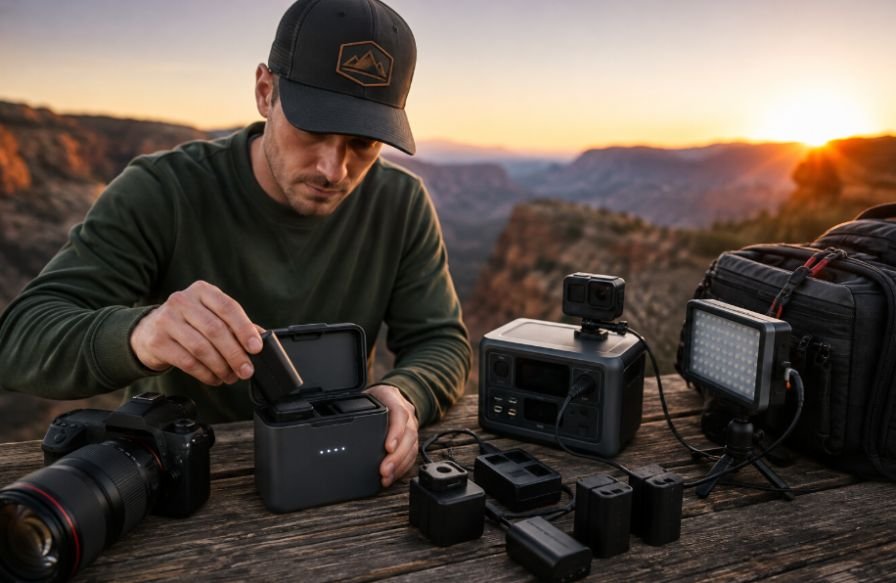
A camera’s rated battery life tells only part of the story. The moment accessories enter the rig, total consumption can rise significantly.
An external monitor may run continuously. A wireless transmitter may draw power throughout the shoot. Add a recorder, focus motor, or camera-control equipment, and the battery can drain much faster than expected.
This becomes especially relevant when using a remote camera control system. Remote operation can involve additional communication hardware and accessories that remain powered while the camera is recording or waiting for commands.
The practical solution is to calculate the complete rig’s power demand instead of relying on the camera manufacturer’s battery-life figure alone.
How to Get More Reliable Battery Runtime
Good battery management starts before the shoot.
Charge batteries fully, label them if you are managing several packs, and keep track of which batteries have seen heavy use. Avoid storing lithium-ion batteries in extreme temperatures, and use chargers designed for the specific battery system.
During production, monitor remaining capacity rather than waiting for a low-battery warning. Keep a reserve battery available for critical shots, especially when recording high-bitrate footage or working in remote locations.
It is also worth checking whether your camera supports USB Power Delivery. Sony, for example, lists multiple current cameras that support USB PD, although the required power output varies by camera and setup.
Comparing High Capacity Camera Batteries
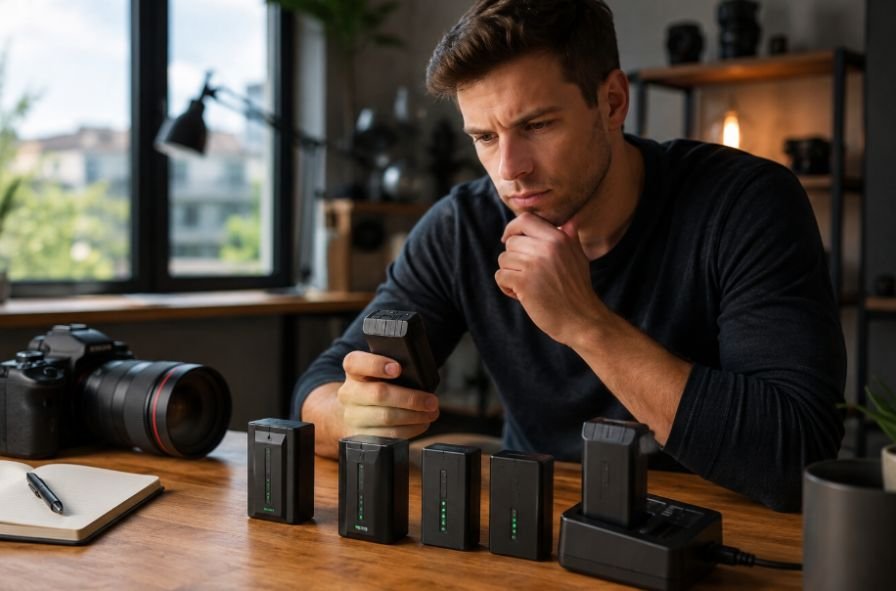
When comparing two batteries, capacity should be only one part of the decision.
Check these specifications together:
- Watt-hours and nominal voltage
- Maximum continuous output
- Physical dimensions and mounting system
- Connector types and polarity
- Battery communication or authentication
- Charger compatibility
- Operating temperature range
- Manufacturer warranty and safety information
A lighter 98Wh battery may be more practical for a handheld setup than a much heavier battery with substantially greater capacity. On a studio camera with multiple accessories, however, the larger pack may provide a better balance between runtime and convenience.
The same principle applies to storage and data management. A long-running camera can produce a large amount of footage, so battery planning should be considered alongside the rest of the production workflow, including the types of high-speed CFexpress cards being used for sustained recording.
Frequently Asked Questions
1. Do higher mAh batteries last longer?
Usually, but only when voltage and other specifications are compatible. Watt-hours provide a better comparison when batteries operate at different voltages.
2. How do I estimate camera battery runtime?
Divide the battery’s watt-hours by the equipment’s average power draw in watts. Treat the result as an estimate because real-world consumption varies.
3. Can I use any V-mount battery with my camera?
No. Check voltage, connector specifications, maximum output, mounting compatibility, and the camera manufacturer’s requirements before connecting one.
4. Are third-party camera batteries safe?
Some reputable third-party batteries can work well, but quality varies. Check compatibility, protection features, manufacturer reputation, and camera-specific limitations before buying.
Why the Best Battery Is the One That Fits the Shoot
High-capacity camera batteries are valuable because they reduce interruptions, simplify production planning, and keep power-hungry rigs operating for longer periods. But maximum capacity is not always the smartest target. A battery that is too heavy can make handheld work uncomfortable, while a battery with the wrong voltage or communication requirements can create much bigger problems.
The best choice balances stored energy, output, physical size, compatibility, safety, and the actual power demands of the camera system. When those factors are considered together, battery planning becomes less about guessing how long a pack will last and more about building a dependable production workflow.