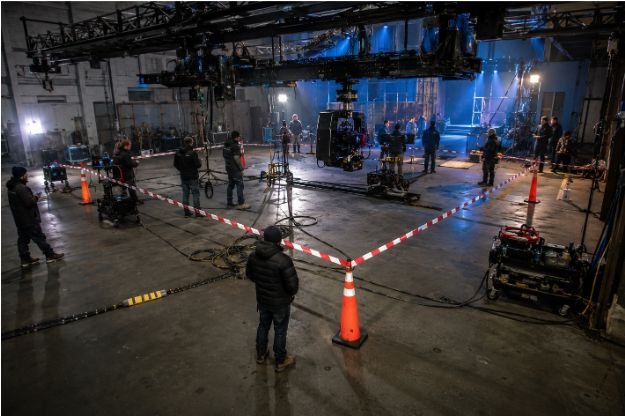






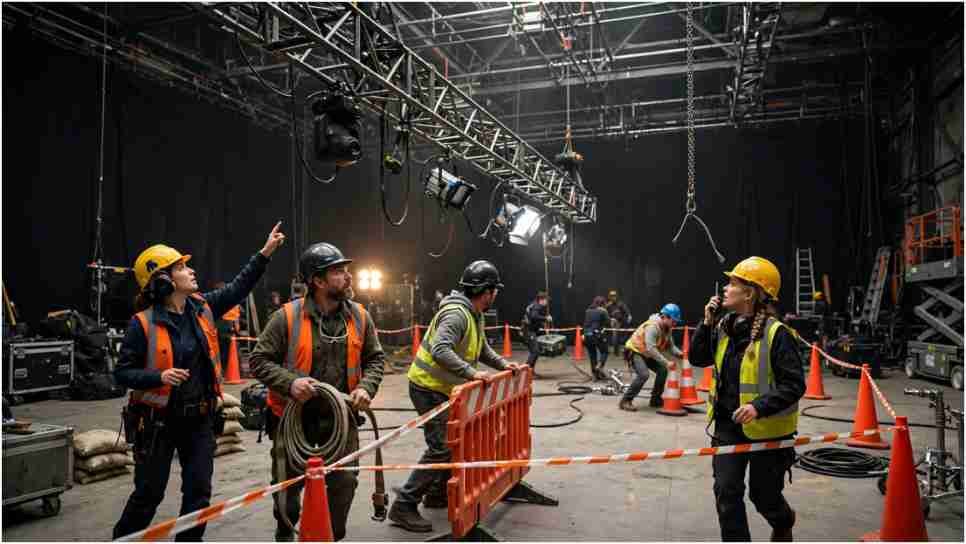
A rigging emergency can become dangerous before anyone has time to debate the next move. Effective film set rigging emergency procedures define who stops work, clears the hazard zone, controls energy, and calls emergency services.
When I assess a set safety plan, I ask one question first: can the crew act correctly in the first minute without improvising? OSHA emergency-action guidance calls for clear reporting, evacuation, accountability, rescue, and medical duties when an emergency action plan applies.
This framework supports planning, but it does not replace site-specific procedures or decisions made by qualified rigging, electrical, rescue, and safety personnel.
Why Rigging Emergency Response Must Be Pre-Planned
Overhead loads, powered hoists, truss, cranes, electrical distribution, and performer suspension can create overlapping hazards. A damaged truss can become a falling-object risk while a power fault makes nearby equipment unsafe to approach.
That is why film set rigging emergency procedures should exist before equipment goes overhead. OSHA requires material-handling rigging to be inspected before use each shift. Defective gear must be removed from service. OSHA also requires workers to remain clear of suspended loads.
I treat prevention and emergency planning as one system. Strong safe rigging practices around actors and crew reduce the chance that an emergency plan ever needs activation.
The First 60 Seconds: Stop, Clear, Control, Call
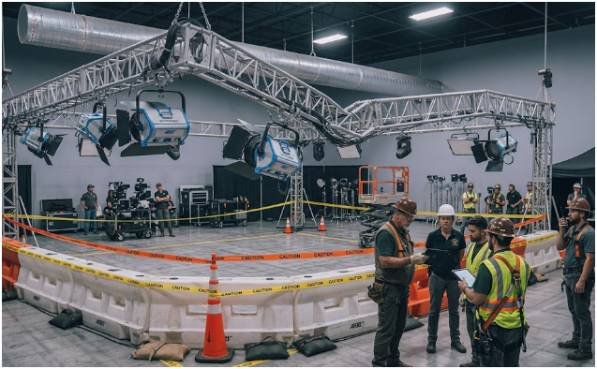
My preferred response model is Stop, Clear, Control, Call. It gives the crew a memorable sequence without encouraging untrained people to touch compromised equipment.
Stop the Operation
Use the production’s pre-briefed emergency stop command. Halt hoisting, crane movement, lighting changes, and nearby activity.
OSHA’s hoisting requirements support stopping an operation whenever safety is in doubt.
Clear the Hazard Zone
Move performers and crew away from the load path, drop zone, swing radius, and areas exposed to secondary failure.
Never try to catch or manually steady a failing suspended load. The priority is getting people outside the potential impact zone.
Control Energy and Access
Keep unauthorized crew away from the affected area. If electrical equipment is involved, follow the production’s established electrical-safety procedure.
Assigned and qualified personnel should handle shutdown actions. Do not assume truss, cables, fixtures, or other metal equipment are safe to touch after an electrical fault.
Call the Right Help
Call 911 for serious injuries, fires, electrical contact, collapse, or incidents beyond the production’s trained response capability.
Give responders the stage or location, lot entrance, gate, access route, and designated meeting point. OSHA emergency planning specifically addresses reporting systems, evacuation, accountability, rescue, and medical duties.
These film set rigging emergency procedures work best when roles and commands are rehearsed during safety meetings. Good film set rigging emergency procedures also separate evacuation decisions from technical equipment recovery.
Suspended-Load and Electrical Rigging Emergencies
Different failures need different technical responses. The human priority remains the same: prevent one incident from creating a second casualty.
| Emergency | Immediate response | Avoid |
| Sagging truss | Stop work, evacuate the footprint, isolate the area, obtain qualified assessment. | Do not blindly lower a failing structure. |
| Runaway crane, jib, or hoist | Use approved emergency controls and clear its movement area. | Do not approach moving equipment manually. |
| Suspended performer or worker | Activate the planned rescue system and trained rescue team. | Do not improvise an unplanned rope rescue. |
| Electrical fire or energized rig | Keep clear and follow approved shutdown and emergency procedures. | Do not touch the rig or use the wrong extinguisher. |
For energized electrical equipment, OSHA identifies Class C-rated extinguishers as the correct class. Workers expected to use portable extinguishers must also receive appropriate training.
A useful companion check is how to identify unsafe rigging setups on set. A warning sign discovered during setup is far easier to control than a failure discovered after loading begins.
Rescue Procedures for Suspended Performers and Crew
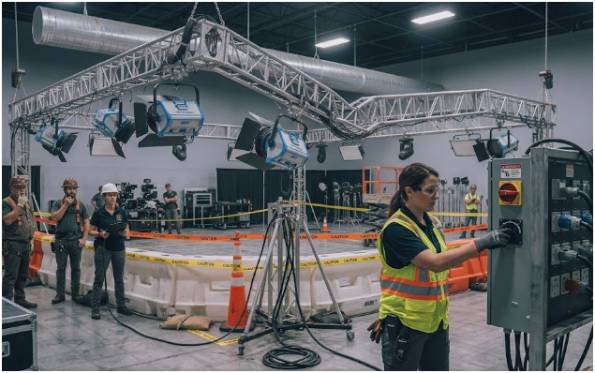
A person left hanging motionless in a fall-arrest harness may develop suspension trauma. OSHA warns that prolonged suspension can reduce blood return and can lead to loss of consciousness.
My rule is simple: decide how the rescue will happen before anyone leaves the ground.
The plan might use a pre-rigged rescue system, suitable aerial access, or another method selected by competent personnel. Whatever method is chosen must match the height, structure, access restrictions, and equipment involved.
Do not rely on a universal rule about how to position someone after rescue. Trained first-aid personnel and EMS should manage post-rescue care based on current medical protocols and the person’s condition.
For film set rigging emergency procedures, identify rescuers, rescue equipment, communications, EMS activation, and who can stop surrounding operations. Strong film set rigging emergency procedures should also name the rescue leader before work begins.
Build the Emergency Plan Around the Actual Set
Generic emergency paperwork becomes weak when it does not match the location.
OSHA recommends assessing hazards during emergency planning and considering site layout, structural features, and emergency systems.
Consider a 20-foot lighting truss suspended above a performance area. One corner suddenly begins dropping during rehearsal.
The wrong response is rushing underneath it to lower or stabilize the structure.
The safer sequence is:
- Stop movement.
- Clear the full potential drop zone.
- Prevent unauthorized entry.
- Control electrical energy through assigned personnel.
- Account for affected cast and crew.
- Allow qualified personnel to assess the structure.
- Develop a controlled recovery plan before anyone re-enters.
This is the original element I use when reviewing film set rigging emergency procedures: every written instruction should answer a real decision someone may face under pressure.
A pre-job film production rigging hazard assessment should identify failures that could change evacuation distances, shutdown procedures, rescue access, or emergency-vehicle routes.
Post-Incident Procedures Before Production Resumes
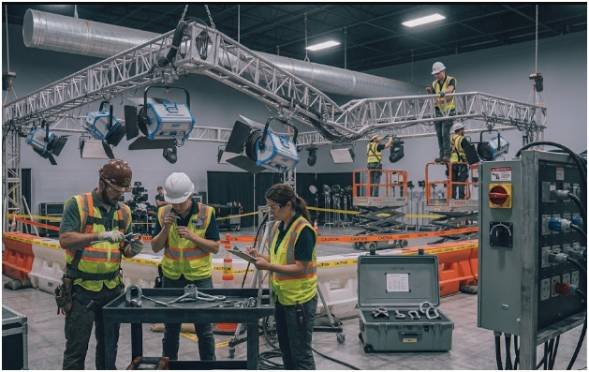
Once the immediate danger has been controlled, document the scene without introducing another hazard.
Record equipment positions, visible damage, operating conditions, response actions, witnesses, and the incident timeline. Avoid casually resetting, re-hanging, altering, or discarding failed components before they are assessed.
Damaged rigging should remain out of service until qualified personnel determine that it is safe. OSHA specifically requires defective rigging equipment to be removed from service.
Contract Services also provides entertainment-industry training covering rigging, safe overhead lifting, fall protection, electrical rigging, and emergency preparedness.
Before filming resumes, review what failed and whether the response worked. After any activation, film set rigging emergency procedures need a formal review.
Update the plan whenever equipment, load conditions, access routes, or crew responsibilities have changed.
That review turns film set rigging emergency procedures into a working safety control rather than paperwork stored in a production office.
Quick Reference for Production Safety Teams
| Safety topic | Authoritative reference |
| Emergency action planning | OSHA 29 CFR 1910.38 and 1926.35 |
| Rigging inspections | OSHA 29 CFR 1926.251 |
| Suspended-load protection | OSHA 29 CFR 1910.184 |
| Entertainment rigging training | Contract Services Safety Pass |
FAQs
1. What should happen first during a film rigging emergency?
Stop the operation, clear the hazard area, control access and energy, then activate the planned emergency response.
2. Who should shut down electrical power during a rigging failure?
Personnel assigned and qualified under the production’s electrical-safety procedures should perform electrical shutdown actions.
3. What should a performer suspension rescue plan include?
It should identify trained rescuers, rescue equipment, access, communications, EMS activation, and control of surrounding hazards.
4. How often should film set rigging emergency procedures be reviewed?
Review them before work, after major rig changes, following an incident, and whenever site conditions or responsibilities change.
When the Rig Says “No,” Production Stops
A shot can be reset. A damaged rig can be rebuilt. A preventable injury cannot be edited out later.
I would make film set rigging emergency procedures part of every rigging brief, not paperwork nobody sees. Assign stop-work authority, rehearse the rescue path, verify emergency access, and establish the exclusion zone before the first lift.
When the rig changes, the emergency plan changes with it.