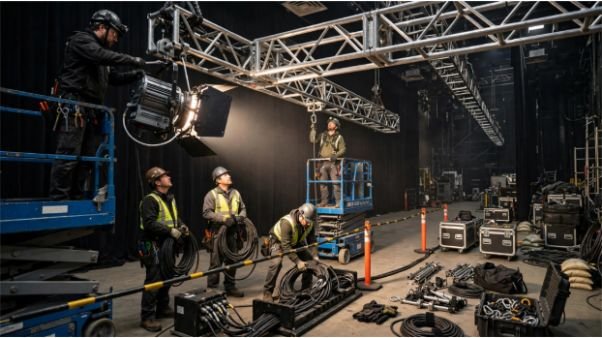
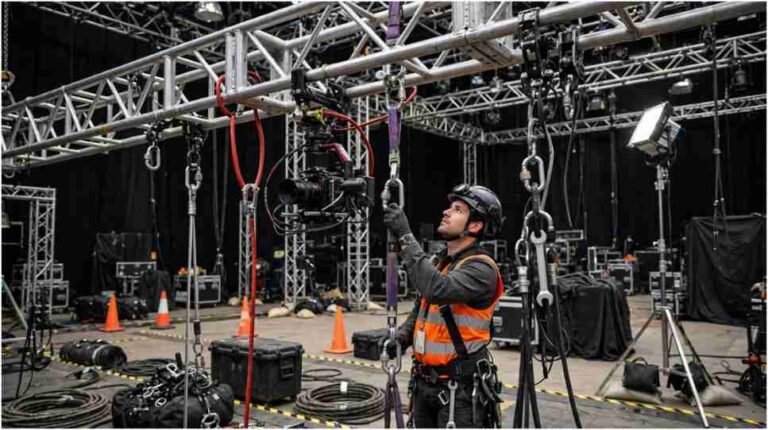
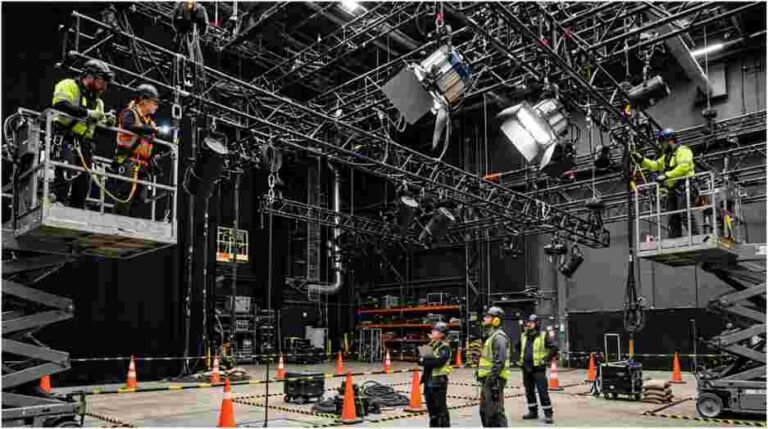
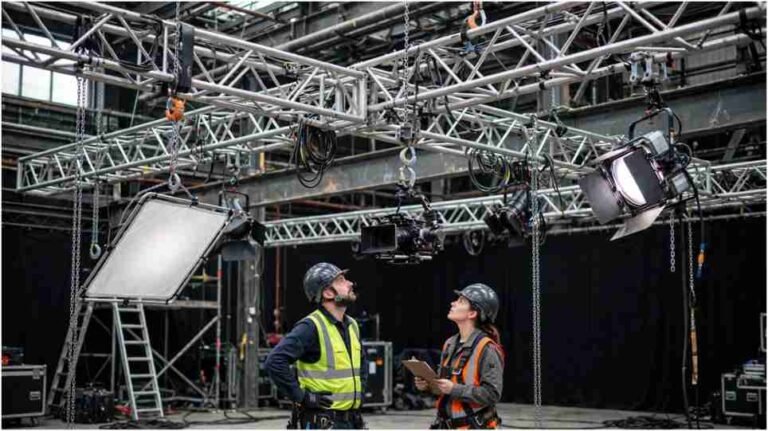
A suspended load can turn a normal setup into a line-of-fire hazard within seconds. My first rule when reviewing suspended load safety rules for film sets is simple: nobody gets a shot, adjustment, or shortcut that requires standing directly beneath a moving load. That principle applies to lighting truss, flown scenery, speakers, camera systems, green […]
A rigging risk assessment for film production should answer one hard question before anything leaves the ground: what could fail, and who could be hurt if it does? I treat the assessment as an operating document, not paperwork for the production folder. A truss can be engineered correctly at 7 a.m. and become unsafe after […]
A fixture overhead should never depend on luck, one clamp, or a rushed final check. When I evaluate how to secure suspended equipment on a film set, I trace the full load path: equipment, mount, connector, support, secondary restraint, and the space below it. That turns overhead safety into a system, not a hardware choice. […]

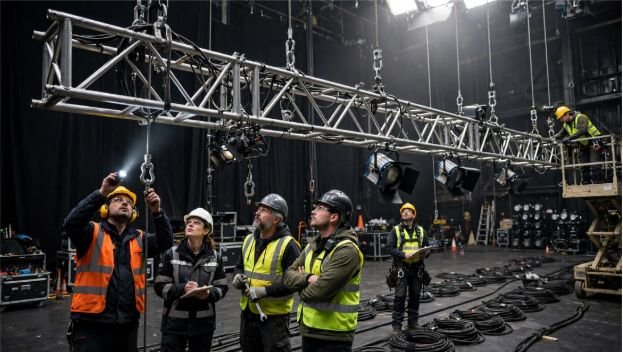
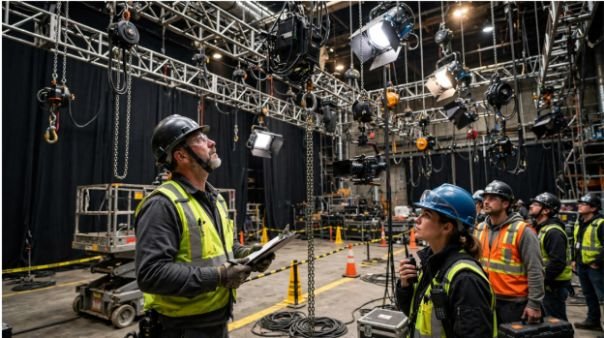
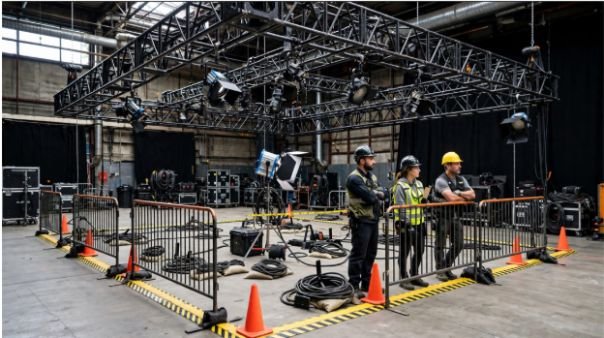
A light, truss, motor, cable, or tool overhead can turn a normal set into a struck-by hazard in seconds. Film set rigging exclusion zone safety is not just tape on the floor. The boundary must match the real hazard, control access, and change when the rigging task changes. On U.S. productions, I treat the exclusion […]
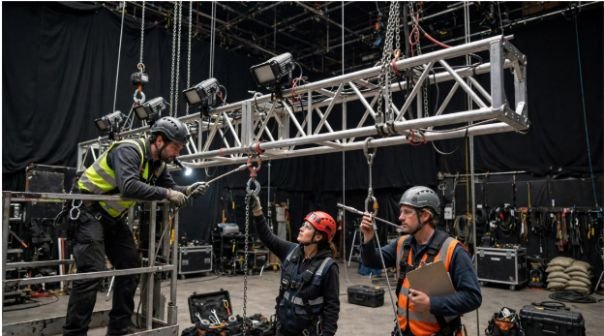
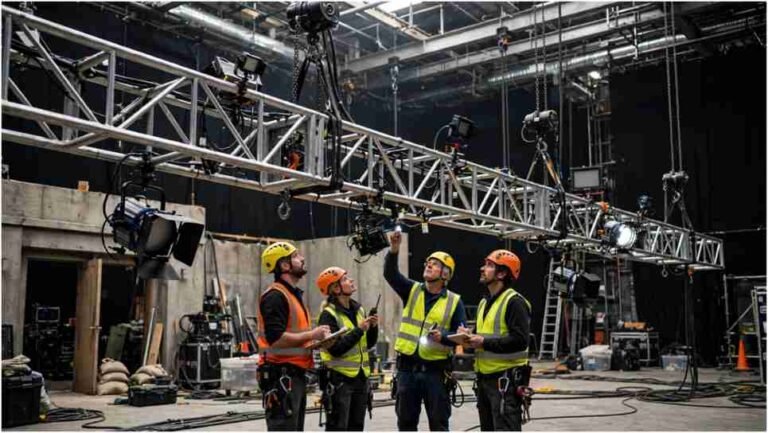
When I review a temporary overhead truss plan, I start with one question: where does every pound go after it leaves the fixture? That catches more bad assumptions than staring at a truss chart alone. Temporary truss rigging safety for film production depends on the full load path: fixture, clamp, truss, sling, hoist, support point, […]
A 2,000-pound shackle does not automatically mean you can hang a 2,000-pound load from it. Change the pull direction, sling angle, hitch, temperature, or connected component, and that usable capacity may change. That is the point I keep front and center when looking at film rigging hardware load ratings explained correctly: the number stamped onto […]
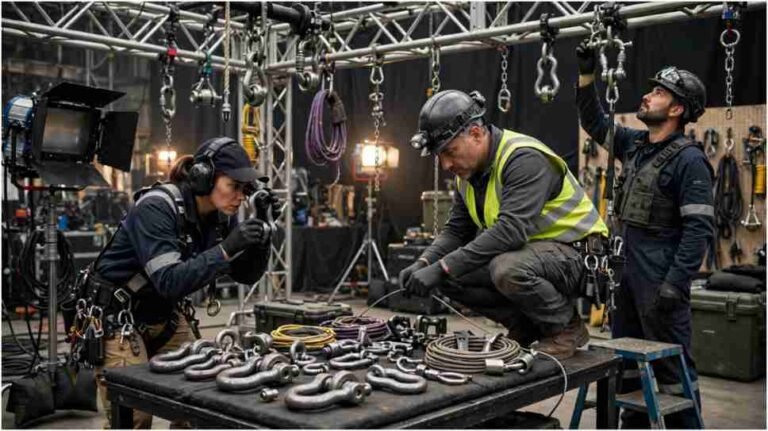
A shackle can look perfect and still be wrong for the load path. A sling can carry the weight on paper and still fail where it folds over a fitting. That is why shackle and sling safety for film rigging must be checked as a complete connection, not as separate rated parts. When I review […]
A dropped wrench does not need to be heavy to turn a routine rigging task into an emergency. For me, dropped object prevention on film sets starts before anyone climbs a lift, scaffold, truss, or greenbed. The goal is not faster reaction after something falls. It is preventing the object from becoming free. ANSI/ISEA 121-2023 […]
A film set overhead rigging load calculation can look safe on paper and still fail at one connection. The mistake I avoid is treating the rig as one total weight. The load travels through fixtures, clamps, truss, slings, shackles, hoists, anchors, and structure. I treat each part as a separate limit. Calculate the force at […]
A camera can be replaced. A failed overhead point can change a production in seconds. When I assess safe rigging anchor points for film production, I use one rule: if the structure, rating, load direction, or connection is unverified, I do not treat the point as usable. Film rigs combine expensive equipment, moving loads, tight […]