




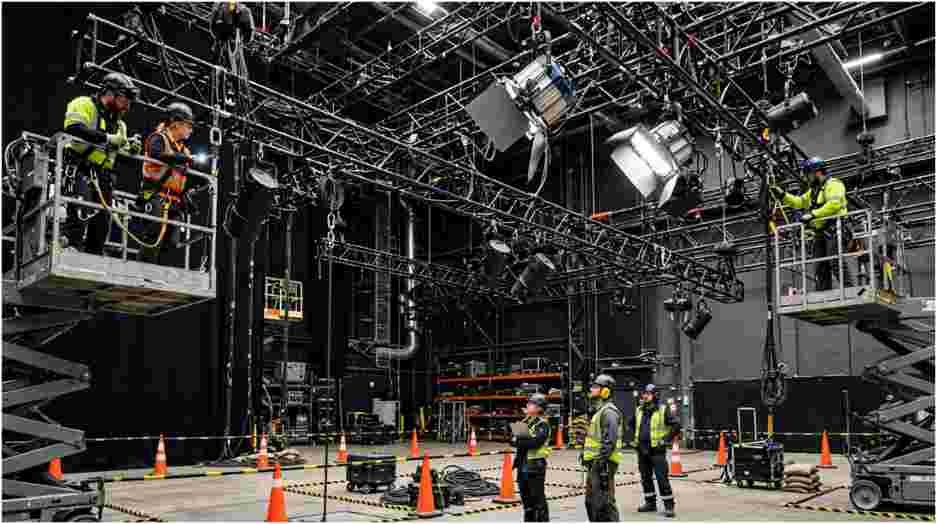
A dropped wrench does not need to be heavy to turn a routine rigging task into an emergency. For me, dropped object prevention on film sets starts before anyone climbs a lift, scaffold, truss, or greenbed. The goal is not faster reaction after something falls. It is preventing the object from becoming free.
ANSI/ISEA 121-2023 provides a useful framework for active prevention. It covers tool tethers, tool attachments, anchor attachments, and containers. OSHA separately addresses falling-object hazards through measures such as toeboards, screening, and protective canopies.
Why Small Objects Become Serious Overhead Hazards
Lighting gear, camera accessories, clamps, fasteners, cable hardware, and hand tools may all sit above active work areas. That makes dropped object prevention on film sets both a rigging problem and a people-management problem.
Weight alone is misleading. A two-pound wrench raised 20 feet stores roughly 54 joules of gravitational potential energy before losses. That is not an impact-force value because impact force also depends on how quickly the object stops.
Still, the calculation explains why “small” does not mean harmless. CPWR warns that even small falling tools can cause severe injuries and recommends preventing tools from becoming loose overhead.
My quickest test is simple: if the primary support fails, what stops the item next? If the answer is “nothing,” the setup still contains a single point of failure. The practical aim of dropped object prevention on film sets is to break that failure chain before an object enters the drop zone.
Build Dropped Object Prevention Into the Rig
The strongest dropped object prevention on film sets strategy uses layers. One control should never be expected to solve every possible failure.
| Control layer | Main purpose | Film-set example |
| Primary fixing | Holds equipment | Rated clamp, mount, pin |
| Secondary retention | Limits primary-fixing failure | Rated safety cable or restraint |
| Tool containment | Controls loose items | Tether, closed pouch, secured bag |
| Area control | Protects people below | Exclusion zone, barricade, spotter |
Use Secondary Retention as a Separate Layer
I treat the primary mount and backup as different systems. The mount positions equipment. Secondary retention should keep that equipment from reaching people if the first connection fails.
The backup must suit the item, attachment point, expected load, and manufacturer instructions. Improvised cord or unrated hardware adds uncertainty instead of reducing it.
That is why crews should understand how to calculate safe working load for film rigging before choosing clamps, shackles, tethers, or supports. Components should come from verified ratings and the actual load path rather than a visual guess.
A film set overhead rigging load calculation should also include more than the obvious fixture. Accessories, modifiers, cable, motors, brackets, and attached hardware contribute to the total suspended load.
Tool Tethering Needs a Complete Connection
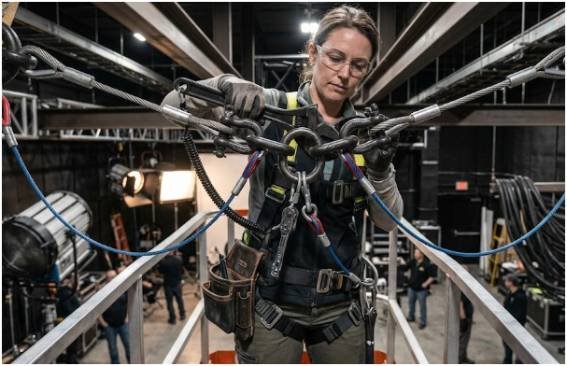
ANSI/ISEA 121-2023 treats tool attachments, tethers, anchor attachments, and containers as separate equipment categories. That distinction matters because dropped object prevention on film sets can fail at either end of a tether.
Before overhead work starts, I would verify the tool attachment, tether compatibility, and anchor. ANSI/ISEA 121-2023 establishes performance requirements for the equipment itself. It does not decide which individual tools must be tethered or when they must be tethered; those decisions come from regulations, company procedures, and equipment guidance.
Closed pouches deserve the same attention. Small hardware, adapters, phones, and multi-tools can escape open pockets or sit unnoticed on platforms. CPWR recommends tethering tools during overhead work, maintaining good housekeeping, and using stable work platforms.
Run a Clean-Surface Sweep
Before a truss, crane component, lift, or rig changes height, I assign one person to check every horizontal surface. For dropped object prevention on film sets, this catches small items that formal structural checks may miss.
The sweep should catch loose fasteners, washers, tools, tape cores, pins, packaging, and forgotten accessories. A named checker creates clearer accountability than assuming someone else inspected the surface.
Use Physical Containment Around Elevated Work
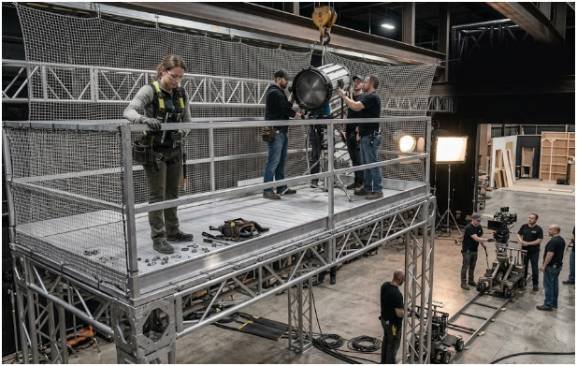
Not every hazard can be tethered. Elevated platforms and scaffolds may also need edge protection, screening, or other passive controls.
OSHA’s general-industry falling-object provisions state that toeboards used for falling-object protection generally need a minimum vertical height of 3.5 inches. Where materials extend above the toeboard, OSHA calls for additional screening or paneling to protect employees below.
For dropped object prevention on film sets, mesh, retention mats, or similar containment may help where small components could pass through open surfaces. The chosen method must fit the work platform, task, applicable rules, and production-specific risk assessment.
Treat the Floor Below as Part of the Rig
An overhead setup is not finished at the truss. The floor below belongs in the same safety plan.
I would establish an exclusion zone under active overhead work and keep nonessential people outside it. Contract Services explains that its motion-picture Safety Bulletins are industry recommendations rather than binding regulations. Applicable federal, state, and local requirements take precedence.
A warning call should support the plan, not replace it. Crews should use the production’s agreed emergency signal if something falls. But shouting after an object becomes loose is the final defense, not primary dropped object prevention on film sets.
Recheck After Every Meaningful Change
A lamp moves. A camera package gains an accessory. Scenic construction changes access. Blocking places performers beneath an area that was previously clear.
Good dropped object prevention on film sets requires another inspection after meaningful changes to load, position, support, access, or activity below. Film-industry safety guidance likewise emphasizes identifying hazards, communicating them to affected crew, and reassessing working conditions as necessary.
A setup approved in the morning should not automatically receive a free pass for the afternoon shot.
Use a Two-Zone Drop Audit Before Cameras Roll
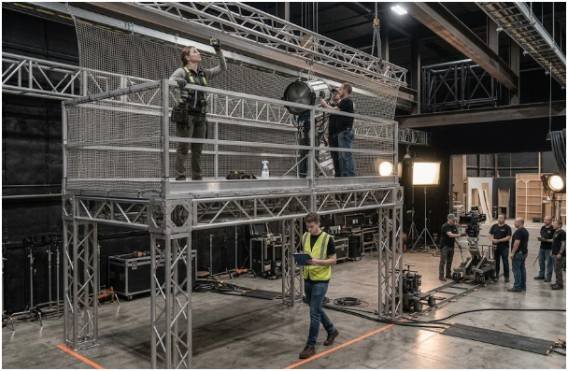
My final check divides the problem into two zones.
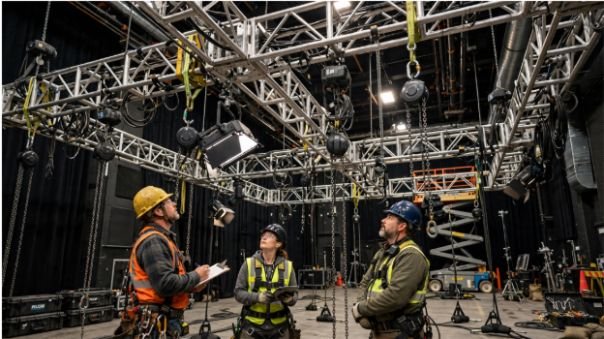
Zone A is everything overhead. I look for anything that could detach, roll, vibrate loose, spill, or simply be forgotten. That includes clamps, tools, accessories, fasteners, cable hardware, bags, and secondary restraints.
Zone B is everything below. I check cast marks, camera paths, crew stations, monitors, doorways, worktables, and emergency access.
This two-zone audit adds a practical layer to dropped object prevention on film sets because it catches an easy-to-miss problem: the hardware may not have changed, but the people underneath it have.
These two zone audit ensures to safe rigging anchor points for film production. A properly rated tether can still form a weak system if its anchor is unsuitable or shares the same failure point as the primary attachment.
A technically secure overhead system and a poorly controlled floor can still create unnecessary exposure.
FAQ
1. What is the best way to prevent tools from falling on a film set?
Use compatible rated tool attachments, tethers, anchors, and closed containers while controlling access to the potential drop zone below.
2. Does ANSI/ISEA 121-2023 apply to film production?
ANSI/ISEA 121-2023 is a voluntary occupational standard that productions can use alongside applicable regulations, manufacturer instructions, and company safety rules.
3. Are safety cables enough for overhead film equipment?
No. Dropped object prevention on film sets should combine proper primary rigging, suitable secondary retention, tool control, inspections, containment, and exclusion measures.
4. When should an overhead film rig be checked again?
Recheck after assembly, before operation, and whenever equipment, load, position, support conditions, or surrounding activity changes.
Make Gravity Boring
The best overhead safety system is the one nobody notices because nothing falls.
For dropped object prevention on film sets, I finish every setup with one question: what happens after the first failure? A strong answer includes verified backup retention, controlled tools, a clear area below, and crew members who understand the plan.
Run the two-zone audit before the next overhead setup. It takes only a few minutes, yet it forces the team to inspect both sides of the risk: the hardware above and the people below.