






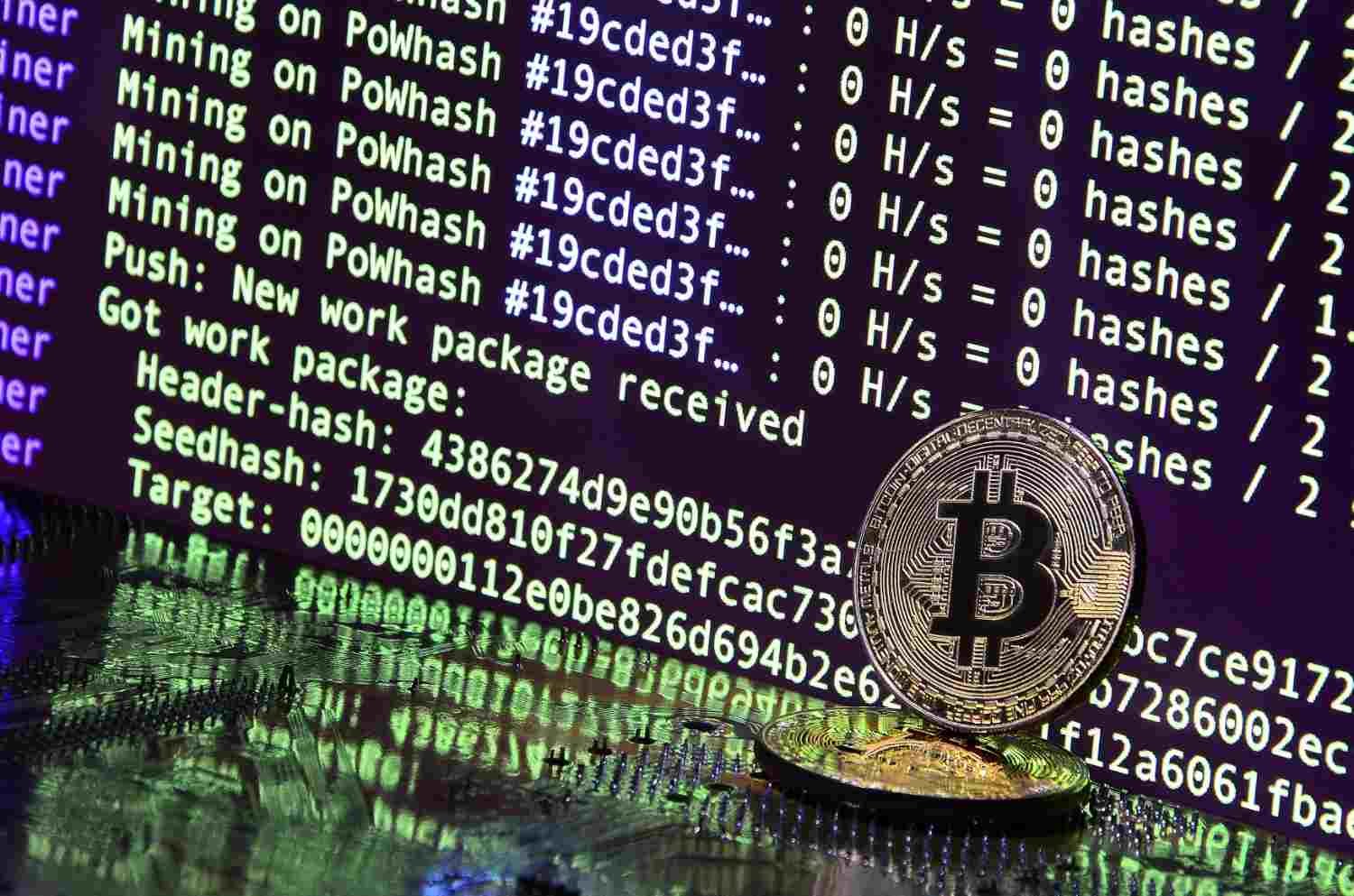
Bitcoin’s price may dominate financial headlines in the United States, but its strictly controlled supply tells the more important long-term story. When I began researching how many Bitcoin are there, I discovered that the answer involves more than subtracting one number from 21 million.
As of September 2026, approximately 20.08 million BTC exist, representing about 95.6% of the intended maximum supply. That leaves roughly 920,000 Bitcoin to be issued. The precise figure changes whenever miners add a new block to the blockchain, so any published total remains a dated snapshot.
Table of Contents
ToggleWhat Is Bitcoin’s Maximum Supply?
Bitcoin’s protocol limits the total supply to approximately 21 million coins. Network nodes enforce this monetary policy, meaning no company, central bank, or government can independently create additional BTC.
That design differs from the US dollar. The Federal Reserve can influence the dollar supply in response to inflation, employment, and economic conditions. Bitcoin instead follows a public issuance schedule controlled by its consensus rules.
Although people commonly refer to an exact 21 million cap, Bitcoin’s projected terminal supply is slightly lower. Because the protocol calculates block subsidies in whole satoshis and rounds increasingly small rewards downward, the final total is expected to stop at approximately 20,999,999.9769 BTC. One Bitcoin contains 100 million satoshis.
How Many Bitcoins Are Left to Mine?
Around 920,000 BTC remain to be issued under the current network rules. The calculation appears simple: subtract the approximately 20.08 million coins already created from the 21 million maximum.
However, miners will not produce the remaining supply at today’s rate. Bitcoin’s halving system repeatedly reduces the block subsidy, spreading the last portion across more than a century.
People commonly search for Bitcoins “left to mine,” but “left to be issued” is more accurate. Mining describes the competitive process that secures the network and confirms blocks. The block subsidy is the part of the miner’s reward that introduces new coins.
How Many Bitcoins Are Mined Every Day?
The current block subsidy is 3.125 BTC. Bitcoin produces approximately 144 blocks during an average 24-hour period, based on its target interval of one block every ten minutes.
Multiplying 144 blocks by 3.125 BTC gives an estimated daily issuance of 450 BTC. That would equal approximately 164,250 new coins annually if blocks arrived at the average rate every day.
Actual daily production can be higher or lower because blocks do not arrive at perfectly uniform intervals. Bitcoin periodically adjusts mining difficulty to keep the long-term average near ten minutes.
Transaction fees should not be confused with new issuance. The block subsidy creates new Bitcoin, while transaction fees move existing BTC from users to miners.
Why Does Bitcoin Halving Reduce New Supply?
A Bitcoin halving reduces the block subsidy after every 210,000 blocks, which generally takes around four years. The network began with a reward of 50 BTC per block. Later halvings reduced it to 25, 12.5, 6.25, and then 3.125 BTC.
The April 2024 halving established the current subsidy. The next event is expected to reduce it to 1.5625 BTC per block, lowering estimated daily issuance from about 450 BTC to around 225 BTC.
Halving explains why more than 95% of Bitcoin’s supply has already been created while the final portion will take generations to issue. Each reduction slows the supply growth rate without changing the overall cap.
When Will the Last Bitcoin Be Mined?
The final fractions of new Bitcoin are expected to enter circulation around 2140. This is an approximate date because the schedule follows block height rather than a standard calendar.
As the subsidy becomes progressively smaller, miners will receive fewer newly issued satoshis. Eventually, the subsidy will round down to zero, and no more BTC will enter circulation through mining.
That does not mean the Bitcoin network must stop operating. Miners already receive transaction fees in addition to block subsidies. After new issuance ends, those fees are expected to become their primary financial incentive for confirming transactions and protecting the network.
How Many Bitcoins Are Permanently Lost?
Researchers cannot determine the precise number of lost coins. Estimates commonly range from approximately 2.3 million to 4 million BTC, potentially reducing the practically accessible supply to around 16 million to 18 million coins. Some estimates place the inaccessible amount closer to 3 million or 4 million BTC.
Coins can become inaccessible when owners lose private keys, forget wallet passwords, discard storage devices, or die without leaving recovery information. Early holders may have treated their coins casually before Bitcoin became financially valuable.
Still, an inactive wallet does not prove a permanent loss. Its owner might simply be holding the assets for many years. Long-dormant wallets occasionally become active again, so describing every unmoved coin as lost would exaggerate the evidence.
Lost coins remain recorded on the blockchain and count toward the issued supply. They are economically unavailable only when nobody can produce the private key required to move them.
Can Bitcoin’s 21 Million Limit Ever Change?
Developers could theoretically propose software that increases the cap, but they could not force the entire Bitcoin network to accept it. Node operators, miners, businesses and users would need to adopt the altered rules broadly.
Such a proposal would probably face considerable resistance because predictable scarcity forms a central part of Bitcoin’s identity. Participants who rejected the change could continue following the original rules, potentially creating a separate blockchain.
The limit is therefore better described as a strongly enforced consensus rule than an unchangeable law of nature. No individual organization controls it.
Does a Limited Supply Guarantee Bitcoin’s Value?
A fixed supply does not automatically make an asset valuable. Bitcoin also requires demand, functional infrastructure, network security and confidence among users.
This distinction matters for American investors. Bitcoin can experience significant price volatility despite its limited issuance. Regulatory developments, institutional demand, cybersecurity events, interest rates and broader market sentiment can all influence its US dollar value.
The supply cap provides predictability, but it does not guarantee returns. Investors should evaluate their risk tolerance and financial objectives rather than assuming scarcity alone will produce higher prices.
Frequently Asked Questions (FAQs)
1. How many Bitcoins are there right now?
Approximately 20.08 million BTC existed as of September 2026. Because miners continually add blocks and receive subsidies, readers should consult a live supply tracker for the latest total.
2. Why can only 21 million Bitcoins exist?
Bitcoin’s consensus rules define a declining issuance schedule with an approximate 21 million limit. Independently operated network nodes verify blocks and reject any new coins that violate those rules.
3. Will all 21 million Bitcoins actually be mined?
Not exactly. Rounding at the satoshi level should leave the terminal supply slightly below 21 million, at approximately 20,999,999.9769 BTC.
4. What happens to mining after the last Bitcoin appears?
Miners can continue validating blocks and processing transactions. Instead of collecting newly issued coins, they are expected to rely primarily on transaction fees paid by network users.
Final Perspective
When I look beyond the headline number, Bitcoin’s real distinction becomes its transparent monetary schedule. Approximately 20.08 million coins exist, around 920,000 remain, and halvings will gradually reduce new issuance until approximately 2140.
The circulating total does not reveal how many coins remain accessible, and estimates of lost Bitcoin cannot provide complete certainty. Even so, the network allows anyone to examine its supply rules. That combination of limited issuance, public verification and decentralized enforcement makes Bitcoin’s supply model unlike conventional US currency systems.




One comment on “How Many Bitcoins Are There? Complete Supply Explained”