





A cable camera can look perfectly healthy minutes before a small defect becomes a failed run, noisy feed, damaged connector, or unsafe rigging condition. That is why cable camera maintenance best practices should focus on finding stress before it becomes failure. The most useful habit is to inspect the load-bearing system separately from the camera’s power, control, video, and fiber lines, because those parts fail differently.
Separate Structural Lines From Signal Cables
A cable-camera rig may use load-bearing wire rope or synthetic line alongside power, Ethernet, coax, control, or fiber-optic cabling. A damaged data cable may cause intermittent video; damage to a load-bearing line can affect the safety of the moving system.
Understanding how cable camera systems work makes inspection easier because it clarifies what carries load and what carries power or data.
Inspect the Places Where Stress Repeats
Damage tends to develop where lines bend, enter a connector, cross a sheave, wrap onto a drum, or repeatedly change direction.
OSHA’s construction-crane wire-rope rule is not a cable-camera-specific standard, but it provides a useful U.S. inspection reference. It highlights terminal ends, reverse bends, drum pickup points, flange and crossover points, and rope passing over sheaves. Warning conditions include kinking, crushing, birdcaging, corrosion, heat damage, broken strands, and damaged end connections.
Before operation, inspect accessible load-bearing lines for flattened sections, broken wires or fibers, abrasion, corrosion, heat marks, and damaged terminations. On camera-side cables, pay special attention to the first few inches beside connectors, where repeated flexing can damage conductors before the jacket looks obviously bad.
Respect Bend Radius During Use and Storage
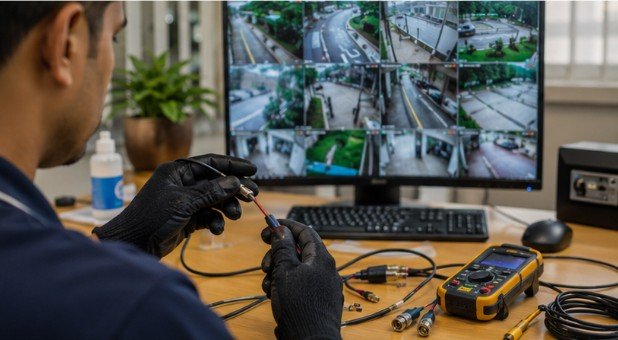
A cable can still pass a basic continuity check while being weakened by poor handling. Tight bends, hard kinks, sharp corners, and overtightened ties all increase mechanical stress and can compromise cable performance.
Fiber deserves extra care. One current Belden broadcast tactical-fiber specification lists a 94.5 mm minimum bend radius during installation and 63 mm during long-term operation. Bend limits vary by cable and should come from the manufacturer.
Coil cables in broad, natural loops. Use hook-and-loop straps without crushing the jacket, protect connector caps, and disconnect by gripping the connector body instead of tugging the cord.
Keep Power and Data Routing Under Control
Poor routing can create failures even when the cable itself is undamaged. CISA’s industrial-network guidance notes that electrical noise from power wiring can couple into low-voltage data cables and reduce reliability; increasing separation can reduce that interference.
On set, avoid long parallel runs of sensitive signal cable beside high-current power where practical. Follow manufacturer separation and shielding guidance, and protect exposed runs from foot traffic, vehicles, sharp edges, water, and moving machinery.
Build Inspection Frequency Around Actual Use
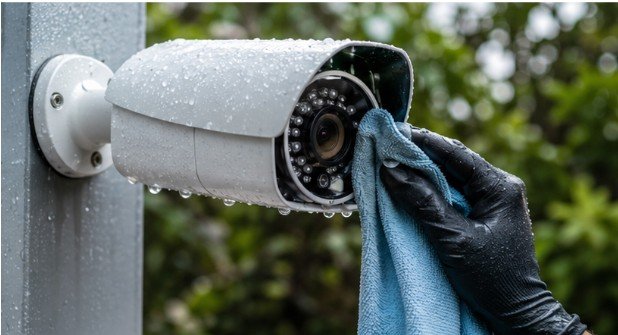
A rig used for one controlled studio day does not experience the same wear as a system operating over a stadium for a week. Inspection frequency should reflect use, loading, weather, transport, and manufacturer requirements.
For crane wire rope covered by its rule, OSHA uses a layered approach: visual inspection each shift, documented monthly inspection, and a comprehensive annual inspection by a qualified person. Those requirements do not automatically govern every cable-camera system, but the layered model is useful.
| Inspection point | What to check |
| Before operation | Lines, anchors, connectors, sheaves, loose hardware |
| After unusual events | Snags, shock loads, water, impact, abnormal noise |
| Periodic review | Full line length, hidden areas, drums, wear history |
| Before storage | Clean, dry, coil correctly, cap and label |
A snag, uncontrolled stop, unexpected overload, severe weather, electrical contact, or impact should trigger an additional inspection rather than waiting for the next scheduled service. OSHA specifically treats electrical contact, broken strands, structural distortion, and significant damage as serious wire-rope conditions in equipment covered by its rule.
Check the Motion Hardware, Not Just the Cable
Winches, drums, sheaves, rollers, encoders, and brakes affect how lines are loaded. A line that repeatedly tracks against a flange or enters a sheave poorly can wear faster even if it was correctly specified. OSHA similarly identifies drum contact areas, terminal ends, reverse bends, and sheaves as locations deserving particular attention during wire-rope inspections.
Review how to set up cable cam rigs before changing alignment or routing. During a low-speed test, listen and watch for grinding, clicking, uneven spooling, line jumping, unexpected vibration, or rubbing.
Never Solve Sag by Guessing at Tension
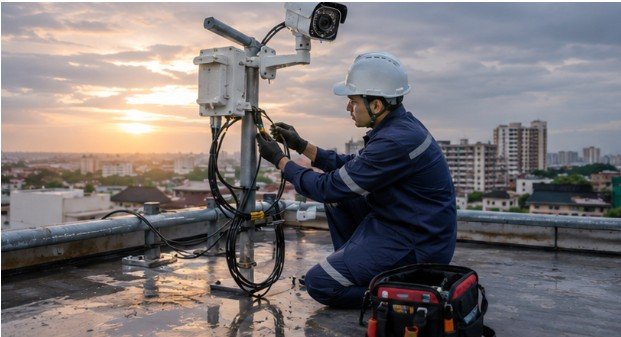
Adding tension may seem like an easy fix for sag or poor tracking, but it also changes forces at anchors, winches, lines, and supporting structures. Cable tension should therefore come from the engineered setup rather than visual guesswork.
Review how to calculate cable cam tension before making adjustments, then stay within the limits established by the system designer or manufacturer.
If one line repeatedly wears faster than the others, the real problem may be alignment, contamination, unequal load sharing, or geometry. Maintenance records make patterns like these much easier to spot.
A Five-Minute Pre-Run Check
Use the same sequence before every operating period:
- Confirm anchors, terminations, shackles, pins, and safety hardware.
- Scan load-bearing lines for deformation, abrasion, corrosion, or broken wires or fibers.
- Check sheaves and drums for clean tracking and debris.
- Inspect power, control, video, and fiber connectors for moisture, looseness, bent contacts, or strain.
- Run slowly through the planned path while watching spooling, clearance, signal stability, and vibration.
If structural integrity is uncertain, stop and refer the component to the qualified person responsible for the rig. ESTA’s entertainment-rigging program includes inspection guidance and standards covering entertainment rigging systems, powered hoists, static suspension systems, and related equipment.
Frequently Asked Questions
1. How often should a cable camera system be inspected?
Check it visually before use and after unusual events. Deeper documented inspections should follow the manufacturer, engineering plan, service history, and applicable workplace requirements.
2. Can a slightly kinked cable still be used?
Do not assume so. Kinking can permanently alter load-bearing wire rope and can damage signal or fiber cables. Evaluate the component against the manufacturer’s removal criteria.
3. Should cable camera lines be lubricated?
Only if the specific rope manufacturer allows it and specifies the product. OSHA also warns against lubricants that make wire-rope inspection difficult.
4. What is the most important maintenance habit?
Inspect known stress points consistently. Connectors, terminations, sheaves, drum contact areas, bends, and exposed runs often reveal trouble earlier than a quick overall glance.
Reliability Starts Before the Camera Moves
Good maintenance is not about having the longest checklist. It is about making defects visible early, separating structural safety from signal reliability, and giving crews a clear reason to stop when something looks wrong.
Treat every run as one connected system: line, anchor, winch, sheave, connector, cable, and camera. Five disciplined minutes before movement can protect the shot, the equipment, and the people working around it.