



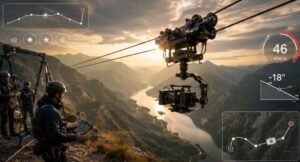
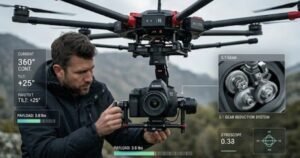
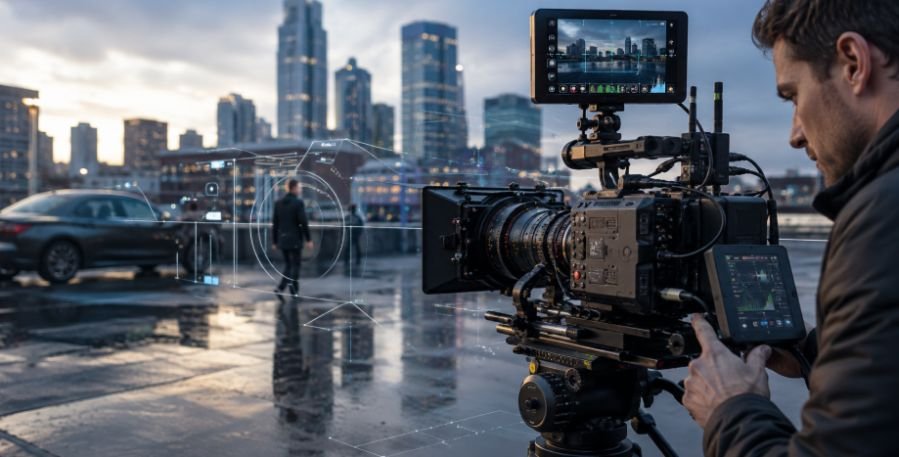
I started noticing how quickly camera technology was changing when autofocus stopped feeling like a simple setting and started behaving more like a second set of eyes. A camera could recognize a person, follow their movement, and keep adjusting focus without needing constant input. That made me curious about what was actually happening inside these newer systems and where the technology could genuinely help on a real set.
I also found that the most useful part of AI in filmmaking isn’t replacing the person behind the camera. It is taking care of repetitive technical work so filmmakers can spend more attention on composition, timing, movement, and performance. That distinction matters because smarter cameras are becoming more capable without making creative judgment any less important.
What AI-Assisted Camera Systems Actually Do
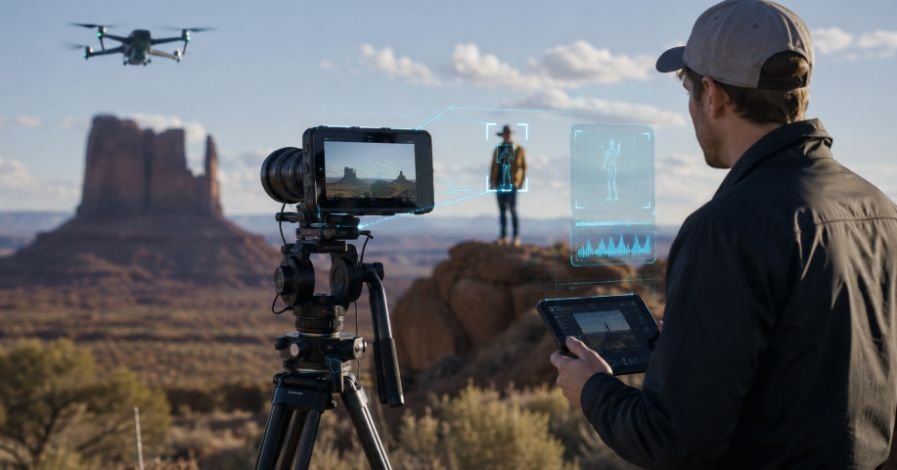
AI-assisted camera systems combine image processing with computer vision and machine learning to identify subjects and respond to movement. Instead of treating everything in the frame equally, the camera can recognize a person, face, eye, animal, vehicle, or other subject and use that information to make focusing and tracking decisions.
Modern systems increasingly include an AI processing unit that handles these recognition tasks alongside the camera’s regular image processor. Sony’s latest Cinema Line FX5, for example, uses AI-based human pose estimation to recognize a subject’s eyes, head, and body while maintaining autofocus performance in difficult conditions.
That does not mean the camera decides how a scene should look. The cinematographer still controls lens choice, framing, lighting, movement, depth of field, and the visual language of the shot.
Why AI Autofocus Feels Different
Traditional autofocus can find a sharp point, but newer systems can make a more informed decision about what should remain sharp.
Recognition Instead of Simple Distance Tracking
The difference becomes obvious when a subject moves through a complicated frame. A person can turn sideways, walk behind another person, or move toward the camera while the background contains plenty of competing detail. Subject recognition gives the camera another layer of information when deciding what to prioritize.
Sony’s current cameras can recognize humans, animals, birds, insects, cars, trains, and aircraft, while Canon’s cinema cameras use advanced Dual Pixel autofocus technology to support continuous subject tracking.
For filmmakers shooting documentaries, events, sports, or fast-moving scenes, that extra assistance can reduce the number of shots lost because focus briefly jumps to the wrong part of the frame.
Where Smarter Tracking Helps Small Crews
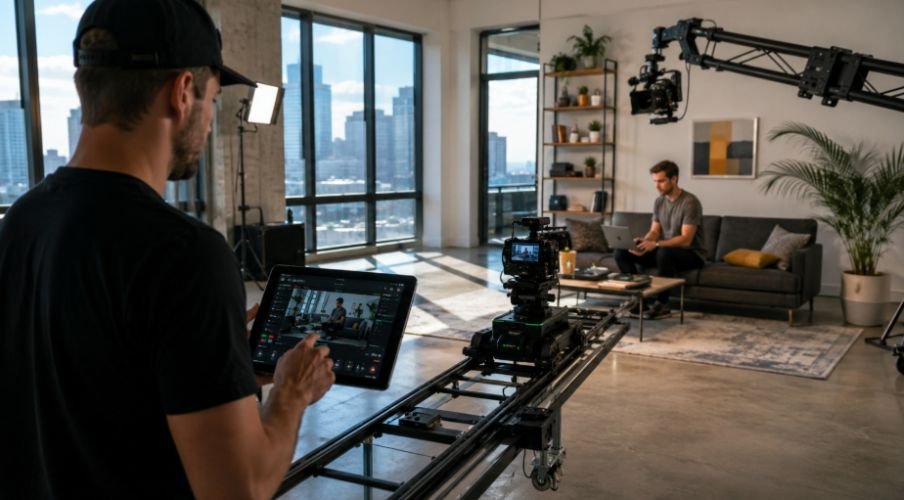
AI assistance becomes especially valuable when one person has to handle several responsibilities.
A solo filmmaker may need to frame the shot, move the camera, monitor audio, watch exposure, and maintain focus at the same time. A reliable tracking system can take one of those jobs off the operator’s hands without taking creative control away.
Movement Gets Easier to Manage
Gimbal work is a good example. If a subject walks toward the camera while the operator moves backward, the operator has to think about footwork, framing, obstacles, and focus simultaneously. Real-time tracking can keep the camera’s attention on the selected subject while the operator concentrates on movement and composition.
Panasonic offers AI-powered automated shooting systems that can track a selected person, identify subjects using facial recognition, and support automated framing for certain professional cameras.
That can be particularly useful for smaller productions where adding another dedicated operator isn’t practical.
A dependable camera package also needs enough power to keep these systems running alongside monitors, wireless accessories, and recording equipment. For longer production days, planning around best power solutions for long cinema shoots can prevent a smart camera workflow from being interrupted by a basic power problem.
AI Is Moving Beyond Autofocus
The bigger change is that AI isn’t staying inside the autofocus menu.
Camera manufacturers are experimenting with automated framing, subject recognition, stabilization, exposure assistance, and other forms of computational support. Sony’s FX5, for example, combines AI-based subject recognition with automatic white balance technology that uses deep-learning estimation to interpret light sources.
The underlying deep learning approach allows systems to make decisions from patterns learned during development rather than relying only on simple rules. For filmmakers, the benefit is less about understanding the technology itself and more about getting more dependable assistance when conditions change quickly.
This becomes even more interesting when cameras are paired with software and post-production tools. AI can help organize footage, identify subjects, and make large media libraries easier to search. The camera is gradually becoming one part of a broader intelligent production workflow.
Build the Camera Around the Shoot
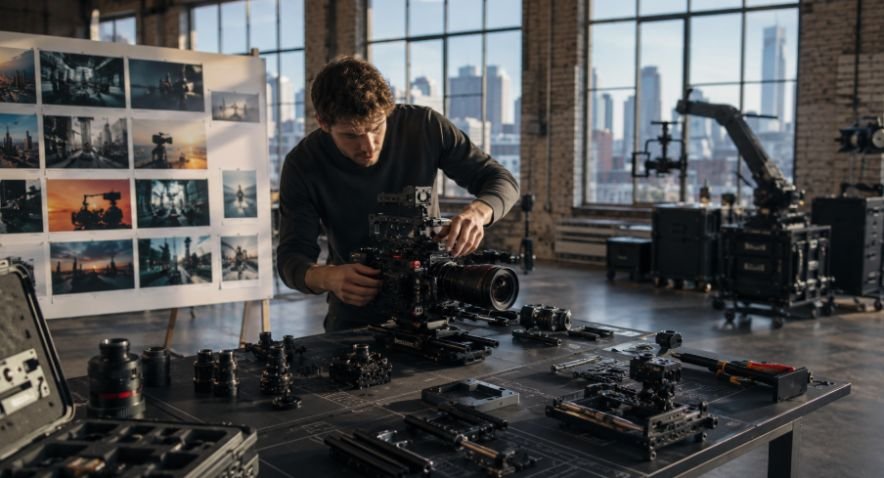
It is easy to get distracted by a long feature list when shopping for an AI-capable camera. A better approach is to start with the type of production you actually shoot.
A documentary operator may value reliable tracking, compact lenses, stabilization, and long battery life. A narrative crew may care more about manual focus control, cinema lenses, monitoring, and repeatable focus pulls. A creator working alone may want a lightweight body that can handle most technical tasks without adding another operator.
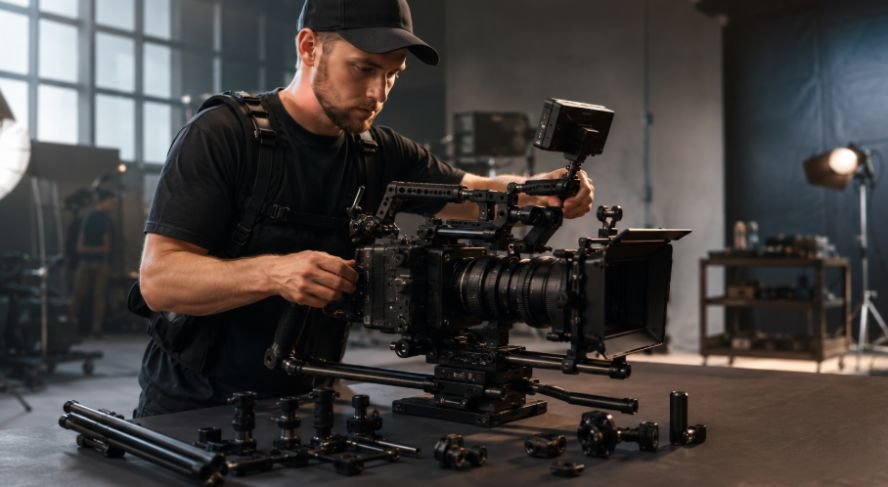
That is why understanding how to build a portable cinema camera package matters. AI should support the package rather than dictate it. The best setup is the one that makes the entire shooting process easier, not simply the one with the most automated features.
Where Human Control Still Matters
AI systems are useful, but they are not perfect.
A subject can disappear behind an object, two people can cross paths, or the camera can decide that a different person is the better tracking target. Even advanced systems can struggle when the visual information becomes ambiguous.
Creative Focus Is Different From Correct Focus
A cinematographer may intentionally move focus away from the main subject to reveal something in the foreground. A slow rack focus may be timed to dialogue or performance. An automated system may correctly identify the subject and still make the wrong creative choice.
Research into intelligent cinematography also shows that AI applications extend far beyond autofocus into areas such as automated camera calibration, 3D content acquisition, virtual production, live production, and aerial filmmaking.
That is where machine learning should be viewed as an assistant rather than a director. It can recognize patterns and react quickly, but the reason for a shot still comes from the filmmaker.
Better Monitoring Makes AI More Useful
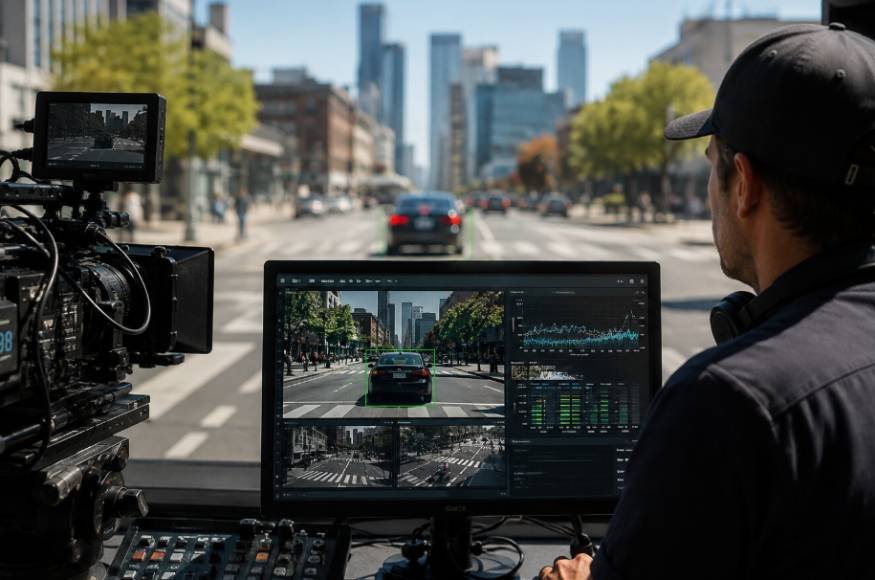
As cameras become smarter, monitoring becomes even more important. Operators need to see whether focus is holding, where the camera is placing attention, and whether exposure and framing remain where they should be.
A good external display can make those decisions easier to verify. For a rig using a monitor and recorder, knowing how to choose a monitor recorder for cinema cameras can help create a workflow where automation remains visible and controllable instead of becoming something the operator simply trusts.
Modern AI camera systems are also increasingly built around computational imaging, where processing contributes directly to how the captured information is interpreted. That means the relationship between the sensor, processor, autofocus system, and operator will continue to become more integrated.
Frequently Asked Questions
1. What are AI-assisted camera systems?
They use computer vision and machine learning to recognize subjects and assist with autofocus, tracking, framing, and other camera functions.
2. Are AI camera systems useful for professional filmmaking?
Yes. They can be especially useful for documentaries, events, sports, solo productions, and scenes with unpredictable movement.
3. Can AI replace a focus puller?
Not reliably in every situation. AI can handle many tracking tasks, but controlled narrative work often still benefits from a skilled focus puller and manual control.
4. What happens when AI tracking fails?
The operator can usually change the tracking target, adjust autofocus settings, or switch to manual focus. Human oversight remains important.
Why Smarter Cameras Still Need Smarter Filmmakers
AI-assisted camera systems are becoming valuable because they reduce some of the technical attention required during production. A camera that can recognize a subject, follow movement, and maintain focus gives filmmakers more room to concentrate on the shot itself. The technology is most useful when it quietly handles repetitive work without interfering with creative decisions.
The future of cinematography is unlikely to be about choosing between humans and automation. It will be about building camera systems where both work together, with technology handling predictable tasks and filmmakers deciding what the audience should actually see.