



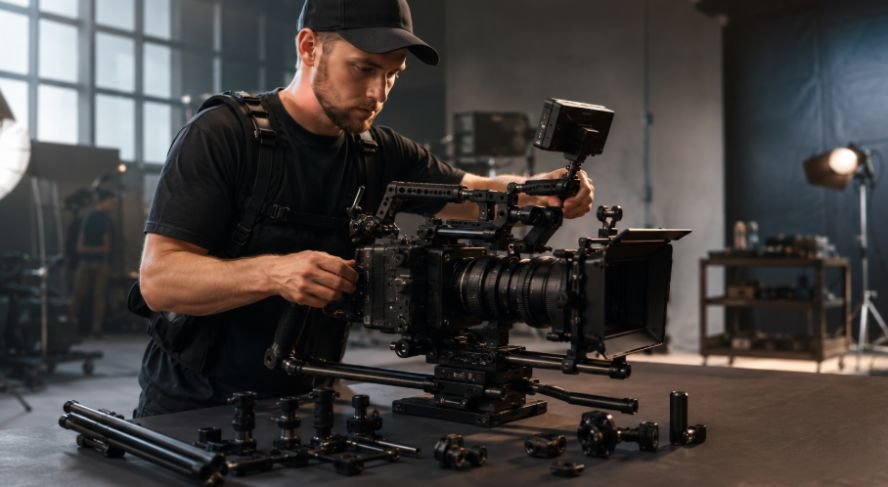
I’ve learned that a camera can be ready to roll long before the operator is actually ready to shoot. Delays often come from changing support, mounting a monitor, moving a handle, reconnecting power, or rebuilding the setup for the next shot. A well-planned modular camera rig setup removes much of that friction without turning the camera into an oversized pile of accessories.
I also found that the best rig is rarely the biggest one. A useful setup changes with the scene. It can stay light for handheld work, gain rods and a follow focus for controlled shots, or move onto a tripod without forcing the crew to rebuild everything. That flexibility makes modular rigging valuable on real production days.
What Makes a Camera Rig Truly Modular?
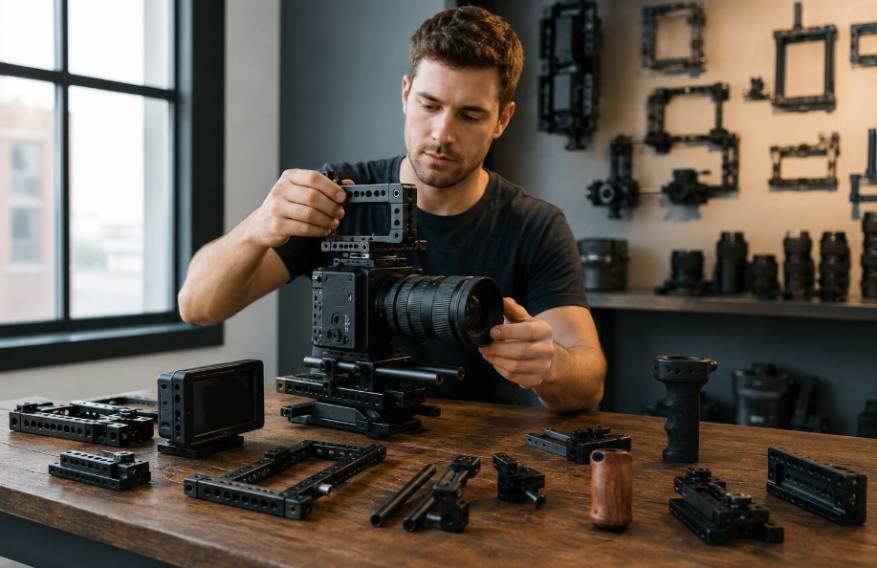
A modular rig starts with a camera cage or base that gives the system a reliable foundation. Standardized mounting points let you add handles, rods, monitors, batteries, and other accessories as needed.
Modular does not mean fully loaded. Each part should have a job and be removable. A documentary setup may need a top handle and compact power, while a narrative setup may need rods, a follow focus, matte box, and lens support.
Build Around the Camera, Not the Accessory List
Start with the camera, lens, and way you plan to shoot. That decision should determine the rest of the rig.
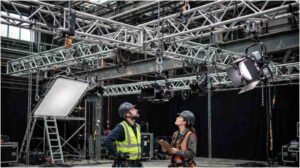
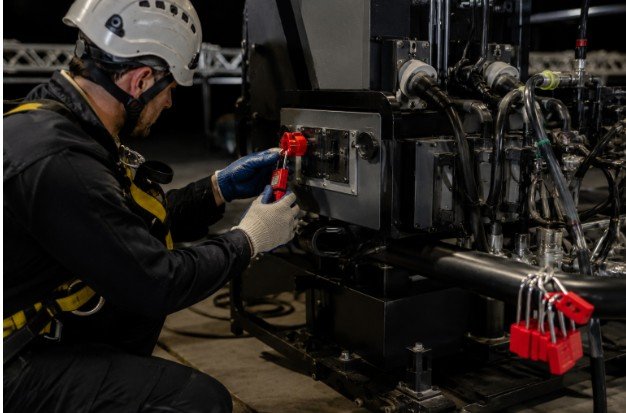
A cage is usually the first step because it provides mounting points while protecting the camera. Whenever cameras, monitors, lights, or related accessories are positioned above crew or talent, crews should also understand how to secure suspended equipment on a film set safely so mounting hardware, secondary restraints, and support points are appropriate for the load.
Choose one that preserves access to essential controls and ports.
Next, add a baseplate that works with your tripod or support system. Keeping the same quick-release standard across support gear can save repeated mounting work during a shoot.
Use Rods Where They Actually Help
15mm rods create a standardized way to support accessories such as follow focuses, matte boxes, lens supports, and battery plates.
Avoid adding rods simply because a cinema rig looks incomplete. If the lens is light and the camera provides the controls you need, they may add weight without much value.
Make Weight and Balance Part of the Setup
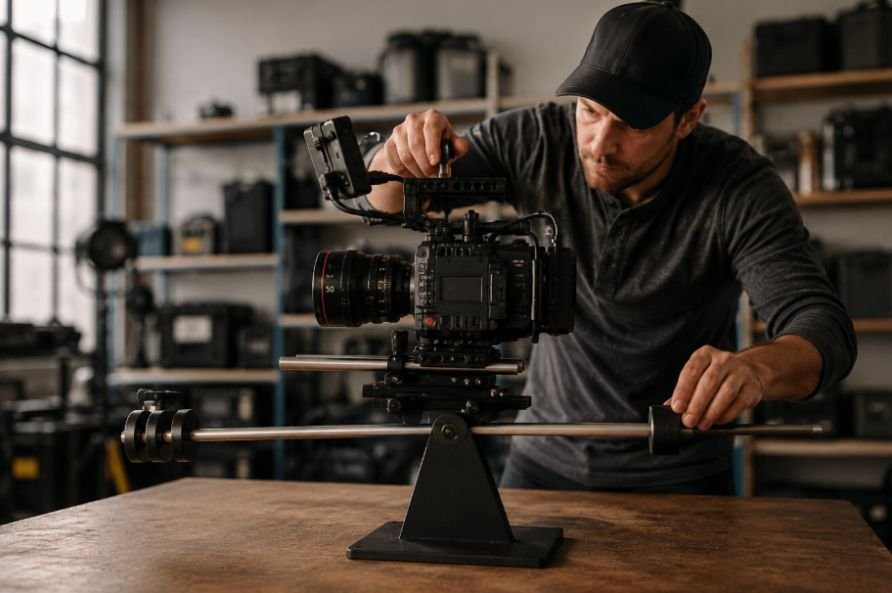
A rig that looks impressive on a cart can become uncomfortable after several hours on a shoulder. Weight distribution matters as much as total weight.
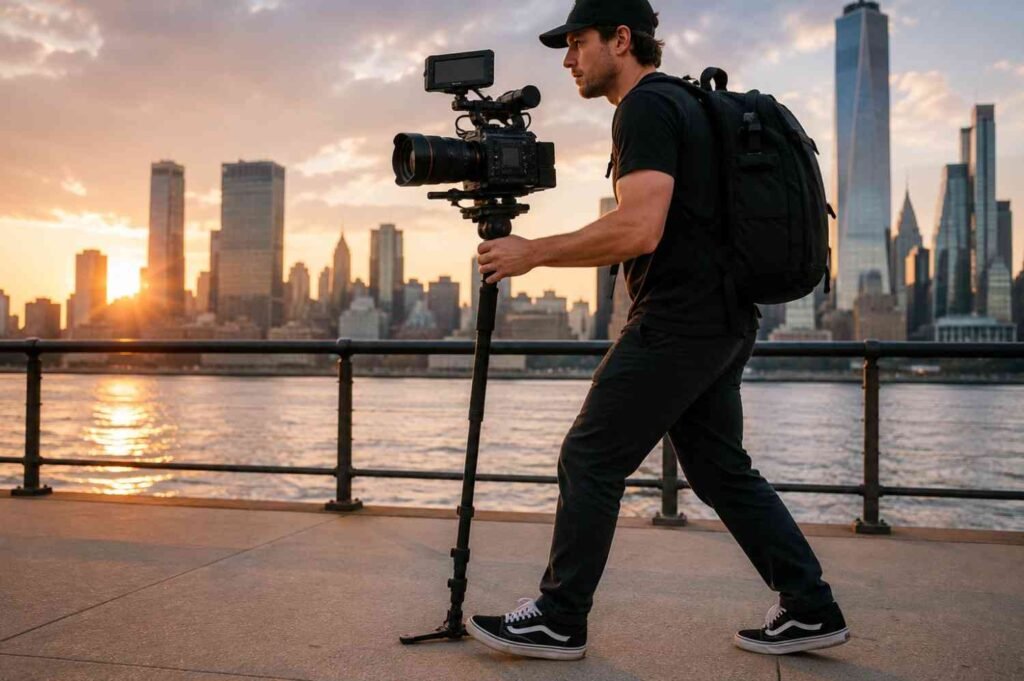
Keep the center of gravity close to your body during handheld or shoulder-mounted shooting. A rear-mounted battery can help counterbalance a front-heavy lens, while a side handle provides another contact point.
Top and side handles can make low-angle work and repositioning easier.
Design One Rig for Multiple Shooting Situations
For a tripod shot, remove the shoulder pad and unnecessary handles while keeping the cage, baseplate, and power system intact. For handheld work, add shoulder support and a side grip. For a gimbal, strip the setup down to the essentials.
This is especially useful for indie productions, where one person may handle camera operation, focus, media, and equipment changes.
It also works when moving between professional cinema cameras for indie films and smaller bodies.
Keep Power, Monitoring, and Cables Practical
Power is easy to overcomplicate. A larger V-mount or Gold Mount battery can power multiple compatible devices through the appropriate distribution system, reducing frequent swaps. On a shoulder rig, a rear-mounted battery may also help balance a front-heavy camera.
External monitors help when the built-in display is not enough, but position one where the operator can see it comfortably.
Cable management matters too. Short, properly routed cables are less likely to snag, disconnect, or stress ports. Use clamps where possible, with enough slack for normal movement.
Avoid Building More Than You Need
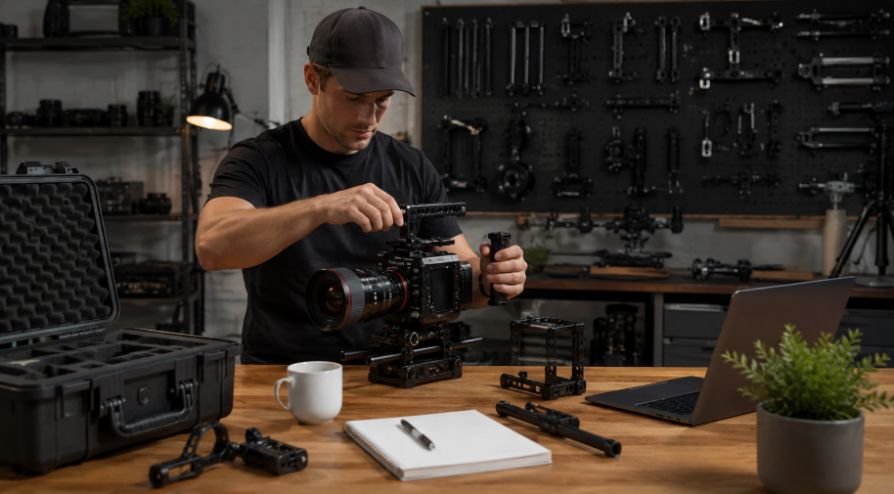
A rig can carry a monitor, recorder, transmitter, large battery, and multiple handles, yet still be worse to operate.
Before adding an accessory, ask what problem it solves.
If the answer is unclear, leave it off.
This mindset also makes open gate cinema cameras easier to integrate into different production styles. A camera that captures a flexible frame can serve multiple delivery needs, but the rig should remain adaptable.
Why Modularity Saves Time on Set
A good rig quietly removes small delays. The value becomes obvious when a monitor slides into position on a NATO rail instead of being rebuilt.
Quick-release plates, standardized mounts, and removable accessories create a predictable workflow. Crew members know what stays attached and what changes for each shot. It is especially useful when schedules are tight, and every equipment change costs valuable shooting time.
Frequently Asked questions
1. What is a modular camera rig?
It is a camera support system built from interchangeable components such as a cage, baseplate, rods, handles, and mounts that can be added or removed for different shooting needs.
2. Do I need 15mm rods for every rig?
No. They are useful for follow focuses, matte boxes, and lens supports, but lightweight setups may not need them.
3. How can a rig reduce shooting time?
A consistent base and quick-release system can make transitions between tripod and handheld configurations faster because fewer parts need removal.
4. Should a camera rig be heavy?
Not necessarily. Add weight when it improves balance, stability, or functionality, but remove components that do not contribute to the shot.
The Best Rig Is the One You Can Adapt
A modular camera rig setup becomes valuable when it disappears into the workflow. It is especially useful when schedules are tight, and every equipment change costs valuable shooting time.
Instead of thinking about how many accessories can fit around a camera, think about how quickly the system can respond when the scene changes. A rig should protect the camera, support the operator, provide access to essential tools, and get out of the way when those tools are no longer needed.
That mindset leads to faster decisions and cleaner setups. The strongest rig is the one that changes with the production without making every change feel like a production of its own.