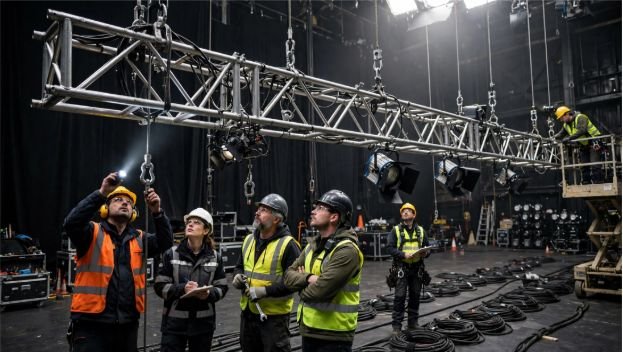
What safety gear should every grip/camera assistant carry on set?

Home » What safety gear should every grip/camera assistant carry on set?

I’m new to working as a grip/AC on sets and want to build a basic safety kit. What should actually be in it, beyond the obvious gaff tape and gloves?

4 Editorial Answers

These answers are written and fact-checked by PhotoShipOne's editorial team to represent genuinely different perspectives — they are not user comments or crowd-sourced discussion.

Editorial Perspective

New Crew Member / Starter Kit

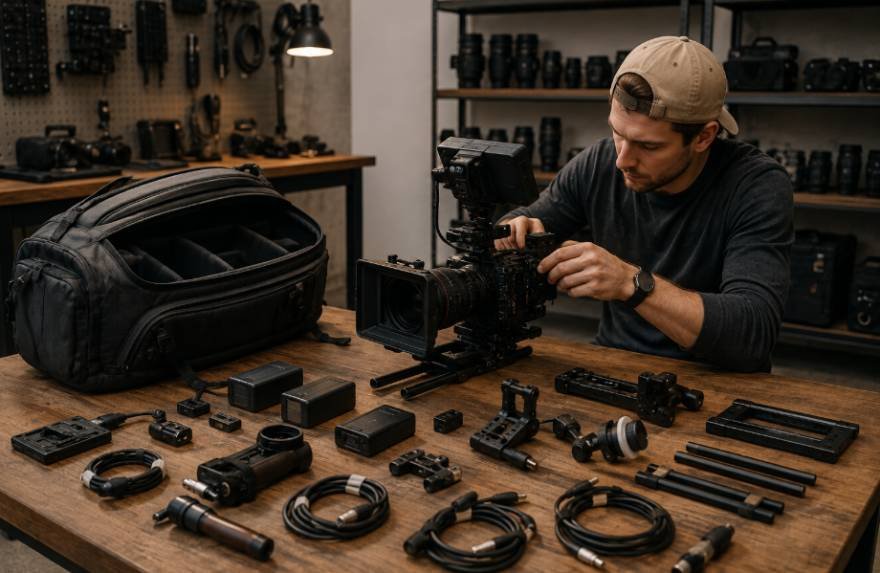
Beyond gaff tape, gloves, and a multitool, the next tier is rigging-specific: a couple of rated safety cables/leashes with carabiner ends in different lengths, a small selection of rated safety chains for backing up quick-release plates (threaded between the camera, cage, and tripod head so a QR failure doesn't drop the camera), and zip ties rated for actual load-bearing use, not just cable management. None of this is expensive — a starter rigging safety kit runs well under $100 and is the single most practical thing a new crew member can bring that signals "I understand set safety," not just "I showed up."

Editorial Perspective

Experienced Grip Perspective

Once you're past the basics, add a dedicated inspection habit, not just more gear: check every clamp, QR plate, and cable for wear at the start of each day, and again after any big rig move. A lot of on-set incidents trace back to equipment that was fine yesterday but got stressed, kinked, or loosened during a rig change and nobody re-checked it. Also carry a notepad or phone note of what's rigged where and its rated capacity on bigger setups — useful when a different department asks if something can take additional weight later in the day.

Editorial Perspective

Lightweight Rig Reality Check

Even on "it's just a lightweight camera, it'll be fine" setups, carry a safety chain anyway. The common failure case isn't a huge rig — it's exactly the lightweight setup people get casual about, where a quick-release plate isn't fully seated and nobody notices until the camera shifts or drops. As a rule of thumb from working ACs: once you're rigging anything above a bare lightweight body-and-lens on a simple tripod, start thinking about safety backups; the moment you add a cage, monitor, or jib arm, treat it as load-bearing equipment requiring the same discipline as a heavy rig.

Editorial Perspective

Team Culture / Soft Skills

The most useful "gear" that costs nothing: the willingness to ask questions and speak up when something looks unsafe, even as the newest person on a crew. Experienced filmmakers consistently say that good crews don't make people feel bad for asking how a rig is secured or whether a mount is rated for the load — and that crews which do make you feel bad for asking are a sign to be more careful, not less. Being proactive about flagging a sketchy setup is a safety skill in its own right, alongside the physical kit.

partners@mybacklinks.co

http://photoshipone.com

Leave a Reply

Your email address will not be published. Required fields are marked *