Two actors can deliver great lines and still end up in a visually flat scene. When I plan camera movement for dialogue scenes, I focus on what changes beneath the words. Emotion, tension, subtext, power, and actor blocking should determine whether the camera moves. Unmotivated movement competes with performance. A motivated move guides the audience […]
I have always found smooth camera movement fascinating. A camera appears to float through a busy location, follow an actor around corners, or move closer at precisely the right moment. Although modern stabilizers help, professional results rarely come from equipment alone. Understanding how production crew captured smooth camera shots reveals a carefully coordinated process involving […]
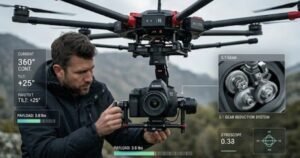
I used to think choosing a gimbal was mostly about checking whether my camera fit within the advertised payload. Then I started adding the lens, cage, monitor, focus motor, battery, and a few cables, and the math changed quickly. A setup that looked lightweight on paper could become a very different rig once it was […]
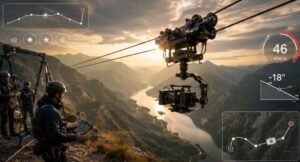
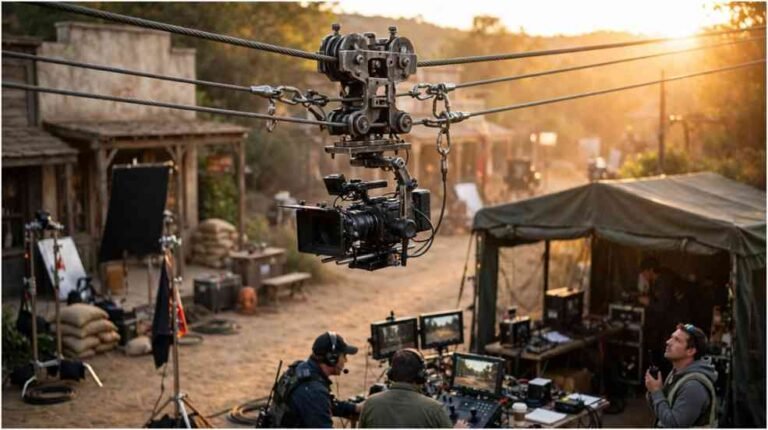
A broadcast camera operator once calculated that capturing a stadium crowd’s collective pulse from the ground requires five stationary camera positions, three operators dodging stage monitor wedges, and constant compromise. Suspend that same camera on a high-tensile line above the crowd, and a single cable camera system for concert venues captures sweeping, three-dimensional perspectives that […]
A light, truss, motor, cable, or tool overhead can turn a normal set into a struck-by hazard in seconds. Film set rigging exclusion zone safety is not just tape on the floor. The boundary must match the real hazard, control access, and change when the rigging task changes. On U.S. productions, I treat the exclusion […]
An arc shot can make a simple scene feel instantly more cinematic. Instead of leaving the camera in one place, I move it along a curved path while keeping the lens trained on the subject. That changing angle creates depth, parallax, energy, and immersion. If you are learning how to shoot an arc shot, the […]
I have always been fascinated by the smooth aerial footage shown during major sporting events. These shots appear effortless, but an enormous amount of engineering, testing, and coordination happens before the camera ever leaves the ground. This case study of an aerial cable camera installed over stadium grounds examines how a suspended camera system can […]
I noticed the biggest difference between a good handheld shot and a frustrating one often has nothing to do with the camera itself. A few seconds of walking, turning, or following a subject can introduce tiny movements that become painfully obvious when the footage is played back. After working with different camera setups, I found […]
A stadium camera can move much faster than it looks on television. Beckhoff documented Spidercam speeds of up to 9 meters per second, about 20 mph, on one generation of the system. Yet the camera is not flying under its own power; coordinated winches and cables pull it through space. That is the key to […]
A character realizes something is wrong. The camera starts closing in. The room seems to disappear, the face fills the frame, and suddenly the scene feels more intense. But what actually created that moment—a moving camera or a changing lens? That is where push-in vs zoom camera movement becomes more than a technical filmmaking question. […]