



I have learned that an extreme location does not forgive casual preparation. A camera that performs perfectly in a studio can overheat in a desert, lose power on a frozen mountain, or develop internal condensation after entering a humid building.
When planning filming in extreme conditions with specialized production gear, I treat the camera as only one part of a larger survival system. Power, sound, lighting, data storage, communication, crew safety, and evacuation planning must work together from the first shot to the final equipment check.
What Makes a Filming Environment Extreme?
An extreme environment is not defined only by dramatic weather. Intense heat, freezing temperatures, rain, saltwater, high humidity, dust, altitude, unstable terrain, limited power, and isolation can all turn a routine production into a technical challenge.
Remote locations introduce another problem: replacement equipment may be hours or days away. A broken connector, contaminated sensor, damaged memory card, or empty battery can stop the entire shoot. Production planning must therefore begin with the conditions, not with a preferred camera package.
Before packing, review weather forecasts, access routes, sunrise and sunset times, local hazards, communication coverage, medical support, and evacuation options. Establish clear conditions under which filming will pause or stop.
Select a Camera System for the Environment
A rugged camera should be chosen according to documented operating limits, weather resistance, power requirements, weight, and ease of operation. Weather sealing is helpful, but it does not make equipment waterproof or immune to dust.
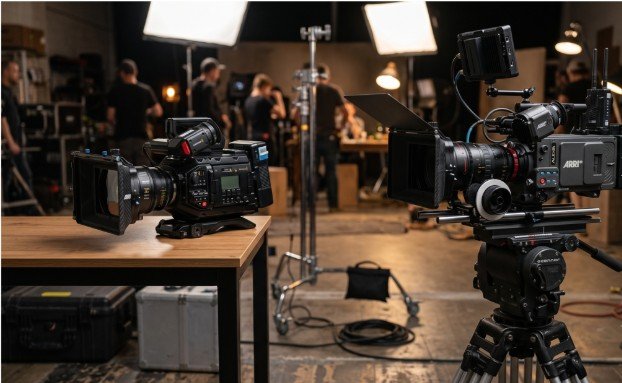
Physical buttons can be more dependable than touchscreens when operators wear gloves or work in rain. A compact body may be preferable when the crew must hike, climb, or travel by small aircraft. Record internally to two cards when possible, and carry a backup camera capable of matching the main unit’s resolution, frame rate, and color settings.
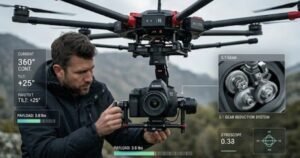
Test the complete camera build before departure, especially when capturing overhead footage without using a drone. The camera, lens, monitor, transmitter, media, batteries, rain cover, and stabilizer should be tested as one working package.
Specialized Gear for Cold and Snow
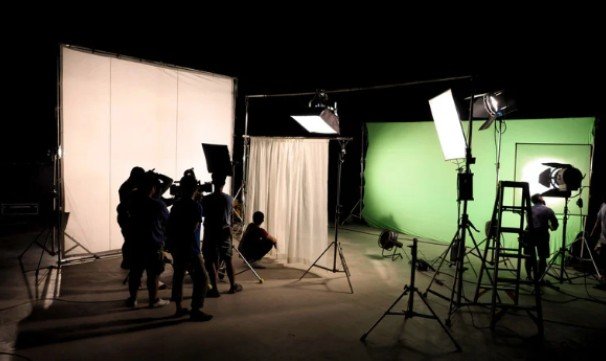
Cold weather reduces battery performance and can stiffen cables, controls, lubricants, and tripod mechanisms. Carry more batteries than a normal shooting day requires and keep reserve batteries in insulated pouches close to the body. Rotate them before they become completely depleted.
Lens heaters help control frost during long night exposures, time-lapses, and static remote-camera work. A fitted rain sleeve can protect the body from blowing snow, while a lens hood helps keep moisture away from the front element.
Condensation is often more dangerous than the cold itself. Place cold equipment inside sealed bags or closed cases before moving it into a warm environment. Allow the gear to reach the new temperature gradually before opening the container. Never remove a lens while moisture is forming.
Protect Equipment From Heat, Sand, and Dust
Direct sunlight can raise equipment temperatures quickly, especially when cameras record high-resolution video for extended periods. Use reflective covers, portable shade, ventilated equipment positions, and scheduled cooling breaks. For low-angle setups, prone ventilation techniques can help maintain airflow around equipment positioned close to hot ground. Never place an active camera inside a sealed cooler, because trapped heat can make overheating worse.
Sand can damage mounts, focus rings, fans, connectors, and sensors. Use sealed hard cases, protective filters, port covers, and dust-resistant rain sleeves. Build the camera before entering an exposed area and avoid changing lenses in open wind.
A manual air blower, clean brushes, microfiber cloths, sensor-safe supplies, and sealed waste bags belong in the field kit. Cleaning should take place inside a protected vehicle, tent, or temporary equipment enclosure.
Film Safely in Rain and Humidity
Rain protection must cover the complete operating system, including the monitor, battery plate, wireless transmitter, microphone connections, and exposed power ports. Overlooking these components is one of the common film rigging safety mistakes that can cause equipment failure. Arrange cables with drip loops so water falls away before reaching a connector.
Place silica gel or reusable desiccant inside equipment cases. In tropical conditions, avoid moving cameras abruptly between air-conditioned interiors and humid outdoor air. Let closed cases acclimatize before exposing the equipment.
For marine work, ordinary rain protection is not a substitute for a correctly rated underwater housing. Salt spray should be removed carefully after the shoot because salt residue can corrode metal, damage contacts, and interfere with moving components.
Build Reliable Power, Lighting, and Sound Systems
Successful filming in extreme conditions with specialized production gear depends heavily on power redundancy. Calculate the expected consumption of cameras, monitors, lights, sound recorders, transmitters, chargers, heaters, and data equipment. Add a meaningful reserve instead of relying on the theoretical capacity printed on batteries.
Protect charging stations from precipitation and dust. If generators are required, confirm how temperature and altitude may affect their output. Carry compatible cables, adapters, fuses, weather-resistant distribution equipment, and an independent emergency power source.
Use compact LED fixtures that reduce power demand and heat. Secure light stands against wind, keep electrical connections elevated, and stop using equipment that shows water intrusion.
Audio requires equal attention. Strong wind can make otherwise excellent footage unusable. Use shock mounts, windscreens, full windshields, protected lavalier microphones, and a secondary recorder. Monitor continuously rather than assuming wind-reduction software will repair the track later.
Stabilize and Secure Every Camera
Uneven ground, ice, mud, vibration, and wind can undermine normal support equipment. Use tripods with suitable load ratings, spiked feet, leveling systems, and tie-down points. Gimbals should be balanced with the complete weather-protected camera build.
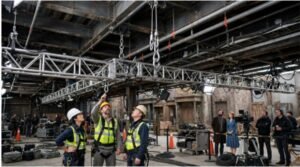
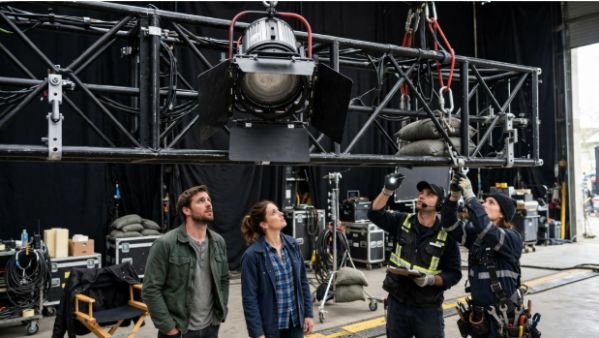
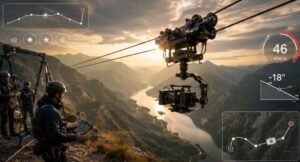
Remote heads, vehicle mounts, cable cameras, and elevated rigs require engineered attachment points, redundant safety connections, documented load limits, and controlled areas beneath suspended equipment. Environmental conditions can change the forces acting on a rig, so inspection must continue throughout the shoot.
Protect Footage Before Leaving the Location
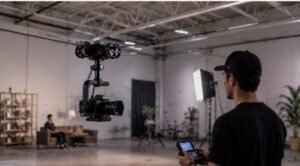
Media protection is as important as camera protection, particularly when crews balance camera on gimbal trolley systems in demanding environments. Whenever possible, record simultaneously to two cards. Transfer footage to at least two separate drives using checksum-verification software, and keep the copies in different waterproof cases.
Create a simple media log containing card numbers, camera IDs, transfer status, drive locations, and any damaged or questionable clips. Do not format original cards until the footage has been verified and the required number of backups exists.
Put Crew Safety Ahead of the Shot
Assign responsibility for monitoring weather, fatigue, communications, and environmental hazards. Every crew member should understand emergency signals, shelter locations, evacuation routes, and stop-work authority.
Carry condition-appropriate clothing, water, food, first-aid equipment, navigation tools, and emergency communication devices. No camera angle is valuable enough to justify continuing after conditions exceed the crew’s training, equipment ratings, or agreed safety limits.
Frequently Asked Questions
1. What gear is most important for an extreme-location shoot?
The essentials are a reliable camera, environmental protection, redundant power, protected audio, stable support, verified media backups, communication equipment, and crew safety supplies.
2. How do I prevent condensation from damaging a camera?
Seal cold equipment inside a bag or closed case before entering a warmer or more humid area. Wait until the equipment acclimatizes before opening the container or removing a lens.
3. Are weather-sealed cameras waterproof?
No. Weather sealing provides limited resistance to moisture and dust. It does not replace a fitted rain cover or pressure-rated underwater housing.
4. Why is backup equipment necessary in remote locations?
Failures are harder to repair when support and replacement gear are unavailable. A compatible backup camera, recording media, power supply, cables, and audio recorder can prevent the production from stopping.
5. What is the safest approach to filming in severe weather?
For filming in extreme conditions with specialized production gear, complete a location-specific risk assessment, establish weather limits, monitor changing conditions, and give qualified crew members the authority to stop work.
Final Takeaway
I approach extreme filmmaking as controlled problem-solving rather than a test of endurance. The strongest production package is not necessarily the largest or most expensive one. It is the package that has been tested, protected, duplicated, and matched carefully to the environment.
When I plan for camera protection, dependable power, clean sound, stable rigging, verified backups, and crew welfare at the same time, difficult conditions become manageable. Preparation preserves more than the equipment—it protects the people, the schedule, and every irreplaceable frame captured in the field.