



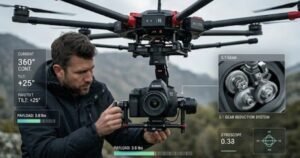
When the Federal Aviation Administration (FAA) tightened Part 107 regulations for flight over crowds, live indoor broadcast producers faced a sudden roadblock. Flying heavy camera drones inside crowded basketball arenas, convention halls, and soundstages became a massive legal and safety headache.
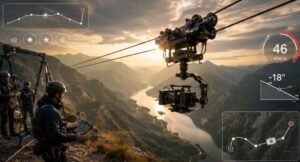
To capture smooth, sweeping overhead shots, operators turned back to a battle-tested mechanical solution: cable-suspended camera systems.
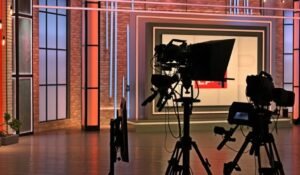
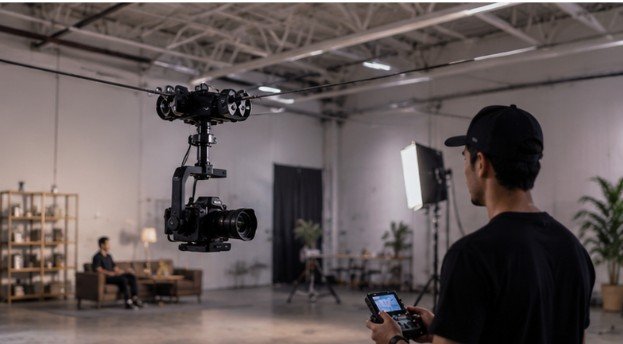
So, can cable cams work indoors? The short answer is yes. From high-school gymnasiums to massive stadium soundstages, cable cameras not only work indoors—they often perform better, safer, and with far greater precision than any indoor drone could ever manage.
Why Indoor Venues Are Retiring Drones for Cable Rigs
Indoor aerial cinematography comes with a unique set of physics problems. Drones rely on GPS signals to hold position, which rapidly degrade or disappear entirely under steel-truss roofs and concrete ceilings. Without GPS, optical flow sensors struggle under dynamic stage lighting, leading to sudden drift or catastrophic crashes into high-voltage lighting grids.
Furthermore, drone props push air downward, creating turbulent ground effect wash that disrupts acoustic microphones and disturbs set elements. Cable camera systems bypass these aerodynamic nightmares entirely.
By operating along fixed line trajectories, cable systems deliver repeatable millimeter-accurate movement. Whether tracking a gymnastics vault or sweeping across a live corporate keynote, a rigged cable system removes the chaos of atmospheric flight, while following Cable Camera Maintenance Best Practices helps keep the system reliable and ready for consistent operation.
The Engineering of Indoor Cable Cam Rigging
Executing a successful indoor flight requires understanding dynamic load physics. Unlike outdoor setups anchored to heavy ground stakes or trees, indoor rigging relies on structural architecture.
1. Structural Steel and Anchor Points
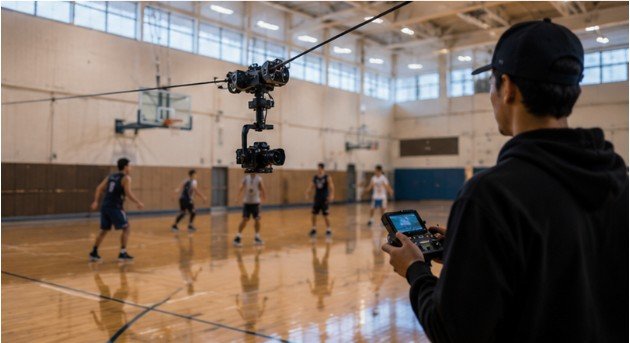
Professional multi-point installations anchor directly to building pillars, structural I-beams, or certified rigging points. The mechanical advantage of a cable system creates immense horizontal pull on anchor points. A 15-pound camera rig on a tight line can easily exert over 1,000 pounds of horizontal vector force at the termination points.
2. Portable 1D Systems
For smaller productions, lightweight single-line systems like the Wiral LITE or prosumer motion rigs offer ultra-fast deployment. These kits utilize synthetic ultra-high-molecular-weight polyethylene (UHMWPE) ropes, allowing operators to span a 150-foot room in under fifteen minutes without heavy rigging infrastructure.
3. Professional 3D Arena Systems
At the top tier of indoor broadcast, multi-axis systems like Spidercam and JoyMechanix use four computerized corner winches. Controlled by custom algorithmic software, these 3D cable cams move fluidly in three dimensions, sweeping from floor level up into the rafters with zero risk of drift.
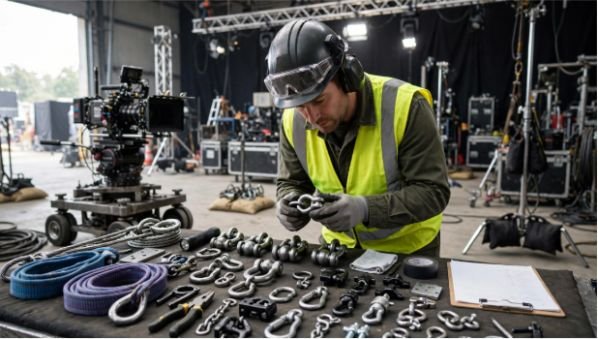
When setting up complex indoor overhead gear, operators must strictly adhere to safety standards. Reading up on ANSI rigging standards for film production helps crews understand the strict Working Load Limits (WLL) required for overhead camera assets.
Key Performance Specs: Indoor Cable Cam Systems
| System Type | Typical Span | Max Speed | Ideal Application | Setup Complexity |
| Consumer 1D (e.g., Wiral LITE) | 50 – 150 ft | 28 mph | Weddings, small stages, corporate reels | Low (15 mins) |
| Prosumer Heavy 1D | 100 – 300 ft | 35 mph | Gymnasiums, music videos, narrative film | Medium (1–2 hours) |
| Professional 3D Winch | 200 – 500+ ft | 20–30 mph | Arena sports, major soundstages, live TV | High (Full team, 4+ hours) |
Editor’s Note: For pitch presentations or client proposals, presenting this data as a side-by-side grouped bar chart clearly illustrates setup time versus payload capacity across different types of cable camera systems.
Regulatory Compliance and Workplace Safety Indoors
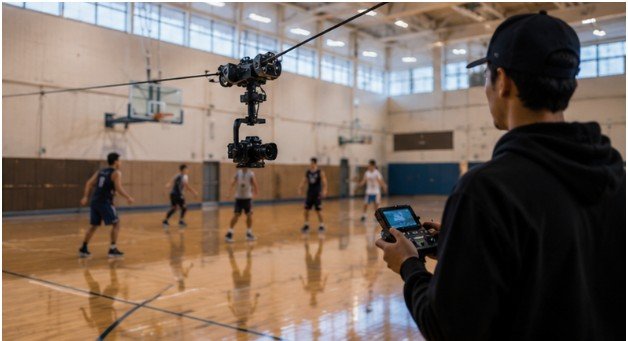
Indoor broadcast sets fall directly under federal workplace safety oversight. Rigging heavy camera gear above crew members, performers, or live audiences requires strict adherence to safety protocols. A single point of structural or mechanical failure can cause devastating injuries.
In the United States, keeping crew members safe requires following clear guidelines regarding structural capacity, safety cables, and pre-flight inspections. Reviewing official OSHA compliance for film set rigging is essential for ensuring your indoor camera operation meets federal workplace standards.
Beyond live sports and entertainment, high-precision indoor movement is transforming commercial media. For instance, creating engaging medical or corporate media often requires steady, non-intrusive flight paths. You can explore how cinematic movement enhances specialized video production in this healthcare patient story video case study.
Critical Limitations and Indoor Flight Obstacles
While cable cams solve the indoor drone problem, they introduce their own set of logistical boundaries:
- Fixed Trajectory Restrictions: Unlike a drone that can pivot on a dime to follow unscripted action, 1D cable cams can only move back and forth along a single straight line.
- Ceiling Clearances: Low ceilings drastically reduce line sag clearance, forcing higher tension on the line and increasing load stress on anchor points.
- Lighting and Pyrotechnic Obstructions: Hanging light grids, speaker clusters, and set pieces require thorough line path mapping to avoid catastrophic entanglements.
The Pre-Flight Indoor Rigging Checklist
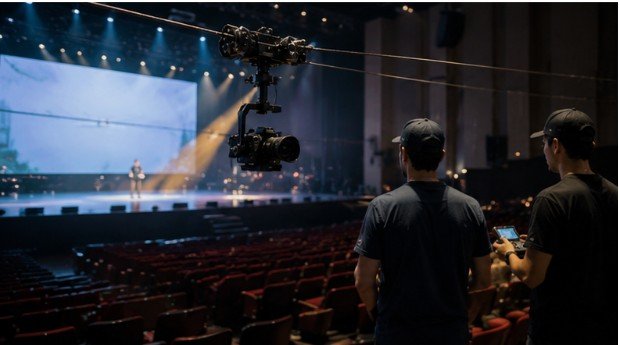
Before slinging a synthetic line across any indoor venue, walk through this quick five-step pre-flight checklist:
- Verify Anchor Load Ratings: Confirm with facility engineers that chosen I-beams or structural points can support dynamic horizontal loads, not just static vertical weight.
- Calculate Line Sag and Tension: Ensure your line tension leaves at least 6 to 8 feet of vertical clearance above the audience at the midpoint.
- Inspect Line Integrity: Check synthetic ropes or steel cables for fraying, dynamic wear, or core burns.
- Set Physical Mechanical Bumper Stops: Position rubber stoppers on the line ends to prevent the trolley from striking anchor pulleys.
- Establish Safety Exclusion Zones: Clear the area directly under the line during rigging, tensioning, and initial test runs.
Frequently Asked Questions
1. Can an outdoor camera be used inside?
Yes, outdoor cameras work inside without issue. However, you may need to adjust white balance settings for indoor lighting and account for lower ambient light levels using wider apertures or higher ISO settings.
2. Is it illegal to put a camera in my own bedroom?
It is legal to put a camera in your own bedroom, provided you own the property, are not violating the reasonable expectation of privacy of others, and are not recording anyone without their consent where privacy laws apply.
3. Does a wired camera need to be plugged in all the time?
Yes, wired cameras require continuous power through a direct electrical connection or Power over Ethernet (PoE) cable to record continuously and function without interruption.
4. What is the safest indoor security camera?
The safest indoor security camera uses end-to-end encryption, local storage options (like microSD cards), two-factor authentication, and a physical privacy shutter to prevent unauthorized remote access.
The Bottom Line
Cable cams do not just work indoors—they represent the gold standard for safe, reliable, high-speed overhead cinematography under a roof. By removing the unpredictable drift of drones and replacing it with solid structural anchor physics, camera operators can capture sweeping shots that elevate any indoor production.