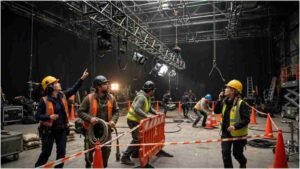






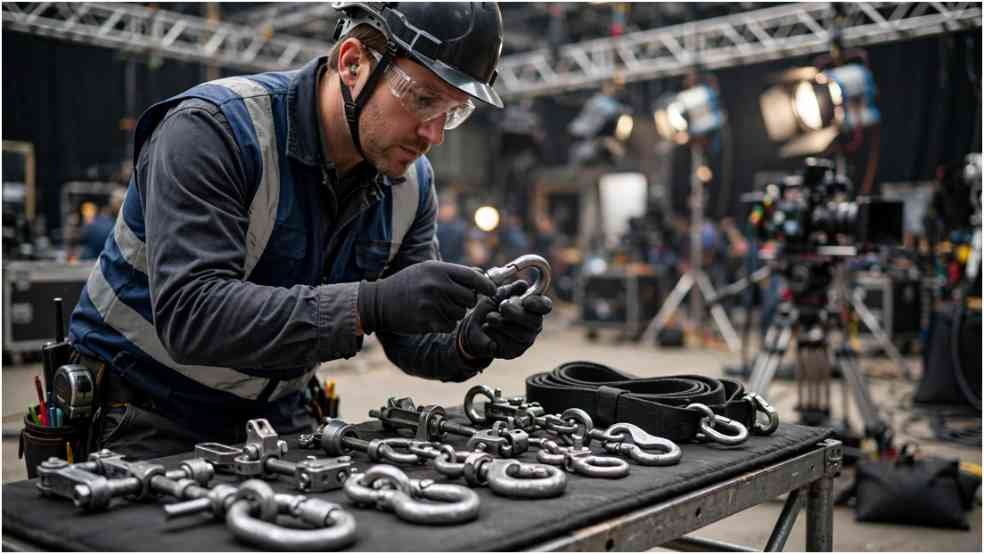
A rigging component does not become safe simply because its annual inspection sticker remains valid. On a working set, hardware can face repeated loading, relocation, weather, vibration, impacts, and rushed changeovers within a few days.
That is why I treat rigging hardware inspection intervals for film production as a combination of scheduled inspections and event-triggered checks. The calendar matters, but what happened to the equipment since its last inspection matters more.
For US productions, OSHA requirements provide an important baseline. However, the exact standard that applies depends on the work, equipment, and employment setting.
How Often Should Film Rigging Hardware Be Inspected?
A practical production system normally has several inspection layers rather than one annual appointment.
| Inspection Stage | Typical Timing | Main Purpose |
| Initial acceptance | Before new or newly introduced equipment enters service | Verify identity, rating and condition |
| Pre-use inspection | Before each shift or day’s use | Find visible damage or defects |
| During-use check | When conditions warrant | Detect damage caused during production |
| Periodic inspection | Based on equipment and service | Detailed condition assessment |
| Event-triggered inspection | After impact, overload or unusual conditions | Confirm continued safe use |
OSHA 1926.251 requires covered rigging equipment for material handling to be inspected before use on each shift and as needed during use. Defective equipment must leave service. It also requires legible manufacturer markings showing the recommended safe working load.
Pre-Shift and Daily Inspections
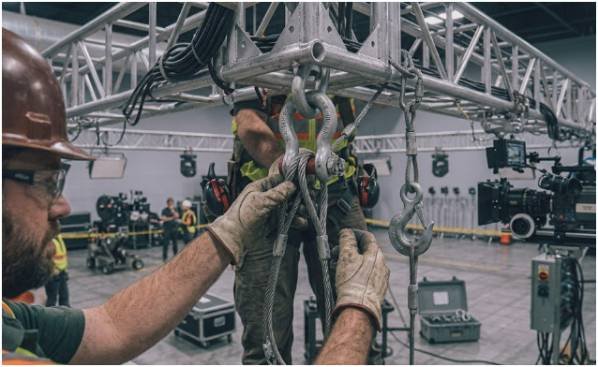
I consider the pre-use check the production crew’s first defense.
OSHA’s general-industry sling standard requires slings, fastenings, and attachments to be inspected each day before use by a competent person designated by the employer. Additional inspections are required when service conditions justify them.
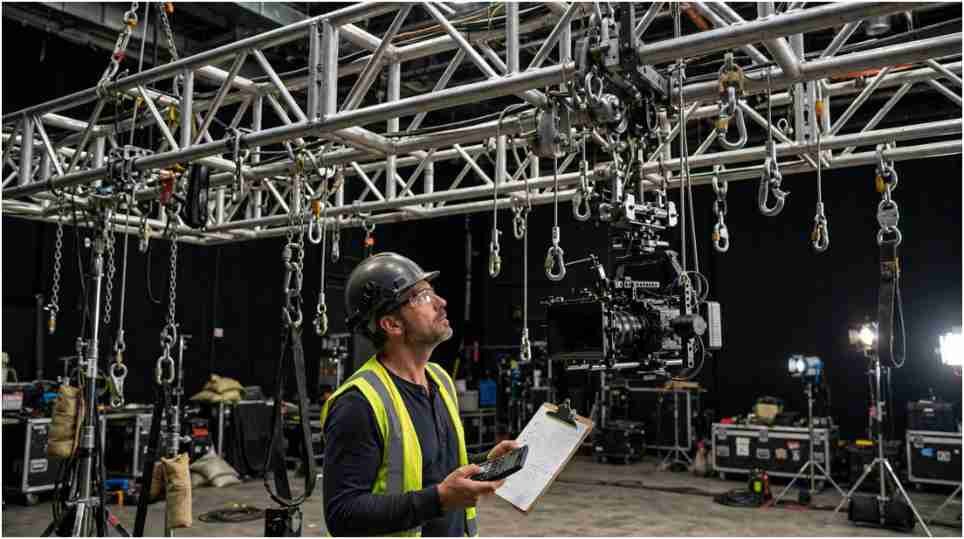
That means hardware should be examined before equipment disappears above a set, lighting grid, camera path, or performer area.
This becomes especially important when planning how to secure film equipment above performers, because inspection history cannot compensate for damage that occurred yesterday.
Periodic Thorough Inspections
This is where rigging hardware inspection intervals for film production become more equipment-specific.
For alloy steel chain slings, OSHA requires thorough periodic inspections. The interval depends on use frequency, service severity, lift type, and experience with similar equipment. It cannot exceed 12 months. OSHA also requires a record of the most recent inspection month.
OSHA’s sling guidance gives a useful service-based benchmark:
| Service Level | OSHA Guidance |
| Normal | Yearly |
| Severe | Monthly to quarterly |
| Special/infrequent | Qualified-person recommendation |
These intervals specifically address alloy steel chain slings. They should not be presented as a universal annual rule for every shackle, hoist, truss component, wire rope, or entertainment rigging system.
Inspections After Unusual Events
I would never wait for a scheduled inspection after an event that may have changed the hardware’s condition.
Examples include an unexpected shock load, dropped component, vehicle impact, uncontrolled movement, severe storm exposure, suspected overload, unauthorized modification, or visible deformation.
That approach should also form part of a broader film production rigging hazard assessment, because inspection frequency should respond to actual exposure rather than dates alone.
Why the 12-Month Rule Is Often Misunderstood
One of the biggest mistakes I see in rigging guidance is the statement that every piece of film rigging hardware is legally required to receive one documented inspection every 12 months.
OSHA’s explicit maximum 12-month interval applies to thorough periodic inspections of alloy steel chain slings under the cited provisions. Other equipment can have different requirements.
OSHA 1926.251 also belongs to the construction regulations and addresses rigging equipment used for material handling. A film production should determine which federal, state, local, manufacturer, contractual, and industry requirements apply to its specific operation rather than assuming one OSHA section governs every entertainment setup.
ANSI standards also should not automatically be described as federal law. ANSI coordinates the US voluntary standards system, although particular standards can gain contractual or regulatory relevance when adopted or referenced elsewhere.
There is another current detail worth knowing. As of August 2026, ESTA’s E1.47 document on entertainment rigging system inspections is still identified as a BSR draft following its 2026 public-review process. It should therefore not be represented as a finalized ANSI E1.47 standard.
How Production Conditions Change Rigging Inspection Frequency
Useful rigging hardware inspection intervals for film production should reflect how the equipment is actually being treated.
Normal Service
A controlled soundstage setup may involve predictable loads, indoor conditions, trained operators, and limited relocation.
Even here, pre-use inspections remain essential where applicable. Periodic inspections should follow the relevant standard and manufacturer’s instructions.
Severe Service
Outdoor productions can create a different risk profile.
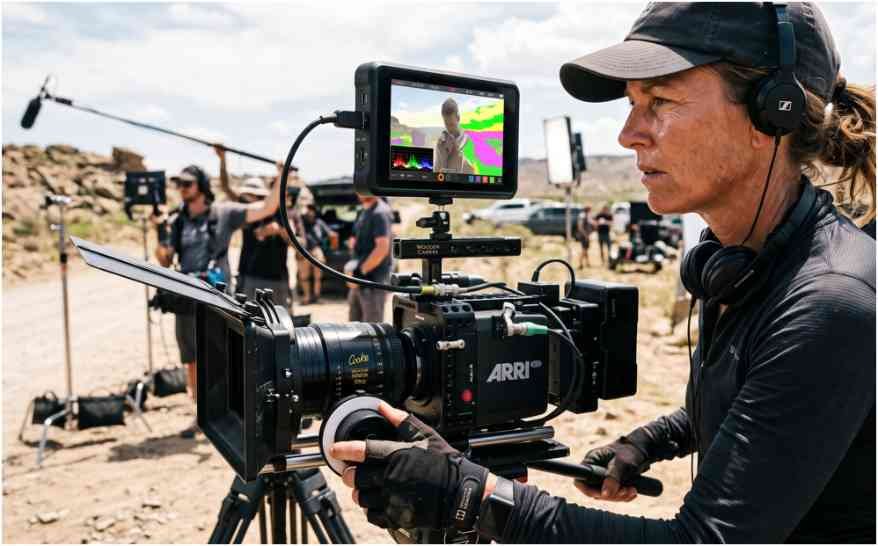
Rain, airborne sand, salt exposure, repeated transport, heavy use, vibration, mud, temperature changes, and frequent reconfiguration can accelerate deterioration.
OSHA’s alloy-chain guidance recommends monthly-to-quarterly periodic inspections for severe service rather than relying only on an annual interval.
Special or Infrequent Service
A custom camera suspension, unusual stunt setup, or one-off structural arrangement may not fit a generic schedule.
Here, I would have a qualified person determine inspection requirements using load conditions, engineering documentation, equipment instructions, and the consequences of failure.
That same logic should guide safe rigging practices around actors and crew whenever people may enter the potential fall zone.
What Should Be Checked During a Rigging Hardware Inspection?
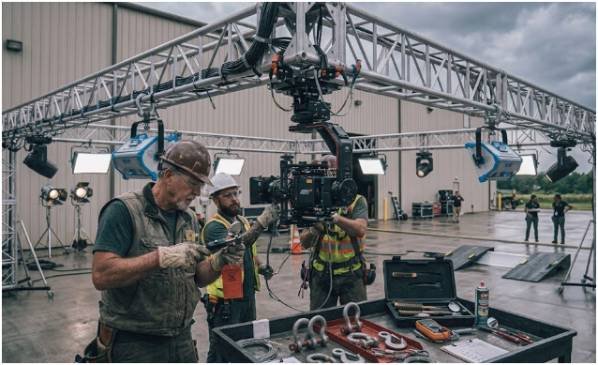
Inspection should go beyond asking whether a shackle pin is present.
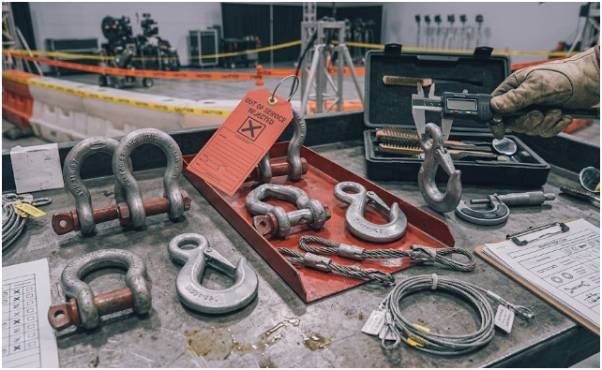
OSHA identifies conditions such as wear, defective welds, cracks, nicks, gouges, stretching, bending, heat discoloration, corrosion, altered hook openings, and missing identification as reasons for closer evaluation or removal from service.
I also check whether the hardware still has a readable rating and whether every component matches the planned load path.
For chain sling attachments, OSHA requires hooks and similar components to have sufficient rated capacity. Makeshift fasteners made from bolts or rods are prohibited under the applicable sling provisions.
When Rigging Hardware Must Leave the Set
Some defects should end the discussion immediately.
Under OSHA’s alloy steel chain sling rules, cracked or deformed components must be removed from service. Hooks must also leave service when they are cracked, twisted more than 10 degrees, or opened more than 15% beyond their normal throat opening.
The manufacturer’s rejection limits may impose additional criteria.
My operating rule is simple: uncertainty is itself a reason to quarantine questionable hardware until someone qualified can evaluate it.
How I Build an Inspection Schedule for a Film Production
My preferred system uses two clocks.
The first is the calendar clock. It tracks manufacturer inspections, required periodic examinations, certificates, and service history.
The second is the exposure clock. It resets attention whenever the hardware experiences something meaningful.
Consider an 18-day exterior shoot using suspended camera and lighting equipment. I would schedule normal pre-use inspections every working day. I would then add inspections after severe weather, a suspected impact, unusual loading, or major reconfiguration.
That produces a better safety system than saying, “It passed inspection four months ago.”
This trigger-based model is the original element I recommend adding to production inspection plans:
Time interval + equipment condition + exposure event = next inspection decision.
It makes rigging hardware inspection intervals for film production responsive to how film sets actually operate.
Rigging Inspection Records and Accountability
Records become especially valuable when hardware travels between stages, rental houses, locations, and production units.
For alloy steel chain slings, OSHA requires employers to maintain the month of the most recent thorough inspection. New, repaired, or reconditioned alloy steel chain slings also have specific proof-testing requirements before use.
For entertainment systems, ESTA’s current E1.47 draft recommends inspection reports that identify the inspection date, inspector, scope, applicable standards, and relevant system information. It also recommends reviewing previous inspection reports and maintenance records.
A simple digital asset record can therefore track equipment ID, WLL, manufacturer, last inspection, inspector, defects, repairs, and next review date.
FAQs
1. How often should film rigging hardware be inspected?
Inspect applicable rigging before each shift, with periodic frequency determined by equipment type, service conditions, standards, and manufacturer instructions.
2. Are rigging hardware inspection intervals for film production always 12 months?
No. The OSHA 12-month maximum discussed here specifically applies to periodic inspections of alloy steel chain slings.
3. Should rigging be inspected after severe weather?
Yes. Conditions such as storms, corrosion exposure, impact, or suspected damage can justify an additional inspection before reuse.
4. Who should inspect film rigging equipment?
The required competence depends on the equipment and applicable rule, but inspections should be performed by appropriately competent or qualified personnel.
The Calendar Is Not Your Safety Net
I would never manage rigging hardware inspection intervals for film production by circling one annual date and forgetting the equipment between inspections.
Film rigs move. Loads change. Locations change. Weather changes. Hardware gets handled, transported, tightened, released, and rebuilt.
The strongest inspection program reacts to those changes.
Keep the scheduled inspection calendar, but add clear trigger points for reinspection. If equipment takes an impact, faces severe conditions, loses its identification, shows deformation, or simply creates reasonable doubt, remove it from service until its condition is confirmed.
That is far cheaper than discovering the missed defect while something is hanging over the set.