




A rushed equipment move can end with a strained back, crushed foot, or dropped camera case. I have found that safe lifting practices for film production crews work best when crews treat every lift as a planning task, not a strength test.
The goal is to reduce force, keep loads controlled, and avoid exposing people to falling gear. OSHA recommends lift-assist devices, lighter loads, and neutral working postures. NIOSH also provides a formal method for evaluating two-handed lifting risk.
Why Film-Set Lifting Injuries Happen
Production gear is rarely shaped like a gym weight. Stands are tall, cases have awkward handles, and cable trunks can shift as they move.
That is why safe lifting practices for film production crews must consider weight, grip, starting height, reach, frequency, route, and stability. NIOSH evaluates several of these factors instead of relying on one weight number.
One common myth also needs correcting. OSHA does not publish one universal federal maximum weight for manual lifting. A production may still use 45–50 pounds as a team-lift trigger. However, that is a production policy, not a blanket OSHA limit.
| Lift condition | Safer first choice |
| Small, stable load near waist height | Controlled manual lift |
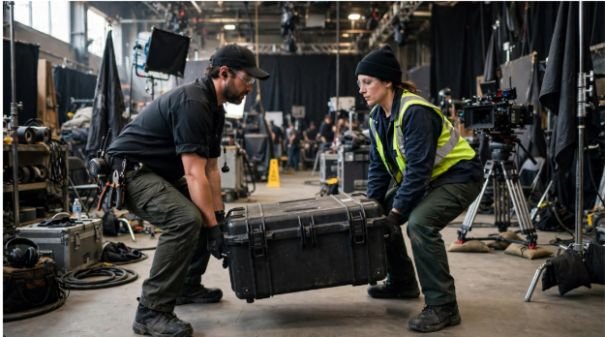
| Heavy or awkward case | Team lift or cart |
| Long travel distance | Dolly or equipment cart |
| Load starts on the floor | Raise it or get assistance |
| Gear must be suspended | Rated rigging and exclusion zone |
Use Better Body Mechanics for Manual Lifts
Good form cannot make every load safe. It can reduce unnecessary strain when manual lifting is appropriate.
Work Inside the Power Zone
I try to position the load between mid-thigh and mid-chest before carrying it. OSHA identifies this area as the “power zone.” It also advises neutral spine alignment and bending at the knees rather than the waist when practical.
Before lifting, I test the load. I check whether the weight shifts, the handles hold, and the object can stay balanced. If the first movement feels unstable, I stop.
Testing first takes seconds. Recovering from a bad lift can take weeks.
Keep the Load Close and Pivot
The farther a load sits from the torso, the harder the lift becomes. NIOSH considers the horizontal distance between the hands and body when assessing risk.
I keep gear close to my centerline and avoid twisting under load. To change direction, I move my feet and pivot my whole body. When setting equipment down, I reverse the same controlled motion.
These safe lifting practices for film production crews become much easier when the destination is prepared before the equipment leaves the ground.
Know When to Team Lift or Use a Cart
For me, safe lifting practices for film production crews start with one question: why does this load need to be carried at all?
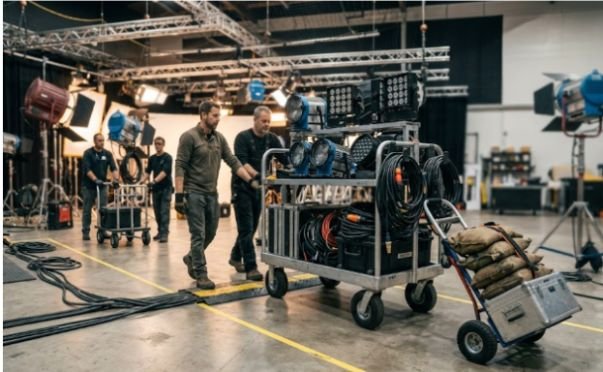
OSHA recommends devices that lift or reposition heavy objects. It also advises using carts for horizontal movement when possible. OSHA guidance generally favors pushing carts rather than pulling them because pushing can allow better use of body weight.
My 30-Second Lift Decision
Before a heavy move, I check five things: weight, shape, route, destination, and alternative.
Can one person control the load without straining? Is it bulky or unstable? Is the route clear? Is there enough space to put it down safely? Would a cart, ramp, lift gate, dolly, or second person reduce the risk?
If one answer raises doubt, I change the plan.
This short check is one of the most useful safe lifting practices for film production crews because it catches hazards before somebody is already holding the load.
Worked Example: Moving a 70-Pound Ballast
Suppose a 70-pound lighting ballast must move from a production truck to a stage.
I would first clear the route and inspect the ramp, doorway, thresholds, and cable crossings. If a lift gate or ramp is available, I use it instead of manually lowering the ballast from truck height.
Next, I place the ballast on a cart for the long horizontal move. If a short manual transfer remains, two crew members establish secure grips. One person controls the count so both lift and lower together.
The destination gets cleared before the ballast moves.
This removes most of the carrying rather than arguing over whether 70 pounds is technically “liftable.” That distinction matters because the safest lift is often the one we redesign out of the job.
Control the Route Before the Gear Moves
Many lifting problems begin underfoot. A coiled stinger, loose wedge, wet patch, or unexpected step can turn a stable carry into dropped equipment.
Before moving gear, I want the route visible and wide enough for both the equipment and handlers. Cables should be bundled, ramped, taped, or rerouted where appropriate. Doors should already be open. A spotter can help when a large case blocks the carrier’s view.
Route control is part of safe lifting practices for film production crews, not a separate housekeeping issue. On a busy set, safe lifting practices for film production crews fail quickly when the path is treated as an afterthought.
Treat Overhead Lifts as Rigging Operations
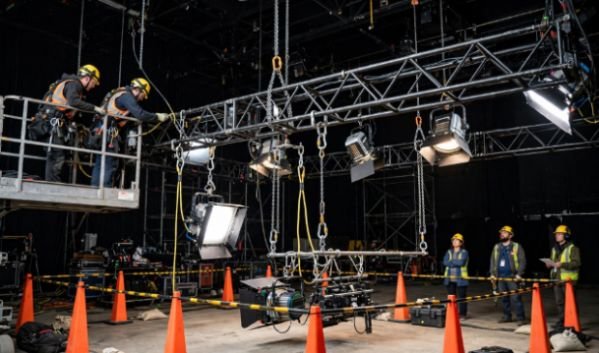
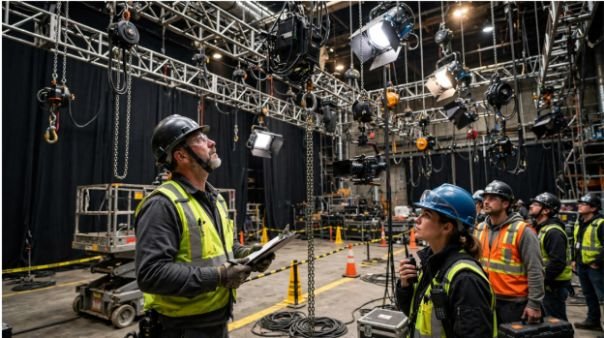
For overhead work, safe lifting practices for film production crews must expand into rigging controls. Once equipment becomes suspended, a falling object can injure someone who never touched the lift.
Check Ratings and Secondary Safeties
For hoists, trusses, fixtures, cranes, or suspended camera systems, load-bearing components should be rated for their intended use and inspected before operation.
This is where crews should connect lifting procedures with how to prevent rigging hardware failure on set. Good body mechanics cannot compensate for damaged hardware, an underrated component, poor attachment geometry, or an incorrect load calculation.
A broader overhead equipment safety for film production plan should address the supporting structure, attachment method, secondary retention, access control, and environmental limits.
Suspending equipment changes the question from “Can we lift this?” to “What happens if any part of this system fails?”
Keep People Out of the Drop Zone
I keep nonessential crew outside the area beneath active overhead work until the load is secured.
The production should establish who controls the lift, who may enter the area, and when movement must stop. Communication becomes especially important when the operator cannot see every person near the load.
Those procedures should align with suspended load safety rules for film sets, particularly during hoisting, repositioning, and temporary overhead installations.
For exterior production, wind and changing weather also matter. Operations must remain within the limits established for the equipment, temporary structure, and engineered system.
PPE, Fatigue, and Small Warning Signs
PPE supports safe lifting practices for film production crews but never replaces planning. Secure footwear and task-appropriate gloves can improve footing and grip.
Fatigue changes the equation too.
NIOSH considers lifting frequency and duration when evaluating manual lifting tasks. Repeated heavy moves should therefore encourage greater use of carts, work rotation, and mechanical assistance.
I also watch for smaller warning signs during a lift: repeated re-gripping, leaning backward, losing sight of the route, or needing momentum to get the equipment moving.
Those signals tell me the lift has stopped being controlled.
Set the equipment down. Reset the grip, route, or lifting method. Production does not become more efficient when an avoidable injury removes someone from the crew.
The Gear Can Wait—Your Back Cannot
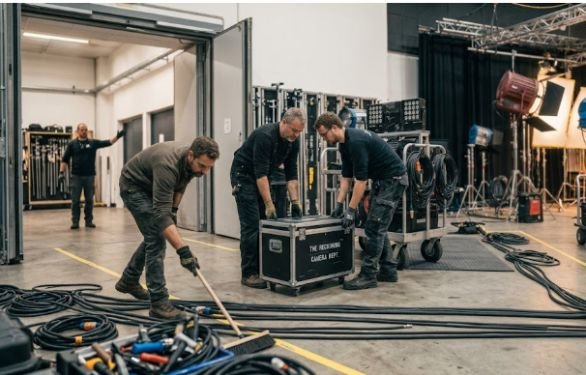
The best safe lifting practices for film production crews are usually unremarkable decisions made at the right moment: move the cart closer, clear the cable, ask for another pair of hands, or verify the rigging before equipment goes overhead.
I would rather delay a gear move than lose a crew member to an injury or damage equipment that never needed to be hand-carried.
Before the next heavy move, use the 30-second check. Look at the weight, shape, route, destination, and available assistance. If one part feels wrong, change it before anybody lifts.
That thirty-second delay may be the fastest decision the crew makes all day.
Frequently Asked Questions
1. What is the safest way to lift heavy film equipment?
Keep manageable loads close, avoid twisting, maintain stable footing, and use a team lift or mechanical aid when control is uncertain.
2. Is 50 pounds the OSHA lifting limit for film crews?
No. OSHA does not set one universal manual-lifting weight limit because task conditions and ergonomic risks also affect safety.
3. When should film crews use a team lift?
Use a team lift when gear is heavy, bulky, unstable, difficult to grip, or unsafe for one person to control.
4. How do safe lifting practices for film production crews prevent dropped gear?
They improve load control, route planning, communication, mechanical assistance, and exclusion-zone discipline around elevated equipment.