



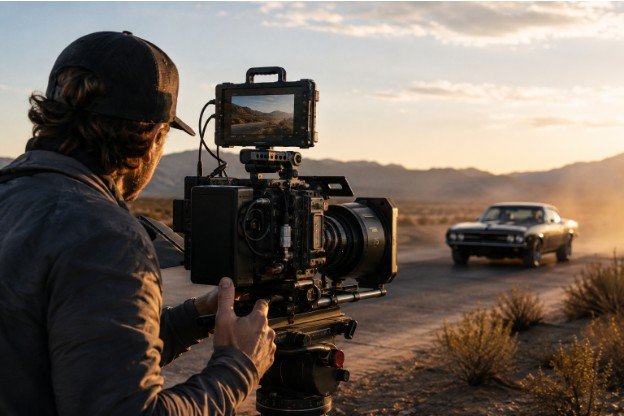
I started paying attention to open gate recording when I noticed how often one finished video now needs to work in several formats. A shot that looks right in widescreen may later need a vertical crop for social media, and a traditional 16:9 frame can leave little room to make that change without cutting into the subject.
I also realized open gate is not simply another resolution setting. It changes how much of the sensor gets captured and gives cinematographers more room to make decisions after the camera stops rolling. For productions where framing flexibility matters, that extra image area can become a practical part of the workflow rather than another impressive specification.
What Open Gate Actually Means on a Cinema Camera
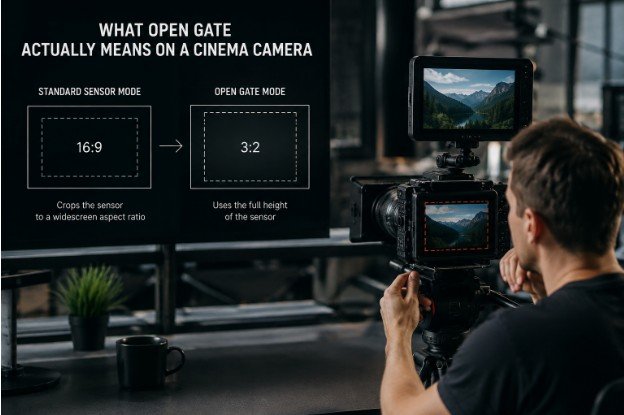
Most video modes use part of a camera sensor to create a familiar widescreen frame, commonly 16:9. Open gate recording uses the full or near-full active sensor area, producing a taller frame such as 3:2 or 4:3. Instead of removing the top and bottom before the footage reaches post-production, the camera preserves that information.
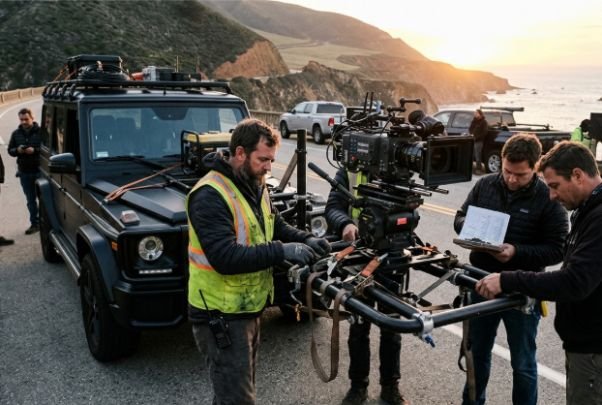
For How to Balance Camera on Gimbal Trolley Systems for Tracking, this additional sensor coverage can provide greater flexibility when framing moving subjects and adjusting compositions during post-production.
That extra height can be valuable. A cinematographer can leave more headroom, keep a subject comfortably inside the frame, and decide later how much of the image belongs in the final composition.
Why Filmmakers Are Paying Attention to Open Gate
The biggest advantage is flexibility. A high-resolution open gate master can be reframed for different aspect ratios while retaining more detail than a standard 16:9 source would.
This matters when a production needs both landscape and vertical versions. One open gate recording can provide a 16:9 crop for a website or YouTube and a 9:16 crop for vertical platforms. The extra sensor height makes those crops more practical. Panasonic demonstrates how a single open gate recording can support multiple crops while retaining corporate resolution.
Open gate also gives editors more room for digital movement. A locked-off shot can sometimes receive a subtle push-in or pan during editing while retaining enough resolution for delivery. Stabilization and horizon correction can benefit from the same additional image area.
One Shoot Can Create Several Different Outputs
Open gate does not guarantee every crop will look perfect. Composition still matters. A subject near the edge of the original frame may disappear when converted to 9:16. That is why frame guides and markers can be useful when operators need to compose for multiple outputs.
Open Gate Has a Natural Connection to Anamorphic Cinematography
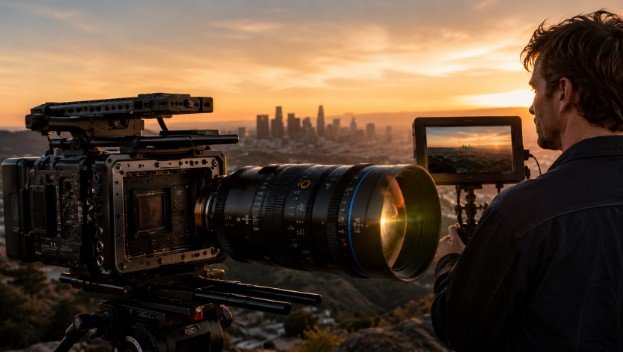
Anamorphic lenses are another reason open gate cinema cameras attract attention. Traditional anamorphic workflows squeeze a wider image onto the sensor, then desqueeze it during post-production. A taller sensor area can provide more room for that image to be captured without unnecessarily cropping useful information.
This can also be relevant when Abandoning Optical Fiber Cable for Camera Transmission, as production teams may need to reconsider how image data, framing flexibility, and transmission requirements work together across different camera systems.
The benefit is especially relevant with full-frame systems designed around anamorphic coverage. Blackmagic’s Cinema Camera 6K supports 3:2 open gate and a dedicated 6:5 anamorphic mode. Canon’s EOS C50 uses its full-frame 3:2 mode for reframing and full-frame anamorphic work.
Current Open Gate Cameras Worth Watching
The growing range of open gate cinema cameras shows that the format is no longer limited to niche workflows. The Panasonic Lumix S5IIX offers 6K 3:2 open gate recording and has become a practical option for filmmakers who want full-frame flexibility without moving into a much larger cinema body.
Canon’s EOS C50 takes the idea further with a 7K full-frame sensor and internal 3:2 open gate recording. Its design makes the feature relevant to productions that need detailed masters and flexible reframing in a compact Cinema EOS body.
Blackmagic’s Cinema Camera 6K takes a different approach, pairing 6K full-frame capture with 3:2 open gate and 6:5 anamorphic recording. That combination makes it interesting for filmmakers who want to build an anamorphic workflow around a large sensor.
The point is not to choose a camera simply because it says open gate on the menu. Each model handles resolution, codecs, frame rates, media, autofocus, and lens compatibility differently. The right choice depends on the production rather than the feature alone. That matters once real production demands appear.
What to Look For in Open Gate Cinema Cameras
Open gate should be evaluated alongside the rest of a camera’s production capabilities. Resolution matters, but it is not the only consideration.
Look at sensor size, frame rates, codecs, bit depth, RAW recording, dynamic range, rolling shutter performance, storage requirements, and lens compatibility. A camera offering 6K or 7K open gate can provide substantial cropping flexibility, but the workflow still needs fast media and enough storage for those files.
Also check the actual open gate frame rate. Some cameras offer their highest-resolution mode only at lower frame rates, while faster recording may require a cropped sensor mode.
That difference matters for action, music videos, and slow-motion work, especially when troubleshooting How to Fix Camera Video Signal Loss, where frame-rate, resolution, and transmission settings can affect the reliability of the video signal.
When Open Gate Is Actually Worth Using
Open gate makes the most sense when flexibility is part of the brief. Commercial productions, branded content, documentaries, interviews, social campaigns, and creator work can all benefit when one master needs to serve multiple formats.
The Limitations Filmmakers Should Know
Open gate is not automatically better than conventional recording. More pixels usually mean larger files, heavier storage demands, and more processing during editing. If a project only needs a standard 16:9 master and has no reason to reframe, the extra sensor area may add little practical value.
The best approach is to treat open gate as a production tool. Use it when the additional image area solves a real problem, not simply because the camera offers it.
FAQs: Open Gate Cinema Cameras: A Smarter Approach to Modern Production
What does open gate mean in video?
It means recording from the camera’s full or near-full sensor area, creating a taller frame such as 3:2 or 4:3 instead of conventional 16:9.
Can open gate create vertical video?
Yes. High-resolution open gate footage can be cropped to 9:16 while retaining more image information than a standard 16:9 source.
Is open gate useful for anamorphic lenses?
Yes. The taller capture area can provide more room for anamorphic coverage and reduce unnecessary cropping.
Do all cinema cameras have open gate?
No. The feature is becoming more common, but recording dimensions, frame rates, codecs, and anamorphic options vary between models.
Why Flexible Capture Is Becoming Part of the Cinema Workflow
The appeal of open gate cinema cameras comes down to control. Instead of deciding every framing detail before recording, filmmakers can preserve more of the sensor and carry some decisions into post-production. That matters as productions deliver the same creative material across different screens and aspect ratios.