

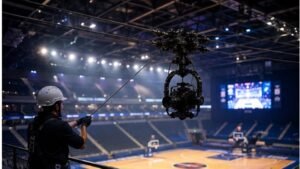
One small camera move can completely change what an audience notices first. A slow sweep across a crowded stadium can build anticipation, while a gradual move from the ground to the top of a skyscraper can instantly create a sense of scale.
That is the real value of understanding pan vs tilt camera movement. I use these two techniques to control direction, reveal information, and shape the viewer’s attention without physically moving the camera through the scene.
What Is the Difference Between a Pan and a Tilt?
A pan rotates the camera horizontally around a vertical axis. Think of turning your head side to side as if saying “no.” A tilt changes the viewing angle vertically around a horizontal axis, much like looking from the floor toward the sky.
A pan explores width, follows lateral movement, or connects subjects across a location. A tilt explores height, reveals something above or below the frame, and can emphasize scale. Because the camera generally stays in place, neither should be confused with tracking, dolly, truck, or pedestal movement, where the camera itself changes position.
| Feature | Pan | Tilt |
| Direction | Left or right | Up or down |
| Camera position | Fixed while rotating | Fixed while rotating |
| Best for | Lateral action, wide reveals | Height, vertical reveals, scale |
| Analogy | Turning your head “no” | Looking up or down |
When Should You Use a Pan Camera Movement?
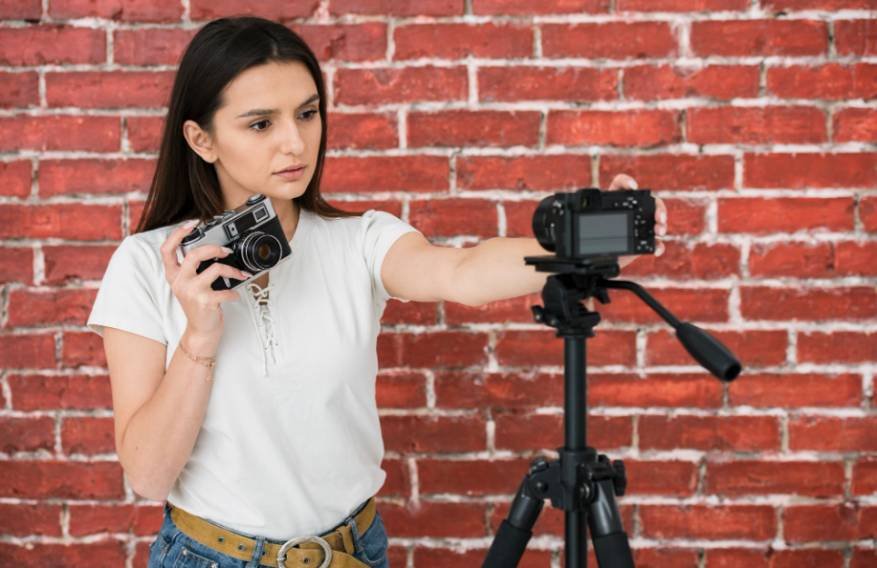
I use a pan when action or visual information extends across the frame. In US commercials, live sports, real estate, and event production, that often means following lateral action or revealing a wide location.
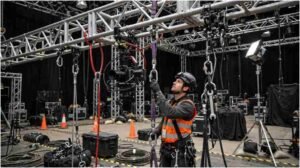
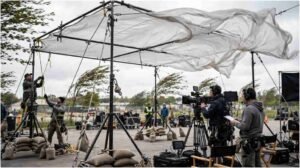
For outdoor productions using suspended cameras, lighting, or other elevated equipment, crews must also account for wind limits for overhead rigs on film sets before deciding whether a planned camera setup can operate safely.
In a commercial or documentary, a slower pan can reveal a workspace, skyline, neighborhood, or crowded event without cutting away.
Panning also connects characters. Instead of cutting between two people on opposite sides of a room, I can pan from one to the other and preserve their relationship to the same environment. Pan shots are widely used to reveal more of a scene, track movement, and direct attention without physically relocating the camera.
A whip pan, or swish pan, uses much greater speed. The blur can create energy, hide an edit, or transition quickly between subjects. Adobe notes that pan speed can change a shot’s rhythm and tone, making speed part of the storytelling decision rather than simply a technical setting.
When Should You Use a Tilt Camera Movement?
I reach for a tilt when the scene is organized vertically. Starting at a character’s shoes and tilting toward the face creates a deliberate introduction. Beginning at the base of a skyscraper and tilting toward the roof communicates height and scale. A tilt can also follow a rocket launch, a falling object, or action moving between levels.
Tilt direction can influence how viewers read a subject, although the final camera angle matters too. A move that settles at a low angle may make a person or structure feel more imposing, while one ending at a high angle can make a subject appear smaller or more vulnerable.
The important distinction is that the tilt creates the movement, while the resulting high or low camera angle contributes strongly to the psychological effect.
How Do You Choose Between Pan and Tilt?
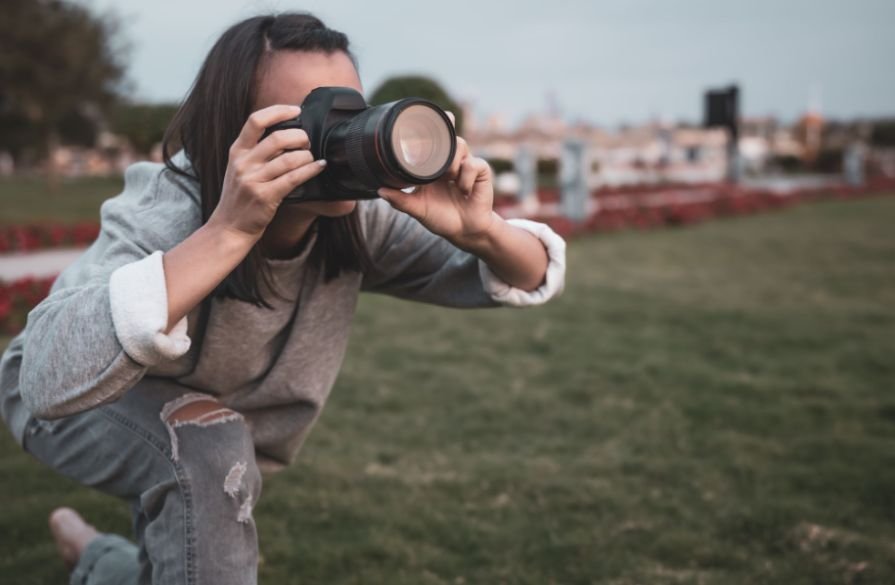
When deciding on pan vs tilt camera movement, I ask where the audience’s attention needs to travel. If the information runs side to side, I start with a pan. If it runs low to high or high to low, I consider a tilt.
The move should support the story. A slow pan across an empty room can create anticipation. A faster pan can add urgency. A gradual tilt up a tower can emphasize scale, while a tilt down from a face to an object can reveal information at a controlled moment.
Neither movement is automatically more cinematic. I prefer the one that makes the viewer’s eye travel naturally and communicates information without drawing unnecessary attention to the camera operator.
How Can You Get Smooth Pan and Tilt Shots?
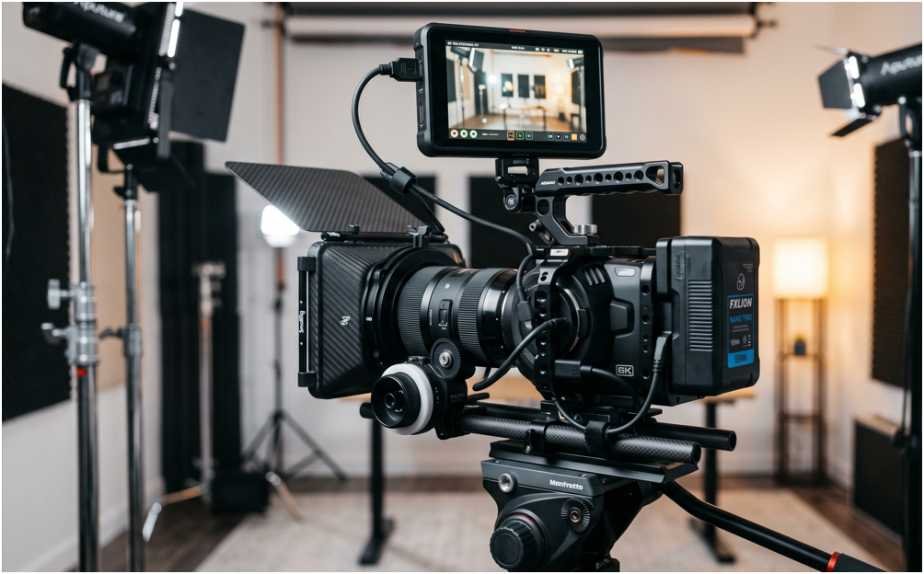
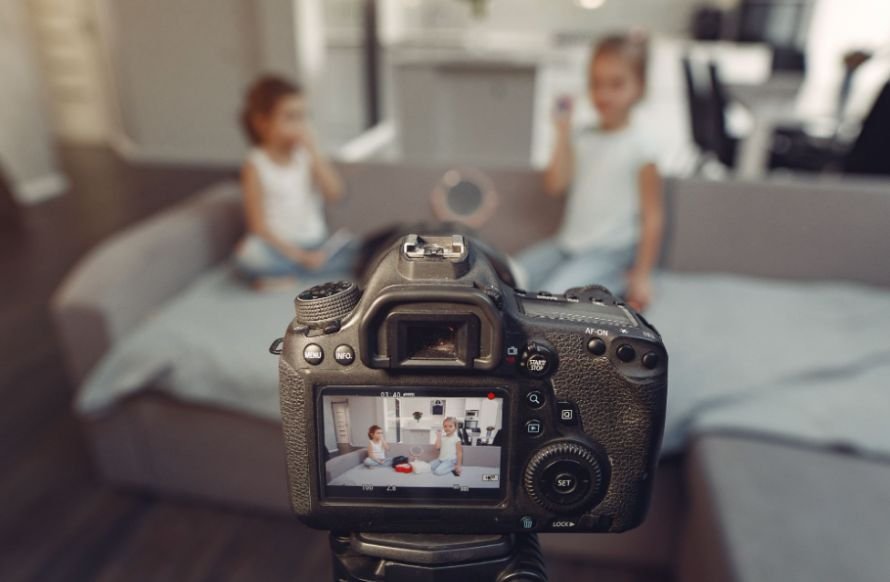
A fluid-head tripod makes controlled movement easier because its damping helps reduce jerky starts and abrupt stops. Storyblocks specifically recommends a fluid head for smoother panning and more natural stops. Before recording, I frame the start and end positions, then rehearse the move so I know where to accelerate and where to settle.
When shooting outdoors, knowing the on-camera monitor brightness needed for daylight filming also helps me judge framing, focus, and exposure more confidently when direct sunlight makes a standard display difficult to see.
I also match movement speed to frame rate, shutter settings, focal length, and subject speed. Very fast moves can create heavy motion blur or visible judder, and some cameras can show rolling-shutter skew during rapid panning. Canon notes that rolling-shutter effects can become noticeable when panning or capturing high-speed movement with some electronic shutters.
Smooth execution also depends on avoiding unnecessary corrections. I would rather rehearse a predictable path and establish exact starting, stopping, and pause points than chase the subject throughout the take.
What Is the Difference Between Pan, Tracking, Tilt, and Pedestal?
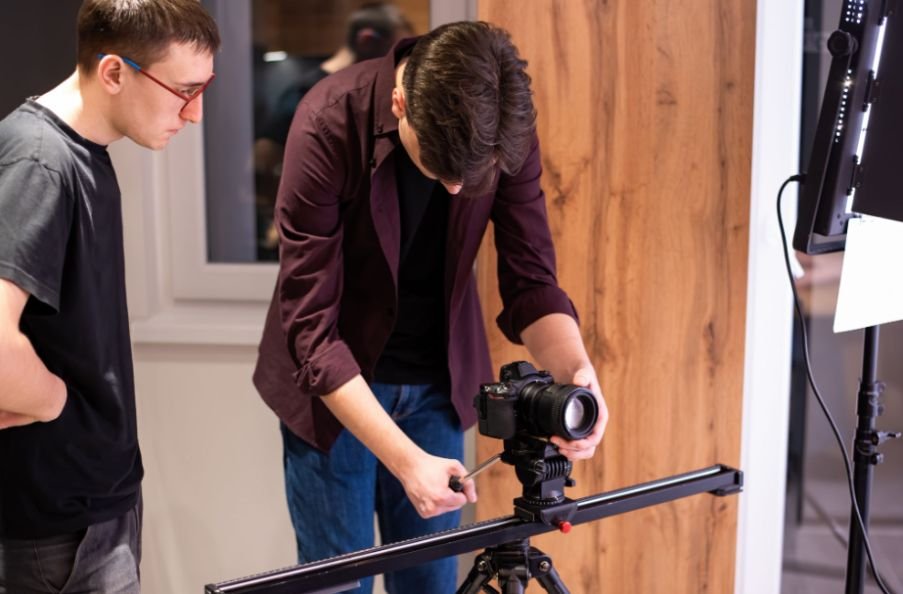
A pan rotates horizontally while the camera stays in one position. A tracking shot physically moves the camera through the scene, often while following a subject. That change in camera position can also create changes in foreground-background relationships that a simple stationary pan does not.
A tilt changes where the lens points vertically, while a pedestal move raises or lowers the entire camera. A tilt feels like looking up or down from the same spot; a pedestal changes the camera’s actual height.
Pan and tilt can also happen together. Understanding how shots work inside a complex camera movement sequence becomes especially useful when an operator combines several axes or movement techniques while maintaining framing, timing, and visual continuity.
If I follow a basketball player across the court and then upward toward the rim, I may pan sideways and tilt upward simultaneously to maintain framing. Pan and tilt are separate axes of movement, not mutually exclusive techniques.
What Pan and Tilt Mistakes Should You Avoid?
The biggest mistake is moving without a reason. A camera move should reveal, follow, connect, emphasize, or redirect attention. If movement contributes nothing to the scene, a locked-off shot may communicate the moment more effectively.
I also avoid abrupt starts and stops unless the style calls for them. Poor start and end frames, an unstable tripod, excessive speed, and repeated corrections can make a simple move look amateur. I always test fast movements before the real take because the results can change with the camera, focal length, shutter settings, frame rate, and subject speed.
Frequently Asked Questions
1. What is the main difference between pan and tilt?
Pan vs tilt camera movement compares two stationary rotational techniques. Panning turns the camera horizontally left or right, while tilting changes its viewing direction vertically up or down.
2. Is panning horizontal or vertical?
Panning is horizontal. The camera swivels left or right around a fixed position rather than physically traveling sideways.
3. What is the difference between a tilt and a pedestal shot?
A tilt changes the camera’s vertical viewing angle while the camera remains in place. A pedestal movement physically raises or lowers the entire camera.
4. Can you pan and tilt at the same time?
Yes. Operators can combine both movements when a subject travels horizontally while also changing height or position vertically.
Final Take
For me, mastering these movements is less about memorizing terminology and more about understanding visual direction. I pan when the story unfolds across the scene and tilt when it unfolds vertically.
Once I define the purpose, establish clean start and end frames, rehearse the movement, and control the speed, even a basic tripod shot can feel deliberate. Whether I’m planning a US commercial, sports sequence, real estate video, documentary, or narrative scene, the best movement is the one that helps the audience see exactly what matters.