



A camera glides beside an actor, slips through a doorway, then pushes closer just as the emotion peaks. To the audience, it feels effortless. Behind the shot, however, the movement may involve very different techniques. That is why dolly shot vs tracking shot remains one of the most commonly confused comparisons in filmmaking.
Both can create smooth, immersive motion, but they are not defined in exactly the same way. One is closely tied to how the camera is physically moved, while the other is more about how the camera follows action through a scene. Understanding that distinction can help filmmakers plan stronger shots, choose the right equipment, and communicate more clearly on set.
What Is the Quick Difference Between a Dolly Shot and a Tracking Shot?
A dolly shot uses a camera mounted on a wheeled camera dolly, commonly running on dolly track or operating on suitable wheels. A tracking shot moves through the scene to follow or accompany action and does not require a traditional dolly. Modern tracking shots can use a Steadicam, 3-axis gimbal, handheld camera, drone, vehicle mount, or other stabilization system.
| Feature | Dolly Shot | Tracking Shot |
| Core idea | Defined mainly by camera-support method | Defined mainly by camera movement through action |
| Equipment | Camera dolly, wheels, rails or track | Dolly, Steadicam, gimbal, drone, handheld rig or vehicle |
| Traditional direction | Dolly in or dolly out | Often lateral or parallel movement |
| Subject | Can remain still or move | Commonly follows or accompanies action |
| Visual character | Smooth, controlled and repeatable | Can be smooth, floating, energetic or intentionally rough |
| Best use | Precise planned movement | Following subjects through changing spaces |
What Is a Dolly Shot in Filmmaking?
A dolly shot physically changes the camera position by moving the camera on a wheeled platform. Professional camera dollies can roll along rails for controlled camera movement or use wheels on an appropriate surface. Because the entire camera travels through three-dimensional space, the shot changes perspective, depth, and parallax rather than merely making the subject appear larger.
This makes a camera dolly especially useful when I want consistent framing, precise timing, reliable focus pulling, and repeatability across several takes.
Depending on the camera setup and complexity of the move, choosing between manual vs wireless follow focus for filmmaking can also affect how easily the focus puller maintains sharpness as the camera-to-subject distance changes.
What Is a Dolly-In Shot?
A dolly-in, sometimes called a push-in, moves the camera toward the subject. Traditionally, this is associated with movement along the depth or Z-axis of the scene.
I often think of a slow dolly-in as a storytelling tool rather than just a technical move. It can gradually increase intimacy, emphasize a realization, or direct attention toward an important character or object.
What Is a Dolly-Out Shot?
A dolly-out or pull-out moves the camera away from the subject. It can reveal more of the environment, change the emotional distance between the viewer and character, or expose information that was previously outside the frame.
The subject does not need to move for either technique. A camera can dolly toward a completely stationary actor, product, or object.
What Is a Tracking Shot?
A tracking shot physically moves the camera through a scene, usually to follow, lead, or remain connected with a subject or unfolding action. Adobe describes the technique around following a subject, while modern filmmaking sources recognize that tracking camera movement can now be achieved with many different rigs.
Traditionally, tracking often referred to lateral movement, with the camera traveling parallel to a subject. You still hear that terminology on sets, especially when discussing a walk-and-talk or sideways camera move.
Today, however, tracking shots can move forward, backward, sideways, diagonally, or around a character. Technology has made the term considerably broader than it was when heavy cameras depended heavily on physical track systems.
Why Do Dolly and Tracking Shot Definitions Overlap?
This is where dolly shot vs tracking shot becomes more nuanced.
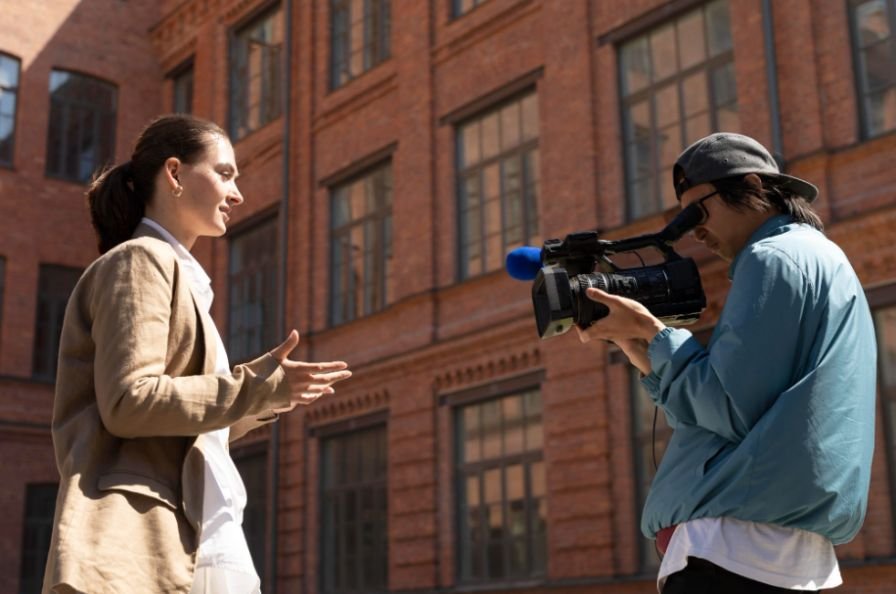
Imagine an actor walking down a New York sidewalk while the camera rolls beside them on a dolly track. The camera uses a dolly, making it a dolly shot, but it also tracks the actor, so it can simultaneously function as a tracking shot. No Film School similarly describes a dolly tracking shot as movement alongside a subject.
Now imagine following that actor through a doorway, up a staircase, and into another room using a motorized gimbal or Steadicam. The camera is still tracking the character, but no traditional dolly is involved.
That distinction matters on US productions because equipment choices affect crew requirements, rehearsal, available space, setup time, camera path, and the overall visual texture of the scene.
Is a Tracking Shot the Same as a Trucking Shot?
Not exactly.
A trucking shot usually refers to strict lateral camera movement, with the camera moving sideways and roughly parallel to the subject. Tracking is now the broader term and can include leading, following, lateral, curved, and other moving-camera paths. StudioBinder makes a similar distinction between general tracking movement and the more specifically lateral trucking shot.
For example, if I move beside two actors during a walk-and-talk, I might call it a trucking shot. If I follow them through multiple rooms and around corners, tracking shot is usually the more useful description.
How Is a Dolly Shot Different From a Zoom?
A dolly physically moves the camera. A zoom changes focal length while the camera can remain in the same position.
That difference affects perspective. As a dolly moves through the scene, foreground and background relationships change. A conventional zoom magnifies or widens the image without producing the same physical shift in camera position.
Filmmakers can deliberately combine these actions to create a dolly zoom. The camera moves in one direction while the zoom changes in the opposite direction, creating the perspective effect famously associated with Vertigo.
When Should You Use a Dolly Shot?
I prefer a dolly when precision matters more than mobility. Commercials, narrative dialogue, product filmmaking, controlled push-ins, music videos, and repeatable visual-effects passes can all benefit from a carefully established camera path.
A well-prepared dolly and rail system can deliver stable, consistent linear motion. That repeatability is valuable when actors, lighting cues, focus marks, or choreography need to synchronize across multiple takes.
The tradeoff is preparation. Dolly tracks require suitable space and careful setup, making them less convenient when a shot needs to move through tight, uneven, or unpredictable environments.
Crews should also consider dropped object prevention on film sets whenever cameras, accessories, lighting, or support equipment are positioned where loose components could fall into active working areas.
When Should You Use a Tracking Shot?
I choose a more flexible tracking setup when the camera needs to stay connected to moving action.
A gimbal tracking shot can follow performers through hallways, sidewalks, event venues, stairs, or other spaces where rails would restrict movement.
For these mobile builds, choosing between a clamp-on vs rod-mounted matte box can affect overall rig weight, balance, filter handling, and how easily the operator can move through tight spaces.
Steadicam systems can also produce fluid long takes while giving the operator considerably more freedom. Adobe notes that lighter modern equipment has expanded the complexity of tracking movements filmmakers can execute.
For American independent filmmakers, commercial crews, event videographers, sports productions, and music-video teams, that flexibility can be especially valuable when production schedules and locations make a full dolly setup impractical.
What Famous Movies Use Tracking and Dolly Camera Movement?
I find studying finished scenes more useful than memorizing definitions. The Shining uses extended tracking movement to build tension while following Danny through the Overlook Hotel. Goodfellas uses moving-camera work to guide viewers through the Copacabana sequence and immerse them in the characters’ world.
Adobe also highlights 1917, Children of Men, and Selma as notable examples of storytelling built around tracking movement.
The key lesson is that effective camera movement has motivation. The rig itself matters, but the shot becomes memorable when movement changes what viewers understand or feel.
Frequently Asked Questions
1. Is dolly shot vs tracking shot really an equipment-versus-purpose difference?
That is a useful modern way to understand the distinction. A dolly shot is closely tied to using a camera dolly, while a tracking shot describes the camera traveling with or following action. Because a dolly can perform tracking movement, one shot can fit both descriptions.
2. Does a subject have to move in a tracking shot?
Tracking shots commonly follow moving subjects, but modern terminology is flexible. The more useful distinction is that the camera physically travels through the scene rather than remaining fixed.
3. Can you create a tracking shot without tracks?
Yes. Steadicams, motorized gimbals, handheld stabilization systems, drones, vehicles, and other camera rigs can create tracking shots without conventional rails.
4. Which is better: a camera dolly or a gimbal?
Neither wins in every situation. I choose a dolly when smoothness, precision, and repeatability matter most. I choose a gimbal when freedom of movement, smaller spaces, or complicated camera paths matter more.
Which Camera Movement Should You Choose?
For me, the decision always comes back to storytelling. If I need a controlled push-in, pull-out, or precisely repeatable path, a camera dolly is often the stronger choice. If I need to follow action freely through a changing environment, a tracking setup using a gimbal, Steadicam, dolly, or another moving platform may make more sense.
Once you understand the difference between equipment, direction, and narrative motivation, the terminology becomes much less confusing. More importantly, you can choose camera movement because it strengthens the scene—not simply because the shot looks impressive.