





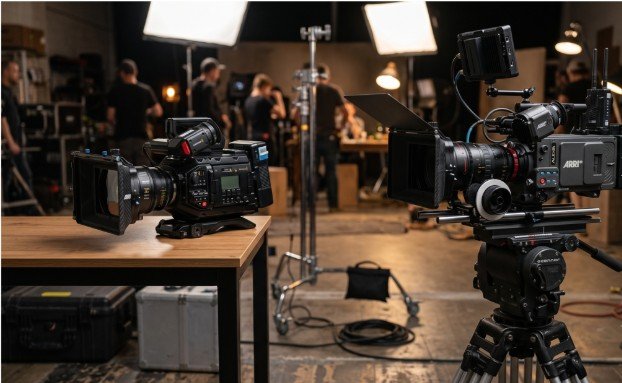
A matte box can make a compact camera feel agile or turn it into a front-heavy headache. My clamp-on vs rod-mounted matte box comparison focuses on what matters during real shoots: lens strain, balance, filter use, lens changes, and operating speed.
The simple distinction is attachment. A clamp-on model grips the front of the lens. A rod-mounted model attaches to 15mm or 19mm support rods and sits in front of the lens.
That small difference changes the behavior of the entire camera rig.
The Core Difference Between Both Matte Box Systems
A clamp-on matte box transfers its weight through the lens barrel, lens mount, and camera body. It usually needs an adapter ring matching the lens’s front diameter.
A rod-mounted matte box transfers its load to the rods, baseplate, and camera chassis. The matte box can sit close to the lens without physically relying on it for support.
Tilta describes its clamp-on carbon-fiber model as attaching directly to standard cinema lenses for a lightweight build. The same design can accept a 15mm rod adapter when extra support is needed.
That hybrid capability matters. The best choice does not always require buying two separate matte boxes.
Clamp-on Matte Boxes: Lightweight Speed
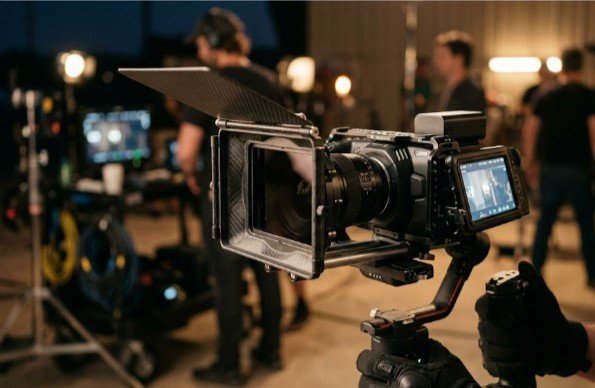
Clamp-on models suit operators who value a small footprint. I prefer them when building mirrorless cameras, handheld documentary rigs, car interiors, drones, or gimbals.
They remove the need for rods and a baseplate when no other rod-mounted accessories are required. Fewer components reduce setup time and make the camera easier to pack.
Where Clamp-on Mounting Performs Best
A clamp-on matte box works especially well with a matched cinema lens set. If every lens has the same front diameter, I can move the box between lenses without changing adapter rings.
It also performs well when I use one lightweight filter, a compact top flag, and a strong internal-focus lens. This combination keeps front-end weight under control.
My clamp-on vs rod-mounted matte box comparison favors clamp-on mounting for:
- Gimbal and Steadicam builds
- Lightweight handheld cameras
- Drone or vehicle-mounted cameras
- Single-lens documentary setups
- Shoots with limited setup space
The format remains valuable even with professional 4 × 5.65-inch filters. Tilta offers clamp-on models supporting multiple 4 × 5.65 filter trays, proving that clamp-on does not automatically mean entry-level.
Lens Stress and Compatibility Limits
The main weakness is load placement. The lens supports the matte box, filter trays, filters, flags, and any adapter hardware.
That weight may be manageable on a rigid cinema prime. It is less suitable for a fragile stills lens, extending zoom, rotating front element, or lightweight lens mount.
I never clamp a matte box onto a moving or telescoping barrel section. I also check the lens manufacturer’s accessory guidance before tightening a clamp.
Clamp-on models can also slow lens changes. The operator must release the clamp, remove the matte box, change the lens, select another adapter ring if needed, and reinstall everything.
Rod-mounted Matte Boxes: Rig Support and Control
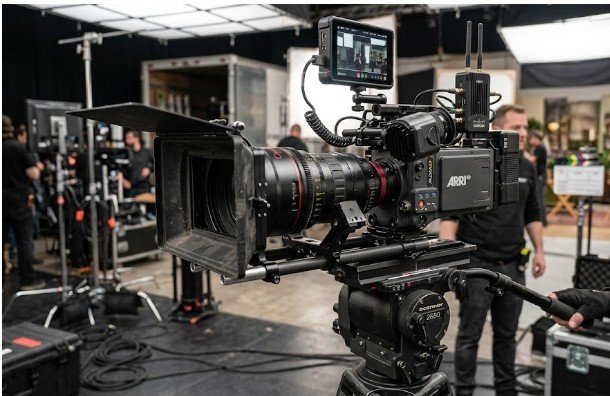
Rod-mounted systems serve larger cinema builds. They connect to 15mm lightweight support, 15mm studio rods, or 19mm studio rods, depending on the matte box and camera package.
Bright Tangerine explains that rod mounting removes matte-box weight from the lens and creates a more rigid build. Its systems support 15mm LWS, 15mm Studio, and 19mm Studio configurations.
Why Rod Support Protects the Lens
A baseplate carries the rods, while the rods carry the matte box. This separation becomes valuable when using heavy filters, large flags, zoom lenses, lens motors, or several filter stages.
Rod support also keeps accessories aligned. A follow-focus motor pressing against a lens gear can create sideways force. A properly supported lens and matte box reduce unwanted movement within the rig.
SmallRig’s baseplate documentation lists matte boxes, follow-focus units, and lens supports among the accessories that can mount to dual 15mm rods.
The tradeoff is added size. Rods, a baseplate, brackets, and support hardware increase weight and extend the camera’s footprint.
Swing-away Matte Boxes and Faster Lens Changes
A swing-away matte box remains attached to the rods but pivots away from the lens. This exposes the lens mount without removing the matte box or filter trays.
Bright Tangerine’s swing-away systems are designed to provide clear lens access and faster changes while maintaining rod support.
I find this most useful during commercial, narrative, and multicamera production. Saving several small steps during every lens change can protect the shooting schedule.
However, not every rod-mounted matte box swings away. Buyers should confirm the mechanism rather than assuming rod support includes it.
Weight, Balance, and Camera Movement
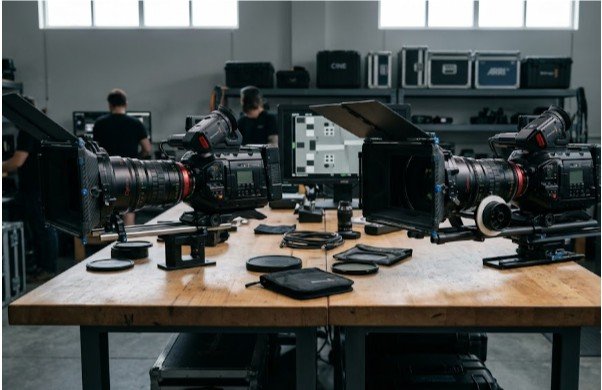
A clamp-on matte box may weigh less as a complete system because it removes the baseplate, rods, and mounting bracket. That makes it attractive for stabilizers.
Yet the total weight number tells only half the story. Weight placed far in front of the camera affects balance more than the same weight placed near the camera body.
A heavy front end can force me to move the camera backward on a gimbal plate. That adjustment may reduce clearance or prevent full tilt movement.
Rod-mounted systems weigh more overall, but the baseplate and rods can create a longer platform for balancing batteries, transmitters, and rear accessories.
This is why a useful clamp-on vs rod-mounted matte box comparison must evaluate balance, not just product weight.
Filter Capacity and Lens Compatibility
Both formats can support professional rectangular filters. The real limitations come from tray count, filter size, lens width, focal length, and matte-box opening.
Wide lenses may vignette when the matte box, hard matte, adapter ring, or stacked filters enter the image area. Test the widest focal length at every intended focus distance.
Rotating filter stages also matter when using graduated neutral-density filters or polarizers. A basic lightweight box may provide fewer adjustment options than a studio model.
Before purchasing, check how to choose a matte box for a cinema camera by comparing:
- Maximum lens diameter
- Supported adapter-ring sizes
- Filter dimensions and tray count
- Rotating-stage availability
- Wide-angle coverage
- Rod standard and lens height
- Swing-away compatibility
The correct matte box must fit the entire lens package, not only the camera body.
My Front-end Load Test
I use a simple test before choosing a mounting system.
First, I build the exact shooting package. I include the lens, filters, trays, flag, motors, adapter rings, cables, and lens support.
Next, I hold the camera in its operating position for several minutes. I test focus pulls, tilts, low angles, lens changes, and gimbal clearance.
Then I ask three questions.
Does the lens barrel flex or move when I touch the matte box? Does the camera become difficult to balance? Will I change lenses often enough for a swing-away mount to save meaningful time?
For example, a compact camera with a lightweight prime and one ND filter usually remains efficient with a clamp-on box. Add a heavy zoom, two glass filters, a motor, and frequent lens changes, and rod support becomes the safer workflow.
This worked example provides more useful information than comparing matte-box specifications in isolation.
Which Matte Box Should You Choose?
Choose clamp-on when mobility controls the decision. It suits light lenses, compact cameras, gimbals, drones, handheld work, and small crews.
Choose rod-mounted when support and operating speed matter more. It suits heavy lenses, multiple filters, follow-focus motors, studio cameras, repeated lens changes, and demanding production schedules.
My clamp-on vs rod-mounted matte box comparison also supports a third option: a convertible matte box. Some models begin as clamp-on units and accept rod or swing-away accessories later. Bright Tangerine and Tilta both document modular systems that can move between mounting styles.
That approach can protect your budget as the camera package grows.
Frequently Asked Questions
1. Is a clamp-on matte box safe for cinema lenses?
Yes, when the lens has a rigid, compatible front diameter and can safely support the complete matte-box load.
2. Can I use a clamp-on matte box with 4 × 5.65 filters?
Yes, several professional clamp-on models support standard 4 × 5.65-inch filter trays.
3. Is a rod-mounted matte box better for a follow focus?
Usually, because the rods can support the matte box, lens support, and follow-focus system within one aligned rig.
4. Which option wins the clamp-on vs rod-mounted matte box comparison?
Clamp-on wins for mobility, while rod-mounted wins for heavy accessories, lens protection, and faster professional lens changes.
Final Verdict: Pick the Rig, Not the Hype
I do not choose a matte box because one mounting style looks more “cinematic.” I choose it based on the lens, movement, filters, and pace of the shoot.
Use clamp-on when every unnecessary ounce works against you. Use rod support when the lens should carry nothing except its own optical workload.
Build your complete camera package before buying. The right answer becomes obvious once you test the real front-end load.