



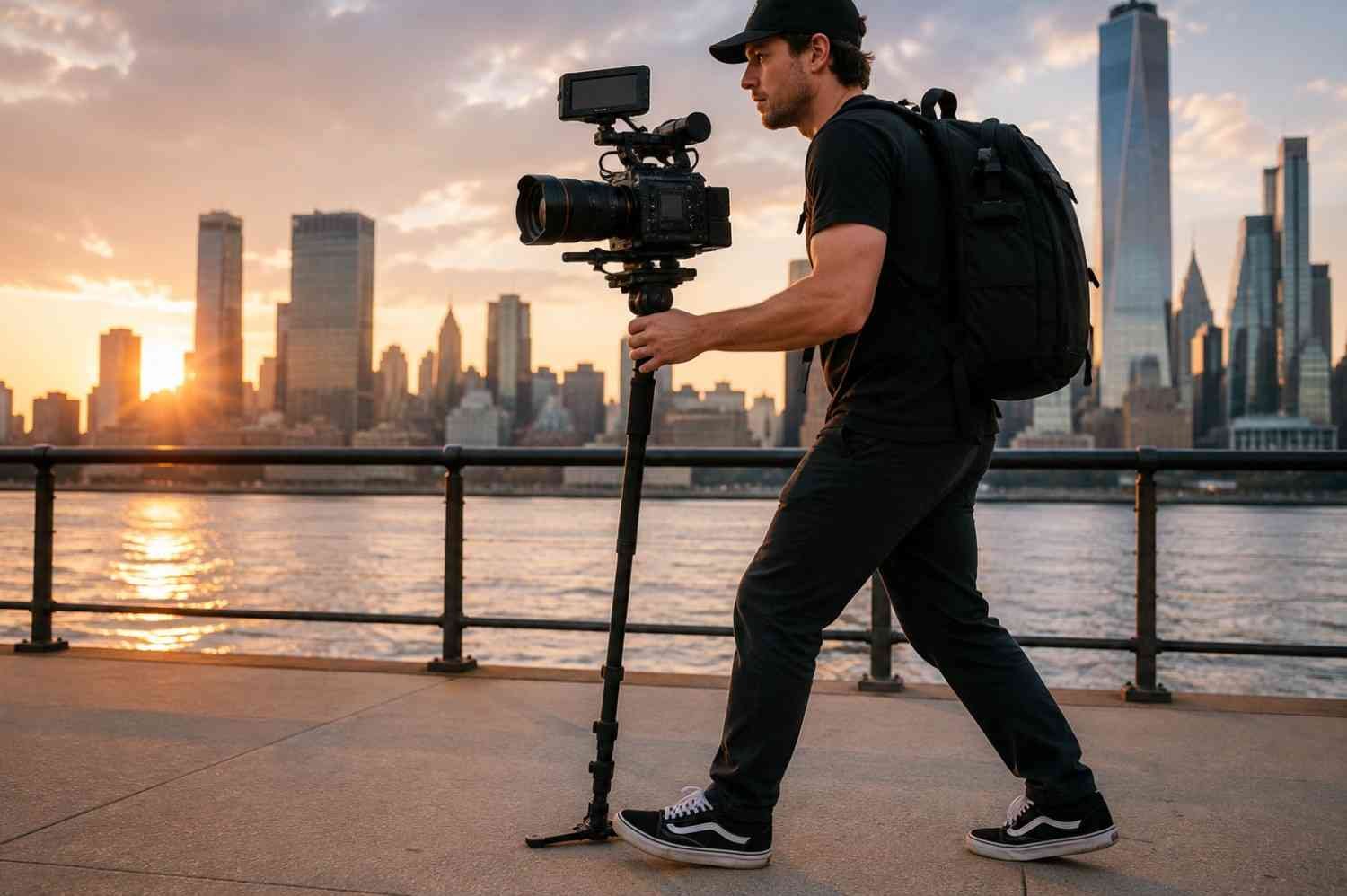
I started noticing how much time a camera support can add or remove from a shoot when moving between locations. A tripod gives excellent stability, but carrying it through a crowded venue or repositioning it between shots can slow things down. A traditional monopod solves some of that problem, yet modern video monopods have become much more capable than the simple single-leg supports I used to associate with them.
What stands out about the latest monopod for filmmaking is the balance between mobility and control. A fluid base, faster locking mechanism, video head, and compact footprint can give a filmmaker enough support to work quickly without completely restricting camera movement. For documentary work, interviews, events, and run-and-gun production, that combination can be more useful than simply choosing the heaviest support available.
Why Modern Video Monopods Are Different
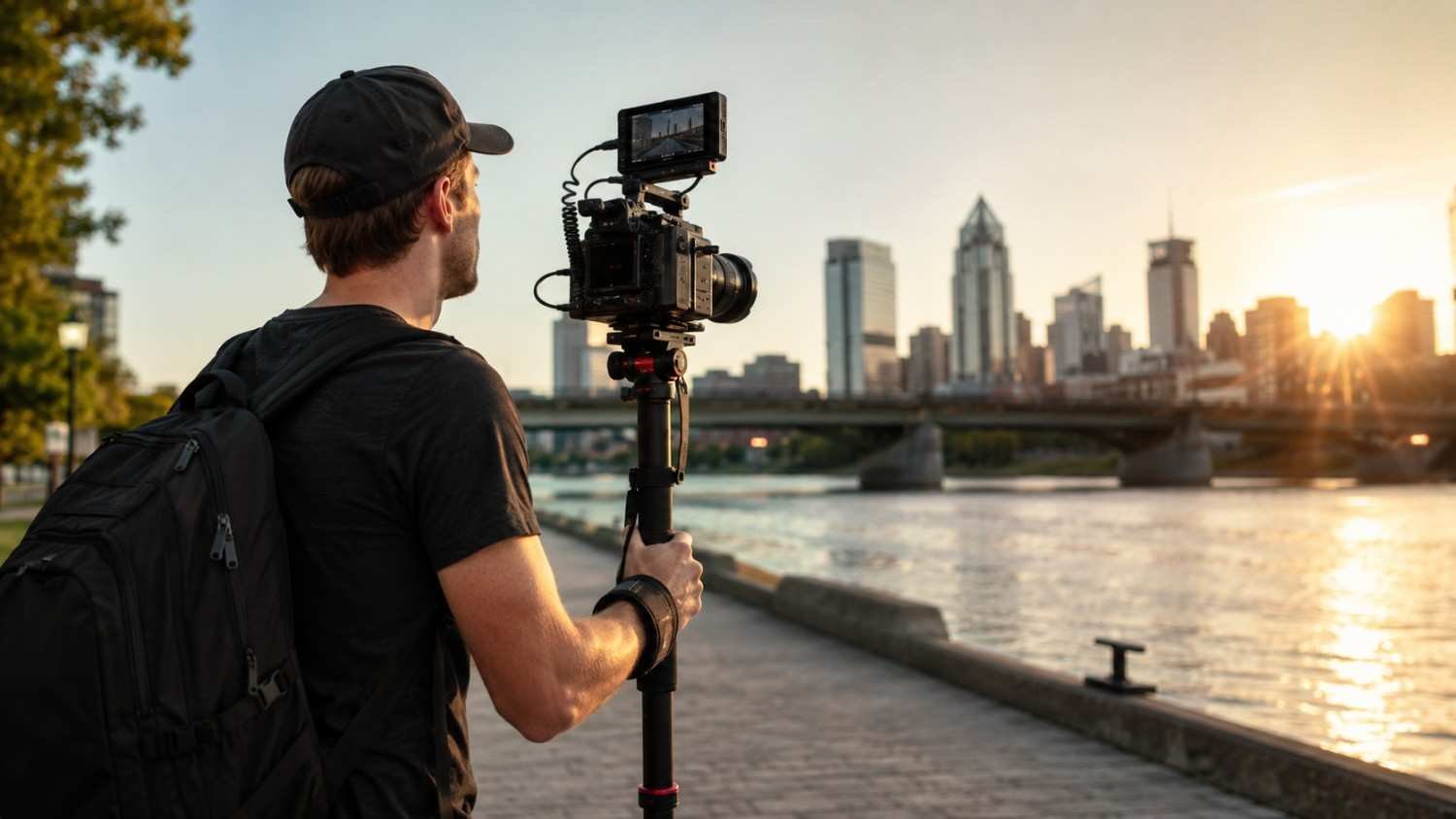
A traditional monopod mainly gives the camera another point of support. Modern video monopods take that basic idea further by combining a single support column with features designed specifically for moving images.
Many current designs include fluid bases, retractable feet, dedicated video heads, quick-release plates, and faster height-adjustment systems. Manfrotto, for example, uses fluid bases with retractable feet on several of its video monopods, while its XPRO systems add three-dimensional fluid movement for pan, tilt, and swivel.
That changes how the support behaves on set. Instead of treating the monopod as something that simply holds the camera, filmmakers can use it as part of the camera movement system.
The biggest advantages come down to three things: stability, speed, and flexibility.
Speed Matters on Real Shoots
The best support system is often the one you can deploy before the moment disappears.
Traditional twist locks can work perfectly well, but they require more hand movement when several sections need adjustment. Modern systems increasingly focus on rapid deployment through lever locks, trigger mechanisms, and other quick-adjustment designs.
Manfrotto’s Quick Power Lock system, for example, is designed for fast setup and secure locking, while some current video monopods use other quick-adjustment approaches to make height changes easier during active shooting.
How Your Camera Rig Changes the Choice
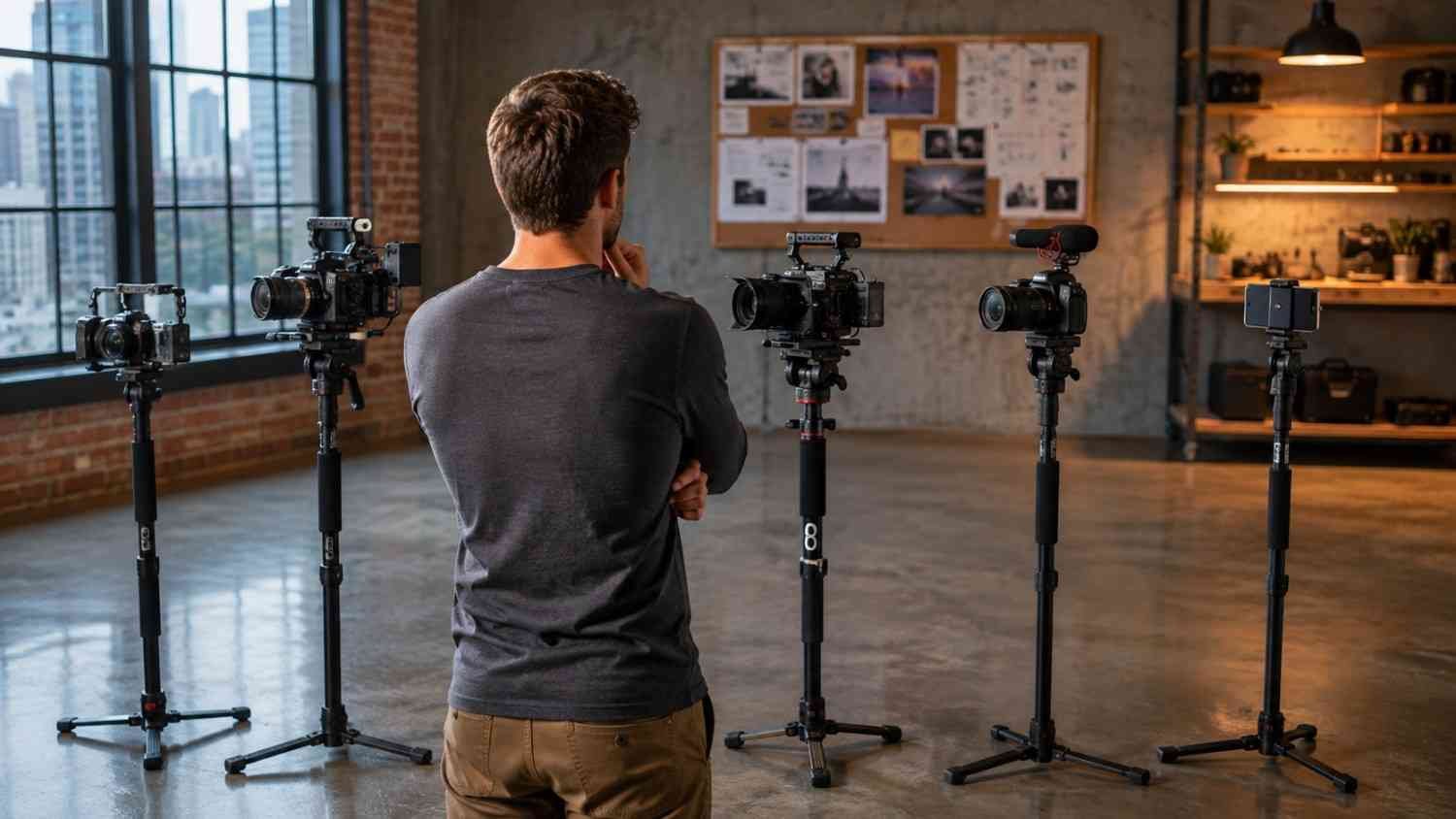
The latest monopod for filmmaking should be selected around the entire shooting package rather than the monopod alone.
A compact documentary setup may need only a camera body, cage, monitor, and lightweight zoom. A commercial production could involve a cinema camera, V-mount battery, matte box, follow-focus motor, wireless video transmitter, and a substantial lens. Both are cameras, but they place very different demands on a support system.
Pay attention to payload capacity, operating height, folded length, mounting interface, head compatibility, and base construction.
If you regularly work with heavier lenses or longer focal lengths, a rigid support becomes even more important because small vibrations can become more noticeable in the recorded image.
For more controlled productions, it can also make sense to use a dedicated professional camera tripod for filmmaking when the shot requires a completely locked position, repeatable framing, or long periods of stationary operation.
Where a Monopod Really Makes Sense
Monopods shine when the production needs stability but cannot afford the footprint or setup time of a full tripod.
Event filmmakers can move through tight spaces without spreading tripod legs across walkways. Documentary shooters can relocate quickly between subjects. Interview crews can use a monopod when they need a stable frame but still expect to change positions. Sports and live-event operators can also benefit from the added height and faster repositioning.
The support is especially useful when the operator needs to maintain a camera at a comfortable working height for long periods. That can reduce physical strain compared with holding a heavy rig entirely by hand.
Some current video monopods are also designed for overhead shooting, giving operators additional framing options when working behind crowds.
Match the Support to the Movement
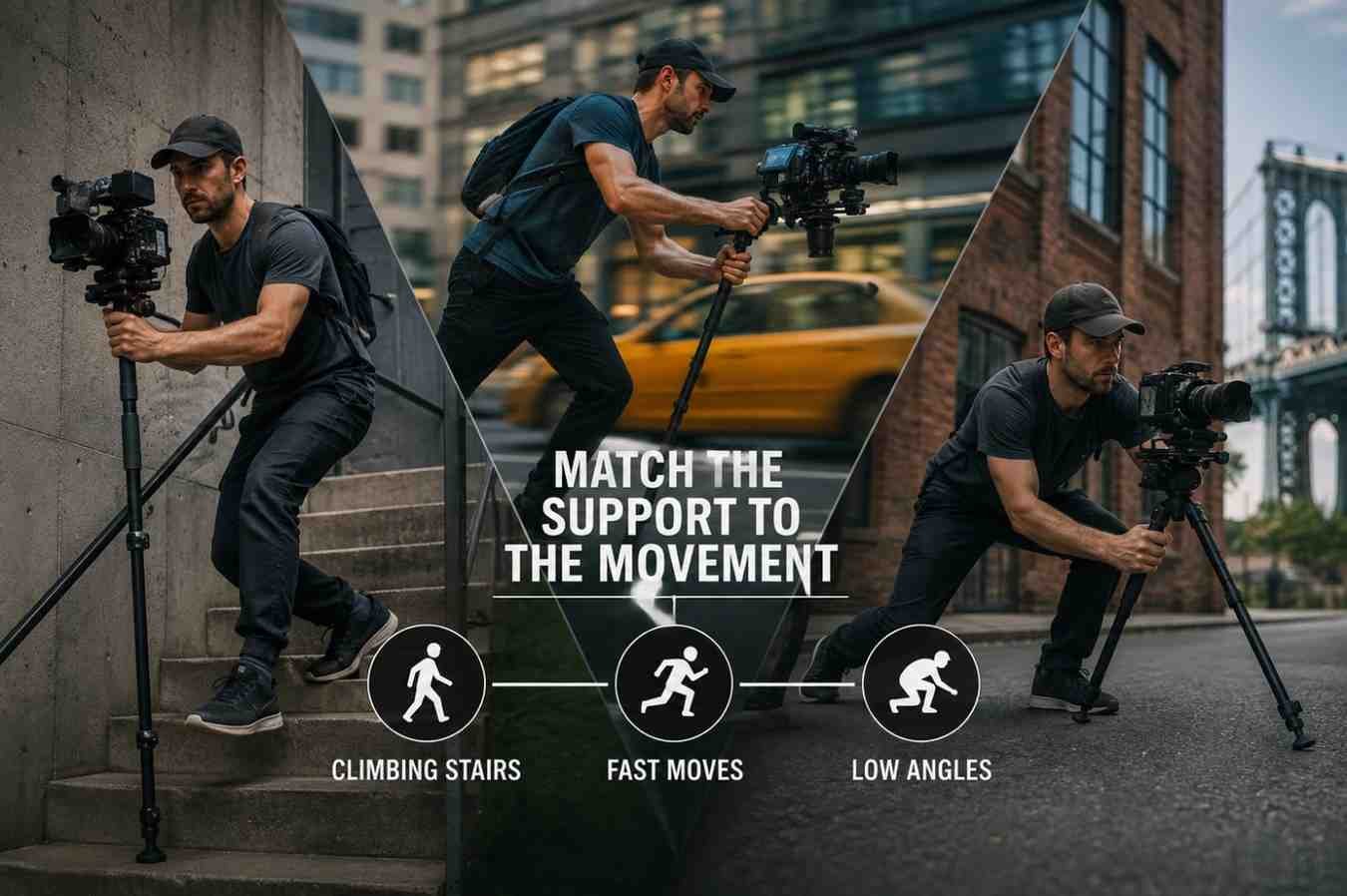
A monopod becomes much more interesting when movement is part of the shot.
A fluid head can provide controlled pan and tilt movement, while a fluid base can allow the support itself to move more smoothly. Some systems are designed to provide pan, tilt, and swivel movement through the base, creating more options than a conventional single-leg support.
That does not turn a monopod into a replacement for a dolly or gimbal. Instead, it gives the operator another tool for subtle camera movement.
Lens choice also affects how noticeable that movement becomes. A longer focal length magnifies small operator movements, while a wider lens can make minor shifts less obvious. Understanding the relationship between focal length, camera movement, and framing helps determine how much support is actually needed.
This is also where zoom cine lens options become relevant for filmmakers who need to reframe quickly without physically moving the camera position. A flexible focal range can complement the monopod’s fast repositioning workflow, particularly during events and documentary coverage.
Three Features Worth Prioritizing
When comparing modern video monopods, specifications can quickly become overwhelming. Focus on the features that directly affect your work:
- Base and movement: Look for a stable base, useful articulation, fluid movement, and reliable locking. A good base can make the difference between controlled motion and an unstable frame.
- Deployment and payload: Check the real-world weight of your complete rig and choose a monopod with appropriate capacity. Then consider how quickly you can adjust its height, fold it down, and move between positions.
Also check the mounting system before buying. A good monopod can become frustrating if your camera plate, fluid head, or other support equipment does not integrate smoothly with it.
When a Monopod Is Not Enough
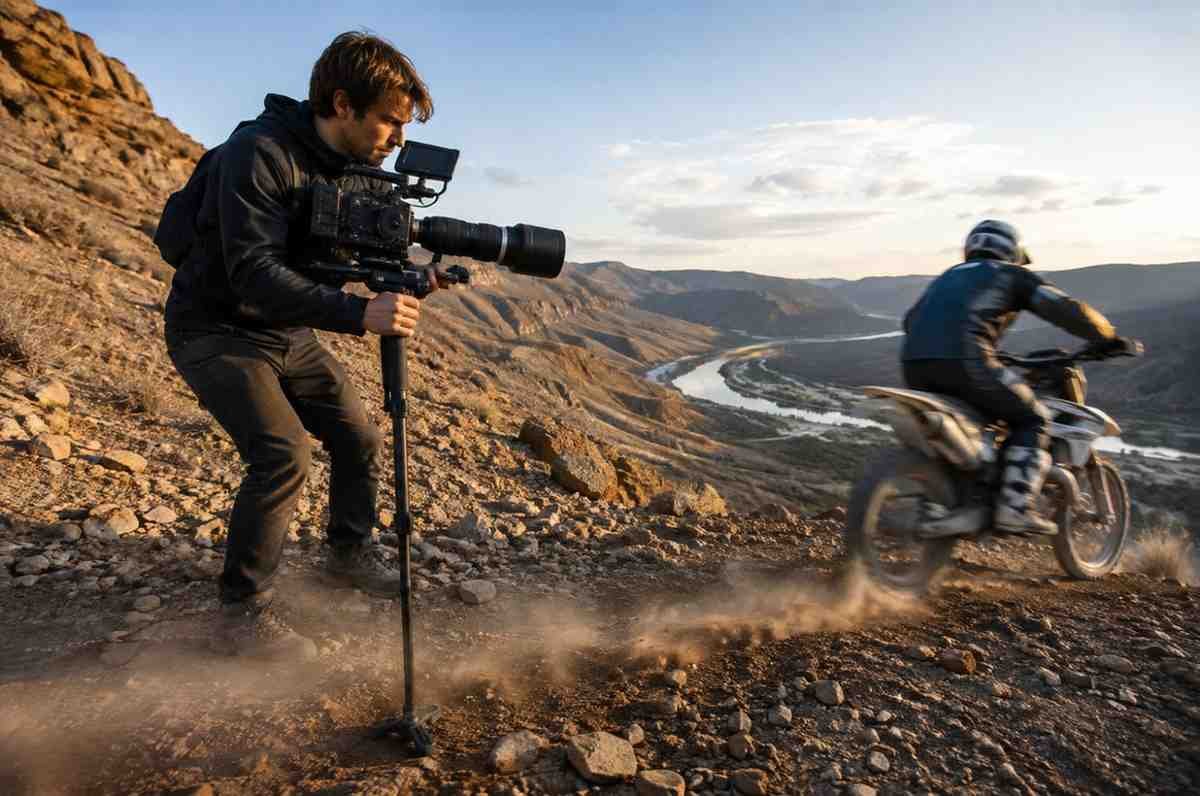
There are situations where a monopod simply is not the right tool.
If you need a completely static composition, a long locked-off shot, precise repeatable framing, or maximum stability for a heavy camera package, a tripod remains the safer choice. A monopod also should not be treated as a self-standing support simply because it has small feet. Those feet improve stability and movement control, but they do not necessarily make the setup safe to leave unattended.
Likewise, a gimbal is better suited to shots that require continuous walking movement and stronger isolation from operator motion.
The goal is not to replace every support system with one piece of gear. It is to choose the support that matches the shot.
Build Around the Way You Actually Shoot
A filmmaker shooting weddings may value fast deployment above everything else. A documentary operator may care more about weight and portability. A commercial cinematographer might prioritize payload, fluid control, and compatibility with a heavier cinema rig.
The latest monopod for filmmaking is therefore less about finding one universally perfect model and more about matching the support to the production workflow. A compact system with fast height adjustment can be incredibly useful when every second matters, while a heavier fluid setup may make more sense when movement control and camera weight take priority.
The same thinking applies to lenses and creative accessories. If the production uses specialized optics, the support needs to remain stable enough for those choices. A heavier anamorphic lens, for example, can change the balance and weight distribution of the entire camera package, making base rigidity and payload capacity more important.
That is why understanding an anamorphic lens setup can also help when planning the support system. The lens is not an isolated component. Its size, weight, and accessories all become part of the camera’s center of gravity.
Why the Right Monopod Should Disappear Into Your Workflow
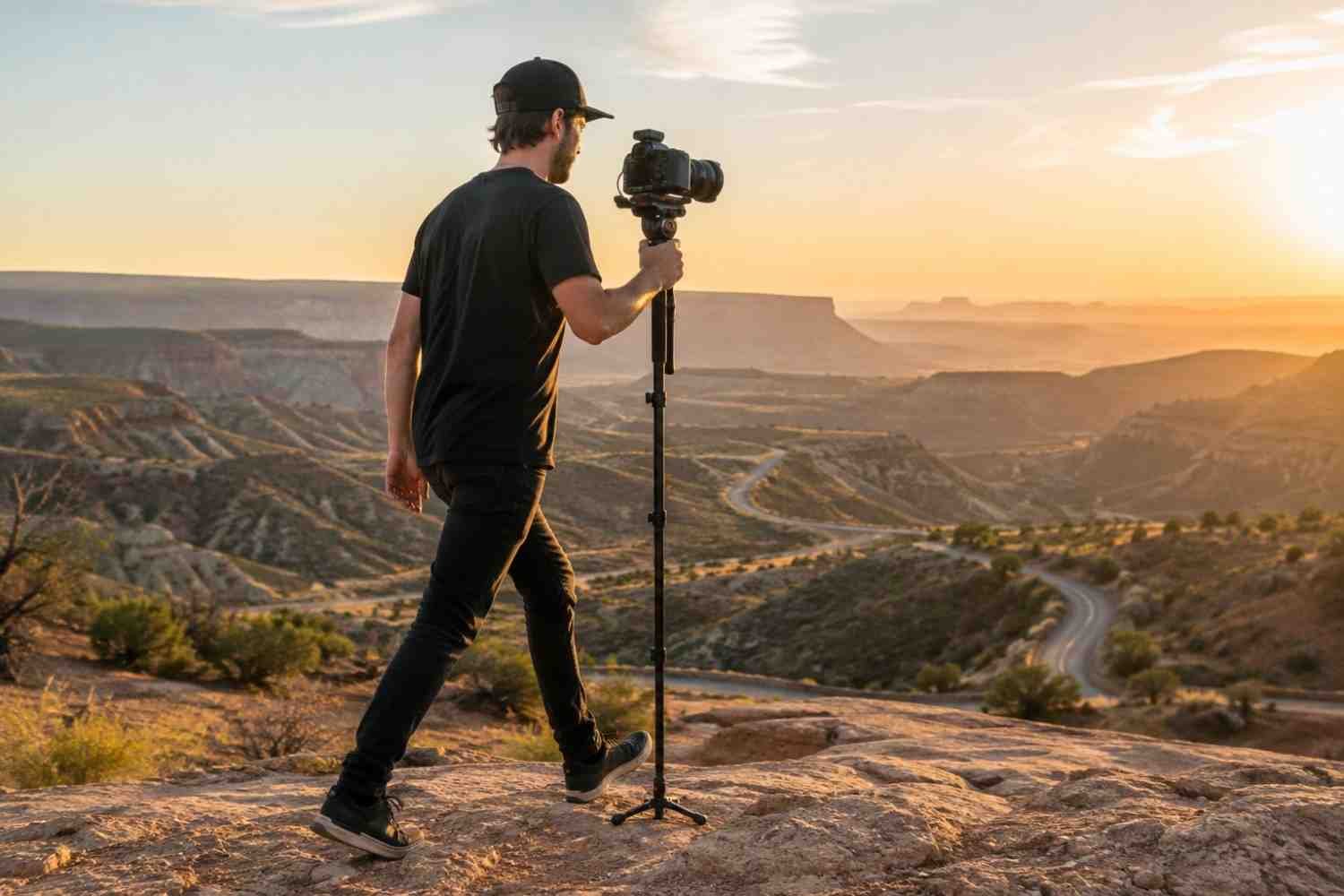
A good filmmaking monopod should not constantly remind you that you are carrying another piece of equipment. It should make movement easier, give your camera enough support to stay controlled, and let you change position without breaking the rhythm of a shoot. That is where modern designs have moved beyond the basic monopod. Fluid bases, rapid locks, quick-release systems, better materials, and dedicated video heads turn a simple support column into a much more capable production tool.
The right choice ultimately comes down to the camera package, shooting environment, and kind of movement you need. When those three things line up, a monopod can provide a useful middle ground between handheld freedom and tripod stability.
FAQs: Latest Monopod for Filmmaking: Stability, Speed, and Flexibility Explained
1. Is a monopod good for filmmaking?
Yes. A video monopod works especially well for events, documentaries, interviews, and run-and-gun productions where mobility and quick setup matter.
2. Are fluid monopods better for video?
A fluid base or fluid head can provide smoother pan and tilt movement than a basic monopod, making it useful for controlled video movement.
3. Can a monopod replace a tripod?
Not completely. A monopod offers greater mobility and a smaller footprint, while a tripod provides stronger support for locked-off shots and heavier setups.
4. Is carbon fiber worth it for a filmmaking monopod?
Carbon fiber can be worthwhile when reducing carrying weight matters. However, payload, rigidity, locking systems, and base design should also influence the decision.