




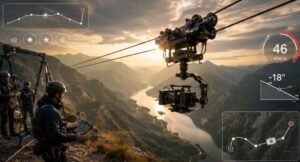
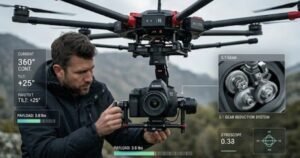
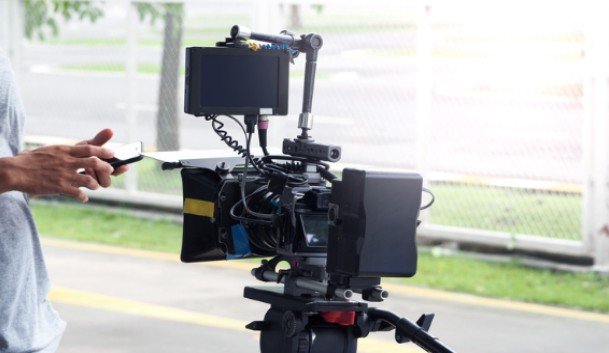
I have always found that the most impressive camera sequence is rarely the product of one expensive piece of equipment. It emerges from dozens of creative and technical decisions working together. When I look behind the production workflow of a technically complex shoot, I see careful preparation, controlled testing, clear communication, and a crew ready to solve unexpected problems without losing sight of the story.
A complicated shoot might involve a long camera movement, practical effects, changing light, precise performer blocking, wireless monitoring, visual effects, and a demanding delivery schedule. The camera may capture the final image, but every department contributes to making that image possible.
What Makes a Shoot Technically Complex?
Technical complexity develops when several production elements depend on one another. A camera move may need to arrive at an exact position as an actor delivers a line, a practical effect activates, and the lighting changes. If one action is late, the entire take may become unusable.
Location restrictions can increase the difficulty. Narrow entrances, low ceilings, unreliable power, reflective surfaces, unpredictable weather, or multiple camera setup may rule out familiar equipment. The production team must then design a workflow around the location instead of forcing an unsuitable plan onto it.
Complexity also increases when footage must be prepared for visual effects, live review, multiple formats, or a rapid edit. These requirements affect decisions made long before the camera starts recording.
Turning the Creative Brief Into a Technical Plan
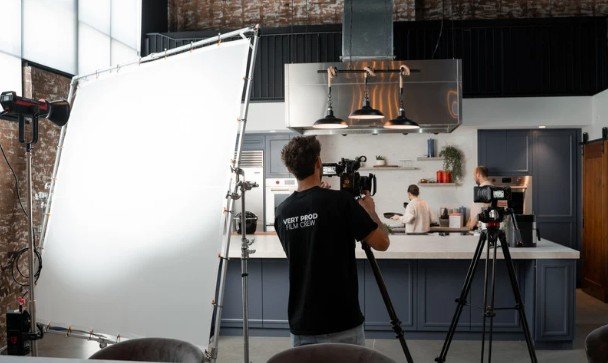
The workflow begins with a clear creative objective. The director and cinematographer must define what the audience should experience before discussing cameras, lenses, or rigs. A shot designed to create tension requires a different technical approach from one intended to feel effortless and romantic.
Once the creative goal is established, the producer and department heads identify practical limitations that may affect the ability to capture smooth and stable camera shots. They examine the budget, schedule, location, equipment availability, performer requirements, safety concerns, and post-production expectations.
Every complicated element should have an owner. The cinematographer controls the photographic approach, the key grip manages camera-support requirements, the gaffer plans lighting and power, the sound department protects audio quality, and the digital imaging technician manages image integrity. Clear responsibility prevents important decisions from disappearing between departments.
Previsualization and Technical Scouting
Mapping the Camera Movement
Previsualization allows the crew to study the sequence before committing resources to the set. It may involve storyboards, an animated previs, overhead diagrams, or a rehearsal recorded on a phone.
The team maps the camera’s starting point, path, speed, lens choice, focus changes, and final composition. Performer marks, lighting cues, effects, set pieces, and crew positions are added to the same plan. This reveals conflicts that may not be obvious from a conventional shot list.
Inspecting the Location
A technical scout should verify measurements rather than rely on photographs or memory. The crew checks ceiling height, doorway width, floor condition, electrical capacity, natural-light direction, sound contamination, equipment access, emergency routes, and safe working areas.
Wireless systems should also be tested. Thick walls, nearby networks, large crowds, or metal structures can interfere with video transmission and communication. Identifying interference during the scout gives the crew time to prepare wired alternatives or reposition equipment.
Building and Testing the Complete System
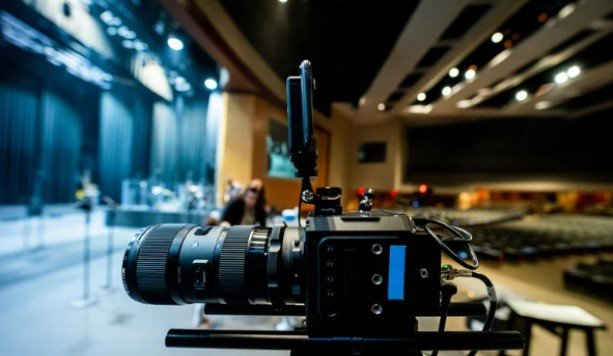
A technically difficult setup must be tested as one connected system. Testing the camera, rig, wireless monitor, timecode, power supply, and recording media separately does not prove that they will work together.
A full test should recreate the intended lens, camera weight, movement speed, signal path, recording format, and expected runtime. Before testing begins, the crew should calculate safe working load for film rigging and confirm that every component can support the complete setup. The crew should also verify focus control, image stability, battery life, monitor delay, playback, timecode, and media transfer.
This is where the team studying behind the production workflow of a technically complex shoot can prevent expensive delays. An overheating transmitter, undersized battery, obstructed camera path, or unstable mounting point is much easier to correct during testing than with performers waiting on set.
A backup plan must also be practical. Carrying spare equipment is not enough if replacing it requires rebuilding the entire setup. The crew should know which component will be changed, who will change it, and how the revised setup affects the shot.
How the Production Day Unfolds
Load-In and Safety Checks
The crew begins by controlling the working area and confirming that equipment can be moved safely. Camera supports, suspended accessories, cables, power distribution, and lighting fixtures are inspected before rehearsals begin.
The production schedule should protect time for a technical rehearsal. Removing this step may appear to save time, but it often creates repeated takes and rushed troubleshooting later.
Rehearsing Department by Department
The first rehearsal establishes performer blocking. The second adds the camera move and focus marks. Lighting, sound, practical effects, and background action are introduced only after the core movement becomes repeatable.
Layering the rehearsal helps the crew identify the source of a problem. If every element is introduced simultaneously, it becomes difficult to determine whether a missed shot resulted from blocking, focus, timing, communication, or equipment.
Capturing the Final Take
During recording, communication should be concise. One designated person calls the sequence, while every department confirms readiness through an agreed system. After each take, the director evaluates performance and storytelling while department heads review technical quality.
The best take is not always the most technically perfect one. If a minor flaw can be corrected without damaging a strong performance, the director and post-production team may choose to preserve the emotionally successful take.
Managing Footage and Metadata
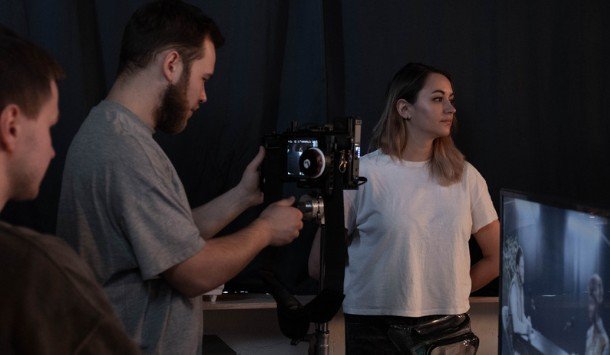
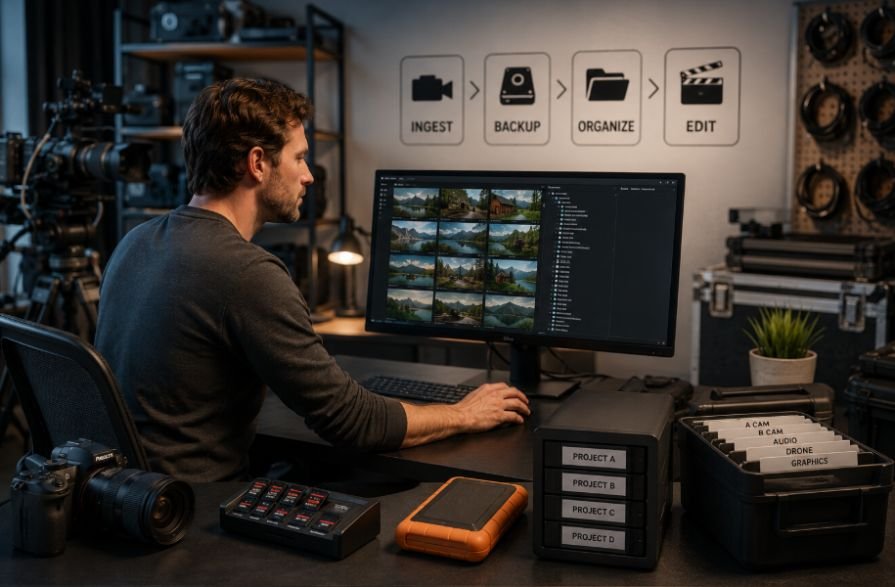
The workflow continues after the director calls cut. Each card must be transferred to verified storage, checked using checksum software, and copied to more than one destination before being cleared.
Consistent folder names, camera reports, sound reports, lens information, timecode, colour notes, and marked takes make the editorial handoff faster. Understanding the artistry behind cable camera systems also requires careful documentation. Visual-effects shots may require reference photographs, tracking markers, lens data, clean plates, and lighting references.
Editorial proxies can be created while the original camera files remain protected. This allows the editor to begin organising footage without compromising the master media.
Moving From Production to Post-Production
Post-production should receive a documented handoff rather than a collection of unexplained files. The editor needs the latest script, continuity notes, camera and sound reports, preferred takes, visual-effects requirements, and delivery specifications.
Picture editing establishes performance and rhythm. Sound editing, visual effects, colour grading, music, graphics, and final quality control then refine the sequence. Review stages should have named decision-makers and clear deadlines to prevent conflicting feedback from delaying delivery.
Frequently Asked Questions
1. What is behind the production workflow of a technically complex shoot?
It is a detailed examination of how creative planning, technical testing, crew coordination, production, media management, and post-production work together during a challenging shoot.
2. Why is a technical rehearsal important?
It allows the crew to test movement, timing, focus, lighting, sound, effects, and communication before recording a full-performance take.
3. Who coordinates a complicated camera sequence?
The director leads the creative decision, while the cinematographer, assistant director, camera team, grip department, lighting crew, sound team, and other specialists coordinate execution.
4. How can production teams reduce technical failures?
They can conduct an accurate scout, test the complete system, assign clear responsibilities, prepare workable backups, and protect time for rehearsals.
Final Take
I believe a complex shoot succeeds when the technology becomes invisible and the audience remains focused on the story. The real achievement is not simply executing an ambitious camera move; it is creating a dependable process that lets every department perform confidently.
When I plan carefully, test the entire signal chain, protect safety, organise media, and prepare realistic alternatives, technical complexity becomes manageable. The finished sequence may look spontaneous, but its apparent simplicity is built on disciplined collaboration from the first creative discussion to the final master.


One comment on “Behind the Production Workflow of Technically Complex Shoot”