



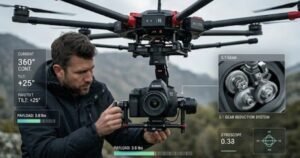
The 3X Pro V2 still appears in used-equipment listings and early aerial filmmaking discussions. Yet reliable information about it is scattered, incomplete and often mixed with details from its controller.
I approached this legacy system as I would any unfamiliar production rig: identify the hardware, separate verified facts from seller claims and evaluate whether it remains safe and useful. The result is a clearer picture of what this professional three-axis camera mount offered—and what buyers must check today.
What Was the 3X Pro V2?
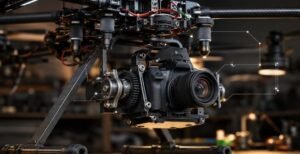
The 3X Pro V2 was a PhotoShip One three-axis camera mount built for professional aerial photography and video. It belonged to an era when filmmakers carried large DSLR bodies beneath helicopters and early multirotor aircraft.
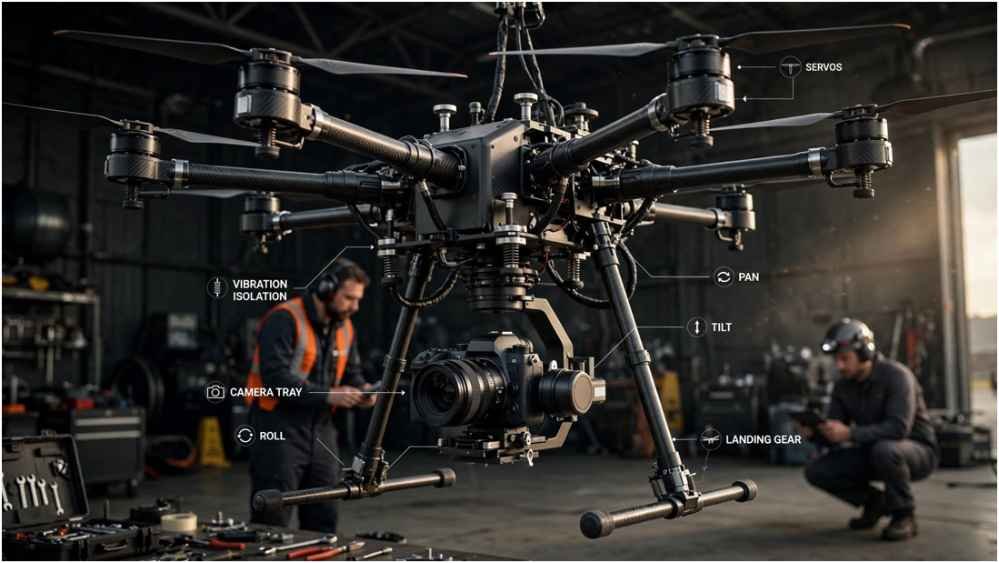
Unlike compact handheld stabilizers, this system formed part of a larger aerial platform. Its structure could include the camera tray, pan assembly, landing gear, servos and separate stabilization electronics. The exact configuration depended on the aircraft and optional components.
Historical references connect the mount with DSLR cameras and platforms such as the DJI S800 and Gaui X7. That history makes the system interesting, but it does not prove that every surviving unit includes the same parts.
How Did the Three-Axis Camera Mount Work?
Pan, Tilt and Roll Movement
The 3X Pro V2 controlled three movements. Pan turned the camera horizontally. Tilt aimed it upward or downward. Roll corrected sideways leaning as the aircraft moved.
These axes allowed a camera operator to adjust framing while the stabilization controller corrected unwanted motion. A pilot could concentrate on the aircraft while another operator managed the camera. This two-person approach was common in high-end aerial work.
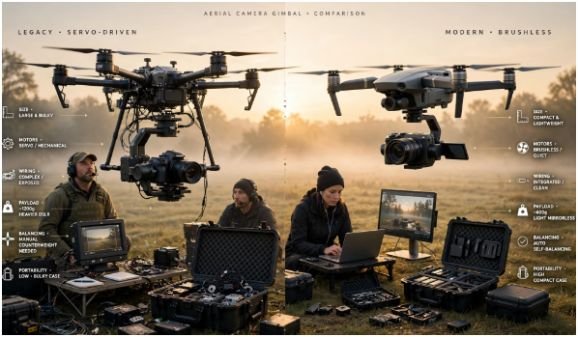
The mount relied on mechanical movement and servo control rather than the compact brushless motors found in many current gimbals. Results therefore depended heavily on alignment, servo condition, structural rigidity and correct controller settings.
Mechanical Balance Before Electronic Correction
I never treat electronic stabilization as a cure for poor mechanical balance. A badly balanced camera forces the motors or servos to work harder. That can produce vibration, heat, slow movement or visible oscillation.
The same principle applies today. DJI’s balancing documentation recommends balancing the tilt, roll, and pan axes before operation.
A lighter camera does not automatically balance better. Its lens length, battery position, and cage can move the center of gravity beyond the tray’s adjustment range. That matters when adapting an older mount to a modern cinema camera setup.
What Specifications Can Be Verified?
Original manufacturer documentation is difficult to locate. The figures below come from archived community references and historical equipment listings. Buyers should verify the measurements on the actual unit.
| Specification | Historically reported detail | Confidence |
|---|---|---|
| Stabilization axes | Pan, tilt and roll | High |
| Intended camera type | DSLR and professional video cameras | High |
| Weight with landing gear | Approximately 1.1 kg | Moderate |
| Maximum camera width | Approximately 170 mm | Moderate |
| Camera plate | Approximately 150 × 150 mm | Moderate |
| Reported overall height | Approximately 36 cm | Low to moderate |
| Electronics | Varied by package and optional controller | High |
| Aircraft compatibility | Configuration-specific | High |
The 3X Pro V2 should not be assigned a universal payload rating without primary documentation. Camera width only confirms physical clearance. It does not establish safe weight, balance, or aircraft performance. Sony also states that an aerial gimbal requires both physical balancing and parameter tuning in its gimbal adjustment guidance.
Which Cameras and Aircraft Were Compatible?
DSLR Camera Fit
Historical installations mention larger DSLR bodies, including cameras in the Canon EOS 5D and 7D class. However, camera compatibility involves more than body size.
The working payload includes the body, lens, battery, memory media, cage, focus hardware, cables and transmitter. A 900-gram camera can become a 1.7-kilogram payload after those parts are fitted.
Here is a useful worked example:
| Payload component | Example weight |
|---|---|
| Camera body | 900 g |
| Lens | 650 g |
| Battery and media | 120 g |
| Video transmitter and cable | 180 g |
| Mounting hardware | 150 g |
| Complete working payload | 2,000 g |
I would balance the complete two-kilogram build, not the 900-gram camera body. This same payload-first logic also applies when you balance camera on gimbal trolley systems.
Aircraft and Mounting Compatibility
The 3X Pro V2 appeared in builds using the DJI S800 and Gaui X7. That does not make every unit a direct-fit accessory. Adapter plates, conversion frames and landing structures could differ.
Aircraft performance must also be considered. The FAA explains that weight distribution and center-of-gravity changes can affect small-aircraft handling. Its Remote Pilot Study Guide provides useful background on weight and balance. Commercial US operators must also follow applicable Part 107 requirements.
Camera Mount or Picloc Controller?
One of the largest information gaps is naming confusion. The PhotoShip One mount and the Picloc-3X PRO controller are related concepts, but they are not automatically the same product.
| Component | Primary role |
|---|---|
| Camera mount | Holds the camera and provides moving axes |
| Servos | Physically move the pan, tilt and roll assemblies |
| Stabilization controller | Detects movement and sends corrective commands |
| Receiver or operator controls | Accept framing commands from the camera operator |
| Aircraft adapter | Connects the mount to a specific airframe |
A used 3X Pro V2 listing may include only the mechanical mount. It may lack its controller, wiring, receiver, power system or camera-control accessories. Ask the seller to photograph every connector and identify each included component.
How Should You Inspect and Balance a Used Unit?
Inspect the Structure
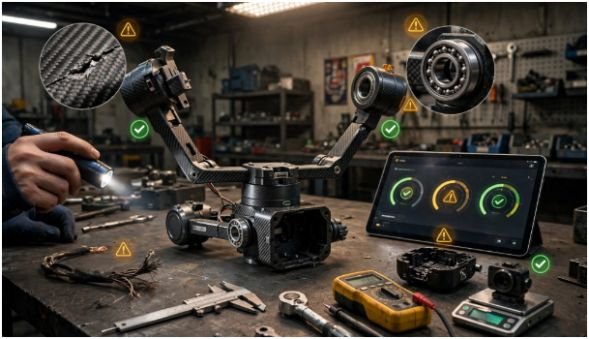
Begin with the rig unpowered. Look for bent plates, cracked composite sections, loose bearings, missing fasteners and damaged wiring. Rotate each axis slowly. Movement should feel consistent without binding or excessive play.
Inspect landing gear and aircraft adapters separately. A sound gimbal attached to a damaged conversion plate remains an unsafe assembly.
Build the Complete Payload
Install every item needed during recording. Set a zoom lens at its intended focal length. Secure loose cables without pulling against an axis.
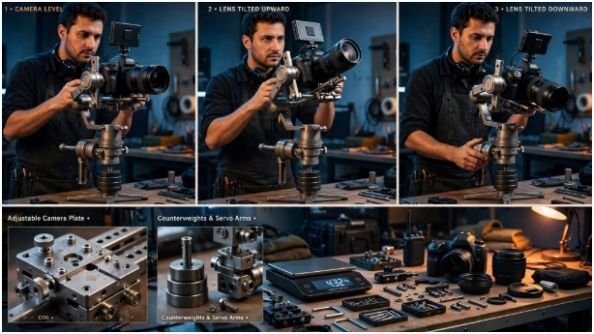
Do not power the servos to hold an unbalanced camera. First adjust the camera tray and counterweight position until gravity produces minimal movement.
Perform the Three-Position Balance Test
My practical test uses three camera positions: level, lens upward and lens downward. The camera should remain close to each position without rapidly falling away.
Repeat the test for roll and pan. This does not certify the mount or establish its payload limit. It reveals obvious imbalance before electronics hide the problem.
How Does It Compare With a Modern Gimbal?
| Feature | Legacy 3X Pro V2 approach | Modern brushless gimbal |
|---|---|---|
| Drive system | Usually servo-based | Brushless motors |
| Setup | Mechanical and controller-intensive | Guided tuning and auto-tuning |
| Camera data | Limited or custom wiring | Broader electronic integration |
| Replacement parts | Difficult to source | Usually supported by manufacturer |
| Portability | Large aerial structure | More compact designs |
| Best use | Restoration or specialized adaptation | Active production workflows |
Modern systems offer easier setup, current compatibility information and better access to support. The older mount may still appeal to collectors, engineers and filmmakers who can fabricate missing parts.
Frequently Asked Questions
1. Is the 3X Pro V2 a camera or a gimbal?
It is a three-axis camera mount or gimbal system, not a camera.
2. Can the 3X Pro V2 carry a Canon DSLR?
Historical configurations used large DSLRs, but actual compatibility depends on complete payload weight, camera width, balance and installed servos.
3. Does the mount include a stabilization controller?
Not always. Used packages may separate the mechanical mount, servos and stabilization controller.
4. Can I install it on a modern drone?
Possibly, but only after checking payload capacity, center of gravity, adapters, control electronics, flight performance and current US operating rules.
Old Rig, Smart Decision: The Final Frame
The 3X Pro V2 represents an important stage in professional aerial cinematography. Its large frame and three-axis design helped filmmakers stabilize substantial cameras before modern brushless gimbals became common.
I would not buy one based on the model name alone. I would request a complete parts inventory, measure the camera tray, inspect every axis and confirm the controller. My final tip is simple: price it as an unsupported legacy system unless the seller can demonstrate a complete, balanced and working configuration.