



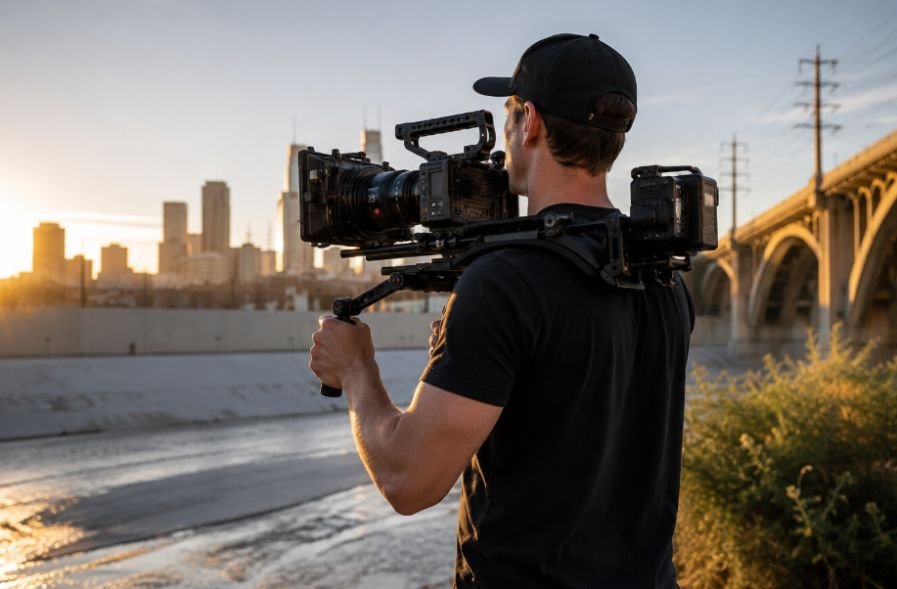
I first noticed the difference a shoulder rig made during a long handheld setup, when the camera felt manageable initially but increasingly awkward after several hours. Holding a cinema camera in front of the body asks the arms and wrists to carry a load that keeps pulling forward. A shoulder-mounted configuration changes that relationship almost immediately.
What stood out was that the benefit was not simply steadier footage. A better-balanced rig made it easier to keep the camera where I wanted it, reach controls without breaking position, and keep shooting without constantly thinking about the weight. That matters on a set, where speed and endurance can shape how many usable shots you capture.
Why a Shoulder Rig Still Matters
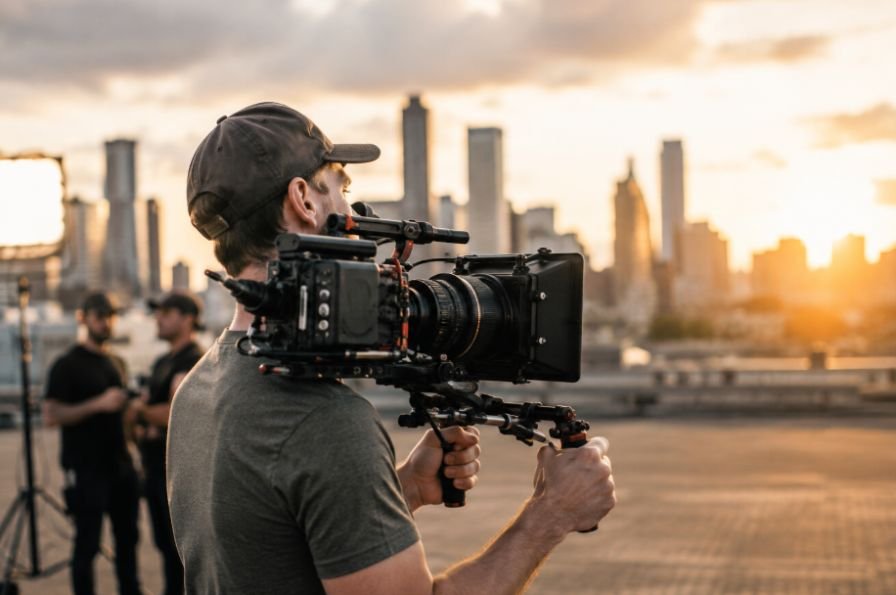
A shoulder rig is a modular support framework that places part of the camera package’s weight against the operator’s shoulder while the hands guide the camera. This creates a more stable operating position.
It also produces a particular kind of movement. A shoulder rig does not erase every trace of human motion. Instead, it helps control small shakes while preserving subtle movement from the operator. That works well for documentaries, narrative scenes, interviews, and handheld sequences that need to feel alive rather than mechanically smooth.
Better Weight Distribution Means Less Fatigue
When the camera’s center of gravity sits close to your body, your arms can focus on steering and framing instead of supporting the entire package.
That helps with a cinema camera carrying a cage, monitor, follow focus, matte box, and battery. A shoulder pad transfers some of that load into the torso. Rear-mounted power can also counterbalance front-heavy lenses and accessories, making the camera feel less like it wants to tip forward.
A balanced rig should not simply be heavy. Adding weight can make an unstable setup harder to operate. The goal is to place the existing weight where your body can manage it comfortably.
More Control Without Losing Organic Movement
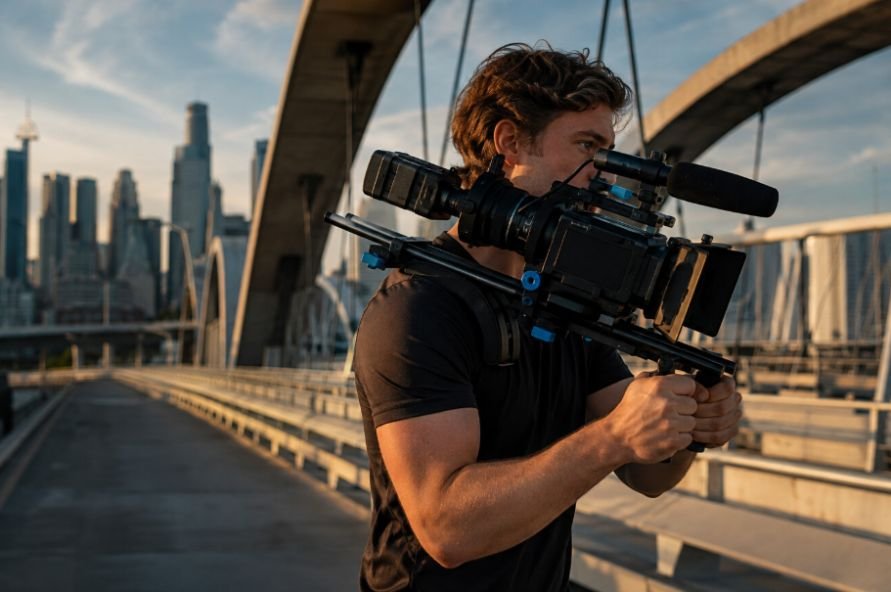
Pure handheld shooting can produce small movements that become distracting, particularly with longer lenses or heavier camera builds. A shoulder rig gives the operator three useful contact areas: the shoulder, left hand, and right hand.
That position makes starts, stops, pans, and small reframes easier to control while retaining natural handheld movement.
Accessories Become Part of the Workflow
Cinema cameras rarely operate as bare bodies. Once you add a monitor, follow focus, matte box, audio receiver, or wireless video transmitter, the rig becomes a system rather than a single camera.
A modular shoulder setup gives those components sensible places to live. Fifteen-millimeter rods can support a follow-focus motor or matte box, while adjustable handgrips put operating controls closer to the hands. A monitor can sit where the operator can see it comfortably.
Modularity Makes Set Changes Faster
A strong shoulder rig should adapt when the camera build changes. One scene may need a lightweight prime. Another may require a zoom, matte box, and wireless transmission.
That is where a modular camera rig setup becomes valuable. Instead of rebuilding the entire camera, the operator can adjust rods, handles, plates, and accessories around the day’s requirements.
Quick-release systems also make transitions easier. A camera can move from shoulder support to a tripod without forcing the crew to dismantle the entire configuration.
Build Around the Camera, Not the Accessory List
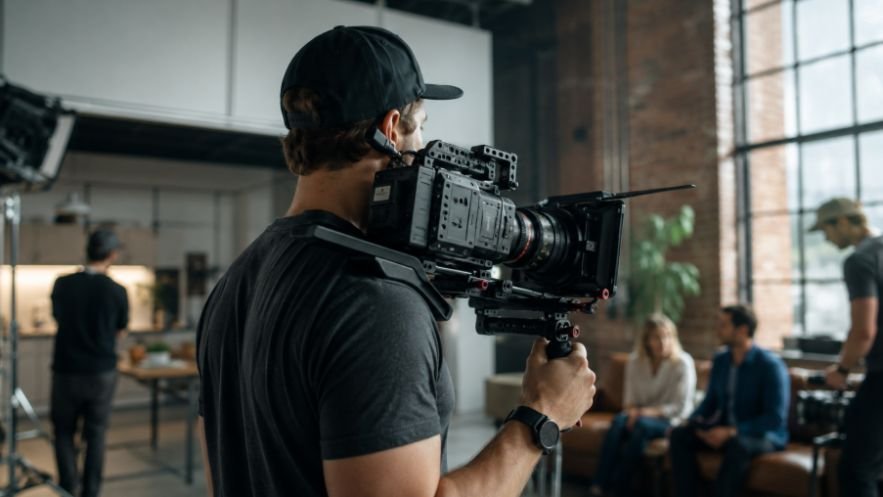
Start with the camera body and lens combination you actually use. Then add the cage, baseplate, shoulder pad, rods, and handgrips. After that, add only accessories that solve a real production need.
This approach is particularly useful when choosing between professional cinema cameras for indie films. A camera that looks compact can become a very different operating package once you add power, monitoring, focus control, and support hardware.
The same thinking applies to open gate cinema cameras. If you switch aspect ratios or lenses, leave enough flexibility to change the setup.
Before a shoot, shoulder the complete package and check where the weight sits. The camera should feel supported rather than pulled away from your body. Handles should fall naturally into your hands.
When a Shoulder Rig Beats a Gimbal
A shoulder rig is not a replacement for every stabilization tool. If a shot requires walking smoothly through a space, floating movement, or dramatic tracking, a gimbal may be better.
The shoulder rig wins when production needs quick deployment, long handheld operation, direct camera control, and natural movement. It can also work well in cramped rooms or crowded locations where there is little time to balance equipment.
Small Rigging Choices Change the Way You Shoot
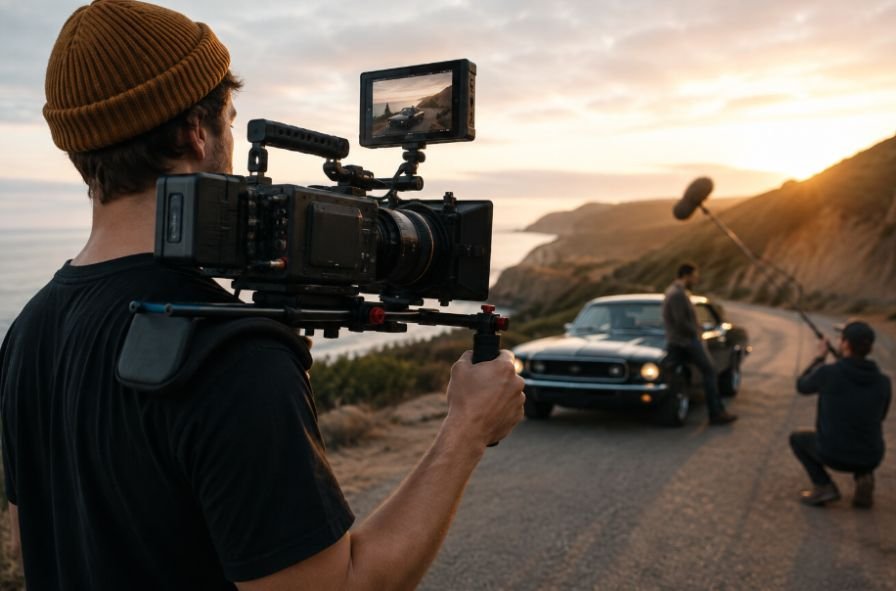
A shoulder rig works best when it disappears into the operator’s routine. Once the camera is balanced, controls are accessible, and accessories sit where they belong, less attention goes toward managing equipment and more toward framing, timing, blocking, and performance.
When the camera feels manageable, the operator can stay focused on the scene instead of the strain.
Frequently Asked Questions
1. Is a shoulder rig good for long shoots?
Yes. A properly balanced shoulder rig distributes camera weight across the shoulder and hands, reducing arm fatigue during extended handheld work.
2. Does a shoulder rig remove camera shake?
It reduces unwanted movement but does not eliminate natural handheld motion. That movement can be useful when a scene needs an organic visual feel.
3. What accessories work with a shoulder rig?
Common additions include a cage, 15mm rods, handgrips, follow focus, matte box, monitor, wireless transmitter, and V-mount or Gold Mount battery.
4. Should I use a shoulder rig or gimbal?
Choose based on the shot. A shoulder rig suits responsive handheld work, while a gimbal is better when you need smooth, floating movement.
A Better Rig Should Make the Camera Feel Simpler
The best shoulder setup is rarely the one with the most components. It is the one that fits the operator, balances the camera package, keeps essential controls within reach, and can change quickly when production demands something different. A thoughtful rig can turn a heavy cinema camera from something you constantly fight into a tool that feels predictable and responsive.
That difference shows up in the work. When the camera feels manageable, the operator can stay focused on the scene instead of the strain.