



An arc shot can make a simple scene feel instantly more cinematic. Instead of leaving the camera in one place, I move it along a curved path while keeping the lens trained on the subject. That changing angle creates depth, parallax, energy, and immersion.
If you are learning how to shoot an arc shot, the challenge is controlling the radius, horizon, framing, focus, speed, and background at the same time. Whether you shoot short films, commercials, music videos, or branded content in the US, a well-planned orbit can give modest setups a polished look.
What Is an Arc Shot in Cinematography?
An arc shot moves the camera around a subject on a curved or circular path. The subject usually acts as the visual center while the camera changes position around it.
An arc shot vs pan comparison matters. A pan rotates from a fixed position, while an arc physically moves through space, shifting foreground and background elements to create parallax.
You might use a 90-degree move for a subtle reveal, a 180-degree arc shot to transform the background, or a 360-degree arc shot for a dramatic camera orbit around subject and environment.
How Do You Set Up a Smooth Arc Camera Movement?
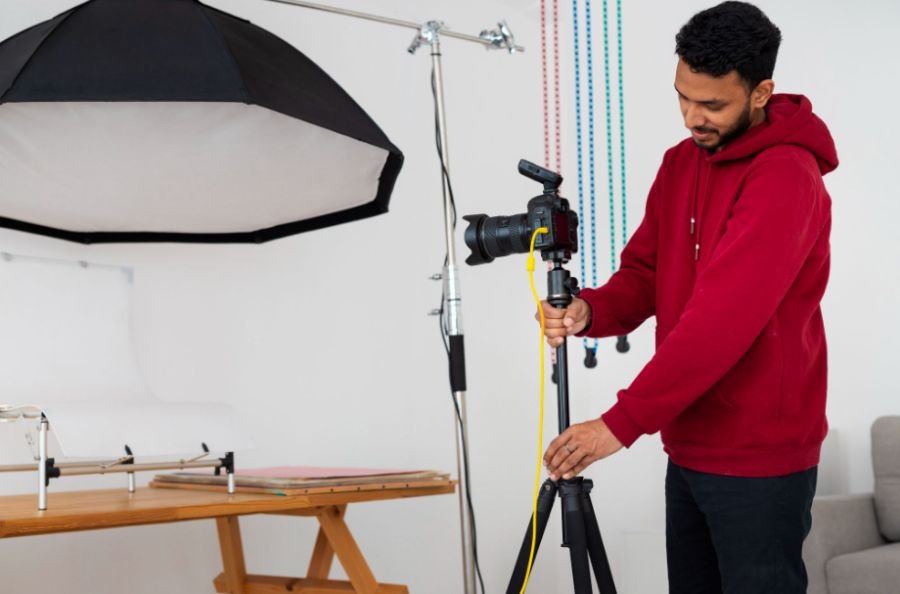
I begin by choosing the center of the move, which may be an actor, two people, a product, or a key action point. Then I choose the radius and keep the camera-to-subject distance as consistent as the shot requires.
I mark the path with tape or use landmarks outdoors, and I establish the starting and ending compositions before rolling.
How Do You Keep the Horizon and Framing Steady?
A steady pace matters more than speed. Sudden acceleration exposes footsteps, framing corrections, focus errors, and changes in distance.
With a gimbal or Steadicam, I use soft knees and a controlled heel-to-toe “ninja walk” to reduce vertical bounce. I keep the rig stable instead of constantly steering it. During low-angle gimbal work, keeping the handle properly oriented and avoiding unnecessary twisting can help prevent pan drift.
I watch headroom, subject size, and the horizon. If the subject becomes noticeably larger, I am probably cutting inward.
What Equipment Is Best for an Arc Shot?
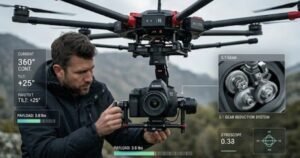
A gimbal is practical for independent filmmakers because it creates smooth movement without track. A gimbal orbit shot works especially well in interiors and tight locations.
A Steadicam offers fluid freedom around obstacles, while handheld work can create a more immediate feel.
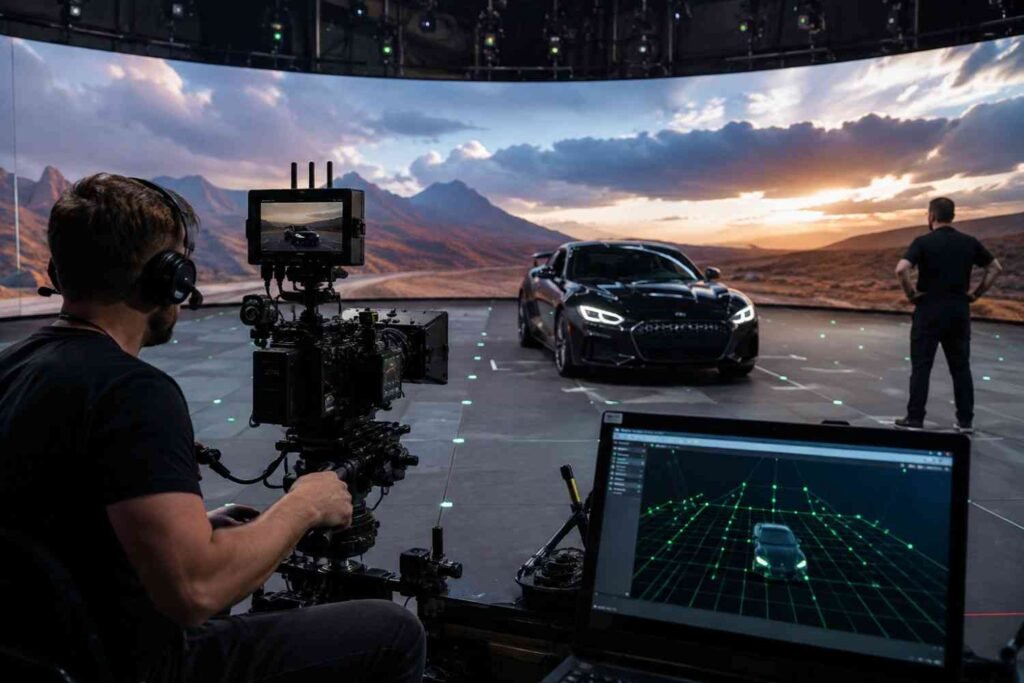
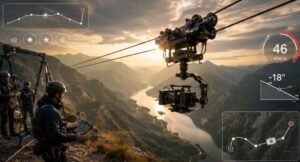
For repeatability, a curved dolly shot is difficult to beat. Curved track rails define the path and help multiple takes match. Larger productions may also use a jib or crane when the arc needs to move vertically over, under, or around the subject.
What Lens and Focus Settings Work Best for an Orbit Shot?
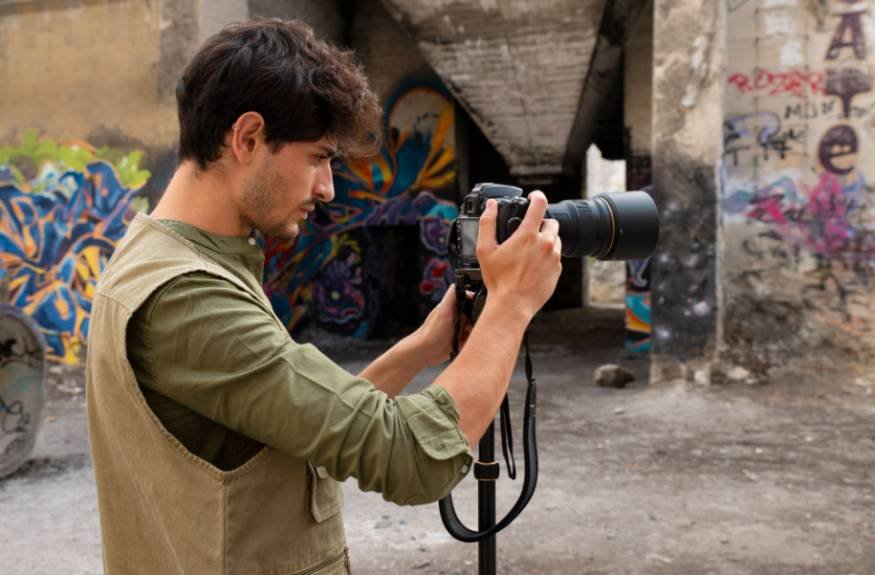
A moderately wide lens can make circular camera movement feel more dynamic because it emphasizes parallax. Very wide lenses, however, may distort faces when the camera gets too close.
Longer focal lengths create a more compressed look but demand more precise operating. I choose the lens according to the scene, space, and desired background movement.
Understanding push-in vs zoom camera movement also helps clarify how physically changing camera position differs from altering focal length when designing depth, perspective, and subject emphasis in an arc shot.
Manual focus can work well when the radius remains consistent. Continuous autofocus may help solo gimbal operators, while larger crews can use wireless follow focus with a dedicated focus puller.
How Do You Light a 360-Degree Arc Shot?
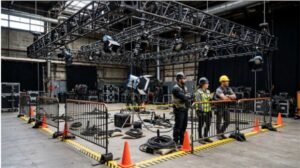
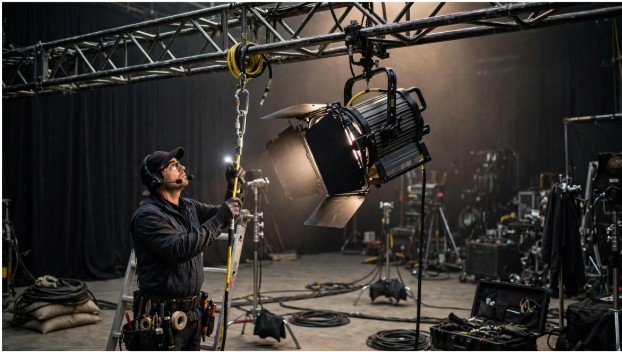
A full orbit makes lighting harder because stands, cables, monitors, crew members, and fixtures can eventually enter frame.
I look first for windows, practical lights, overhead sources, and architectural lighting. On larger sets, overhead or carefully hidden fixtures give the camera more freedom.
For a full 360, I mentally divide the location into visual zones so each part of the background adds depth, texture, or story information.
What Mistakes Make Arc Shot Cinematography Look Amateur?
The most common mistake is an inconsistent radius. Another is assuming stabilization can replace operator technique. A gimbal can smooth rotation, but it cannot completely hide heavy footsteps, weak timing, or constant steering corrections.
Many of the same planning and execution challenges appear in lessons learned from large-scale cinematography projects, where rehearsal, crew coordination, equipment choices, and movement control can directly affect the quality of complex shots.
The background matters too. Foreground layers, practical lights, and architecture strengthen parallax. Most importantly, the movement should have a reason. I use arcs to reveal information, build tension, increase intimacy, energize action, or change how the audience sees a character.
Strong arc shot examples can help, but copying movement without purpose usually produces an empty camera trick.
Does “Arc Shot” Also Mean Something in Basketball?
Yes. In basketball, an arc shot refers to the ball’s high, looping trajectory rather than a filmmaking technique.
Some shot-tracking guidance targets roughly a 45- to 47-degree shooting arc. Players create more arc by driving the ball upward, releasing around eyebrow level, and finishing with the shooting elbow above the eye line. Holding the follow-through helps evaluate mechanics, while a firm wrist snap adds backspin. A close-range backboard drill can also encourage a higher trajectory.
Frequently Asked Questions
1. What Is the Easiest Way to Learn How to Shoot an Arc Shot?
Start with a 90-degree orbit around a stationary subject. Mark the path, maintain your distance, move slowly, and rehearse until framing stays consistent. Then progress to 180- and 360-degree moves.
2. Is an Arc Shot the Same as an Orbit Shot?
The terms often overlap. Both describe movement around a subject, although “orbit shot” is especially common for complete or near-complete circular moves.
3. Can You Film an Arc Shot Without a Gimbal?
Yes. You can use handheld technique, a Steadicam, curved dolly track, jib, or crane. The best option depends on your budget, location, crew size, desired texture, and need for repeatable takes.
Final Take
When I think about how to shoot an arc shot, I focus on storytelling first and equipment second. A controlled radius, steady horizon, deliberate speed, appropriate lens, and reliable focus matter more than owning an expensive stabilizer.
The best arc movements feel motivated. When the camera changes perspective at the right moment, the audience notices the emotion or information being revealed rather than the difficulty of the technique.