





An exposed camera cable isn’t just an aesthetic eyesore—it is a massive structural vulnerability. Security industry audits reveal that a high percentage of residential security system tampering occurs simply because exposed wiring gives intruders a low-tech way to snip power or data feeds in seconds.
Whether you are securing a commercial property or mounting gear for high-end optical captures, learning how to hide security camera cables protects your investment against environmental degradation, vandalism, and signal failure. Proper cable management transforms an obvious target into a seamless, discreet surveillance setup.
The Engineering Risks of Unprotected Cabling
Exposed cabling suffers from environmental decay long before a human ever tampers with it. Standard PVC-jacketed Ethernet or coaxial cables degrade rapidly when subjected to solar ultraviolet radiation. UV breakdown causes the outer jacket to embrittle, crack, and admit moisture, leading to impedance changes, signal attenuation, or short circuits.
+———————————————————————–+
| CABLE PROTECTION MATRIX |
+———————+——————-+—————————–+
| Method | Ideal Environment | Key Threat Mitigated |
+———————+——————-+—————————–+
| In-Wall Fishing | Indoor Drywall | Aesthetic / Human Tampering |
| Schedule 80 PVC | Outdoor Masonry | UV / Physical Vandalism |
| Direct Burial Conduit| Yard / Perimeter | Rodents / Ground Heave |
| Surface Raceways | Indoor Trim/Base | Accidental Stumbles/Pulls |
+———————+——————-+—————————–+
Editor’s Note: A stacked bar chart comparing the tensile strength and UV lifespan of unshielded vs. conduit-enclosed CAT6 cabling across a 5-year outdoor deployment would visually reinforce these engineering trade-offs.
Understanding these physical vulnerabilities helps technicians choose between architectural integration, mechanical shielding, or surface disguise.
Architectural Concealment: In-Wall and Sub-Structure Routing
Routing cables through the architectural envelope offers the highest level of security because it completely removes lines from sight.
Interior Drywall Fishing
To fish cables through interior walls, drill a entry point directly behind your camera mounting plate using a paddle bit. Drop a fiberglass fish tape or flexible pull rod through the wall cavity toward a lower cut-in box near a power receptacle.
When running data or power lines through enclosed wall cavities, verify compliance with local building codes. In the United States, National Electrical Code (NEC) standards require fire-resistant jacketing—such as CL2, CL3, or CMP (plenum)—to prevent toxic smoke propagation along hidden wall cavities during a fire.
Exterior Eave and Soffit Integration
Soffits and roof eaves provide a natural shelter for outdoor camera mounts. Drill an entry hole directly beneath the eave overhang, mount your camera housing over the opening, and feed the wiring directly into the attic space.
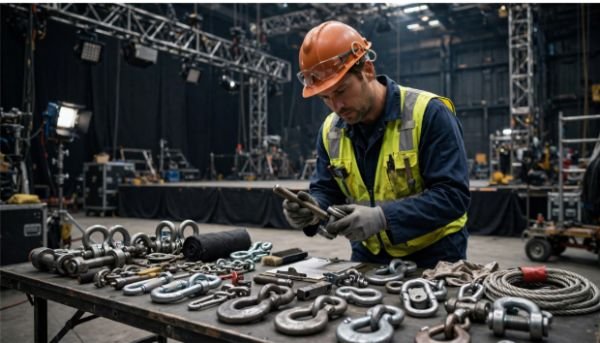
For heavy outdoor camera setups or complex mobile rigs, structural balance and cable tension become critical factor; reviewing a detailed camera rigging case study for outdoor film shoots provides excellent insight into managing load distributions and line strain under severe weather conditions.
Outdoor Enclosures and Surface Shielding
When cutting into walls isn’t an option—such as on concrete block, brick, or rental properties—you must apply rigid surface protection.
Weatherproof Junction Boxes and Drip Loops
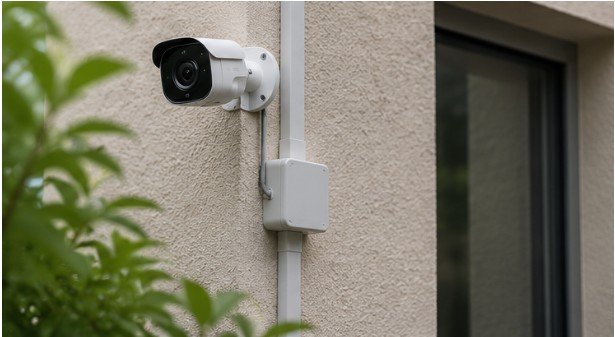
Always mount a weather-rated junction box directly behind outdoor units. A silicone-sealed junction box encapsulates cable pigtails, RJ45 connectors, and excess slack, shielding delicate connections from oxidation.
Before any cable enters an exterior wall or junction box, form a drip loop. A drip loop is a simple, U-shaped downward dip in the cable path situated just before the entry point. Gravity forces water running along the cable to drip off the bottom of the loop rather than following the wire into your structure.
Rigid PVC Conduit and Direct Burial
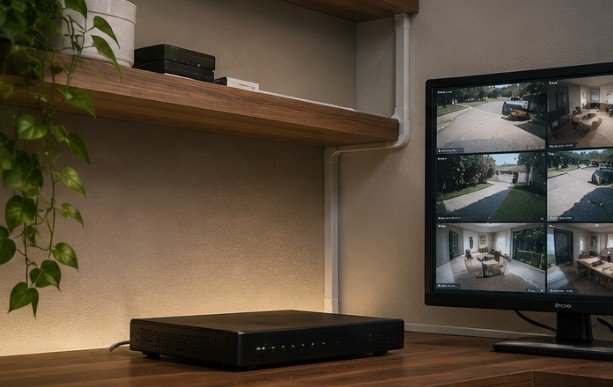
Exterior runs across masonry require Schedule 80 PVC or rigid metallic conduit (RMC) anchored with masonry straps. If routing lines across open yard space, place conductors inside direct-burial rated conduit at a depth of at least 18 inches (or 6 inches for low-voltage lines encased in rigid non-metallic conduit) to protect them from lawnmowers, foot traffic, and burrowing pests.
When working with heavy outdoor installations or overhead spans, ensure your mechanical supports match your environmental exposure; referring to a reference on film rigging hardware load ratings explained helps ensure your structural mounts can handle dynamic wind resistance and line pull without failing.
Non-Invasive Surface Methods for Interiors
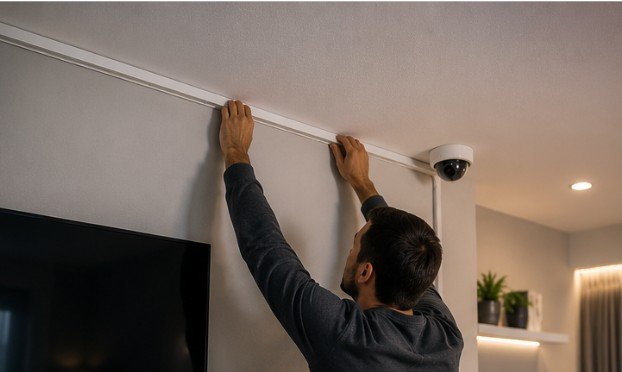
If you cannot drill into walls, high-density surface raceways offer a clean visual line while preventing trip hazards.
- Latching Surface Raceways: Self-adhesive PVC channels run flush along baseboards or door frames. Once wires are seated inside, snap the cover shut and paint the raceway to match your interior wall color.
- Baseboard Expansion Gaps: Most wood floor installations leave a small expansion gap between the bottom of the drywall and the subfloor, hidden behind the baseboard moulding. Pry off the quarter-round trim, tuck thin low-voltage lines into this gap, and re-nail the trim.
- Architectural Furniture Framing: Route vertical cable drops down the hidden back edges of tall bookcases, entertainment centers, or curtain rods using sticky cable clips.
Environmental Realities and Material Limitations
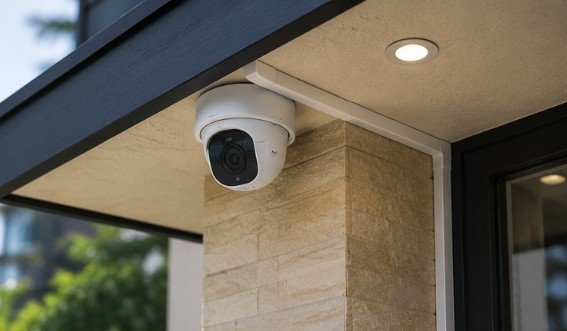
Surface concealment techniques have clear operational boundaries. Adhesive-backed raceways often fail on textured plaster, unpainted concrete, or in high-humidity areas like garages.
Furthermore, flat adhesive cables painted over on exterior walls may look smooth initially, but thermal expansion will crack the paint line over time, exposing the line to direct sunlight.
In sub-zero temperatures, PVC conduit becomes brittle and prone to cracking under minor physical impacts. When planning complex outdoor runs, evaluating specific weather considerations for cable camera systems ensures your wiring setup survives extreme temperature shifts, moisture accumulation, and heavy wind cycles without physical failure.
Frequently Asked Questions
1. How to make wires not visible?
Route cables directly through wall cavities, tuck them inside painted latching raceways, or run them behind existing architectural trim, baseboards, and heavy furniture.
2. How to keep cables hidden?
Secure wires tightly along structural corners using adhesive clips, enclose them inside rigid PVC conduits, and paint raceways or exposed runs to match surrounding surfaces.
3. How to hide a CCTV cord?
Mount a weatherproof junction box behind the camera body to store pigtails, then run the primary wire through wall cavities or surface-mounted channels.
4. How do I hide cords without a cord hider?
Route lines beneath baseboard gaps, behind window curtains, along the back edges of furniture, or directly through wall studs and attic joists.
Clean Lines, Secure Systems
A well-concealed cable network bridges the gap between clean structural aesthetics and total security. By choosing appropriate in-wall routing, rigid exterior conduits, and proper drip-loop mechanics, you protect your optical investment against both environmental degradation and deliberate human intervention. Assess your structural layout, match your concealment method to your environment, and build a setup that stays hidden in plain sight.