



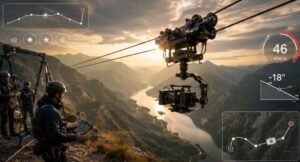
A single 1,000-foot cable camera rig sliding through a crowded stadium carries up to 80 pounds of high-end cinema equipment at speeds exceeding 30 miles per hour—directly over the heads of thousands of spectators. One failed rigging point or miscalculated line tension can result in catastrophic equipment loss or severe injury.
Learning how to hire cable camera operator teams requires evaluating specialized safety engineering, custom rigging mechanics, and tight dual-person crew coordination.
Whether you are capturing high-stakes live sports, large-scale concert venues, or complex commercial tracking shots, choosing the right operator goes far beyond standard camera work. You are hiring a specialized flight unit where safety protocols, precision control, and technical rigging intersect.
The Hidden Mechanics of Cable Camera Operations
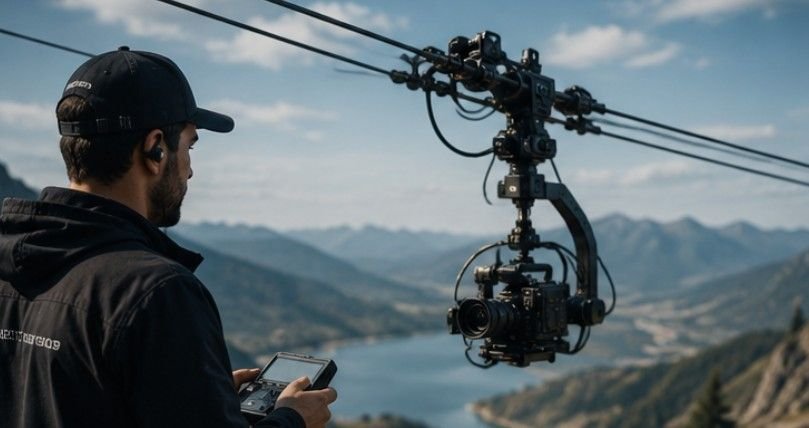
Standard camera operations rely on tripods, dollies, or handheld gimbals grounded on firm surfaces. Cable cameras (often referred to as cable cams or rope cams) suspended between two fixed points operate in a high-tension dynamic environment governed by physics.
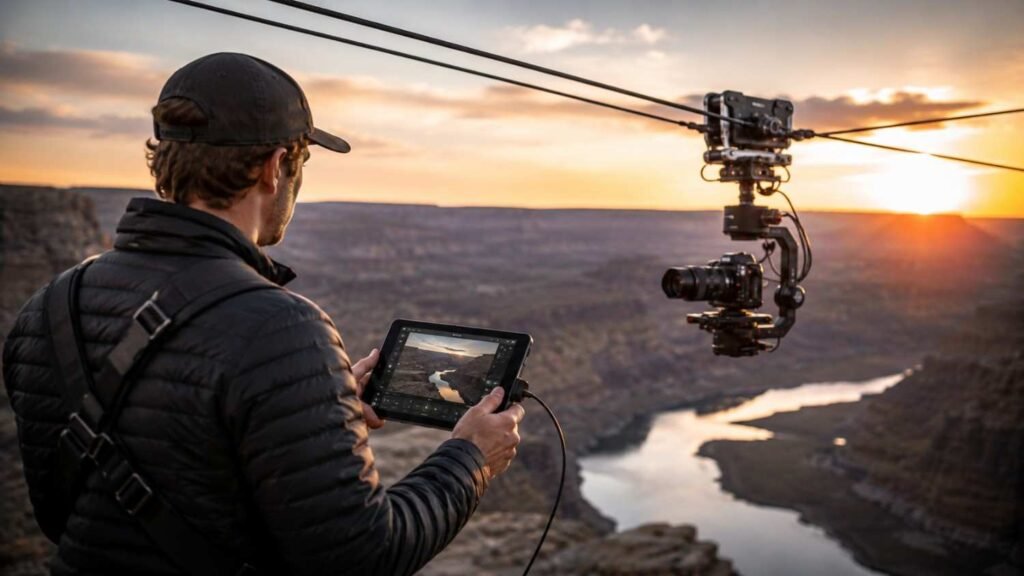
A standard setup utilizes a motorized drive unit mounted on tensioned synthetic or steel lines. Because the system moves along a physical line stretched up to 1,200 feet, line deflection (sag), payload inertia, and wind resistance play massive roles in frame stability.
To achieve smooth cinematographic motion, the operation requires a minimum two-person team:
- The Pilot / Cable Drive Operator: Controls the horizontal velocity, acceleration, braking, and line speed of the trolley.
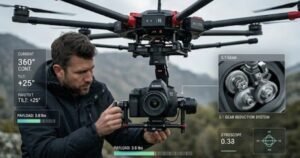
- The Gimbal Operator: Controls the pan, tilt, roll, and focus of the camera payload mounted to a dynamic head like a MōVI Pro or DJI Ronin 2.
On larger film sets, a third dedicated crew member—the Safety Lead or Master Rigger—is mandatory to calculate tension loads, evaluate anchor points, and maintain line integrity throughout the shoot day.
Where to Source Vetted Cable Camera Professionals
Finding skilled technicians who own, maintain, and safely deploy suspended camera systems requires looking outside traditional crew registries.
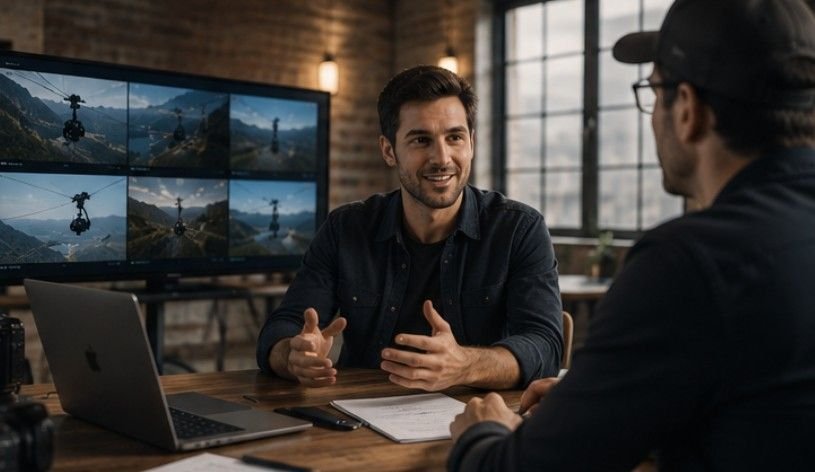
Specialized Aerial and Cable Cam Teams
The most reliable route for high-end film and live broadcast is booking a complete turn-key package through established aerial media companies. Agencies like We Fly Aerial Media or Airmedia360 supply the equipment package alongside certified technicians who regularly work together.
Peer-to-Peer Gear and Crew Outfits
For mid-budget commercial productions, platforms such as ShareGrid offer listings from independent owner-operators. Look specifically for technicians who bundle their Highsight or Defy cable systems with personal operating services rather than renting dry gear.
Industry Production Directories
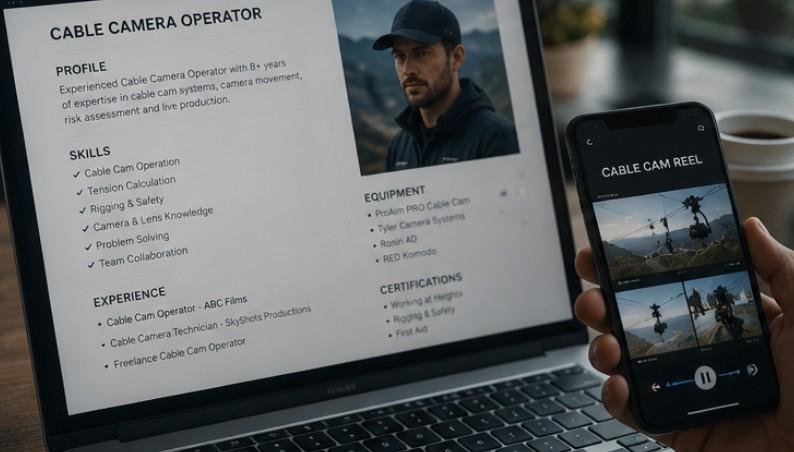
General industry directories like ProductionHUB and ZipRecruiter list freelance camera operators, but you must filter specifically for “cable cam operator” or “rigging technician.” Verify that listed operators maintain specialized reel footage demonstrating high-speed dynamic tracking.
Critical Vetting Steps Before Signing a Contract
When evaluating prospective operators, asking standard camera questions is not enough. You must rigorously audit their technical capabilities, safety history, and hardware limits.
1. Crew Structure Verification
Never hire a single individual expecting them to rig, drive, and frame the shot simultaneously. Solicit applications that specify a dual-operator configuration alongside dedicated rigging support.
2. Rig Specifications and Payload Matching
Confirm that the operator’s gear accommodates your specific camera build. A fully outfitted cinema camera with a zoom lens, matte box, follow focus motor, and wireless transmitter can easily surpass 25 pounds.
Check the trolley’s maximum payload limit, maximum line distance, and top speed before committing. If you are building out a heavy cinema camera setup, reviewing how to choose a matte box for a cinema camera can help optimize weight distribution on the gimbal.
3. Rigging Safety and Insurance Validation
According to safety guidelines established by the Entertainment Services and Technology Association (ESTA) and OSHA, overhead equipment setups require strict load calculations. Require prospective operators to provide:
- Proof of General Liability Insurance (typically $2 million to $5 million policy minimums for overhead rigs).
- Rigging safety certifications or evidence of formal SPRAT/IRATA rope access training.
- A written risk assessment plan covering emergency drop-stop procedures and anchor point evaluations.
Cable Cam Setup Evaluation Matrix
Use this quick reference to compare different sourcing paths for your production needs:
| Sourcing Option | Ideal Production Type | Pros | Cons |
| Specialized Aerial Agencies | Live Stadium Sports, Feature Films, Massive Concerts | Fully insured, includes master riggers, top-tier reliability | Higher overall package cost |
| Owner-Operators (ShareGrid/Peer-to-Peer) | Indie Films, Mid-Sized Commercials, Music Videos | Cost-effective, single point of contact, custom setups | Limited backup gear on set |
| General Crew Directories | Local Broadcast, Regional Events, Corporate Media | Wide local availability, flexible day rates | Requires heavy independent vetting for safety |
Editor’s Note: A multi-variable scatter plot comparing setup time versus maximum speed across payload classes would provide additional clarity for line producers.
Real-World Applications: Why Suspended Systems Win
Drones have revolutionized aerial cinematography, but they face severe real-world limitations. Federal Aviation Administration (FAA) Part 107 regulations restrict drone flights directly over unprotected crowds, inside covered stadiums, or within tight, wooded environments.
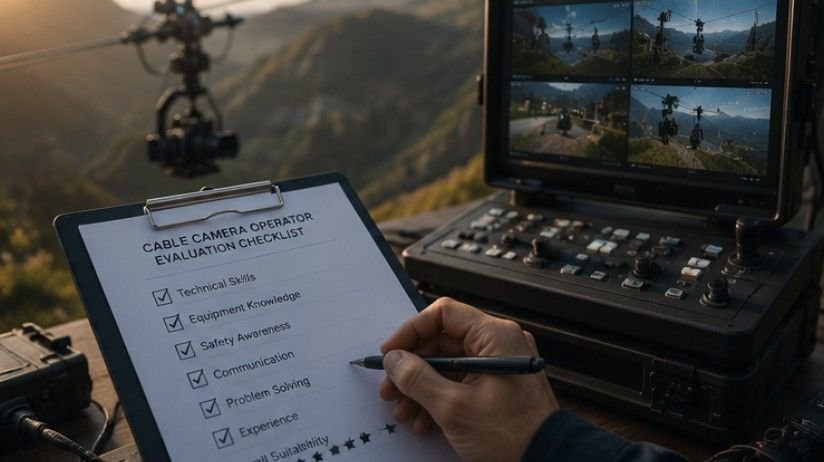
Cable camera systems bypass these restrictions. Because they run on locked, physical paths, they are exceptionally safe for low-altitude passes directly above talent, crowds, or indoor arenas. Furthermore, they deliver perfectly repeatable camera moves—a critical requirement for visual effects (VFX) plates that demand multiple identical takes.
To better understand physical line dynamics on location, review this detailed outdoor film shoot camera rigging case study guide for practical line tensioning insights.
Step-by-Step Operator Evaluation Checklist
To streamline your hiring decision, process each candidate through this five-point evaluation:
- Reel Assessment: Look for smooth acceleration and deceleration curves. Jerky stops indicate poor drive control or inadequate line tension.
- Anchor Point Mastery: Ask candidates how they evaluate structure integrity (e.g., truss systems, trees, steel beams) before running lines.
- Redundancy Planning: Verify that their system features redundant safety lines (dual-rope systems) and fail-safe braking mechanisms.
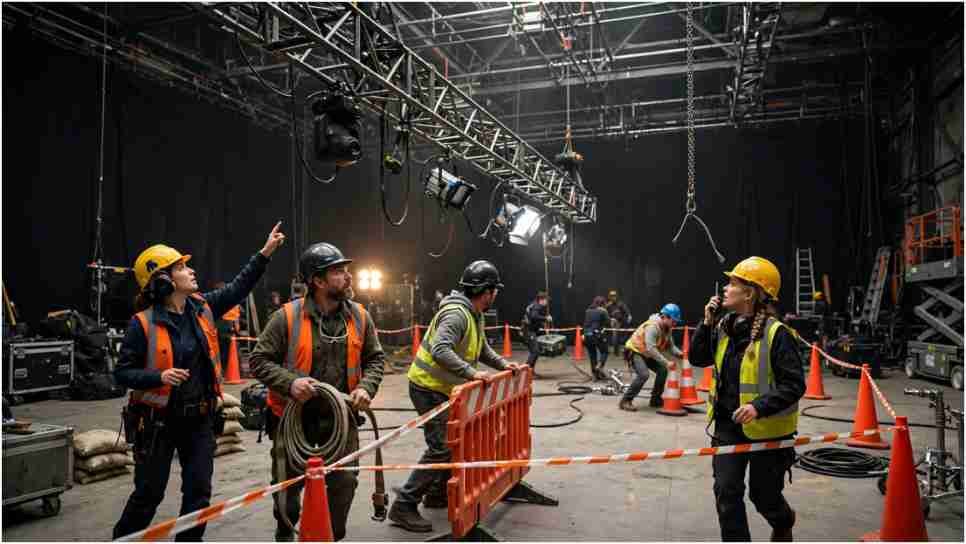
- On-Set Protocols: Ensure they utilize ground spotters and secure perimeter zones during installation and teardown. You can examine baseline operational workflows in this overview on how to set up cable cam rigs.
- Contractual Scope: Clarify whether the quote includes pre-rig days, location scout walkthroughs, and specialized transportation for heavy rigging cases.
Common Misconceptions and Limitations
While cable cameras provide unmatched cinematic motion, they are not a universal solution for every tracking shot.
- Setup Time Expectations: A standard cable cam installation is not a quick “run-and-gun” setup. Rigging lines, securing anchors, tuning gimbals, and conducting safety drop-tests typically take 2 to 4 hours before the first shot.
- Straight-Line Vector Constraints: Cable cams travel along a straight vector between two points. Curved paths require complex multi-point winch systems that significantly scale budget and setup footprint.
- Weather Vulnerabilities: While cable cams handle wind better than small drones, extreme icing, heavy downpours, or high crosswinds cause line slippage and compromise drive traction.
Frequently Asked Questions
1. How much does it cost to hire a camera operator?
A standard solo camera operator in the US typically charges a day rate between $600 and $1,200 for labor alone, depending on experience, region, and union status.
2. How much does it cost to hire a camera crew?
A full camera crew—including a Director of Photography, camera operators, assistants, and gaffers—generally ranges from $2,500 to $7,500+ per day, excluding specialized equipment rentals.
3. What is a day rate for a camera operator?
The average day rate for a qualified camera operator ranges from $650 to $1,500 per 10-hour day, reflecting their technical expertise, location, and the complexity of the gear involved.
4. How much should you pay a cameraman?
Entry-level video operators cost around $350–$500 per day. Experienced cinema or specialized rig operators command $800 to $1,800+ per day based on their specialized skills and track record.
Prioritizing Safety and Precision
A great aerial shot elevates production value instantly, but the mechanics behind suspended rigs demand absolute rigor. Prioritize verified safety protocols, dual-operator experience, and proper insurance coverage over discounted rates. Hire the right crew, secure your anchors, and let the physics work for your film.