



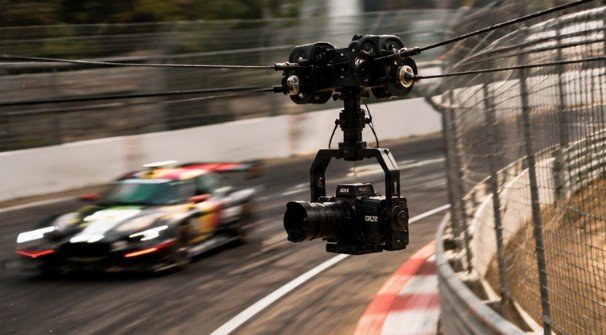
A professional cable camera can move faster than many people expect. The quickest systems publish top speeds around 43–45 mph, while stadium systems operate closer to 29 mph and portable rigs can be much slower. So, how fast can cable cams fly? The useful answer depends on the drive system, payload, line length, slope, wind, acceleration settings, and available stopping distance.
That matters because a rig capable of 45 mph on a long controlled run may never reach that speed during a short film shot.
Cable Cam Speed Ranges: From Portable Rigs to 45 MPH Systems
Current specifications show why one speed figure cannot describe the whole category.
| System/example | Published top speed | Practical context |
| Noxon Portable Wirecam | 8 km/h, about 5 mph | Compact work; up to 6 kg horizontal payload |
| Wiral LITE | Up to 28 mph in launch-era specs | Lightweight cameras |
| Skycam | About 13 m/s, roughly 29 mph | 3D stadium broadcast coverage |
| Noxon High-Speed Cablecam | 70 km/h, about 43.5 mph | Up to 20 kg payload |
| FlyLine Cablecam | Up to 45 mph | Fast tracking and outdoor sports |
Noxon currently lists 70 km/h for its High-Speed Cablecam with a 20 kg payload, while its Portable Wirecam is rated at 8 km/h and up to 6 kg when working horizontally. FlyLine advertises travel up to 45 mph. Skycam technical references place its travel speed at 13 m/s, or about 29 mph.
Wiral LITE is often quoted at 28 mph from published launch specifications. Its current website emphasizes portability rather than prominently listing that speed, so crews should confirm the exact model specification before planning for a shutter speed shot.
Editor note: This table could become a horizontal bar chart comparing top speed by system.
Why Maximum Speed Is Not the Same as Shooting Speed
Top speed tells you what a machine can achieve under suitable conditions. It does not tell you how fast the camera should move during a shot.
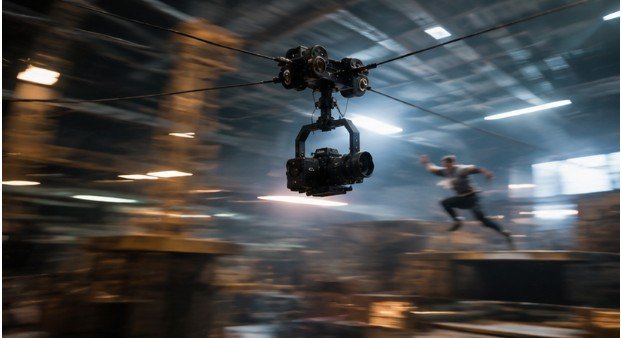
A 45 mph cable cam travels 66 feet every second. Even with impossible instant acceleration and braking, a 200-foot line would be crossed in about three seconds. Real systems need room to accelerate and decelerate, so the full-speed portion is shorter.
Payload Changes the Equation
Moving mass includes more than the camera body. A cinema package can add a stabilized head, lens, wireless video transmitter, focus motor, batteries, plates, antennas, and control hardware.
Heavier packages make acceleration, braking, line tension, and motor capacity more important. Noxon’s high-speed system is notable because its 70 km/h figure is paired with a 20 kg payload rating rather than a stripped-down action camera.
Cable Length and Slope Affect the Shot
Long runs provide more room to build speed. Short runs often favor smooth acceleration over maximum velocity. A slope can also change how gravity assists or resists motion.
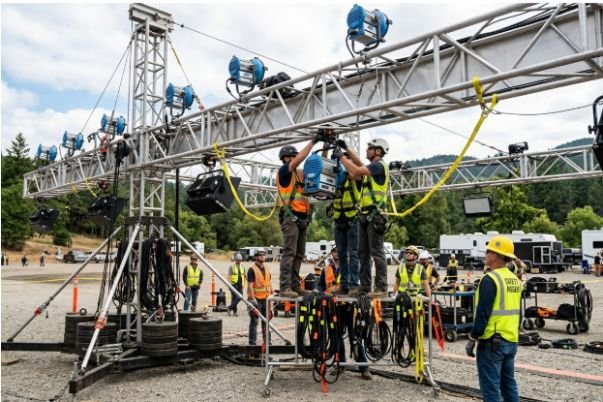
For location work, a camera rigging case study for outdoor film shoots helps put speed alongside anchors, terrain, access, payload, and operating space.
Where High Cable-Cam Speed Actually Matters
High-speed cable cams are useful when the camera must stay with a subject that would outrun a dolly, slider, or walking operator.
In US production, examples include football, motorsports, skiing, mountain biking, concerts, and long action sequences. The camera does not always need to match the subject exactly. Moving slightly slower creates separation; overtaking the subject can create a reveal.
FlyLine’s published 45 mph ceiling suits fast straight-line tracking, while Skycam prioritizes controlled 3D positioning over a field rather than chasing the highest straight-line number.
For more context on aerial movement during live coverage, see this sports broadcast production case study.
A Simple Speed-to-Run-Length Test
Before choosing a system, perform a quick planning check.
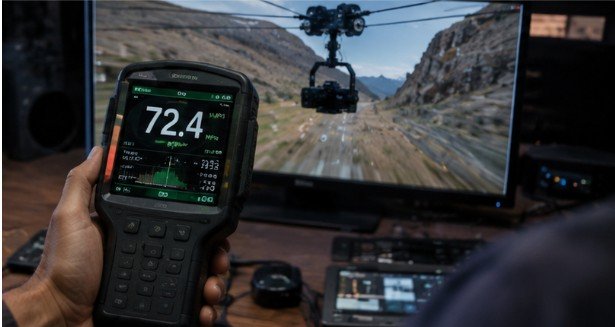
First, convert mph to feet per second by multiplying by 1.467. A 28 mph rig moves about 41 feet per second; a 45 mph rig moves 66 feet per second.
Next, compare that with usable cable length, not total rope length. Subtract approach zones near anchors, safety buffers, and distance required for acceleration and braking.
Then estimate the subject’s real pace. A runner, bicycle, vehicle, or skier demands a different tracking speed. Rehearse below maximum speed, check framing and stabilization, and increase only when the shot requires it.
Finally, include environmental conditions in the plan. Outdoor productions introduce variables that indoor test runs cannot reproduce consistently, which is why weather considerations for cable camera systems deserve attention during pre-production rather than at call time.
What Usually Limits a Cable Cam Before the Motor Does
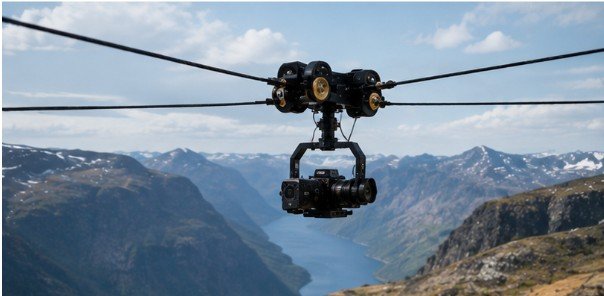
Maximum motor speed is rarely the only performance limit. Line geometry, braking distance, anchors, payload, control range, stabilization, visibility, weather conditions, and the need to keep the operating path clear may matter first.
More speed can also make footage worse. A fast pass exaggerates vibration, reduces composition time, and increases background motion blur. For narrative work, a slower repeatable move may be more valuable than a single maximum-speed run.
That is why a useful comparison looks at controllable speed range, acceleration behavior, payload, repeatability, and safety features—not only the biggest mph number.
Frequently Asked Questions
1. How fast is the fastest camera?
If “fastest” means frame rate, the Phantom TMX 7510 can reach up to 1.75 million frames per second at reduced resolution with its FAST option.
2. How does Skycam get power?
Technical descriptions of Skycam specify cables containing conductive copper elements alongside optical fiber, while the moving camera package contains power-distribution electronics.
3. How fast are high speed cameras?
High-speed cameras are measured in frames per second. The Phantom TMX 7510 records 76,000 fps at 1280 × 800 and can go much faster at reduced resolutions.
4. What is a good camera speed?
For normal video, a common starting point is shutter speed near twice the frame rate: around 1/48 second at 24 fps or 1/60 at 30 fps.
The Number That Matters Is the Speed You Can Control
The headline answer to how fast can cable cams fly is roughly 45 mph at the high end of current professional systems. The better production question is whether the rig can reach, hold, and safely stop from the speed your shot needs.
A cable cam earns its place on set when speed becomes repeatable camera movement—not simply a bigger number on a specification sheet.