A closing shot is the final visual sentence of a scene, so I never choose its movement just because it looks impressive. I choose it according to what I want the audience to feel. For me, the best camera movement for closing shots depends on whether the story needs finality, intimacy, tension, release, isolation, or a sense that life continues beyond the frame.
Which Camera Movement Creates the Strongest Closing Shot?
A slow pull-back or dolly-out is the most versatile option because it separates the audience from the subject while revealing more of the world. Still, no movement fits every ending.
| Camera movement | Emotional effect | Best use |
| Pull-back / dolly-out | Finality, isolation, reflection | Leaving a character behind |
| Jib up + tilt down | Closure, peace, perspective | Rising away from a resolved scene |
| Push-in / dolly-in | Intimacy, realization, tension | Holding on a final expression |
| Slow arc / orbit | Transformation, triumph | An emotional turning point |
| Pan or tilt | Hope, transition, letting go | Ending on open space or a detail |
| Tracking away | Continuation, departure | Following a character onward |
| Static hold | Stillness, discomfort | Letting composition carry the ending |
How Does a Slow Pull-Back Create Finality?
I use a dolly-out when I want viewers to feel themselves leaving the character. I may start with a close-up or medium shot, then move the camera slowly backward. As the frame widens, the environment gains importance and the subject becomes smaller.
That shift can suggest abandonment, reflection, grandeur, or closure. A motorized slider such as the Neewer ER1 or a stable tripod dolly can help reduce micro-jitters.
Dolly-Out vs. Zoom-Out
A dolly-out physically moves the camera, changing foreground, subject, and background relationships. A zoom-out changes focal length while the camera stays in place. I prefer physical movement when I want stronger depth and a more immersive look.
When Should You End With a Jib Up or Crane Shot?
A jib-up or pedestal-up combined with a tilt down creates a clear visual signal that the scene is ending. The camera rises while the lens tilts downward to keep the subject in frame.
I use this when the location matters. Rising above a street, arena, landscape, or room can create peace, resolution, or detachment. A jib, crane, or controlled drone can produce the move.
Why Does a Slow Push-In Work for Tense Endings?
A closing push-in does the opposite of a pull-back: it draws viewers closer.
I use a slow dolly-in when the final meaning lives in a character’s face, such as a realization, decision, fear, or quiet emotional shift. It works especially well for thrillers, dramas, mysteries, and cliffhangers.
Whenever possible, I physically move the camera rather than rely on a basic lens zoom because physical movement changes perspective and background relationships.
How Can a Slow Arc or Orbit Strengthen an Ending?
An arc or orbit moves the camera in a semi-circle or full 360-degree path around the subject while the background changes.
That makes it useful for triumph, emotional crossroads, tragic realizations, romance, or transformation. It can also be one of the best camera movement for character introductions when the goal is to reveal personality, environment, or status dynamically. A three-axis gimbal such as the Feiyu SCORP 3 or SCORP-C 2 can help maintain a level horizon as the operator walks the curve.
I avoid an orbit when it has no storytelling purpose. A beautiful move can still distract from the ending.
Should You Pan Away or Tilt Up at the End?
A slow pan can leave the character and reveal an empty chair, road, photograph, doorway, landscape, or another meaningful detail. A tilt toward the sky or horizon can transition gently into credits and suggest hope, freedom, peace, or what comes next.
I keep the movement controlled so viewers have time to understand the final framing.
Can a Tracking Shot or Static Shot Be Better?
A tracking shot works when the story should feel as if it continues. Following someone walking away, leaving a building, driving off, or disappearing into a crowd creates momentum instead of total closure. This approach can also be adapted when learning how to shoot camera movement in small spaces, where short hallways, doorways, and carefully planned paths can create the impression of a longer journey.
A static shot can be stronger when movement would weaken the composition. Locking the camera forces viewers to sit with the performance, silence, or final image.
How Do You Make a Closing Camera Move Look Professional?
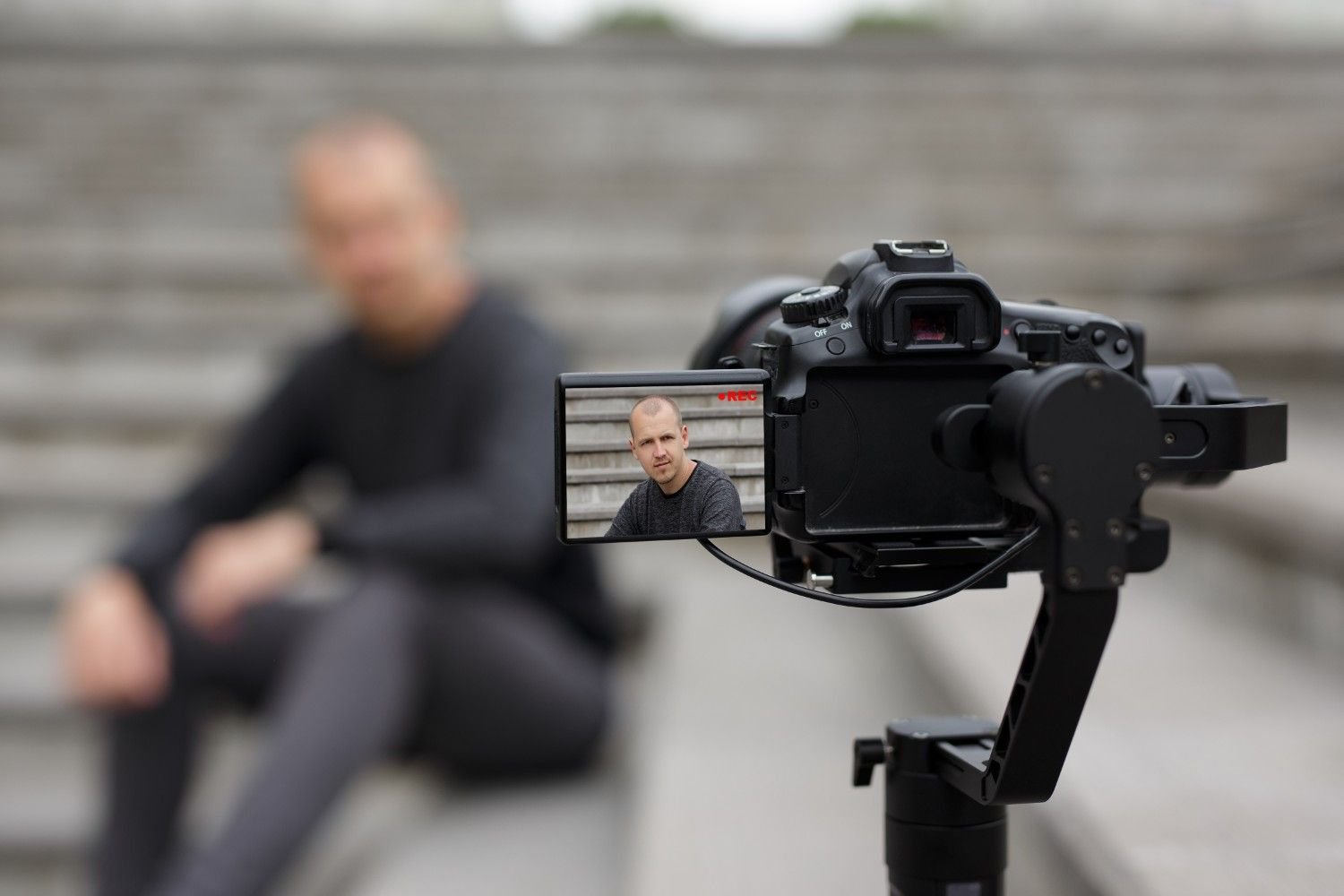
I rehearse the movement with the actor before rolling. The camera should start and stop at meaningful moments, and its speed should match the emotional rhythm. Focus matters just as much because a smooth move loses impact if the subject drifts soft.
I also hold a few clean seconds after the move, giving the editor room to fade or enter the credits naturally.
For U.S. narrative, commercial, documentary, and branded productions, I plan around location, crew size, stabilization, safety, and setup time. A simple slider move executed well often looks better than an ambitious crane shot.
Frequently Asked Questions (FAQs)
1. What is the best camera movement for closing shots?
A slow dolly-out is one of the strongest all-purpose choices because it creates separation, reveals context, and suggests finality. I use a push-in for tension, a crane-up for scale, an orbit for transformation, or a static frame when stillness carries more weight.
2. Should the Camera Move Toward or Away From a Character?
Move toward the character for intimacy, realization, or tension. Move away for closure, isolation, reflection, or a wider sense of place.
3. Can Handheld Movement Work in a Closing Shot?
Yes. Handheld movement can fit endings built around urgency, realism, instability, or documentary energy. I keep it deliberate so natural motion supports the emotion instead of looking accidental.
Final Take
The strongest closing movement is not automatically the biggest or most difficult one. I choose the move that matches the final emotion. A pull-back creates distance, a push-in intensifies focus, a crane move creates scale, an orbit captures transformation, a pan or tilt releases the viewer into open space, and a tracking shot suggests that the journey continues. These choices also translate well to camera movement techniques for social media videos, where a strong final move can make a short clip feel more polished and intentional.
When I plan the last image, I treat movement as storytelling rather than decoration. That is what turns a technically clean ending into one the audience remembers after the screen goes dark.