







I started paying more attention to filtration once cinema camera rigs became more modular. A camera body might change from one production to the next, but the matte box, filter trays, and glass often remain part of the same workflow. That made me realize that choosing a filter size is less about buying another accessory and more about building a setup that can keep up with different lenses, lighting conditions, and shooting styles.
What makes 4×5.65-inch filters especially practical is the amount of flexibility they bring to a cinema rig. The format gives filmmakers room for exposure control, diffusion, and polarization while fitting into established matte box systems. Once the pieces are matched properly, changing filters becomes a quick part of production instead of something that interrupts the shoot.
Why 4×5.65 Filters Work So Well for Cinema
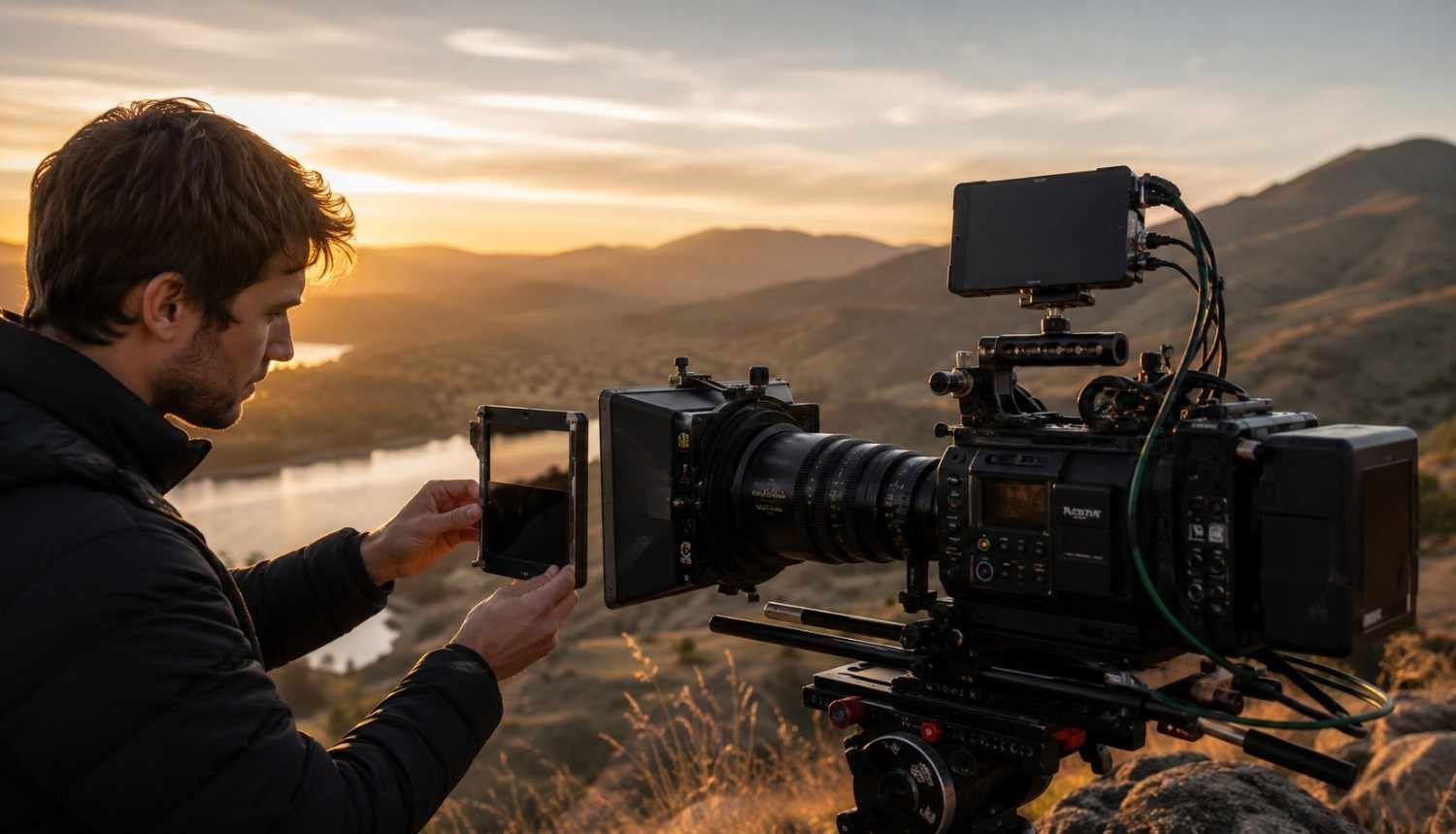
The 4×5.65-inch format has become a common choice for professional cinema filtration because its rectangular shape provides broad coverage in front of cinema lenses. That matters when shooting with large sensors or wider focal lengths where smaller filters can create unwanted edge problems.
The format also fits established matte box designs from manufacturers such as ARRI. Current ARRI filter frames include dedicated 4×5.65 options, along with versions designed for horizontal or vertical filter orientation.
For cinematographers working with large format digital cinema cameras, that compatibility can make a difference when moving between camera bodies or lens packages.
How the Filter System Mounts to the Camera
A 4×5.65 filter does not attach directly to the camera sensor or lens in the way a screw-on photography filter does. It normally sits inside a matte box positioned in front of the lens.
A rod-mounted matte box can attach to 15mm or 19mm support rods, creating a secure setup for larger cinema lenses. A clip-on design attaches directly to the lens and can be more convenient when keeping the rig compact matters.
Inside the matte box, filter frames or trays hold the glass. Some systems provide multiple stages, allowing filmmakers to combine filtration when the scene calls for it. ARRI’s LMB systems, for example, are available with configurations containing two or three 4×5.65 filter frames.
That modular approach fits naturally into professional cinema camera workflows, where the same camera package may need to handle controlled studio lighting one day and fast-moving exterior work the next.
Choosing the Right Filters for the Shoot
Not every production needs the same glass. Neutral density filters are useful when you need to reduce incoming light while maintaining a preferred aperture and shutter setup. Diffusion filters can soften highlights or change the perceived character of digital images, while polarizers can help manage reflections and deepen certain skies.
NiSi’s current 4×5.65 cinema range includes ND, graduated ND, mist, and rotating polarizing filters, showing how broad the format has become.
The real advantage comes from building a collection around the way you actually shoot. A documentary crew working outdoors may prioritize ND and polarizing options, while a narrative production may put more emphasis on diffusion.
These choices also support precise exposure control on set, especially when lighting changes quickly and stopping down the lens is not the look you want.
Make the Matte Box Match Your Lenses
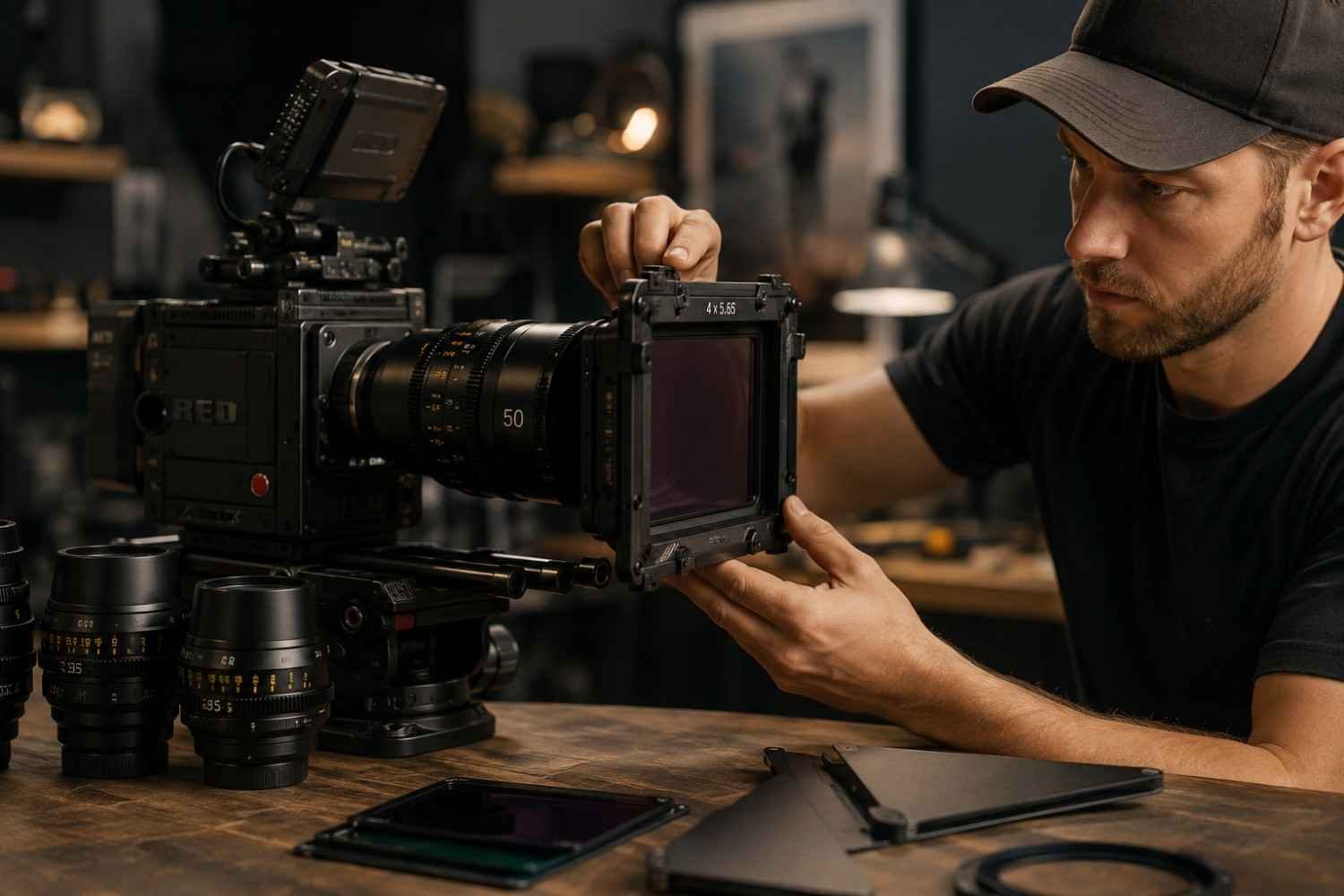
Filter compatibility is only one part of the equation. The matte box also needs to match the physical dimensions of your lenses.
Check the lens front diameter, adapter rings, matte box opening, and whether the design works with your widest lens. A system that works perfectly with a 50mm prime may behave differently with an ultra-wide lens.
This becomes particularly important with large-sensor cameras because wider fields of view can expose weaknesses in an undersized setup. The goal is to maintain clean coverage without introducing vignetting or unnecessary restrictions.
A good matte box should also make filter changes easy. On a busy set, fast filter changes between takes can save more time than a slightly cheaper piece of equipment ever will.
When a 4×5.65 Setup Makes Sense
A full 4×5.65 system makes the most sense when you regularly use cinema lenses, a matte box, multiple filtration stages, or cameras with larger sensors. It is also useful when you expect your camera package to evolve.
That matters when putting together a broader production kit. Instead of buying filtration that only works with one lens, a standardized system can move between compatible lenses and camera builds.
For filmmakers assembling a larger package, modular camera rig configurations can also make the transition between handheld, tripod, dolly, and studio setups easier.
If your work is mostly lightweight run-and-gun shooting with small lenses, however, a full-size matte box may add unnecessary weight. The right system depends on the production rather than the perceived prestige of the format.
Think About the Entire Production Package
Filtration works best when it is considered alongside the rest of the camera build. A matte box, lens support, rods, camera body, monitor, power system, and other accessories all contribute to the final weight and balance.
That is why filtration should be evaluated before buying everything separately. A compact production may benefit from a clip-on matte box, while a larger narrative setup may justify a rod-supported design with several stages.
As camera technology becomes more capable, filmmakers are also combining traditional optical tools with modern digital cinematography techniques rather than relying entirely on software-based image adjustments.
If you’re evaluating the broader equipment package, AI-assisted camera systems can be considered alongside traditional optical tools, especially when planning a production workflow that combines newer technology with established cinematography practices.
Build the System Around Real Shooting Needs

There is no reason to own every filter simply because a matte box has several available slots. Start with the situations you encounter most often, then expand the collection as your productions demand it.
A useful starting point might include a few strengths of ND, one or two diffusion choices, and a polarizer if your work involves reflective surfaces or outdoor environments. Storage also matters because cinema filters are larger, expensive pieces of glass that need protection during transport.
For filmmakers deciding what equipment deserves investment, the filtration system should be evaluated alongside a broader camera accessory compatibility strategy. A filter that works across multiple future setups can be more valuable than one designed around a single camera.
This is also where a list of filmmaking tools worth buying in 2026 can help frame the bigger equipment decision, particularly when balancing essential production gear against accessories that only serve occasional projects.
What to Check Before Buying
Before committing to a system, check:
- Whether the matte box supports standard 4×5.65 filters
- How many filter stages you actually need
- Compatibility with your widest lens
- Rod-mounted versus clip-on requirements
- Filter thickness and frame compatibility
- Whether rotating stages are available when needed
- How the system handles transport and storage
Good filtration should disappear into the workflow. You should be thinking about the shot, not fighting the equipment.
For smaller crews, portable cinema production systems can make more sense when the camera package needs to move quickly between locations. A lighter setup can preserve the advantages of 4×5.65 filtration without turning every setup change into a major rigging exercise.
FAQs: How 4×5.65 Filter Systems Fit Into a Modern Cinema Camera Setup
1. Are 4×5.65 filters compatible with most cinema matte boxes?
Many professional matte boxes support the 4×5.65 format, but compatibility should always be checked against the specific model and filter frame.
2. Can you stack 4×5.65 filters?
Yes. Matte boxes with multiple stages allow filmmakers to combine filters, although stacking too many can increase reflections and other optical issues.
3. Are 4×5.65 filters better than 4×4 filters?
They are not automatically better for every setup. The larger format generally offers more flexibility for cinema lenses and wider fields of view.
4. Do I need a rod-mounted matte box?
Not necessarily. Clip-on systems can work well for lightweight setups, while rod-mounted matte boxes offer additional support for larger camera and lens configurations.
Why the Filter System Should Serve the Camera
A good 4×5.65 system is ultimately about flexibility. The format gives filmmakers a practical way to manage light and image character while keeping filtration integrated with a professional camera package. The best setup is not necessarily the biggest one. It is the one that matches the lenses, locations, crew, and pace of the production.
When the system is chosen carefully, filters become a natural part of shooting rather than another technical problem to solve.





One thought on “How 4×5.65 Filter Systems Fit Into a Modern Cinema Camera Setup”