



I have found that power becomes one of those production problems nobody thinks much about until the camera suddenly needs a battery change in the middle of a setup. On a short shoot, swapping a battery is barely an inconvenience. On a 12-hour location day with a cinema camera, monitor, wireless video, follow focus, and other accessories running together, it can become a constant interruption.
I also noticed that the best solution is rarely just buying the biggest battery available. A reliable cinema power setup starts with understanding the entire rig, its power draw, the voltage each device needs, and how the operator will carry everything. Once those pieces are planned together, long shooting days become much easier to manage.
Why Power Planning Matters on Long Cinema Shoots
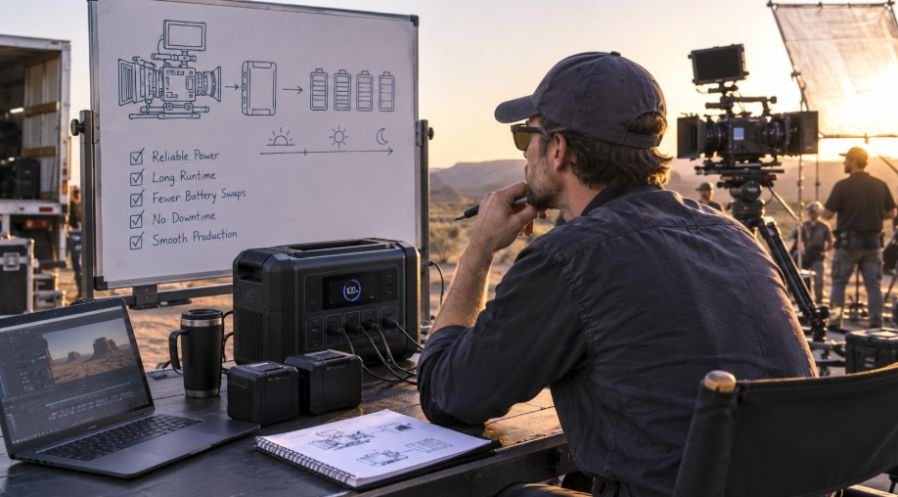
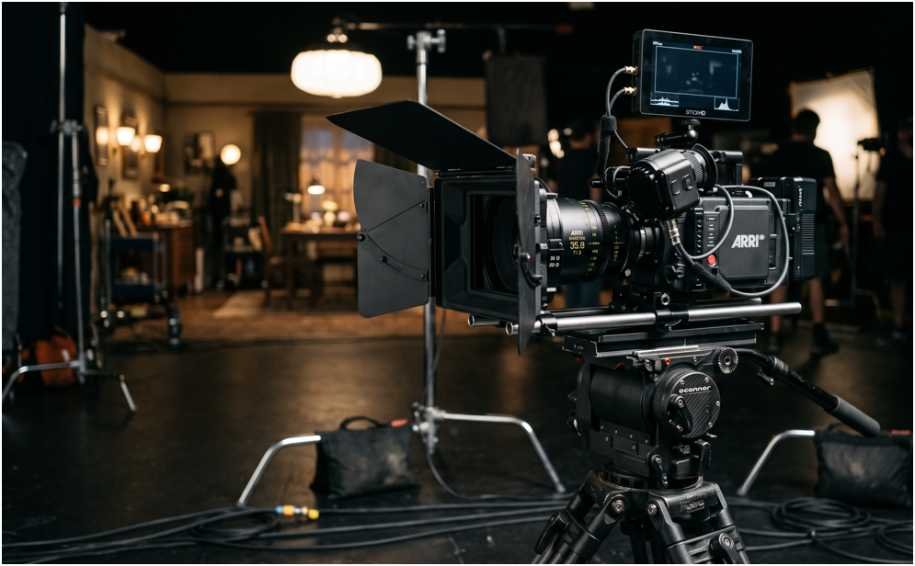
A cinema camera rarely works alone. Once you add an on-camera monitor, wireless transmitter, lens motor, follow focus, timecode box, receiver, and other accessories, the total power demand can be much higher than the camera’s published consumption.
That is why watt-hours matter. A battery’s watt-hour rating describes how much energy it can store, while watts describe how quickly equipment uses that energy. In simple terms, a higher-capacity battery can provide longer runtime, but only if its output voltage and current capability match the equipment being powered.
For example, Sony lists the FX6 at approximately 18W under a specific recording configuration, but that figure excludes external devices. Add a monitor, wireless system, and motors, and the power budget changes considerably.
Before choosing a battery, make a list of everything that will receive power from it. That small step can prevent a lot of guesswork.
V-Mount Batteries Are a Practical Starting Point
V-Mount remains one of the most flexible options for cinema rigs because a single battery can often power the camera and several accessories through additional outputs.
A good V-Mount setup can also simplify the physical build. Instead of attaching separate batteries to every accessory, the main battery becomes the central power source, while D-Tap or regulated outputs distribute power around the rig.
Capacity is the first thing to compare, but it should not be the only specification. Look at voltage, maximum current, output types, battery management features, physical dimensions, and weight.
For a smaller handheld setup, carrying several medium-capacity batteries may make more sense than mounting one huge block. A larger production rig, however, can benefit from a high-capacity battery that stays on the camera cart or support system for most of the day.
If you’re still putting the camera package together, power should be considered alongside the camera body, lens, support, and accessories rather than added at the very end. A well-planned how to build a portable cinema camera package approach makes it easier to keep the final rig balanced and practical.
Use Hot-Swap Power for Uninterrupted Shooting
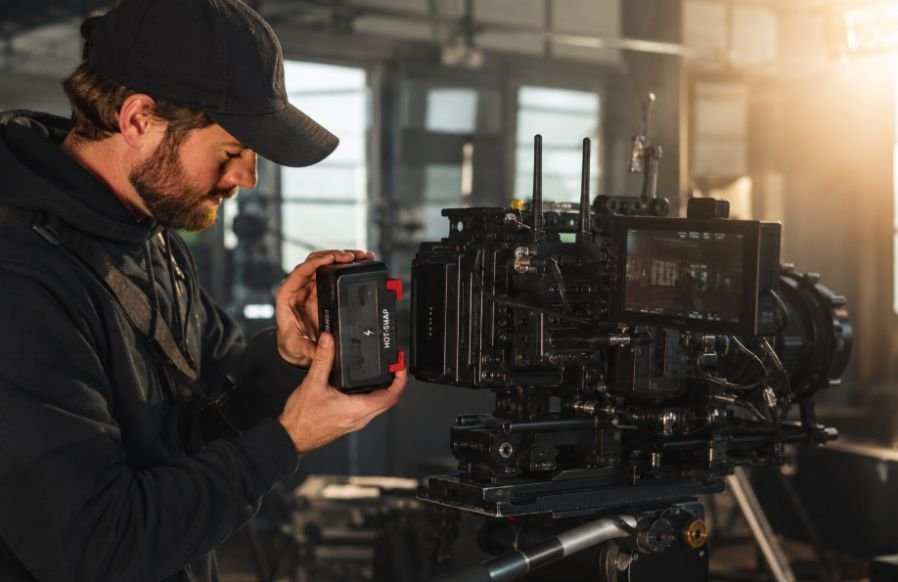
Hot-swapping becomes especially valuable when stopping the camera is not practical.
A dual-battery plate can allow one battery to remain connected while the other is replaced, depending on the specific system. This reduces downtime and gives the operator or assistant a chance to replace depleted batteries without interrupting the production.
It is particularly useful for documentary work, interviews, live events, long takes, and other situations where restarting the camera can mean losing a moment.
The important part is to make sure the battery plate and camera are designed to support the intended hot-swap workflow. Not every dual-battery arrangement provides seamless power switching.
A production assistant should also keep the replacement battery charged and immediately accessible. Hot-swap hardware only helps when the second battery is actually ready.
Match Battery Capacity to the Entire Rig
Choosing capacity starts with the total power draw.
Suppose a camera consumes 30W and the connected accessories consume another 20W. The rig is drawing roughly 50W. A 500Wh battery would theoretically provide around 10 hours at that load before accounting for conversion losses and other real-world variables.
That calculation is useful for planning, but it should never be treated as an exact runtime guarantee. Battery age, temperature, conversion efficiency, discharge characteristics, and changing equipment loads can all affect actual performance.
This is also why published camera battery ratings can be misleading when planning a complete cinema rig. A camera manufacturer’s runtime may be measured with a particular lens, recording format, display, and operating configuration. Once external accessories are added, the production’s real power budget changes.
If you’re building a monitor-heavy setup, the monitor and recorder deserve their own power calculation. A dedicated how to choose a monitor recorder for cinema cameras approach can help determine what needs to be powered, how much power it consumes, and whether it should share the camera’s main battery.
When a Portable Power Station Makes More Sense
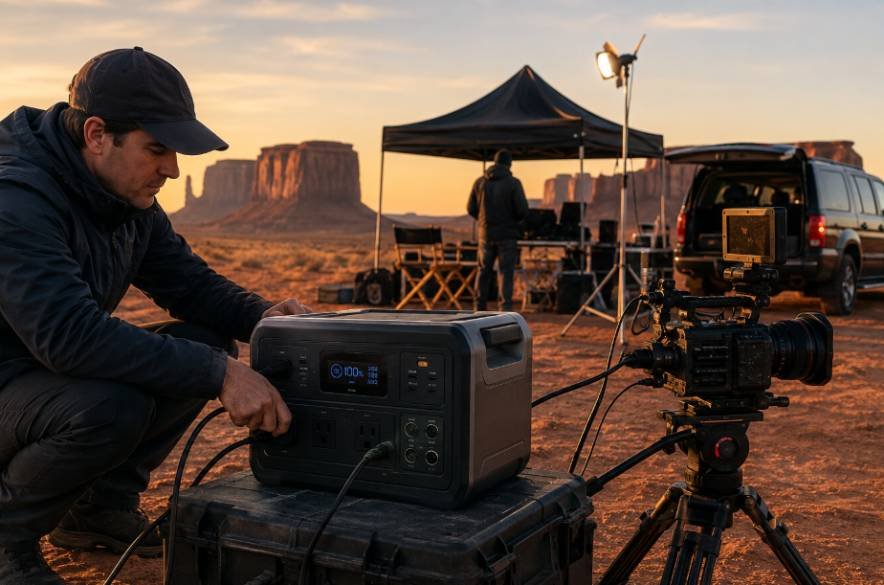
Camera batteries are ideal for the camera rig, but they are not always the best answer for the entire production.
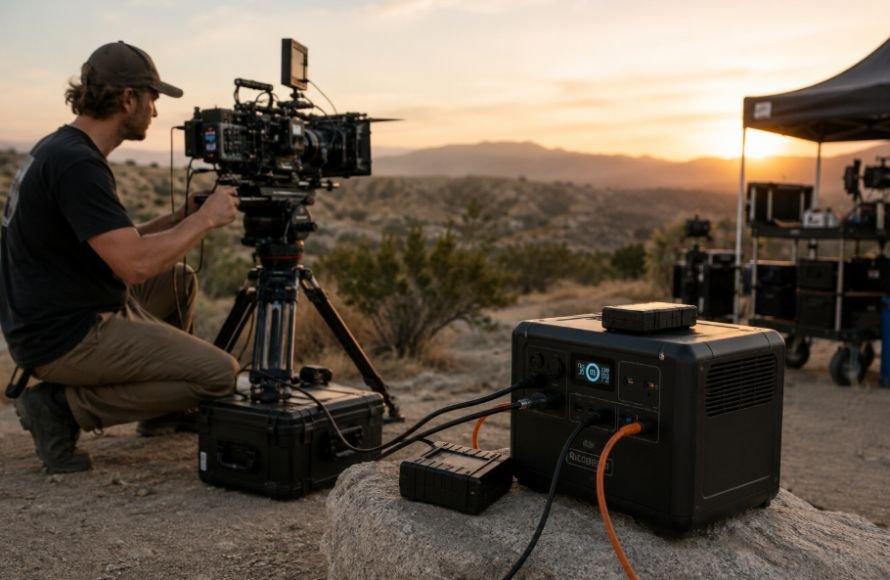
A portable power station becomes more practical when you need to run larger lights, chargers, laptops, monitors, or multiple production devices from AC power.
For example, the Instagrid ONE max is designed for professional off-grid applications and provides 2.1kWh of energy, 3,600W of continuous power, and up to 18,000W of peak power. Its manufacturer also lists a 20kg weight and IP54+ protection, making it suitable for demanding location environments.
A system like that is more appropriate for a production cart or remote location than for mounting directly on a camera.
The key is separating camera power from production power when necessary. A camera can stay on a V-Mount or Gold Mount system while a larger portable station handles lighting and charging duties nearby.
Keep the Power Setup Practical for the Operator
More power does not automatically mean a better camera package.
A huge battery attached to a handheld camera can quickly turn a manageable rig into an exhausting one. Weight distribution affects shoulder operation, stabilization, tripod work, and how quickly an operator can reposition the camera.
Cable management matters too. Keep power cables short where possible, secure them against snagging, and leave enough slack for normal camera movement. Labeling cables can also save time when several similar connectors are running from a distribution plate.
For remote productions, the wider mobile cinema production gear setup should also account for charging, spare batteries, weather protection, transportation, and backup power. A battery plan that works in a studio may not work nearly as well when the crew is several miles from the nearest outlet.
Plan for Charging, Not Just Runtime
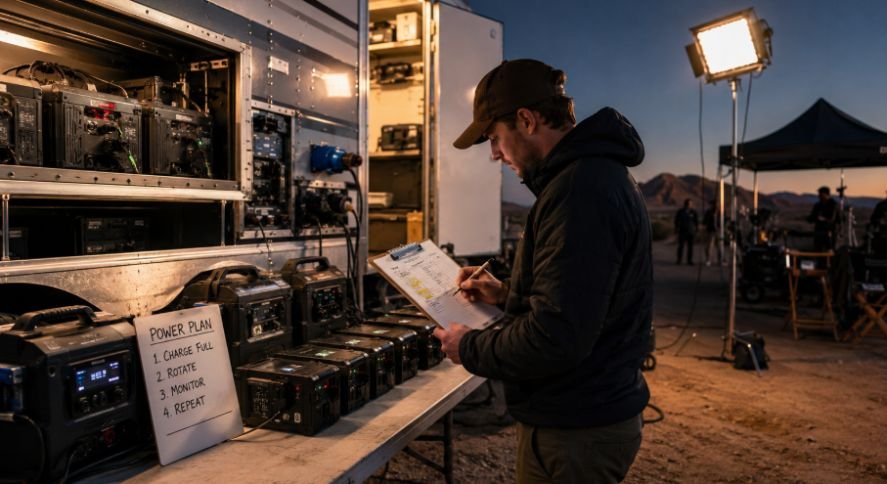
A long shoot needs a charging strategy as much as it needs a battery strategy.
If the production runs for several days, calculate how many batteries can be charged overnight and how quickly the chargers can replenish them. Keep charged and depleted batteries physically separated so nobody accidentally grabs the wrong one.
For larger batteries, monitor remaining capacity instead of relying only on a percentage indicator. Professional systems may provide information about active power draw, remaining runtime, charge status, and battery health.
Also check transportation requirements before flying with lithium-ion batteries. Battery chemistry, capacity, and airline rules can affect how equipment must be transported.
Most importantly, never assume that a cable or connector is safe simply because it fits. Check the camera and accessory specifications for the required voltage, current, polarity, and connector type before connecting external power.
Frequently Asked Questions
1. Are V-Mount batteries good for long cinema shoots?
Yes. V-Mount batteries are useful for cinema rigs because they can provide substantial capacity and often offer additional outputs for accessories. The right capacity depends on the total rig’s power draw.
2. Is a larger battery always better?
No. A larger battery provides more stored energy, but it also adds weight and bulk. For handheld work, several smaller batteries may be easier to manage than one oversized unit.
3. What is a hot-swap battery setup?
A hot-swap setup uses compatible battery hardware that allows one power source to be replaced while another maintains power. It can reduce downtime during long takes or continuous production.
4. Should a portable power station run the camera?
Usually, a portable power station makes more sense for production equipment such as lights, chargers, and AC-powered devices. Camera power should use a compatible battery or regulated external power system designed for that camera.
Why Reliable Power Is Part of the Production Plan
Power should be treated as part of the cinematography workflow, not just another accessory sitting in the equipment case. The right setup balances capacity, voltage, current, runtime, weight, charging, cable management, and the way the camera will actually be operated. A documentary crew working handheld has very different needs from a narrative crew operating a camera from a tripod or dolly.
The best power solution is ultimately the one that disappears during the shoot. When the battery system is properly sized, distributed, monitored, and backed up, the crew can concentrate on the image instead of watching a battery percentage slowly fall.