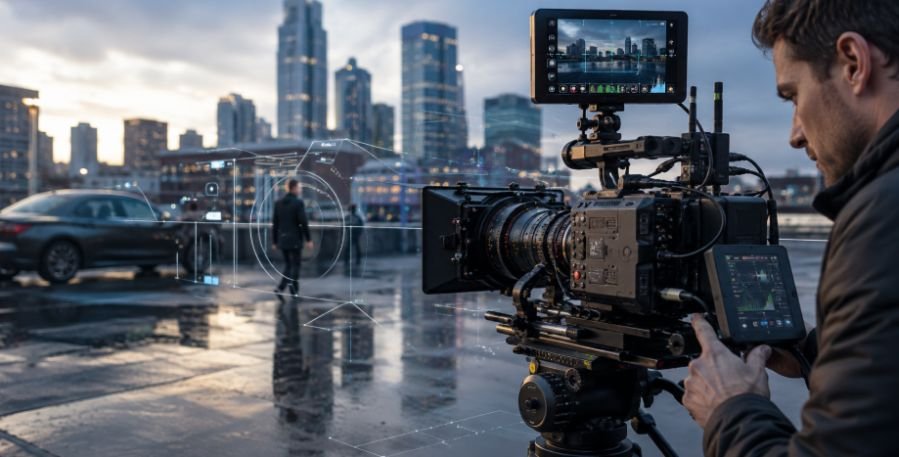




I have found that choosing a cinema zoom is rarely just about finding the widest focal range or the fastest T-stop. The real decision usually comes down to how the lens behaves once the camera is actually moving. A lens that looks perfect on a specification sheet can become frustrating when it adds too much weight to a gimbal, shifts focus during a zoom, or forces you to rebuild your setup every time the focal length changes.
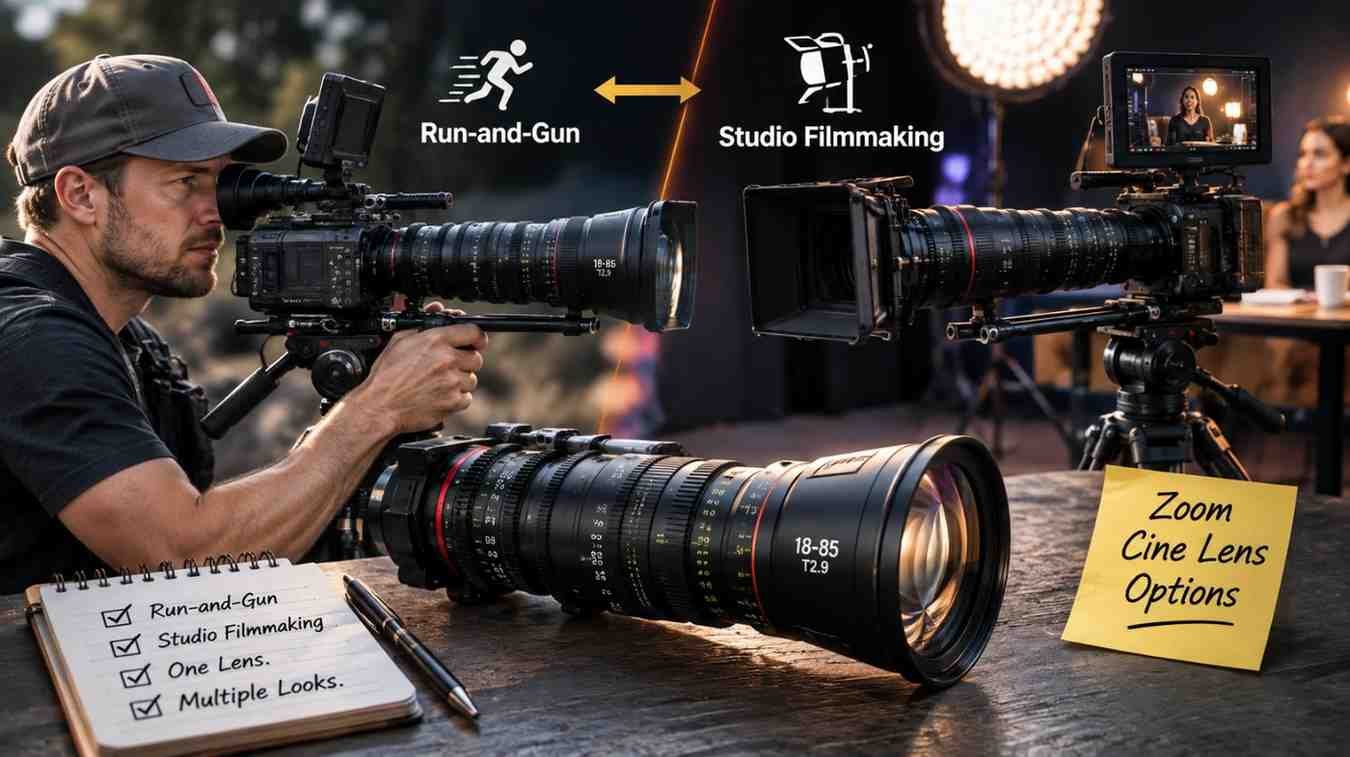
I also noticed that run-and-gun and studio work reward very different choices. When shooting documentaries, events, or fast-moving productions, portability and quick framing can matter more than having the absolute best optical performance. On a controlled set, however, a heavier lens with better mechanics, consistent exposure, and refined optical characteristics can make much more sense. That is where comparing the right zoom cine lens options becomes useful.
What Makes a Zoom Cine Lens Different?
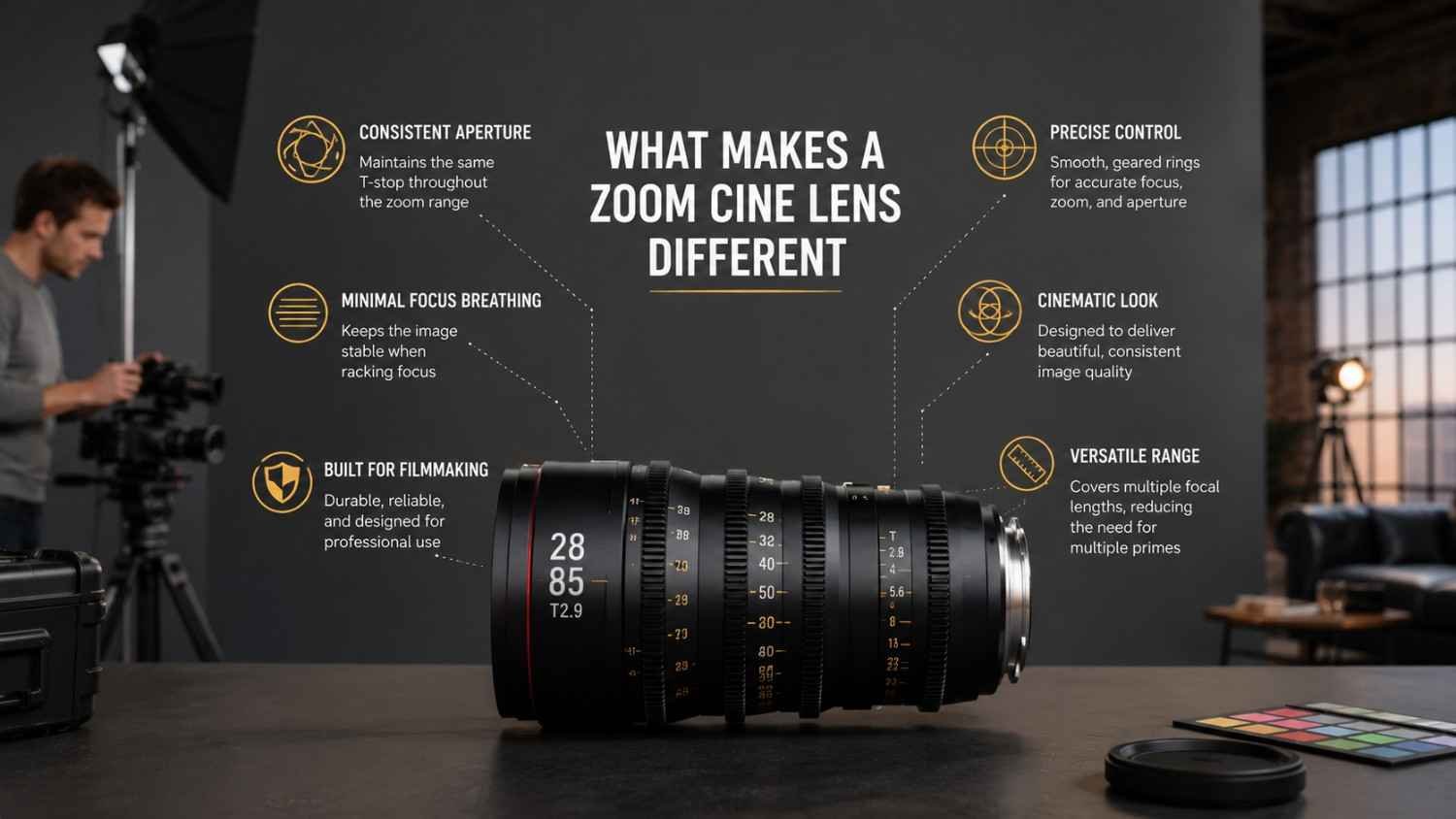
A cinema zoom is designed around motion-picture production rather than still photography. That difference shows up in the mechanical design as much as the optics.
Features such as a long focus throw, standardized 0.8 Mod gear pitch, geared focus and zoom rings, a de-clicked iris, repeatable markings, and controlled focus breathing are valuable when a lens needs to work with a follow focus, matte box, or cinema camera rig.
Parfocal behavior is another major consideration. A parfocal zoom is designed to maintain focus while the operator changes focal length. That can be extremely useful when reframing a subject during a live shot. Some lenses also minimize optical axis shift and focus breathing, which helps keep the image stable while zooming.
The Fujinon MK Series is a good example. Its 18-55mm and 50-135mm T2.9 lenses are designed for Super 35 and APS-C cameras, use fully manual focus, zoom, and iris rings, and feature 0.8M gearing and 200 degrees of focus rotation. Fujifilm also specifically lists suppression of focus shift, optical axis shift, and lens breathing.
Zoom Cine Lens Options for Run-and-Gun Filmmaking
Run-and-gun shooting puts a premium on speed. You may have seconds to change composition, move through a location, or react to an unexpected moment. Swapping primes can interrupt that flow, which is why a practical cinema zoom can be such a useful production tool.
The Fujinon MK18-55mm T2.9 is particularly interesting for compact Super 35 setups because it weighs about 980 grams. Pairing it with the MK50-135mm T2.9 extends coverage through 135mm while keeping both lenses at T2.9.
The DZOFILM Pictor range takes a different approach. Its 20-55mm and 50-125mm T2.8 zooms are Super 35 lenses with PL and EF mounts, 0.8 Mod gearing, and a 270-degree focus rotation. The lenses weigh around 1.5 to 1.7 kg, so they remain considerably more substantial than the Fujinon MKs but offer a broader cinema-oriented setup.
For a mobile production, lens weight should be considered alongside the camera body, battery, cage, wireless transmitter, monitor, matte box, and other accessories. A lens that looks manageable by itself can become a very different proposition once the complete rig is assembled. Before mounting a heavier zoom, it is worth checking your gimbal payload guide for filmmakers so the stabilization system is not operating at its limit.
The Canon CN-E 18-80mm T4.4 Compact-Servo is another practical option for operators who need a more integrated shooting experience. Canon lists Super 35 coverage, a 4.4x zoom ratio, 18-80mm focal range, 0.5-meter minimum object distance, and a weight of about 1.2 kg.
Its T4.4 maximum aperture is not as fast as a T2.0 or T2.8 cinema zoom, but run-and-gun work is not always about maximizing background separation. In documentary, corporate, event, and daylight production, controlled handling and framing flexibility can be more valuable.
Studio Filmmaking Demands Different Things
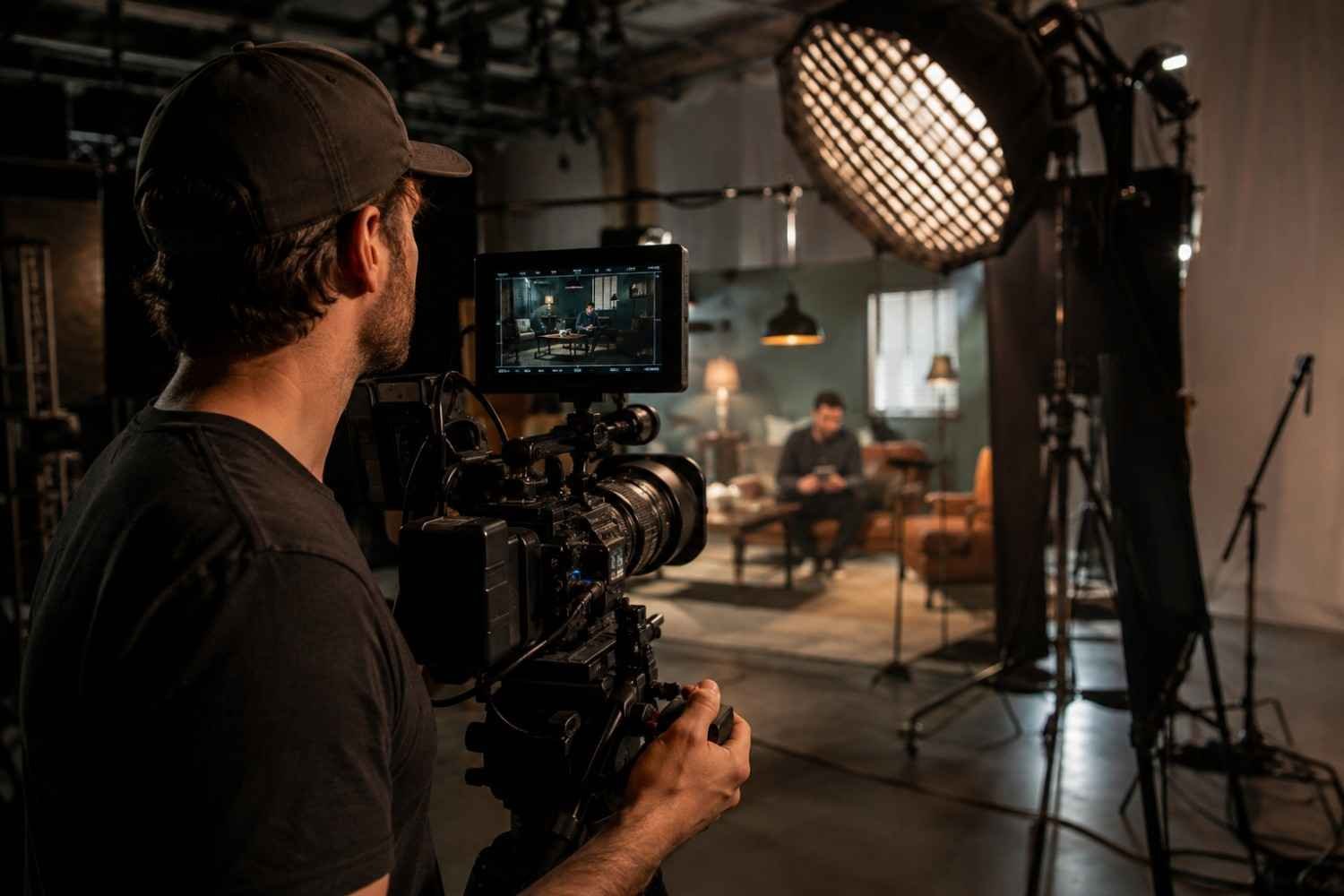
A studio environment changes the equation. When the camera is mounted on a tripod, dolly, crane, or larger stabilization system, weight becomes less restrictive. That allows cinematographers to consider larger optical assemblies designed around image quality and production consistency.
The Sigma High Speed Zooms are a good example of this philosophy. The 18-35mm and 50-100mm lenses maintain a T2.0 aperture across their respective zoom ranges and are available in PL, EF, and Sony E mounts. The 50-100mm weighs about 1.9 kg in PL mount and covers Super 35.
A constant T-stop matters because exposure remains consistent as you move through the zoom range. That becomes especially useful when the lens is used for controlled push-ins, reframing, or planned zoom movements. It also reduces the need to compensate for exposure changes during a focal-length transition.
At the higher end, large-format zooms such as Fujifilm’s Premista series prioritize resolution and large-format coverage. The Premista 19-45mm T2.9, for example, covers a wide 19-45mm range and uses large-diameter aspherical elements to maintain edge-to-edge sharpness and low distortion. Fujifilm lists a 3.3 kg weight, making it much more suited to a substantial production setup than a lightweight handheld rig.
ZEISS takes a similarly production-focused approach with its CZ.2 cinema zoom family. The CZ.2 range spans from 15mm through 200mm across three zooms, with standardized gears and scales, T2.9 performance, and designs intended to prevent focus changes during zooming.
Don’t Choose a Lens by Focal Range Alone
A 25-100mm zoom may sound more useful than an 18-55mm lens because it covers more focal lengths, but that does not automatically make it better.
The 18mm end can be critical for cramped interiors, establishing shots, vehicle work, and handheld movement. A 100mm or 135mm end becomes more valuable for interviews, compression, detail shots, and isolating subjects from busy backgrounds.
The Laowa OOOM 25-100mm T2.9 demonstrates why a moderate range can still be extremely versatile. It offers a 4x zoom ratio, constant T2.9, Super 35+ coverage, parfocal design, low focus breathing, and interchangeable PL, EF, and FE mounts.
Think about the focal lengths you actually use instead of buying a range that rarely leaves the case.
Weight, Sensor Coverage, and Rig Compatibility Matter
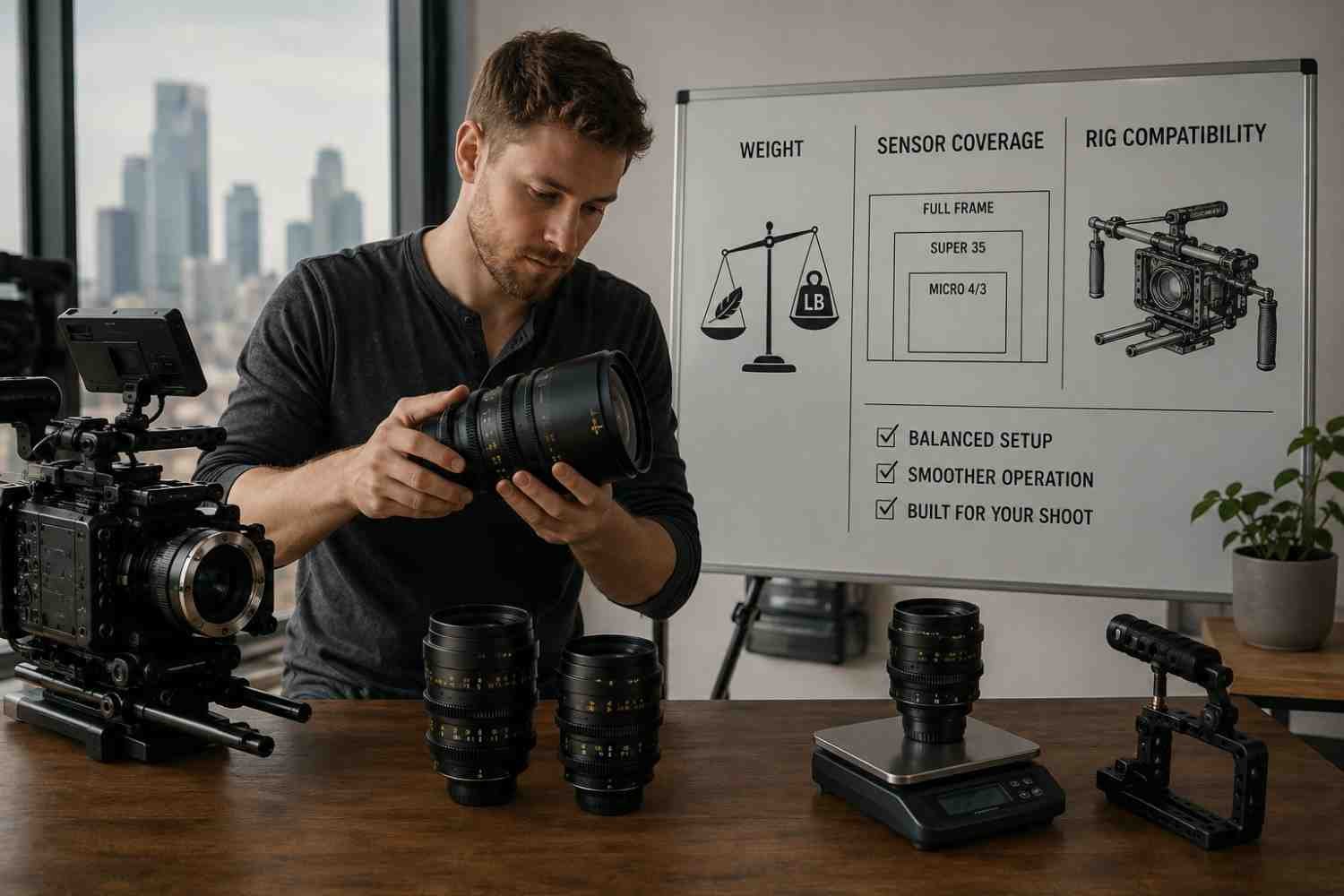
Lens selection should always start with the camera’s sensor and mount. A Super 35 lens is not automatically appropriate for a full-frame camera, and a lens with the correct mount may still create an unwanted crop or vignetting issue if its image circle is too small.
Weight also affects camera balance. This becomes particularly obvious when building a lightweight camera stabilizer setup. A front-heavy cinema zoom can force the operator to add counterweight or reposition the camera, potentially making an otherwise compact rig much harder to operate for long periods.
Check the complete system rather than the lens alone. Look at front diameter, filter size, gear position, support requirements, minimum focus distance, and whether the lens works cleanly with your matte box and follow-focus system.
The DZOFILM Pictor lenses, for example, use a 95mm front diameter and standardized 0.8 Mod gearing, while the Fujinon MK pair uses an 85mm front diameter and 82mm filter diameter. These small physical details can affect how easily different accessories transfer between lenses.
Features Worth Paying For
For serious filmmaking, some specifications are worth prioritizing over an enormous zoom ratio.
Parfocal performance should be high on the list if you expect to zoom during a shot. Focus breathing is another major consideration because noticeable changes in framing during a focus pull can distract from an otherwise polished image.
A constant T-stop is useful when you want predictable exposure throughout the zoom range. Long focus rotation provides greater precision for manual pulls, while standardized gearing makes it easier to keep accessories aligned across a lens set.
Color consistency also matters when building a multi-lens package. If you are combining spherical zooms with an anamorphic lens setup, the differences in rendering, contrast, flare, distortion, and bokeh become much more noticeable. Matching lenses by focal range alone will not guarantee a consistent visual language.
Which Type of Cine Zoom Makes the Most Sense?
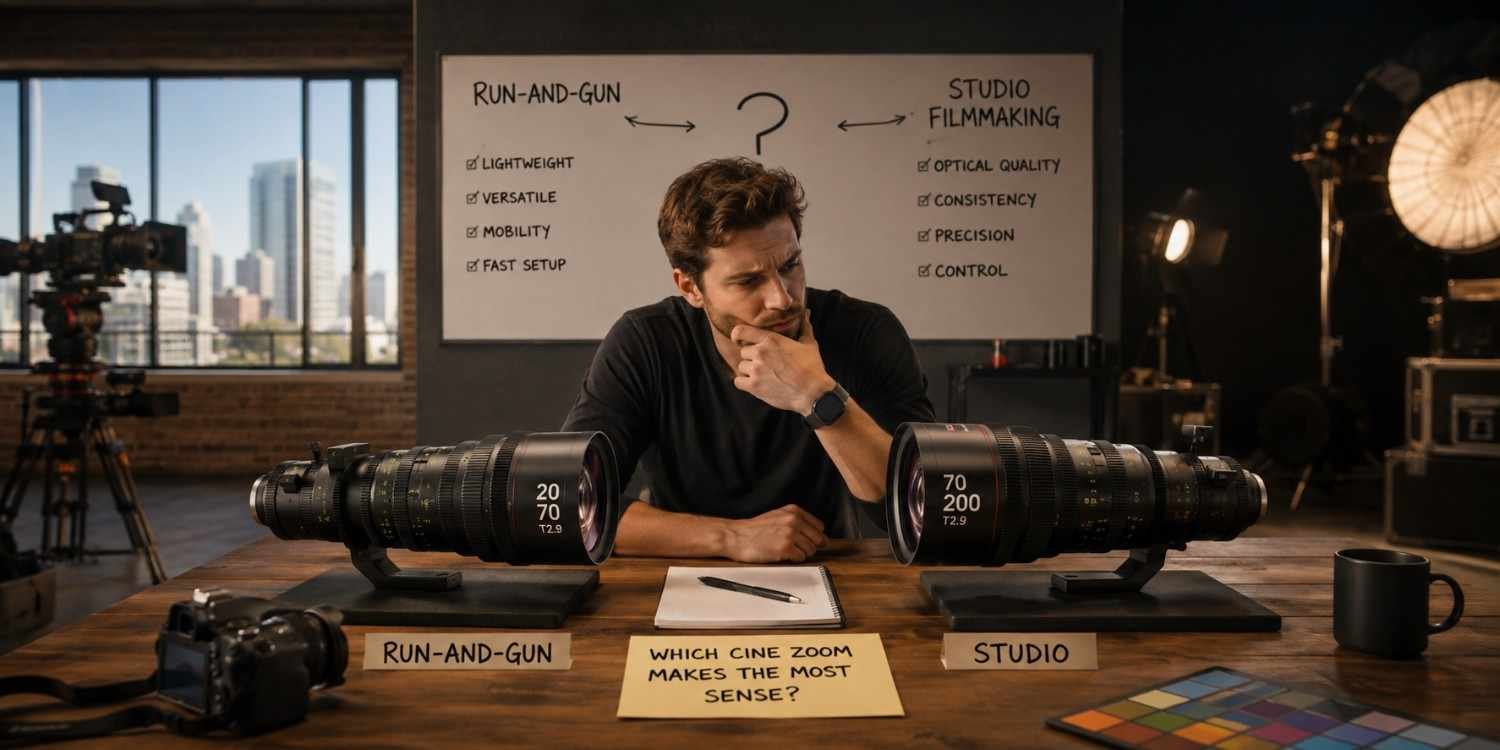
For run-and-gun work, a compact T2.8 or T2.9 zoom can be a strong middle ground. The Fujinon MK lenses are especially attractive when weight and Super 35 coverage are priorities.
For controlled studio production, a T2.0 high-speed zoom or a larger-format T2.9 zoom can make more sense. These lenses can offer stronger low-light performance, more control over depth of field, and optical characteristics designed for demanding cinema production.
The right choice depends on what the camera has to do once it leaves the case. A lightweight zoom that keeps you mobile can produce better real-world results than an expensive lens that makes the entire rig too heavy to operate comfortably.
FAQs: Zoom Cine Lens Options for Run-and-Gun and Studio Filmmaking
1. What is the best focal range for run-and-gun filmmaking?
An 18-55mm, 20-55mm, or similar range works well for many documentary, corporate, event, and travel productions because it covers wide to normal perspectives without adding excessive weight.
2. Are cine zooms usually parfocal?
Not every cine zoom is perfectly parfocal. A true or near-parfocal design is valuable when you need to change focal length while maintaining focus, but the importance depends on how you shoot.
3. Is T2.0 better than T2.9 for filmmaking?
T2.0 provides more light and can create shallower depth of field, but T2.9 can offer a useful balance between speed, size, weight, and cost. The better choice depends on the production.
4. Do cine zooms work well on gimbals?
Some compact cine zooms work very well on gimbals, but lens weight and camera balance are critical. Always consider the complete camera build rather than the lens weight alone.
Choose the Lens Around the Way You Actually Shoot
The most useful cinema zoom is rarely the one with the longest specification sheet. It is the one that fits naturally into the way you work. A documentary shooter may value a lightweight 18-55mm or 20-55mm lens because it keeps the camera responsive, while a studio cinematographer may happily accept several extra pounds for faster optics, larger image circles, and more controlled mechanical performance.
The best zoom cine lens options are ultimately about tradeoffs. Once focal range, T-stop, sensor coverage, weight, focus behavior, gearing, and rig compatibility all make sense together, the lens becomes less of a limitation and more of a production advantage.