



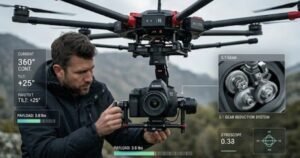
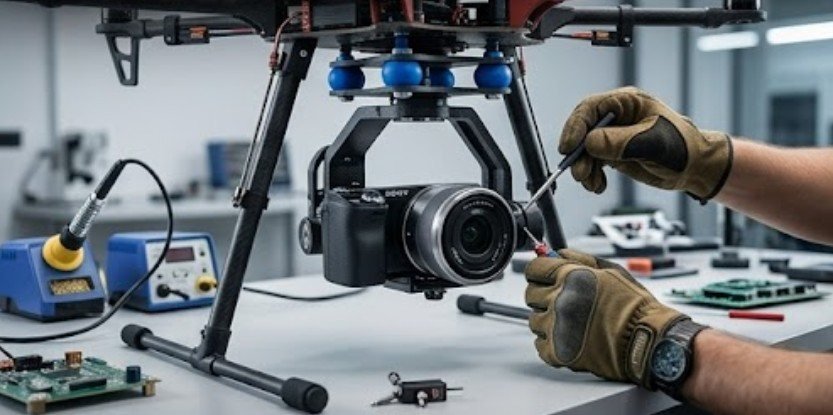
Most aerial cinematography setups fail not from battery drain, but from micro-vibrations—specifically the high-frequency motor hum that turns crisp CMOS sensor footage into unusable, jelly-like distortion. In precision aerial filming, structural dampening determines whether raw footage makes final post-production.
The designation “MKTR” occupies a unique dual footprint across specialized tech industries. Hardware engineers know the PhotoShip One mkTR Professional as a dual-axis camera stabilization platform. Meanwhile, growth strategists recognize MKTR Pro as a digital marketing ecosystem driven by automated ad scaling and dedicated lead management.
Whether fine-tuning aerial camera hardware or managing enterprise ad budgets, optimizing performance requires structural balance, mechanical efficiency, and reliable systems.
Technical Analysis: The PhotoShip One mkTR Professional Gimbal
Built for high-precision multirotor platforms—including Mikrokopter Hexakopters, Octokopters, and custom DJI frame configurations—the PhotoShip One mkTR Professional system addresses roll and tilt stabilization for lightweight mirrorless and mid-size DSLR bodies.
Engineering and Structural Redesign
The mkTR Professional features a redesigned drive assembly that eliminates unnecessary mechanical linkages. By reducing total moving parts by 75% compared to legacy v1 and v2 platforms, it minimizes mechanical play (backlash), improves tracking speed, and extends servo lifespan.
The reinforced chassis offers a 10% larger physical footprint. This added clearance accommodates popular mid-tier bodies, including:
- Sony NEX-5N / NEX-7 mirrorless setups
- Panasonic GH2 / GH3 micro four-thirds systems
- Canon EOS 550D (Rebel T2i) and 600D (Rebel T3i) DSLRs
The landing gear layout features broadened fore-and-aft baseplate spans. This wider footprint distributes impact forces across touchdown points and keeps the lens barrel clear during low-altitude maneuvers.
Mechanical Specifications Breakdown
| Technical Parameter | Engineering Specification | Operational Impact |
| Roll Motion Range | 30° total travel | Corrects high-speed lateral frame tilting |
| Tilt Motion Range | 100° total travel | Enables continuous top-down framing |
| Base Weight | 480 grams (1.05 lbs) | Minimizes payload drag to preserve flight times |
| Primary Materials | G10 Composite Fiber & Anodized Aluminum | High rigidity-to-weight ratio to prevent frame flex |
| Stock Servos | Hitec HS5245MG (Roll) / HS5485HB (Tilt) | High-torque digital positioning for lighter setups |
| Power Distribution | Dual battery tray system (3S/4S up to 3300mAh) | Isolates camera power from main propulsion systems |
Vibration Suppression and CMOS Sensor Stabilization
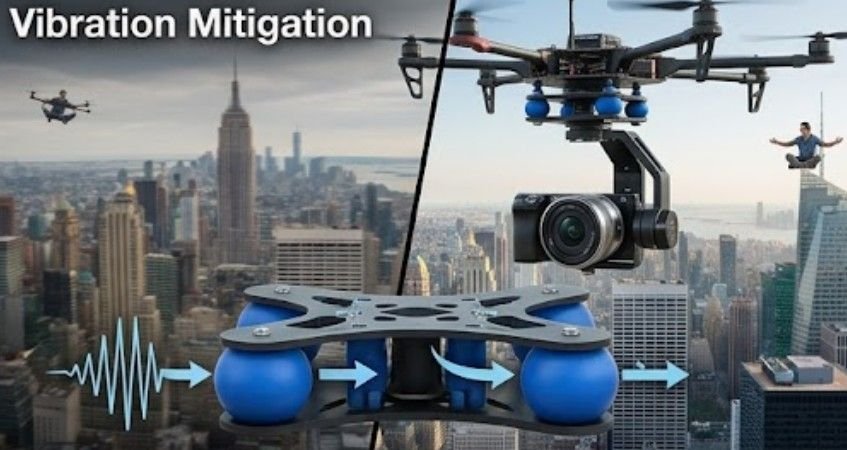
Unshielded CMOS sensors suffer from rolling-shutter distortion (“jello effect”) caused by high-frequency motor vibrations. The mkTR Pro uses tuned elastomeric rubber ball mounts between the top plate and multirotor chassis. These dampeners absorb motor hum before it reaches the sensor plane, producing clear, fluid footage without software stabilization.
Assembly, Mounting, and Power Configuration
Installing the mkTR Professional onto an airframe requires precise mechanical alignment and proper power delivery.
Frame Integration
The base mounting pattern matches Mikrokopter frame geometry directly using a 25mm x 100mm standoff spacing. Adapting the system to custom hexacopters or quadcopters (such as the DJI Flame Wheel F550) requires a dedicated adapter plate or precision drilling to match the top plate footprint.
Heavy Payload Configurations
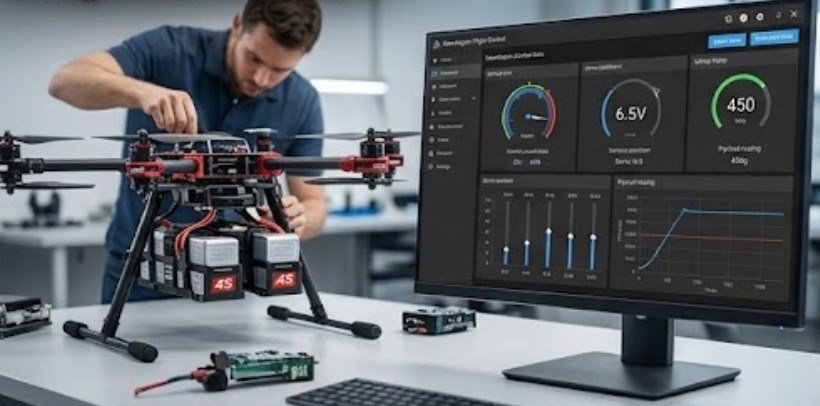
Stock digital servos handle payloads up to 450g (1 lb). Flying heavier setups like a fully rigged Canon DSLR requires the optional gear-driven tilt assembly and secondary roll servo module. These additions increase mechanical advantage, preventing motor stalling during sharp pitch shifts.
Crucial Voltage Requirement: Upgrading to dual high-torque servos increases current draw on the flight controller’s internal power rail. When interfacing with a Mikrokopter Flight Control board, replace the stock 5.0V Recom voltage regulator with a 6.5V Recom regulator on the servo bus. This modification prevents voltage dips and servo brownouts mid-flight.
For additional resources on unmanned aircraft system design and technical specs, check out the national standards established by the Federal Aviation Administration or research papers on robotic aerial stability hosted by the Massachusetts Institute of Technology.
The Digital Side: MKTR Pro Marketing & Lead Management
Outside of hardware design, the name MKTR Pro designates a modern sales enablement and digital marketing infrastructure. Just as a physical gimbal stabilizes camera equipment, digital marketing frameworks stabilize client lead flow.

Paid Campaign Management
The agency side of MKTR Pro creates high-conversion audience funnels on platforms like Meta and Google Ads. They manage every phase of campaign performance:
- Custom audience segmentation based on user intent and behavior
- Continuous A/B testing of ad creative and landers
- Direct API integrations to feed captured lead data into customer pipelines
Lead Tracking via MKTR Leads
Managing paid leads requires rapid response times. The MKTR Leads app gives field teams and insurance agents an immediate mobile workflow:
- Push notifications when a new lead enters the pipeline
- Instant lead routing to sales reps based on location or product line
- Built-in call tracking and stage updates to monitor conversion rates
Organizations interested in marketing compliance standards can review guidance from the Federal Trade Commission or research digital interaction models via the World Wide Web Consortium.
Evaluating Your Operational Needs
Choosing between mechanical and digital MKTR solutions depends entirely on your project scope.
The Hardware Checklist (PhotoShip One mkTR)
- You run specialized multirotor airframes for custom aerial filming.
- Your camera setup weighs less than 1.5kg (3.3 lbs).
- You need lightweight mechanical dampening to eliminate CMOS rolling shutter issues.
- You have experience configuring RC servos, soldering components, and tuning flight control boards.
The Marketing Checklist (MKTR Pro Agency/App)
- You need dedicated ad management for paid customer acquisition.
- Your sales team needs real-time lead routing on mobile devices.
- You want to scale ad spend without building an internal media buying team.
Frequently Asked Questions
1. What cameras fit the PhotoShip One mkTR Professional?
It fits mirrorless and mid-size DSLR cameras weighing under 450g natively—such as the Sony NEX series, Panasonic GH2, and Canon 550D/T2i. Heavier setups require the optional gear-drive upgrade.
2. Can I mount the mkTR gimbal on non-Mikrokopter frames?
Yes. While built natively for Mikrokopter mounting holes (25mm x 100mm), it mounts to platforms like the DJI Flame Wheel F550 using optional adapter plates or simple frame modifications.
3. What is the primary purpose of the MKTR Leads software?
MKTR Leads gives sales professionals real-time mobile tracking, instant lead notifications, and pipeline management tools for leads generated through paid social campaigns.
4. Why is an upgraded voltage regulator necessary for heavy gimbal setups?
Upgrading to dual roll or gear-driven tilt servos increases electrical demand. Swapping to a 6.5V regulator prevents servo power loss and keeps flight control signals stable.
Precise execution relies on matching the right system to your operational goals. A perfectly balanced aerial gimbal produces smooth, professional video, just as a well-tuned digital marketing funnel delivers reliable, scalable sales leads. Focus on system stability first, measure performance metrics continuously, and build workflows designed for long-term growth.