






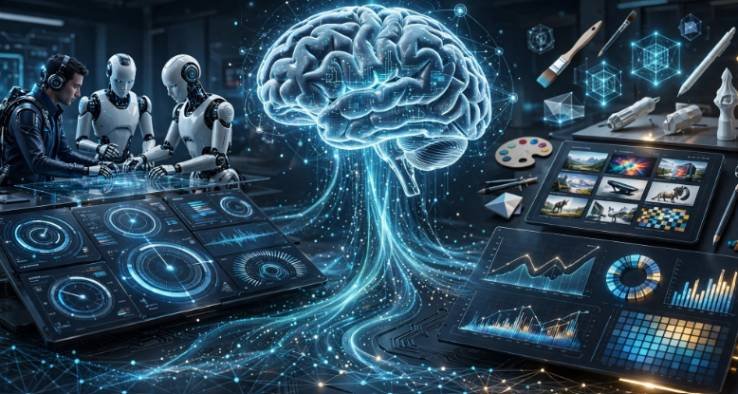
I have watched artificial intelligence move from simple automation tools into creative partners that can write, design, analyze, and solve problems. What surprises me most is how quickly generative AI has become part of everyday workflows.
When people search for infographics top 10 generative ai trends, they are usually looking for an easy way to understand where AI is heading and how these changes may affect businesses, creators, and everyday users.
Generative AI is no longer just about generating text. It now covers images, videos, software development, research, business operations, and personalized digital experiences.
The biggest shift is that AI is becoming more accessible. You no longer need advanced programming skills to experiment with powerful AI systems.
Table of Contents
ToggleWhy Are Infographics Top 10 Generative AI Trends Important for Understanding AI Growth?
AI trends can sometimes feel overwhelming because new tools appear almost every week. Visual explanations and infographics make complex developments easier to understand.
I believe this is why infographic-style AI content has become popular. Instead of reading through complicated technical documents, users can quickly identify important patterns, opportunities, and challenges.
Generative AI trends reveal how companies are changing their workflows and how individuals are adapting to new technology.
According to McKinsey & Company, generative AI has the potential to significantly impact productivity across multiple industries.
What Are the Biggest Generative AI Trends Changing the Digital World?
Generative AI is expanding across different areas. Here are some major trends shaping the industry.
| Generative AI Trend | What It Means | Impact |
| AI Assistants | Smarter digital helpers | Better productivity |
| Multimodal AI | AI understanding text, images, and audio | More natural interactions |
| AI Content Creation | Automated creative production | Faster workflows |
| AI Coding Tools | AI-assisted software development | Improved developer efficiency |
| Personalized AI | Customized user experiences | Better engagement |
| AI Agents | Autonomous task completion | Business automation |
These trends show that AI is becoming less like a simple tool and more like an intelligent partner.
As digital technology continues to evolve, AI is also intersecting with newer forms of online interaction, including decentralized applications and the best dApp browsers that give users different ways to access Web3 services.
How Is Multimodal AI Becoming One of the Biggest Generative AI Trends?
One of the most exciting developments is multimodal AI.
Instead of working with only text, modern AI systems can understand and generate multiple formats, including images, audio, video, and documents.
This creates more natural interactions. A user can upload an image, ask questions about it, and receive detailed responses.
For businesses, multimodal AI creates opportunities in customer service, education, healthcare, and marketing.
I think this trend will become even more important because humans naturally communicate through multiple formats, not just written words.
Why Are AI Agents Changing How Businesses Work?
AI agents represent a major step beyond traditional chatbots.
A chatbot usually responds to questions, but AI agents can complete tasks, make decisions, and manage workflows with limited human involvement.
Companies are exploring AI agents for customer support, research, scheduling, and data analysis.
This does not mean humans disappear from the process. Instead, AI agents can handle repetitive tasks while people focus on strategy and creativity.
The IBM Artificial Intelligence platform highlights how organizations are adopting AI solutions to improve efficiency and decision-making.
How Is Generative AI Transforming Content Creation?
Content creation has changed dramatically because of generative AI.
Writers, designers, marketers, and video creators now use AI tools to brainstorm ideas, create drafts, generate visuals, and improve productivity.
I see AI as a creative assistant rather than a replacement. The best results often come when human experience combines with AI capabilities.
For example, a marketer can use AI to generate campaign ideas but still rely on human judgment to understand audience emotions.
This collaboration between humans and machines is becoming one of the most interesting parts of the AI revolution.
How Can You Use Infographics Top 10 Generative AI Trends to Prepare for the Future?
Understanding AI trends is useful, but applying them practically matters even more.
Here is a simple approach I recommend:
Step 1: Identify Your Needs
Start by asking where AI could save time or improve quality in your work.
A business owner may focus on automation, while a designer may explore AI image tools.
Step 2: Learn Popular AI Tools
Experiment with different platforms and understand their strengths.
For hands-on learning, exploring platforms such as the Stanford AI Playground can also help beginners experiment with AI concepts and understand how generative tools work in practice.
Learning how AI works helps you use it more effectively.
Step 3: Improve Your AI Skills
Prompt writing, data understanding, and AI evaluation are becoming valuable skills.
The better you communicate with AI systems, the better results you can achieve.
Step 4: Stay Updated
AI changes quickly. Follow reliable technology sources and continue learning.
The people who adapt early will have a stronger advantage.
What Role Does Personalized AI Play in Future Technology?
Personalization is becoming a major focus in AI development.
People expect digital experiences designed around their preferences, habits, and goals.
Generative AI can help create personalized recommendations, learning experiences, shopping suggestions, and business interactions.
This shift means technology will become more customized instead of offering the same experience to everyone.
Are There Challenges Behind These Generative AI Trends?
Generative AI offers exciting possibilities, but challenges remain.
Accuracy is one concern. AI systems can sometimes produce incorrect information, which means users need to verify important details.
Privacy is another issue. Organizations must carefully manage data when implementing AI solutions.
Ethical concerns around copyright, misinformation, and responsible AI use will continue shaping the industry.
The National Institute of Standards and Technology (NIST) provides frameworks focused on developing trustworthy and responsible AI systems.
How Can Businesses Adapt to New Generative AI Opportunities?
Businesses that succeed with AI usually focus on practical applications.
Instead of adopting AI simply because it is popular, companies should identify problems where AI can create measurable improvements.
Training employees, protecting data, and creating responsible AI policies are important steps.
I believe businesses that combine technology with human creativity will have the strongest advantage.
Frequently Asked Questions
1. What does infographics top 10 generative ai trends explain?
It explains the major developments in generative AI through visual insights, helping users understand trends like AI agents, automation, personalization, and multimodal technology.
2. Is generative AI replacing human creativity?
No. Generative AI works best as a creative assistant that helps people generate ideas, improve workflows, and complete tasks faster.
3. Which industries benefit most from generative AI?
Industries such as marketing, healthcare, education, software development, finance, and customer service are already exploring generative AI applications.
4. How can beginners start learning generative AI?
Beginners can start by testing AI tools, learning effective prompts, and understanding basic concepts through practical experimentation.
AI Is Moving Fast, So Keep Your Curiosity Faster
The world of AI is changing quickly, and understanding infographics top 10 generative ai trends helps make those changes easier to follow.
From AI agents and multimodal systems to personalized experiences and creative automation, generative AI is reshaping how people work and interact with technology.
My personal advice is simple: do not just watch the AI revolution from the outside. Try the tools, learn the basics, and discover where AI can make your own work smarter.
The future will belong to people who know how to work alongside intelligent technology.





3 thoughts on “Infographics Top 10 Generative AI Trends: The Future of AI Explained Visually”