


When I first searched info fintechzoom com bitcoin mining, I expected Bitcoin mining to be mostly about buying a powerful computer, switching it on, and watching digital coins roll in. That version of mining belongs somewhere beside dial-up internet and floppy disks.
Modern Bitcoin mining is a competitive infrastructure business. Specialized machines run around the clock, electricity can make or break profitability, and miners compete with enormous operations using industrial-scale power and cooling.
Yet the basic idea remains surprisingly understandable. Miners help secure Bitcoin, organize valid transactions into blocks, and compete using proof-of-work calculations for block rewards and transaction fees.
Table of Contents
ToggleWhat Does info fintechzoom com bitcoin mining Actually Mean?
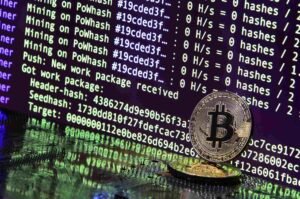
Bitcoin mining is the process through which proof-of-work participants compete to add valid blocks to the Bitcoin blockchain. Mining machines repeatedly perform cryptographic calculations until one produces a result satisfying the network’s current target.
The successful miner or mining pool earns the current block subsidy plus eligible transaction fees. Since the April 2024 halving, the subsidy has been 3.125 BTC per block.
If you want additional context around Bitcoin issuance, BlackRock’s digital-asset materials explain how Bitcoin’s mining reward and roughly four-year halvings work, including the expected reduction of the subsidy to 1.5625 BTC around the next halving.
Why Does info fintechzoom com bitcoin mining Depend on Proof of Work?
Proof of work makes producing a valid Bitcoin block computationally expensive while allowing other network participants to verify that work relatively easily.
Miners repeatedly change data and calculate SHA-256 hashes, effectively making enormous numbers of attempts. Increasing your hashrate gives you more attempts, but it does not guarantee that your machine will find the next block.
Bitcoin also adjusts mining difficulty roughly every 2,016 blocks to keep average block production close to ten minutes even when computational power entering or leaving the network changes.
Why Does info fintechzoom com bitcoin mining Need ASIC Hardware?
In Bitcoin’s earliest years, enthusiasts could mine with ordinary computer processors. Competition eventually moved through GPUs and specialized equipment until application-specific integrated circuits, or ASICs, became the practical standard.
An ASIC is designed specifically for a narrow computational job. In Bitcoin mining, that means performing SHA-256 hashing extraordinarily quickly while trying to use electricity as efficiently as possible.
For readers interested in a more casual, game-based take on the mining concept, Bitcoin Miner codes Roblox Bitcoin Miner offers a different way to explore the idea of mining through Roblox gameplay.
The number I care about isn’t simply terahashes per second. I compare hashrate with energy consumption because two miners producing similar computational power can have dramatically different electricity costs.
| Factor | Why It Matters |
| Hashrate | Determines how much computational work the miner contributes |
| Efficiency | Shows how much electricity is required for that work |
| Purchase cost | Determines your upfront capital requirement |
| Electricity price | Often determines whether mining is profitable |
| Pool fee | Reduces the revenue reaching you |
| Uptime | Machines earn nothing while offline |
| Cooling | Affects reliability and operating cost |
How Does Electricity Affect info fintechzoom com bitcoin mining?
Electricity is one of the least glamorous parts of mining and one of the most important. Your ASIC can be incredibly powerful, but expensive electricity can turn a technically successful operation into an economically terrible one.
You also need to think about heat. Mining equipment effectively converts much of the electricity it consumes into heat, meaning ventilation or active cooling may be required depending on your equipment and climate.
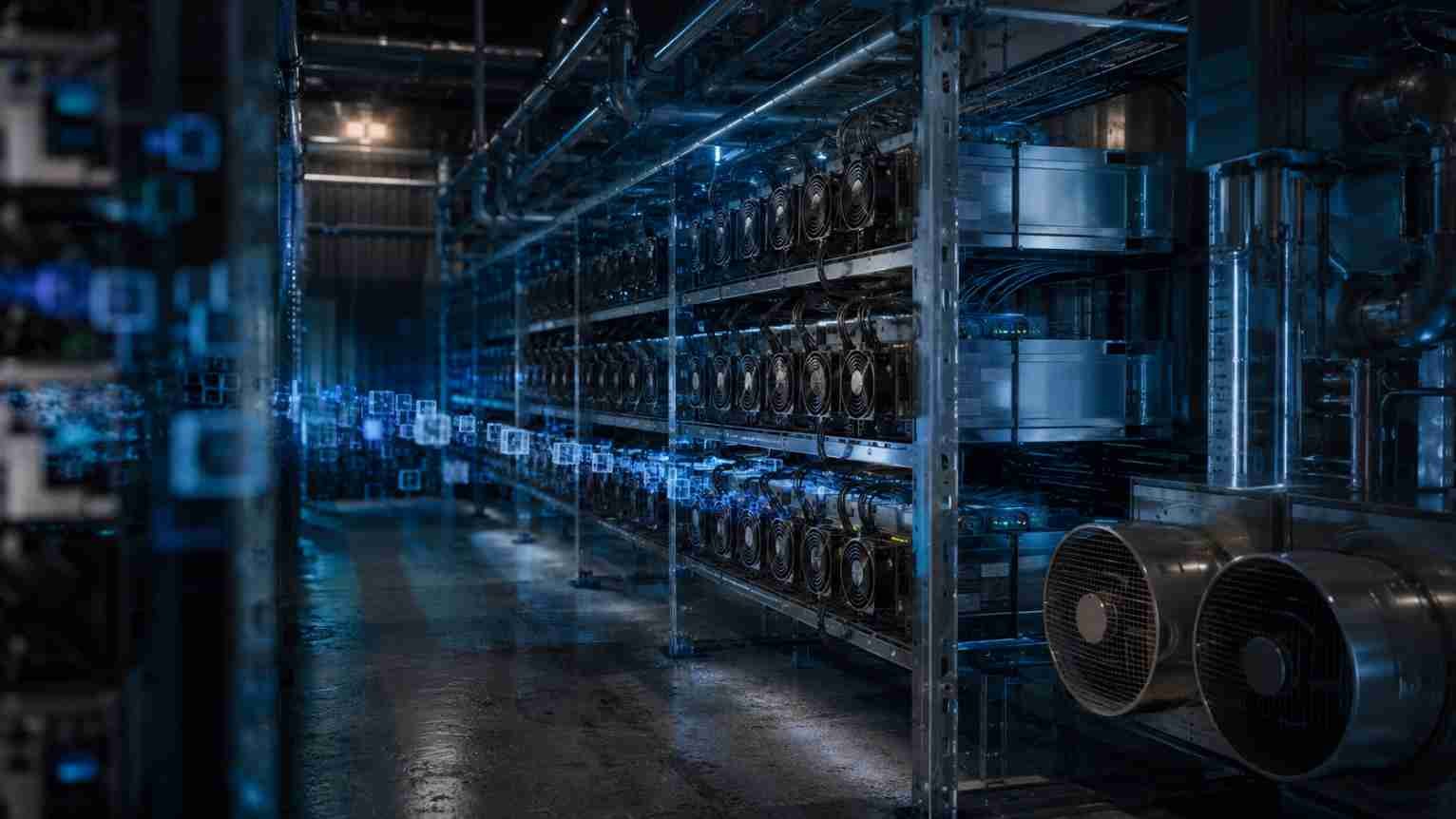
For perspective on the scale of the industry, the U.S. Energy Information Administration explains how specialized Bitcoin-mining facilities can contain tens of thousands of machines and why electricity demand has attracted increasing attention. The agency also describes hashrate as a measure of how many computational attempts miners perform.
Why Are Mining Pools Important for info fintechzoom com bitcoin mining?
Imagine buying one lottery ticket while thousands of other people arrive with truckloads. Technically, you could still win. Predictable income is another story.
That is why many miners join pools. Pool participants combine their hashrate, and when the pool finds blocks, revenue is distributed under its chosen payout system according to contributed work and other rules.
Pools can make payouts smoother, but they introduce fees and dependence on the pool operator. Compare payout models, minimum thresholds, transparency, reliability, geographic servers, and reputation before connecting equipment.
Is info fintechzoom com bitcoin mining Still Profitable?
Sometimes—but profitability is not a permanent property of a mining machine. It is a moving equation.
Your revenue depends on Bitcoin’s market price, transaction fees, network difficulty, equipment hashrate, uptime, and pool conditions. Your costs include hardware, electricity, cooling, maintenance, infrastructure, and potentially taxes or hosting.
The 2024 halving made that equation tougher by reducing the block subsidy from 6.25 BTC to 3.125 BTC. Efficient miners can adapt, while machines with poor energy efficiency may become difficult to operate profitably.
Why Should Environmental Costs Matter to Bitcoin Miners?
Bitcoin mining’s electricity consumption is real, which has made its energy mix and environmental effects part of the wider policy conversation.
How that electricity is generated matters. Mining supplied by low-carbon or otherwise underused power has a different emissions profile from facilities relying heavily on fossil-fuel generation during carbon-intensive grid periods.
For a research-focused perspective, a Nature Communications study examined electricity consumption and air-pollution impacts associated with major U.S. Bitcoin mines. The researchers analyzed 34 large mining sites rather than treating every mining operation as environmentally identical.
How Can You Start info fintechzoom com bitcoin mining Step by Step?
Step 1 is calculating electricity cost before buying anything. Find your real rate per kilowatt-hour, including relevant charges. Then compare it with the power consumption and efficiency of the ASIC you’re considering.
Step 2 is researching hardware. Compare hashrate, watts consumed, efficiency, purchase price, warranty, expected noise, cooling requirements, and availability of replacement components.
Step 3 is choosing where the machine will operate. A powerful ASIC can be loud and extremely hot. A bedroom desk may therefore be less “crypto entrepreneur” and more “accidental aircraft engine.”
Step 4 is choosing a reputable mining pool and configuring its server address, worker information, and Bitcoin payout address according to the pool’s official documentation.
Step 5 is monitoring actual rather than theoretical results. Track accepted hashrate, uptime, pool revenue, electricity consumption, temperatures, errors, and maintenance costs.
Step 6 is recalculating profitability regularly. Network conditions change, so yesterday’s break-even calculation should never be treated as a lifetime guarantee.
What Are the Key Takeaways From info fintechzoom com bitcoin mining?
Bitcoin mining provides computational work that supports Bitcoin’s proof-of-work network while giving successful miners access to block subsidies and transaction fees.
Understanding Bitcoin’s overall supply is also important when evaluating the long-term economics of mining. For a deeper look, see how many Bitcoin are there.
Today’s competitive landscape favors specialized ASIC equipment and careful operating economics. Electricity price and hardware efficiency can matter just as much as the price of the miner itself.
For beginners, I would calculate costs before purchasing hardware, compare several realistic scenarios, and treat mining as an operating business rather than passive income delivered by a noisy box.
Frequently Asked Questions
1. Can I still mine Bitcoin on a laptop?
Technically, software can perform hashes, but ordinary laptops are nowhere near competitive with modern Bitcoin ASICs.
2. What is the Bitcoin mining reward now?
The current block subsidy is 3.125 BTC following the April 2024 halving.
3. Do I need to join a mining pool?
You aren’t required to, but solo mining has extremely high payout variance for small operators.
4. How much electricity does Bitcoin mining use?
Network-wide consumption is substantial, but estimates vary with hashrate, hardware assumptions, and methodology.
Is info fintechzoom com bitcoin mining Digital Gold Mining or Just an Expensive Space Heater?
It can honestly be a little of both. A well-planned mining setup can participate meaningfully in Bitcoin’s network, while a badly planned one can efficiently transform your electricity bill into regret.
What I like about mining is that economics forces you to be practical. Hashrate sounds impressive, but electricity bills are wonderfully resistant to hype.
My final tip is simple: calculate your worst reasonable scenario before your best one. If the setup only works when Bitcoin rises, difficulty stays flat, the ASIC never breaks, and your electricity provider suddenly becomes charitable, the spreadsheet is trying to warn you.