



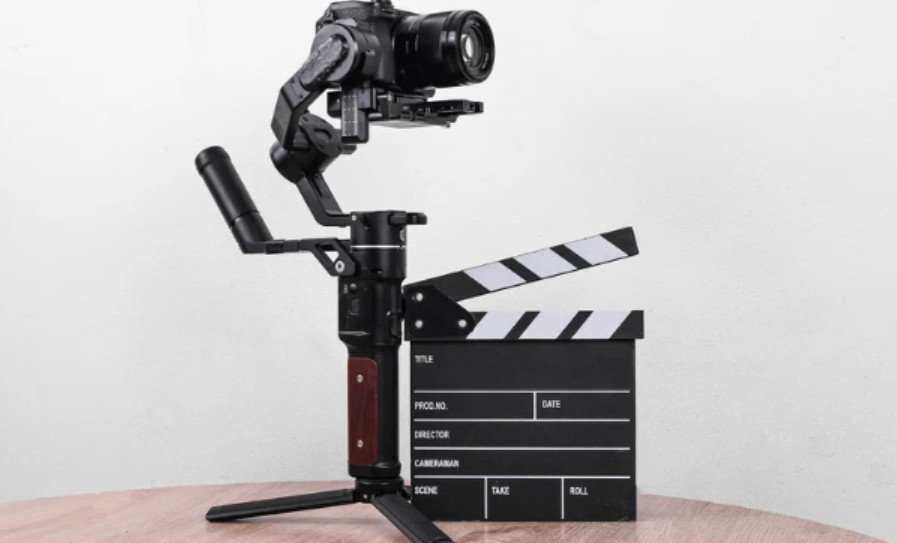
I have always found smooth camera movement fascinating. A camera appears to float through a busy location, follow an actor around corners, or move closer at precisely the right moment. Although modern stabilizers help, professional results rarely come from equipment alone.
Understanding how production crew captured smooth camera shots reveals a carefully coordinated process involving creative planning, technical preparation, rehearsals, skilled operators, and thoughtful editing.
Why Smooth Camera Movement Matters
Camera movement should support the story rather than simply show off an expensive rig. A slow push toward an actor can increase emotional intensity, while a tracking shot can place viewers inside a fast-moving scene. A controlled pullback may reveal new information or create emotional distance.
Before choosing equipment, the director and cinematographer determine what the movement needs to communicate. This decision affects the shot’s direction, speed, framing, duration, and relationship with the subject.
Smoothness is not always the goal. Deliberately unstable handheld footage can create urgency, danger, or realism. The crew chooses controlled movement when the story requires elegance, clarity, immersion, or precise visual timing.
Planning the Shot Before Filming
A smooth shot usually begins with a storyboard, shot list, location scouting, or previsualization. The team identifies the starting frame, ending frame, camera route, actor positions, obstacles, lighting changes, and possible crew locations.
This level of preparation becomes especially important when planning high-speed tracking shots for a live event production, where camera speed, subject movement, safety boundaries, and operator timing must all be coordinated before filming begins.
The camera path must be inspected carefully. Loose flooring, cables, uneven ground, furniture, and narrow doorways can interrupt an otherwise successful take. Grips may clear the route, level the surface, secure equipment, or install tracks.
The cinematographer also chooses an appropriate lens. A wider lens can make small shakes less noticeable, whereas a longer lens magnifies movement. Exposure, white balance, shutter speed, and focal length are normally set before filming so they remain consistent throughout the take.
Choosing the Right Camera Support
Camera Dolly and Tracks
A dolly is a wheeled platform that carries the camera and sometimes its operator. It commonly moves along carefully leveled tracks, producing controlled and repeatable forward, backward, or lateral movement.
A dolly works especially well when the crew needs identical framing across several takes. However, installing and leveling tracks requires space, preparation, and experienced grips.
Steadicam
A Steadicam uses a stabilizing arm, sled, and body-mounted vest to isolate the camera from the operator’s footsteps. It allows an operator to follow actors through hallways, stairs, crowds, and complicated environments where tracks would be impractical.
Operating one effectively requires considerable strength, balance, and practice. The operator must anticipate turns and speed changes while maintaining composition.
Motorized Gimbal
A three-axis gimbal uses motors and sensors to counter unwanted movement. It is compact, adaptable, and useful for following subjects through restricted locations.
The camera must be balanced correctly before the gimbal is switched on. Poor balance can strain the motors and cause drifting, vibration, or sudden corrections. Operators also use controlled steps and relaxed upper-body movement because a gimbal cannot disguise every mistake.
Slider, Tripod, Crane, and Drone
A slider creates short, precise moves that add depth or produce a subtle reveal. A fluid-head tripod provides controlled pans and tilts. Cranes and jibs create sweeping vertical movement, while drones capture smooth aerial perspectives over areas ground-based equipment cannot easily reach.
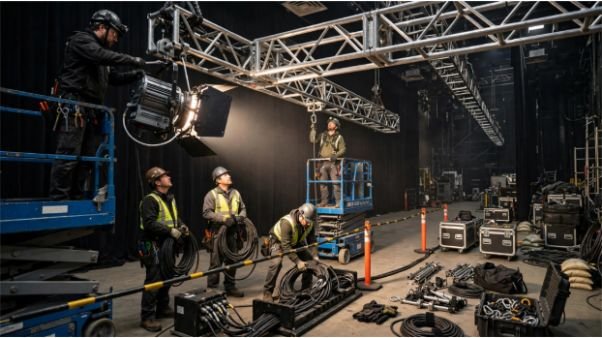
When camera systems, lighting, or support equipment depend on overhead rigging, crews should also understand ANSI rigging standards for film production so load handling, hardware selection, inspections, and working practices follow appropriate safety principles.
The best tool is not necessarily the most expensive one. It is the support system that matches the required distance, direction, environment, payload, and visual effect.
How the Crew Works Together
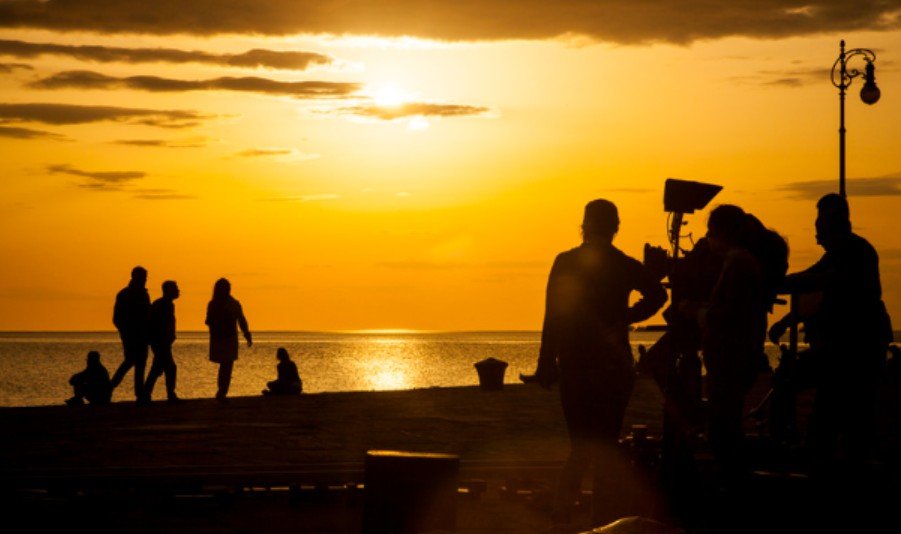
Smooth moving shots depend on coordination between several people. The director establishes the scene’s intention, while the cinematographer selects the lens, framing, lighting, and movement style.
Similar coordination becomes even more important in a production breakdown of a multi-camera live event, where several operators must maintain consistent coverage, timing, and visual continuity while working simultaneously.
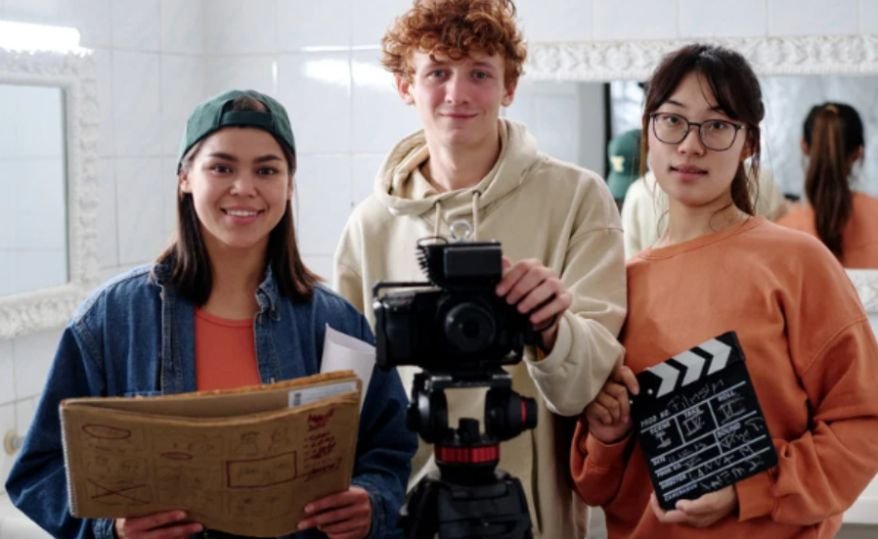
The camera operator maintains composition. A dolly grip controls the platform’s acceleration, speed, stopping point, and timing. The first assistant camera, commonly called the focus puller, keeps the subject sharp as the distance between the camera and actor changes.
Actors must hit predetermined marks and repeat their pace consistently. Grips prepare the route and operate support equipment. Lighting technicians ensure that stands, fixtures, and cables remain outside the moving frame. The video-assist team reviews playback for unwanted shake, missed focus, reflections, shadows, or visible equipment.
Why Rehearsals Produce Better Results
A technically complicated movement is rarely attempted without rehearsal. The crew first performs a walkthrough, followed by practice with the actors and camera.
Rehearsals help everyone synchronize the actor’s pace, camera speed, focus changes, dialogue, lighting cues, and background action. They also reveal practical problems that may not have been obvious during location scouting.
Operators practice smooth acceleration and deceleration rather than starting or stopping abruptly. They continue moving until the director calls cut, protecting the final frames from an unintended slowdown.
Camera Settings That Influence Smoothness
Shutter speed affects how natural movement looks. An unusually fast shutter can make motion appear sharp and stuttering, while a suitable amount of motion blur helps consecutive frames flow together.
Frame rate also matters. Higher frame rates allow footage to be slowed during editing, but slow motion should support the scene rather than serve as a universal repair method. Autofocus may work for simple movement, while difficult tracking shots often require a dedicated focus puller.
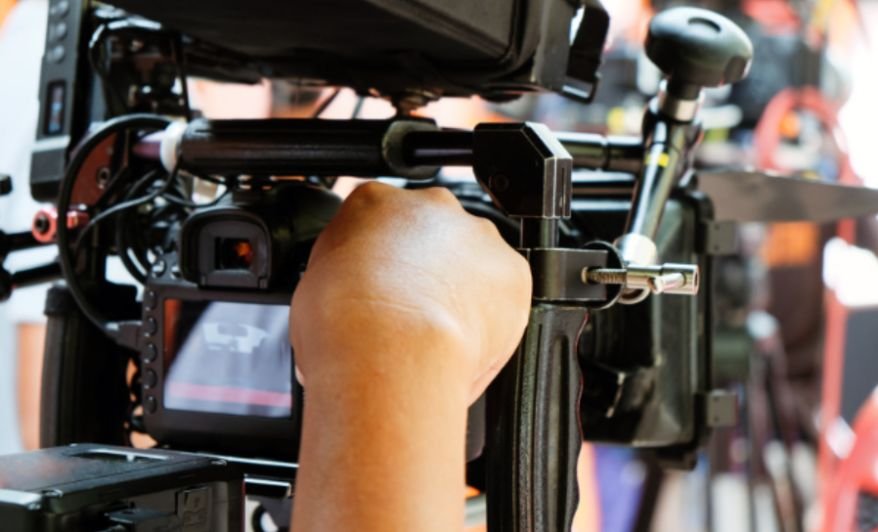
Optical and in-body stabilization can reduce small vibrations. These systems complement good operating technique but cannot compensate for poor blocking, sudden footsteps, or an unsuitable camera rig.
Finishing the Shot in Post-Production
Editing software can correct minor shake, adjust framing, repair rolling-shutter distortion, and smooth small rotational changes. Stabilization works best when footage is already reasonably controlled.
Excessive digital stabilization may crop the image, distort its edges, or create an unnatural floating effect. Production teams therefore use video stabilization as a finishing layer, not as a replacement for proper planning and camera operation.
Common Mistakes That Ruin Moving Shots
Common problems include using an unbalanced gimbal, choosing the wrong support system, skipping rehearsals, ignoring uneven surfaces, and failing to coordinate movement with the focus puller.
Other mistakes include gripping equipment too tightly, walking with stiff steps, changing speed before the take ends, relying heavily on slow motion, and expecting editing software to rescue severely unstable footage.
Frequently Asked Questions
1. How production crew captured smooth camera shots during long takes?
Crews plan the complete route, remove obstacles, mark actor positions, select a suitable stabilizer, rehearse repeatedly, coordinate focus changes, and position team members along the path. Complex long takes may require camera handoffs and precisely timed background action.
2. Is a gimbal better than a dolly?
Neither is universally better. A gimbal provides freedom in confined or unpredictable locations, while a dolly offers controlled, repeatable movement over a prepared path.
3. How do camera operators walk smoothly?
Operators keep their knees slightly bent, take controlled steps, maintain a consistent pace, and avoid unnecessary upper-body movement. They also rehearse the route until movement becomes predictable.
4. Can editing completely fix shaky footage?
Editing can reduce moderate shake, but severe movement may cause cropping, warping, motion blur, or lost image detail. Capturing stable footage on set remains the better solution.
Bringing the Movement Together
When I watch an elegant tracking shot now, I see more than a camera rig. I see the planning, marked positions, cleared pathways, rehearsed performances, focus adjustments, and coordinated decisions happening outside the frame.
Learning how production crew captured smooth camera shots shows that polished camera movement is ultimately a team achievement. Equipment provides stability, but preparation, communication, timing, and experienced hands transform that stability into meaningful visual storytelling.