




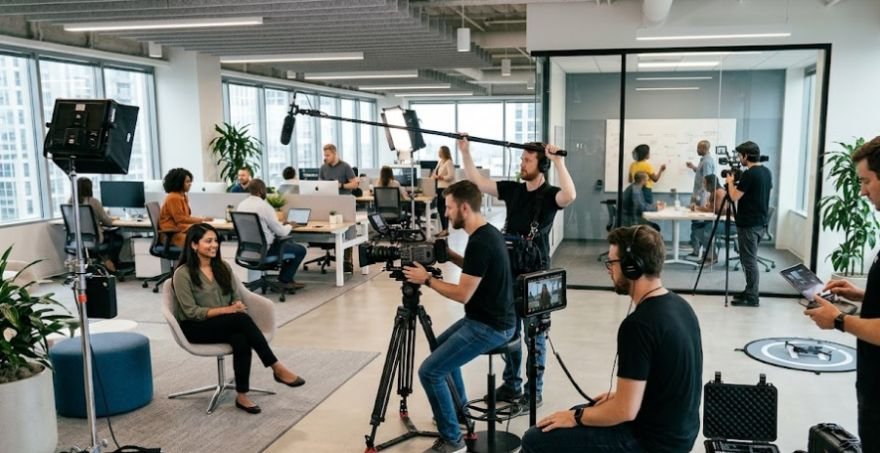
A polished commercial may catch attention, but the real story begins behind the camera. Commercial video case studies reveal how brands identify a problem, develop a creative idea, manage production, distribute the final content, and measure whether it worked.
For marketers, agencies, and production teams, these stories offer practical lessons that can improve future campaigns.
The most useful examples do not simply praise the final video. They explain what the client needed, why a particular approach was selected, what changed during production, and which measurable outcomes followed.
This combination of storytelling, evidence, and production experience makes a case study valuable to both potential clients and creative professionals.
Top 3 Commercial Video Case Studies
Examining proven campaigns shows how different storytelling methods can influence recruitment, brand perception, customer trust, and audience behavior. Each example below follows the same basic path: a clear problem, a focused solution, and an outcome connected to a wider business objective.
1. Chezy Video Company And Enclave Companies
Enclave Companies needed a more efficient way to support recruitment. Producing individual videos could cost as much as $12,500 each, making it difficult to build a consistent library of employer-brand content without repeatedly increasing the marketing budget.
Chezy Video Company consolidated the work into one coordinated production. The shoot produced a twelve-video library featuring workplace culture, drone footage, employee interviews, office environments, and recruitment-focused messages. By planning several deliverables at once, the team reduced repeated setup, travel, crew, and equipment expenses.
The result was a much lower average cost per video and a flexible content library that could support career pages, social media, recruitment advertising, presentations, and internal communication. This example shows how production efficiency can become a measurable business advantage.
2. Dove And The Real Beauty Campaign
Dove faced a broader brand challenge. Beauty advertising had long relied on highly edited images and narrow standards that left many customers feeling excluded. Selling another product through conventional beauty imagery would have done little to separate Dove from its competitors.
The brand chose a research-driven approach built around real women of different ages, backgrounds, body types, and appearances. The “Real Beauty Sketches” video compared how women described themselves with how strangers described them, creating an emotional contrast around self-perception.
The campaign encouraged a global conversation about confidence, representation, and beauty standards. It strengthened emotional recognition of the Dove brand and demonstrated that a commercial can earn attention by addressing a meaningful cultural tension rather than concentrating only on product features.
3. Google And Parisian Love
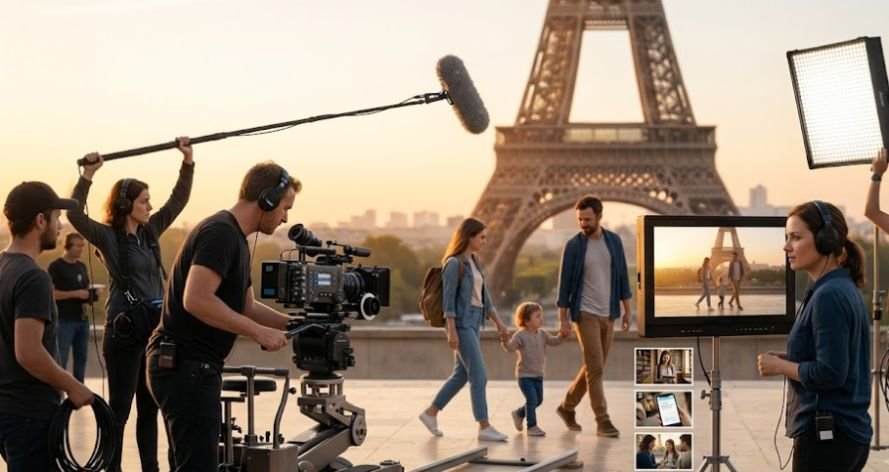
Google needed to show that its search engine was not merely a technical tool. The challenge was to demonstrate how search could become part of personal decisions, travel, education, relationships, and important life changes without producing an impressive product demonstration.
“Parisian Love” told a complete romantic story through a sequence of Google searches. The audience followed one person from studying abroad to finding cafés, translating phrases, building a relationship, and eventually creating a family. No traditional dialogue or celebrity performance was required.
The commercial became memorable because it transformed a familiar interface into an emotional storytelling device. It proved that a simple creative idea can feel universal when the story remains human, specific, and easy to follow.
How To Structure Commercial Video Case Studies
Creating effective commercial video case studies requires more than placing a client quote beside an embedded video. The strongest structure follows the campaign from the original business challenge through production, distribution, measurement, and reflection.
A well-organized video production case study connects the client challenge, creative decisions, production workflow, and measurable results within one clear narrative.
Introduce The Client And Industry
Begin by explaining who the client is, what the company offers, and which audience it wants to reach. Keep the introduction focused on information that helps readers understand the campaign rather than providing a long corporate history.
A small business brand video production case study can demonstrate how focused storytelling helps a growing company clarify its identity, reach local customers, and build credibility within a limited production budget.
Mention the industry, market position, customer type, and campaign context. A recruitment video for a property company requires different planning from a product commercial for a beauty brand or a paid social media campaign for a software provider.
Define The Business Problem
Describe the exact pain point that existed before production began. The problem might involve weak brand awareness, low conversion rates, expensive recruitment, poor customer understanding, stagnant sales, or inconsistent content across platforms.
Use specific evidence where possible. Instead of saying that production costs were high, state the previous cost per video. Instead of claiming that engagement was weak, identify the former view rate, click-through rate, lead volume, or campaign benchmark.
Explain The Creative Solution
Show how the production approach directly addressed the problem. Discuss the concept, audience insight, script, visual style, interview strategy, casting, location, production design, animation, cinematography, and message.
Every major creative decision should have a clear reason. Employee testimonials may build recruitment trust, animation may simplify technical information, and a documentary style may make a customer story feel more natural and believable.
Plan The Production Process

A detailed production section demonstrates experience and strengthens E-E-A-T. It gives readers evidence that the campaign was supported by real planning, technical knowledge, and practical decision-making.
Map Pre-Production Clearly
Pre-production may include research, scripting, storyboards, scheduling, budgeting, casting, location scouting, equipment planning, crew selection, permits, safety checks, and client approvals. Explain which steps were especially important to the project.
This is also the right place to mention constraints. A short deadline, limited access to a location, product availability, weather, or a strict budget can shape the creative approach and reveal how the team solved problems before filming.
Describe The Shoot Honestly
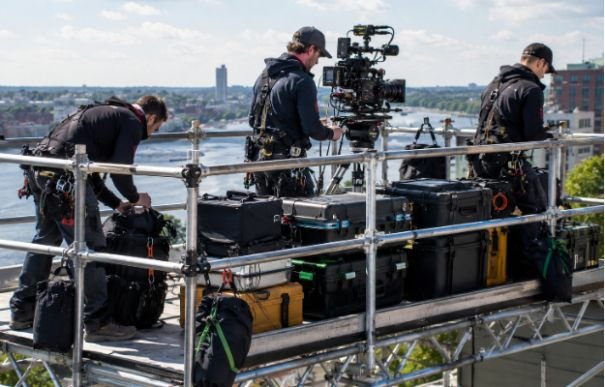
Explain how many production days were required, which crew roles were involved, and what content was captured. Mention important adjustments made on set, especially when those decisions protected the schedule or improved the final campaign.
Do not present every shoot as flawless. A location may become unavailable, natural light may change, an interview may need a new direction, or a shot may be redesigned to work in both horizontal and vertical formats. Honest details make the case study more credible.
Cover Post-Production And Delivery
Post-production should include editing, sound design, music licensing, color grading, motion graphics, visual effects, captions, review rounds, and final exports. Explain how the final assets were adapted for different placements.
A single production might deliver a hero commercial, 30-second cutdowns, 15-second social ads, six-second bumpers, vertical videos, square edits, website clips, still photographs, and behind-the-scenes material.
Measure Real Campaign Results
Results should extend beyond attractive footage and total views. Strong case studies separate production outputs from marketing outcomes and business performance so readers can understand what was delivered and what changed.
Track Useful Metrics
Production metrics may include cost per asset, number of deliverables, filming days, locations, revision rounds, and turnaround time. Marketing metrics may include reach, completion rate, engagement, clicks, leads, and conversion rate.
Business outcomes may include sales, recruitment applications, qualified inquiries, customer acquisition cost, revenue growth, or return on advertising spend. State the measurement period and comparison point so the figures have meaningful context.
Report Limits And Lessons
Not every result will be positive. One edit may outperform another, a platform may produce weak engagement, or an audience segment may respond differently than expected. These findings are still valuable because they guide future decisions.
Explain what the team learned and what it would change next time. This creates a more trustworthy production case study than simply describing every campaign as a major success.
Protect Rights And Approvals

A production company should confirm that it has permission to publish footage, client details, campaign data, testimonials, and behind-the-scenes materials before releasing a case study.
Secure Written Permission
Review talent releases, location agreements, music licenses, stock-footage rights, artwork permissions, trademarks, and product clearances. Advertising usage rights may not automatically include portfolio or case study publication.
Clients should approve confidential information such as budgets, customer data, product launches, internal strategy, sales figures, and performance reports. Written approval protects both the brand and the production company.
Verify Every Claim
Healthcare, finance, environmental, food, and performance claims may require additional legal or regulatory review. A case study should not repeat promotional claims without context or present estimates as confirmed results.
Attribute statistics to the correct source, preserve qualifications, and distinguish client-reported outcomes from independently verified figures. Clear sourcing strengthens credibility and makes future outbound linking easier.
Frequently Asked Questions
1. What Are The Five Types Of Case Studies?
The five commonly discussed types are descriptive, explanatory, exploratory, intrinsic, and collective case studies. Production teams can use them to examine one campaign, compare several projects, investigate a challenge, or explain a creative process.
2. Can ChatGPT Create A Case Study?
ChatGPT can organize project notes, suggest interview questions, create headings, and help draft commercial video case studies. However, a human must verify every metric, quotation, campaign detail, legal approval, and client claim before publication.
3. What Are Case Study Videos?
Case study videos explain how a company, agency, or production team solved a specific problem. They usually combine interviews, campaign footage, behind-the-scenes material, creative reasoning, measurable outcomes, and lessons from the finished project.
4. What Are Some Examples Of Video Marketing?
Video marketing includes television commercials, brand films, product demonstrations, social media ads, customer testimonials, recruitment videos, explainer videos, connected television campaigns, vertical shorts, event recaps, educational videos, and behind-the-scenes production content.
Lights, Camera, Results
The strongest commercial video case studies turn finished campaigns into useful stories about strategy, production, and performance. They explain the client’s challenge, reveal the creative decisions, document the production process, report measurable outcomes, and acknowledge what could improve.
By combining honest evidence with clear storytelling, production teams can educate readers, build trust, support sales conversations, and show exactly how video creates business value.