How do production teams rig overhead or static camera mounts safely on a real set?

Home » How do production teams rig overhead or static camera mounts safely on a real set?

I’ve seen case studies of overhead and static camera rigs on real productions. What does the actual safety process look like beyond just ‘use a safety cable’ — how do bigger crews approach this?

4 Editorial Answers

These answers are written and fact-checked by PhotoShipOne's editorial team to represent genuinely different perspectives — they are not user comments or crowd-sourced discussion.

Editorial Perspective

Process Overview

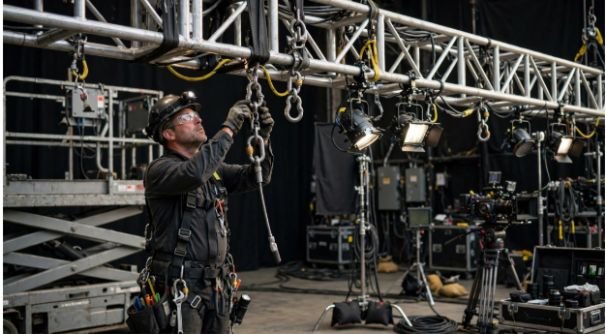
On larger productions, overhead/static rigging follows a repeatable process rather than one-off judgment calls: risk identification for the specific location and rig (what's below the mount, what's the structure rated for), a documented rigging plan reviewed before the rig goes up, the physical build with redundant attachment points, and a final inspection pass before anyone works under it. This is formalized as a rigging safety plan on union and larger non-union sets, but the same four steps scale down fine for smaller crews — it's the habit that matters, not the paperwork volume.

Editorial Perspective

Cross-Department Coordination

A detail that's easy to miss from outside: overhead rigging on a real set usually involves grip, camera, and sometimes the stunt or SFX department simultaneously, and most serious incidents trace back to miscommunication between departments rather than a single bad component — one department assuming another already checked something, or a rig being adjusted by one team without the camera department knowing the attachment points changed. Case studies of complex rigs (like curved-screen or multi-camera overhead setups) consistently cite clear role assignment — a named key grip and rigging lead — as what kept a multi-hour build from becoming a safety gap.

Editorial Perspective

Maintenance Across a Shoot Day

A rig that passed inspection at 7am isn't automatically still safe at 7pm. Real productions treat rigging safety as ongoing, not a one-time gate: re-checks after any adjustment, after a company move, and at set intervals on long rig-up days, because vibration, repeated repositioning, and thermal changes (lighting heat, outdoor temperature shifts) all loosen fasteners and change load behavior over time. This is the single biggest gap between how hobbyists approach rigging (set it once, trust it all day) and how professional crews approach it.

Editorial Perspective

Scaling Down for Smaller Crews

You don't need a union-sized crew to apply the same logic. For a two- or three-person shoot rigging a static overhead camera: identify what's underneath the rig and whether the structure can take the load, use two independent attachment points as a non-negotiable minimum, assign one person as the one who checks the rig before anyone works under it (even if that's just you, checking it twice), and re-check after any move. The scale of the crew changes who does each step, not whether each step matters.

partners@mybacklinks.co

http://photoshipone.com

Leave a Reply

Your email address will not be published. Required fields are marked *