Steadicam vs. gimbal: which one actually replicates the other’s movement?

Home » Steadicam vs. gimbal: which one actually replicates the other’s movement?

I keep hearing gimbals can replace a Steadicam operator. Is that actually true, or are the two tools producing genuinely different-looking movement?

4 Editorial Answers

These answers are written and fact-checked by PhotoShipOne's editorial team to represent genuinely different perspectives — they are not user comments or crowd-sourced discussion.

Editorial Perspective

Technical / How Each Works

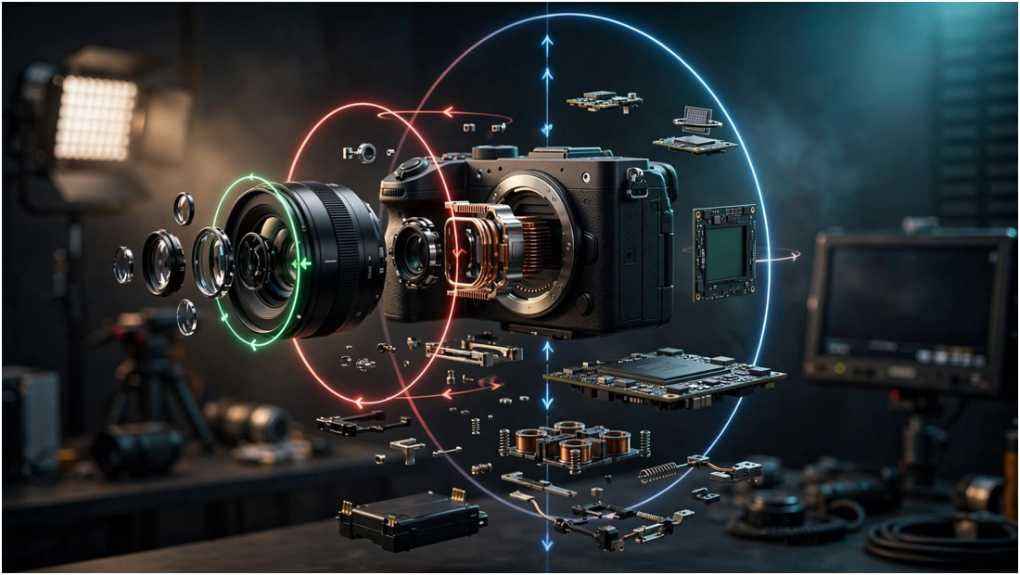
They solve the stabilization problem through opposite mechanisms. A Steadicam is a mechanical isolation system: an iso-elastic arm absorbs the operator's vertical body movement, and the sled's balance (not motors) keeps the camera level, producing an organic, slightly "floating" quality tied to the operator's own walking rhythm. A gimbal is an electronic correction system: motors on three axes detect unwanted movement via inertial sensors and actively counter it in real time, which produces a more mechanically "locked" look, especially noticeable on very slow movements where correction artifacts can become visible.

Neither replicates the other exactly — a gimbal can't produce the Steadicam's characteristic organic sway, and a Steadicam can't match a gimbal's near-instant setup or ability to work one-handed.

Editorial Perspective

Working Operator Perspective

The honest professional take: gimbals replaced a large share of Steadicam work on budget-conscious productions, but not because they look identical — because they're dramatically cheaper to operate (no specialized Steadicam operator day rate, no lengthy balancing/training investment) and "good enough" for most contemporary visual styles, which increasingly favor a slightly more mobile, documentary-adjacent look anyway. A trained Steadicam operator can do take after take for minutes at a time without a break; a gimbal operator fatigues faster holding the rig's weight actively, even though the gimbal itself doesn't need rebalancing between takes the way some assume.

For long, flowing, emotionally weighted takes in high-end narrative work, productions still hire Steadicam operators specifically because the organic quality reads differently on screen, even to untrained audiences.

Editorial Perspective

Image Quality / High-Frame-Rate Context

The gap between the two widens at high frame rates and in slow motion. At 120–240fps, even tiny correction micro-adjustments from a gimbal's motors become visible on playback, whereas a heavy, well-balanced mechanical system (Steadicam, or even a fluid head on a solid tripod) has no electronics to introduce that artifact. This is a specific, technical reason some productions avoid gimbals for their highest-frame-rate or slowest-motion shots regardless of budget.

Editorial Perspective

Budget / Realistic Advice

If you're choosing between renting a Steadicam-with-operator versus buying/renting a gimbal, the deciding question isn't "which looks more cinematic" in the abstract — it's whether your specific shot needs long, sustained, flowing takes (Steadicam's strength) or shorter, punchier, more active movement (where a gimbal's characteristics are less noticeable and its lower cost wins easily). For most indie and corporate work, a gimbal covers 90% of practical needs; the remaining 10% is exactly the kind of shot where people notice the difference, so it's worth knowing which category your project falls into before committing budget either way.

partners@mybacklinks.co

http://photoshipone.com

Leave a Reply

Your email address will not be published. Required fields are marked *